Arthur Schopenhauer wrote one of the most readable prose styles in German philosophy and one of its most demanding systems. His central claim, that a blind, striving will underlies everything, is bleak but strangely bracing, and it influenced Nietzsche, Wagner, Freud, and Beckett. Reading him in order, guides first, makes the system click.
The path opens with introductions and biography, works through the masterwork and the essays, and ends with his critics and heirs.
Getting oriented
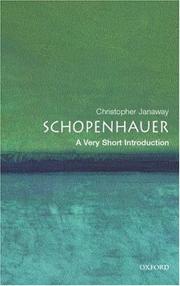
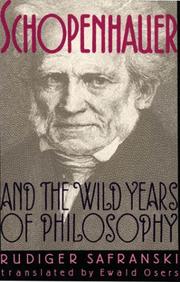
Start with Schopenhauer by Christopher Janaway, a superb short introduction that lays out the whole philosophy clearly, and Schopenhauer and the wild years of philosophy by Rudiger Safranski, a rich biography that sets him against the backdrop of German idealism and his rivalry with Hegel. These give you the argument and the life before the heavy lifting.
The masterwork
The core is The World as Will and Representation, Vol. 1, where Schopenhauer builds his system from Kant outward, followed by The World as Will and Representation, Vol. 2, which supplements and deepens it. His ethics gets its own book in On the basis of morality, grounding compassion rather than duty at the heart of moral life. For a gentler entry, Essays and aphorisms collects the shorter, worldly-wise writing that first won him a wide readership.
Deeper study and legacy
To go further, Schopenhauer by John Atwell and Schopenhauer: The World As Will and Representation by Judith Norman offer careful scholarly readings of the system. His influence is best seen in Nietzsche, who began as a disciple: The birth of tragedy. The genealogy of morals shows the young Nietzsche working through Schopenhauer's aesthetics, and Schopenhauer as educator is his admiring early tribute. The path closes with Waiting for Godot by Samuel Beckett, a play whose bleak comedy carries Schopenhauer's vision into the twentieth century.
Read in this order and Schopenhauer's pessimism becomes a coherent worldview to reckon with rather than a mood. Follow the full path to read him properly.
Follow the full reading path →
Ready to learn something deeply?
Build a reading path — free