The Best Books on Trading Psychology, in Order
This curriculum builds a deep, layered understanding of trading psychology — starting with the mental frameworks that define consistent performance, then moving into behavioral science and self-mastery, and finally into the advanced inner work that separates elite traders from the rest. Because the learner starts at an intermediate level, we skip surface-level introductions and go straight into the canonical texts, progressively demanding more self-reflection and psychological sophistication at each stage.
The Mental Foundations of Trading
IntermediateEstablish the core psychological framework: understand why discipline, emotional control, and a process-driven mindset are the true edge in markets — and begin diagnosing your own mental patterns.
▸ Study plan for this stage
Pace: 8–10 weeks, ~40–50 pages/day (with reflection days built in). Week 1–3: "Trading in the Zone" (300 pages); Week 4–6: "The Disciplined Trader" (350 pages); Week 7–10: "The Psychology of Trading" (400 pages). Plan 1–2 reflection/integration days per week.
- Belief systems and self-image: How your internal beliefs about money, risk, and your identity as a trader directly shape your trading decisions and outcomes
- The illusion of control and probability: Understanding that markets are probabilistic, not predictable—and learning to accept uncertainty as the foundation of disciplined trading
- Emotional regulation and the reptilian brain: Recognizing how fear and greed hijack rational decision-making, and developing techniques to stay process-focused rather than outcome-focused
- The trading plan as a psychological contract: Using a written, pre-decided trading system as an external anchor to override emotional impulses in real time
- Discipline as a trainable skill: Building consistent habits through repetition, accountability, and feedback loops—not relying on willpower or motivation
- Pattern recognition in your own behavior: Identifying your personal mental traps (revenge trading, overconfidence, loss aversion) so you can interrupt them before they cost money
- The role of the subconscious mind: Understanding how deeply ingrained beliefs about money and self-worth operate beneath conscious awareness and must be actively reprogrammed
- Process over outcomes: Shifting your locus of control from external market results to internal adherence to your edge—the only thing you can truly control
- What is the relationship between your self-image and your trading performance, and how can you deliberately reshape your identity as a trader?
- Why does Mark Douglas argue that accepting the probabilistic nature of markets is essential to emotional discipline, and how does this differ from trying to predict the market?
- Describe the three primary emotional states that sabotage traders (fear, greed, hope) and explain one specific technique from the books to interrupt each one in real time.
- What is a trading plan, and why is it a psychological tool as much as a technical one? How does it protect you from emotional decision-making?
- How do you distinguish between a 'good trade' and a 'good outcome,' and why is this distinction critical to long-term trading success?
- What are your personal mental traps or recurring patterns that have cost you money in the past, and what early warning signs can you identify before they trigger?
- According to Steenbarger, what role does self-awareness and ongoing psychological assessment play in becoming a consistently profitable trader?
- Write a personal belief audit: List 10 beliefs you hold about money, risk, loss, and your ability to trade. For each, identify whether it supports or sabotages your trading, and rewrite 3–5 limiting beliefs as empowering alternatives.
- Create a one-page trading plan (or refine an existing one) that includes: your edge, position sizing rules, entry/exit criteria, and most importantly, your pre-decided response to three specific emotional triggers (e.g., 'If I'm down 2% in a day, I will...').
- Keep a trading journal for 2–3 weeks that logs not just trades, but emotional states: What were you feeling before entry? During the trade? After the outcome? Identify patterns in your emotional responses.
- Conduct a 'loss autopsy': Review your 3 worst trades from the past year. For each, diagnose the psychological root cause (overconfidence, fear, revenge trading, etc.) and design a specific behavioral intervention.
- Practice the 'probability acceptance' exercise: For one week, before each trade, explicitly state the probability of success (e.g., 'This trade has a 55% win rate'). After the trade, record the outcome without judgment. Repeat 20+ times to internalize probabilistic thinking.
- Interview yourself using Steenbarger's framework: Answer 5–10 reflective questions about your trading psychology (e.g., 'What market conditions trigger my worst behavior?' 'When do I feel most confident, and is that confidence justified?'). Revisit monthly.
- Role-play a losing streak: Imagine a 5-trade losing streak. Write out how you would feel, what thoughts would arise, and exactly what you would do to stay disciplined. Practice this mental rehearsal before it happens in real markets.
Next up: This stage establishes that your psychology is your true edge and that discipline is trainable; the next stage will teach you how to identify, test, and validate your actual *trading edge* (technical or systematic) and build a repeatable process around it.
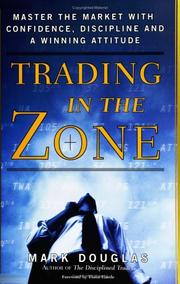
The single most important book on trading psychology. Douglas introduces the concept of probabilistic thinking and explains precisely why fear, greed, and the need to be right destroy consistency. Read this first to build the foundational vocabulary for everything that follows.
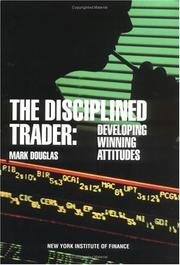
Douglas's earlier, rawer work digs into the psychological origins of self-sabotage in trading. Reading it after 'Trading in the Zone' reinforces the framework and adds depth on how childhood beliefs and social conditioning shape market behavior.
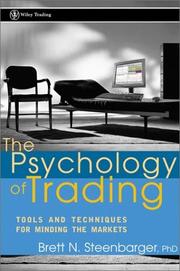
Steenbarger brings a clinical psychologist's lens to the trading desk, offering concrete self-assessment tools and cognitive-behavioral techniques. It bridges theory and practice, making it the ideal third read to begin applying what Douglas introduced.
Behavioral Science & Decision-Making Under Risk
IntermediateUnderstand the cognitive biases and irrational decision patterns hard-wired into the human brain, so you can recognize and counteract them in real-time trading situations.
▸ Study plan for this stage
Pace: 8–10 weeks, ~40–50 pages/day (approximately 2–3 weeks per book with review and integration time)
- System 1 vs. System 2 thinking: automatic, fast, intuitive decisions versus deliberate, slow, analytical reasoning, and how each dominates different trading scenarios
- Anchoring bias: how initial numbers disproportionately influence subsequent judgments and price estimates in trading
- Availability heuristic: the tendency to overweight easily recalled information (recent trades, vivid losses) when making decisions
- Loss aversion and prospect theory: why losses feel roughly twice as painful as equivalent gains, driving panic selling and revenge trading
- Overconfidence bias: the illusion of control and excessive certainty in one's ability to predict markets, leading to overleveraging
- The neuroscience of money: how the brain's reward and fear centers are hijacked by market movements, creating emotional trading
- Framing effects: how the same trade presented as a 'loss' versus a 'gain' triggers completely different emotional and rational responses
- Herding and social proof: why traders follow the crowd despite evidence, and how to recognize and resist crowd psychology
- Explain the difference between System 1 and System 2 thinking. Which system is more likely to cause costly trading errors, and why?
- How does anchoring bias affect your price targets and entry/exit decisions? Give a specific trading example.
- What is loss aversion, and how does it explain panic selling? How can you design your trading rules to counteract it?
- Describe prospect theory. Why do traders often hold losing positions too long and sell winners too quickly?
- How does overconfidence bias lead to overleveraging? What objective measures can you use to check your confidence levels?
- What is the availability heuristic, and how might it cause you to overweight recent market events in your decision-making?
- Explain framing effects with a trading example. How can you reframe losses to make better decisions?
- How does the brain's neurobiology (reward centers, amygdala) drive emotional trading? What practical steps can you take to create distance between impulse and action?
- Trade journal analysis: Review your last 20 trades and categorize each decision as System 1 (emotional/fast) or System 2 (deliberate/slow). Identify which category produced better results and why.
- Anchoring experiment: Set three different price targets for a stock you're considering—one anchored to yesterday's close, one to the 52-week high, one to your fundamental valuation. Track how each anchor influences your actual entry/exit decisions over 2 weeks.
- Loss aversion simulation: Paper-trade two identical portfolios—one where you frame all moves as 'gains relative to breakeven' and one where you frame them as 'losses from entry.' Record your emotional responses and decision speed in each frame.
- Overconfidence audit: Before each trade for 2 weeks, write down your confidence level (0–100%) and your expected win rate. After 20 trades, compare your predicted accuracy to actual results. Calculate your calibration error.
- Herding detection: Spend 30 minutes scanning financial news and social media for a stock you trade. List all the bullish/bearish claims you see. Then research the same stock independently (fundamentals, technicals, valuation). Compare how many of your initial opinions came from herding versus independent analysis.
- System 2 forcing exercise: For one week, implement a rule that you must write down your reasoning for every trade in 3–5 sentences before executing it. Review these write-ups daily and score them for logical rigor versus emotional language.
- Neurobiology pause drill: When you feel the urge to make a trade, pause for 60 seconds and perform a simple breathing exercise (4-count in, 6-count out, 3 reps). Record whether this pause changed your decision and the outcome.
- Framing rewrite: Take your three worst trades from the past month. Reframe each loss as 'tuition paid for learning' rather than 'money lost.' Write a 1-paragraph lesson from each, focusing on what System 2 thinking would have caught.
Next up: By internalizing these cognitive biases and their neurological roots, you'll be equipped to recognize your own mental traps in real time; the next stage will teach you concrete behavioral and technical frameworks to systematically exploit these biases in *other* traders and protect yourself from falling victim to them.

Kahneman's masterwork on System 1 vs. System 2 thinking is essential for understanding why traders make predictably irrational decisions under pressure. It provides the scientific bedrock for every bias discussed in trading psychology literature.

Zweig applies neuroscience and behavioral economics directly to investing and trading decisions, translating Kahneman-style research into vivid market examples. Read after Kahneman to see exactly how these biases manifest in a financial context.
Performance Psychology & the Trader's Edge
ExpertAdopt the mindset and habits of elite performers — drawing on sports psychology, peak performance research, and professional trading practice to build repeatable, high-discipline routines.
▸ Study plan for this stage
Pace: 6–8 weeks, ~25–30 pages/day, with 2–3 days per week dedicated to reflection and exercise implementation
- The performance loop: how self-awareness, deliberate practice, and feedback create sustainable trading edge
- Mental models for peak performance: flow states, optimal arousal, and the role of preparation in consistency
- Coaching yourself: using daily journaling, video review, and self-dialogue to identify and correct behavioral patterns
- Routine design: building pre-trade, during-trade, and post-trade rituals that anchor discipline and reduce emotional reactivity
- The trader's identity: aligning your self-concept with your trading plan to resolve internal conflicts that sabotage execution
- Stress inoculation and resilience: systematic exposure to market adversity to build psychological immunity and maintain composure
- Performance metrics beyond P&L: tracking process adherence, emotional regulation, and decision quality as leading indicators of long-term success
- Habit stacking and environmental design: leveraging context and cues to make high-discipline behaviors automatic
- What is the performance loop, and how does deliberate practice differ from passive trading experience?
- How can you design a daily routine that anchors discipline before, during, and after trading sessions?
- What role does self-dialogue play in managing emotions, and how do you identify and reframe unhelpful internal narratives?
- How do you use journaling and performance metrics to diagnose behavioral gaps between your trading plan and actual execution?
- What is stress inoculation, and how can you systematically build psychological resilience to market drawdowns?
- How does aligning your trader identity with your trading plan resolve the internal conflicts that lead to plan violations?
- Read and annotate 'Enhancing Trader Performance' (weeks 1–3): highlight passages on the performance loop, deliberate practice, and mental models; write one-paragraph summaries of each chapter
- Design your personal pre-trade routine: document 3–5 specific actions (breathing, visualization, plan review) to execute before every trade; test for 2 weeks and refine based on results
- Start a daily trading journal: record your emotional state, decision rationale, plan adherence (yes/no), and one behavioral insight after each session; review weekly patterns
- Read and annotate 'The Daily Trading Coach' (weeks 4–6): focus on the coaching frameworks and daily exercises; select 5 coaching lessons most relevant to your current performance gaps
- Implement one coaching exercise per week from 'The Daily Trading Coach': practice self-dialogue scripts, video review of your trading, or stress-inoculation scenarios; document what you learn
- Create a performance dashboard: track 3–5 process metrics (e.g., % of trades following your plan, emotional regulation score 1–10, decision quality rating) alongside P&L; review weekly
- Conduct a trader identity audit: write a 1–2 page description of your ideal trader self; identify 2–3 ways your current behavior conflicts with this identity; design one habit to close the gap
- Record yourself explaining your trading plan out loud: listen back and identify vague language, emotional triggers, or gaps in conviction; refine your language and re-record
Next up: This stage equips you with the psychological frameworks and daily practices to execute with discipline and consistency; the next stage will deepen your understanding of how market structure, risk management, and advanced decision-making systems amplify the edge you've built through elite performer habits.
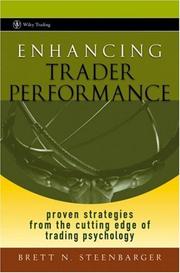
Steenbarger's most rigorous work applies peak-performance research from elite sports and military training to trading. It introduces deliberate practice frameworks and is the natural next step after his introductory psychology text.
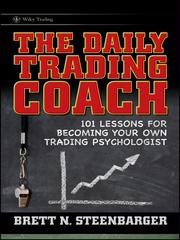
Structured as 101 coaching lessons, this book operationalizes everything in the curriculum so far into daily habits and self-coaching routines — making it the ideal bridge between knowledge and consistent execution.
Deep Inner Work & Mastery
ExpertConfront the deepest layers of self-sabotage, ego, and unconscious belief systems that prevent traders from reaching their ceiling — and develop the inner resilience of a truly consistent trader.
▸ Study plan for this stage
Pace: 8–10 weeks, ~40–50 pages/day with deep reflection pauses. Week 1–4: "Reminiscences" (300 pages); Week 5–8: "The Hour Between Dog and Wolf" (350 pages); Week 9–10: Integration and personal application journaling.
- The cycle of boom-bust psychology: how emotional extremes (greed, fear, overconfidence) drive repeated self-sabotage in Livermore's trading career
- Ego as the primary obstacle: recognizing how pride, stubbornness, and the need to be 'right' override rational decision-making
- The body's role in trading psychology: understanding how stress hormones (cortisol, testosterone) hijack the prefrontal cortex and distort risk perception
- Unconscious belief systems about money, loss, and deservingness: how deep-seated narratives inherited or formed early shape trading behavior
- The trader's paradox: the tension between the aggressive, risk-taking mindset needed to profit and the disciplined, emotionally-detached mindset needed to survive
- Neurobiological roots of overtrading and revenge trading: how the brain's reward system and loss-aversion circuits create compulsive behavior
- Mastery as self-knowledge, not just technique: the realization that consistent trading requires radical honesty about one's psychological limits and triggers
- The role of narrative and identity: how traders construct stories about themselves that either enable or sabotage long-term success
- What are the recurring psychological patterns in Livermore's trading career, and how do they illustrate the cycle of self-sabotage? What specific moments show ego overriding discipline?
- How does Coates explain the physiological mechanisms by which stress and winning streaks alter a trader's decision-making? What is the 'hour between dog and wolf' metaphor describing?
- What unconscious beliefs about money, risk, and personal worth do you recognize in Livermore's behavior, and how might similar beliefs be operating in your own trading?
- How does the body's neurochemistry (testosterone, cortisol) explain overtrading, revenge trading, and the inability to cut losses? What does this suggest about managing psychology?
- What is the difference between the aggressive mindset required to initiate trades and the detached mindset required to manage them? How can a trader cultivate both?
- What does 'mastery' mean in the context of these two books—and how is it fundamentally different from technical skill or market knowledge?
- Livermore Pattern Audit: Identify 3–5 recurring psychological patterns from Livermore's career (e.g., overconfidence after wins, revenge trading after losses, ignoring warning signs). For each, write a specific example from the book and then honestly assess whether you exhibit the same pattern. Rate severity 1–10.
- Ego Trigger Inventory: List moments in Reminiscences where Livermore's ego directly caused losses (e.g., refusing to admit he was wrong, trading against his own rules to prove a point). For each, write what belief about himself was at stake, and identify your own ego triggers in trading.
- Neurochemistry Journal: Over 2 weeks of trading, track your emotional state before, during, and after trades. Note: energy level, confidence, impulsivity, physical sensations (heart rate, tension). Cross-reference with Coates' descriptions of stress hormones. Identify 2–3 patterns where physiology hijacked your decision-making.
- Belief System Excavation: Write a 2–3 page exploration of your deepest beliefs about money, loss, and what you deserve. Where did these beliefs originate? How do they show up in your trading decisions? Use specific trade examples.
- The Paradox Exercise: Describe a recent trade where you needed to be aggressive to enter but disciplined to manage. What internal conflict did you experience? How did your body feel? Write a protocol for how you'll handle this paradox in future trades.
- Narrative Rewrite: Choose one recurring self-sabotaging story you tell about yourself as a trader (e.g., 'I always panic-sell winners' or 'I can't follow my rules'). Write the current narrative in detail. Then write an alternative narrative grounded in the same facts but reframed as mastery-oriented. Practice the new narrative daily for 1 week.
Next up: This stage equips you with brutal self-awareness of the psychological mechanisms that sabotage trading—the foundation for the next stage, which will focus on building concrete systems, rules, and environmental structures that work *with* your psychology rather than against it, turning insight into sustainable edge.
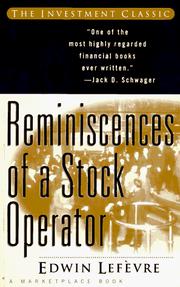
The fictionalized biography of Jesse Livermore is a timeless study in the psychological lifecycle of a trader — hubris, ruin, discipline, and redemption. At this advanced stage, it reads as a profound cautionary and instructional tale rather than mere history.

Coates, a former Wall Street trader turned neuroscientist, reveals how hormones like cortisol and testosterone physically alter risk perception and decision-making. This is the most scientifically rigorous book on the biology of trading psychology and provides the final, deepest layer of self-understanding.
Discussion
Keep reading
Paths that share books, cover the same subject, or open a related topic.