The Best Books on Customer Experience Management
This curriculum builds a rigorous, end-to-end mastery of Customer Experience Management, starting from the strategic and conceptual foundations, moving through the practical disciplines of journey mapping and service design, and culminating in the organizational and loyalty-driving practices that create truly customer-obsessed companies. Because the learner starts at an intermediate level, the early stage sharpens core CX frameworks before diving into hands-on methods and advanced culture-building.
CX Strategy & Foundations
IntermediateEstablish a shared vocabulary and strategic mindset for customer experience — understanding what CX really means, how it drives business outcomes, and what separates good from great.
▸ Study plan for this stage
Pace: 4–5 weeks, ~40–50 pages/day (approximately 10–12 hours/week). Week 1–2: "Outside In" (320 pages); Week 3–5: "The Effortless Experience" (304 pages), with overlap for reflection and integration.
- The 'outside-in' perspective: designing from the customer's viewpoint rather than internal organizational structures, and why this fundamentally shifts strategy
- Customer experience as a competitive differentiator that directly impacts loyalty, retention, and revenue—not just a nice-to-have
- The concept of 'effort' as the primary driver of customer satisfaction and loyalty; reducing friction matters more than exceeding expectations
- The customer journey and touchpoint mapping: understanding how customers move through interactions and where pain points occur
- Organizational alignment and accountability: breaking silos to create a unified CX strategy across departments
- Emotional and functional dimensions of experience: how both rational problem-solving and emotional connection drive loyalty
- The business case for CX: translating customer insights into measurable outcomes (NPS, CSAT, retention, lifetime value)
- What does 'outside-in' thinking mean, and how does it differ from traditional inside-out organizational design? Give a concrete example from your own experience.
- According to 'The Effortless Experience,' why is reducing customer effort more important than delighting customers, and what evidence supports this claim?
- How would you map a customer journey for a product or service you use regularly, identifying key touchpoints and moments of friction?
- What are the main barriers to implementing a true outside-in CX strategy within organizations, and how can they be overcome?
- How do you measure the business impact of CX improvements, and what metrics matter most for your industry or organization?
- Describe the relationship between organizational silos and poor customer experience. How would you restructure a team to be more customer-centric?
- Customer journey mapping: Choose a service you use (banking, e-commerce, healthcare). Map the full journey from awareness to post-purchase, identifying emotional highs/lows and effort points. Compare your map to what the company likely intended.
- Outside-in audit: Select a company or department you know. List 5 processes or policies designed for internal convenience rather than customer ease. Propose outside-in alternatives.
- Effort reduction challenge: Identify one repetitive frustration in your own customer experience (e.g., password resets, form filling, phone menus). Redesign it to minimize effort in 3 concrete ways.
- Stakeholder interview: Interview someone in a different department (sales, operations, product) about their view of the customer. Document where their perspective diverges from actual customer needs.
- NPS and effort analysis: Find a company's NPS or CSAT data (or create a mini-survey of 10–15 people). Correlate satisfaction scores with 'effort' questions. What patterns emerge?
- CX strategy brief: Write a 1-page business case for a CX initiative in your organization, grounding it in both customer insights and financial impact (retention, lifetime value, referrals).
Next up: This stage establishes the *why* and *what* of CX strategy; the next stage will focus on *how*—moving from strategic vision to implementation, measurement, and organizational change management.

A rigorous, research-backed framework from Forrester that defines CX maturity and shows exactly how customer experience connects to revenue — the ideal strategic starting point for an intermediate learner.
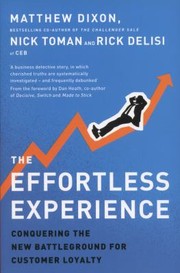
Challenges the 'delight at all costs' assumption and introduces the Customer Effort Score, reframing loyalty around reducing friction — a critical counterpoint to read immediately after the big-picture strategy.
Journey Mapping & Customer Understanding
IntermediateLearn to see the world through the customer's eyes — mapping journeys, identifying moments of truth, and using empathy-driven research to find and fix experience gaps.
▸ Study plan for this stage
Pace: 4–5 weeks, ~25–30 pages/day (approximately 150–180 pages total across both books)
- Experience mapping as a tool for visualizing customer touchpoints, emotions, and pain points across the entire journey
- The concept of moments of truth—critical interactions that disproportionately shape customer perception and loyalty
- Empathy-driven research methods (observation, interviews, personas) to uncover unstated customer needs and frustrations
- The difference between customer journeys and experience maps, and when to use each
- Identifying and prioritizing experience gaps where customer expectations diverge from actual delivery
- Cross-functional alignment: how to translate customer insights into organizational action
- The role of context and emotion in shaping customer behavior and decision-making
- Practical frameworks for designing interventions that address root causes, not just symptoms
- What is the difference between a customer journey map and an experience map, and when would you use each?
- How do you identify moments of truth in a customer journey, and why do they matter more than other touchpoints?
- What empathy-driven research methods does Kalbach recommend, and how do they help uncover unstated customer needs?
- How can you use personas and customer research to anticipate emotional responses at different journey stages?
- What are the most common experience gaps, and how do you prioritize which ones to address first?
- How do you translate customer insights from journey maps into concrete, cross-functional organizational changes?
- Map a real customer journey for a product or service you use regularly: identify all touchpoints, channels, and stakeholders involved. Note where emotions shift and where friction occurs.
- Conduct 3–5 empathy interviews with actual customers (or users of a service). Ask open-ended questions about their goals, frustrations, and workarounds. Synthesize findings into a one-page insight summary.
- Create a persona based on your research interviews, including motivations, pain points, and moments of truth specific to their journey.
- Build an experience map (not just a journey map) for one customer segment, layering in emotional highs/lows, internal processes, and organizational touchpoints.
- Identify 2–3 moments of truth in your mapped journey and hypothesize why they matter. Design a small intervention to improve one moment and sketch how it might cascade through the rest of the journey.
- Facilitate a cross-functional workshop where you present your journey map and experience gaps to colleagues from different departments (sales, support, product, etc.). Document their perspectives and identify shared priorities for improvement.
Next up: This stage equips you with the diagnostic tools and empathy foundation needed to move into designing and testing solutions—you'll now know *where* and *why* customers struggle, setting the stage for prototyping, testing, and iterating on experience improvements.
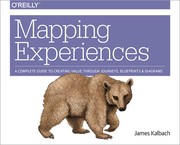
The definitive practical guide to journey maps, service blueprints, and experience diagrams — packed with real templates and step-by-step methods to apply immediately.

Bridges strategy and execution by showing how to translate journey insights into actionable CX improvements, reinforcing the mapping skills built in Kalbach with a business-outcome lens.
Service Design & Operational Excellence
IntermediateDesign and deliver experiences intentionally — understanding how backstage processes, people, and systems must be orchestrated to reliably produce great front-stage customer moments.
▸ Study plan for this stage
Pace: 8–10 weeks, ~25–30 pages/day, with 1–2 weeks between books for reflection and exercises
- Service design as a systematic discipline: mapping the full ecosystem of touchpoints, actors, and processes that create customer value
- The distinction between frontstage (customer-facing) and backstage (operational) elements, and how they must be aligned
- Tools and methods for visualizing service systems: journey maps, service blueprints, and stakeholder maps
- Human-centered design principles applied to service delivery: empathy, iterative prototyping, and co-creation with users and staff
- Operational orchestration: how people, processes, and technology must work together to enable consistent, intentional experiences
- Service design thinking as a business discipline: connecting design decisions to measurable business outcomes and organizational strategy
- What is the difference between a customer journey map and a service blueprint, and when would you use each?
- How do backstage processes and systems directly influence front-stage customer moments? Give a concrete example.
- What are the key stakeholders in a service system beyond the customer, and why does their experience matter?
- How would you apply human-centered design principles (empathy, iteration, co-creation) to redesign a service you use regularly?
- What role does prototyping and testing play in service design, and how does it differ from traditional business planning?
- How do you measure whether a service design intervention has successfully improved both customer experience and business outcomes?
- Create a detailed service blueprint for a service you use frequently (e.g., restaurant, gym, online shopping). Include frontstage actions, backstage processes, support systems, and failure points.
- Conduct a stakeholder mapping exercise for a real service: identify all actors (customers, staff, suppliers, partners), their goals, and pain points. Visualize their interdependencies.
- Interview 3–5 employees or service providers in a business you have access to. Map their experience and identify gaps between what they're asked to deliver and the resources/processes they have.
- Redesign one customer journey moment by working backward from the desired front-stage experience to the backstage processes needed to enable it. Prototype and test with a small group.
- Facilitate a co-creation workshop with 4–6 people (mix of customers and staff) to identify service pain points and generate solutions collaboratively.
- Develop a simple business case for a service redesign: articulate the customer benefit, operational changes required, resource investment, and expected business outcomes (cost savings, revenue, retention).
Next up: This stage equips you with the frameworks and mindset to design and operationalize intentional experiences; the next stage will likely deepen your ability to scale these insights across organizations, measure their impact, and embed service design into ongoing business strategy and culture.
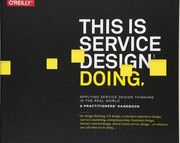
The most comprehensive hands-on guide to service design methods — prototyping, blueprinting, and co-creation — giving the learner the operational toolkit to move from map to implementation.

A concise, business-focused companion that shows how to make the case for service design internally and embed it in real organizations, bridging the gap between design practice and corporate reality.
Loyalty, Metrics & the Voice of the Customer
ExpertMaster the measurement systems and loyalty economics that prove CX ROI — understanding NPS, customer feedback loops, and how to build programs that turn satisfied customers into advocates.
▸ Study plan for this stage
Pace: 4–5 weeks, ~25–30 pages/day, with 2–3 days per week dedicated to exercises and reflection
- Chief Customer Officer role and organizational accountability for CX strategy
- Building a customer-centric culture and breaking down internal silos
- Designing and implementing customer feedback systems and listening mechanisms
- Translating customer insights into measurable business outcomes and ROI
- Creating loyalty programs grounded in customer value and emotional connection
- Establishing metrics frameworks that connect CX to financial performance
- Developing customer advocacy and turning detractors into promoters
- What are the core responsibilities of a Chief Customer Officer, and how does this role drive organizational change around customer experience?
- How can organizations systematically capture and act on the voice of the customer across multiple touchpoints?
- What metrics and KPIs should a company track to measure customer loyalty and prove CX ROI?
- How do you design a loyalty program that creates genuine emotional connection rather than transactional rewards?
- What are the barriers to implementing customer-centric strategies in traditional organizations, and how can a CCO overcome them?
- How should customer feedback loops be structured to ensure insights drive real business decisions?
- Map your organization's current customer feedback channels and identify gaps; design one new listening mechanism to capture unheard customer voices
- Conduct a stakeholder interview with 3–5 colleagues from different departments to understand how customer insights currently flow (or don't) across your organization
- Build a simple CX metrics dashboard for your business or a case study company, linking customer experience metrics to revenue, retention, or cost metrics
- Write a customer loyalty program proposal that goes beyond transactional rewards—define the emotional value and advocacy outcomes you want to drive
- Analyze a real company's NPS or customer satisfaction data; identify the drivers of promoters vs. detractors and recommend one high-impact improvement
- Create a 90-day action plan for implementing one customer-centric initiative in your organization, including how you'd measure success and communicate ROI to leadership
Next up: This stage equips you with the measurement systems, loyalty frameworks, and organizational structures needed to prove CX value—preparing you to move into deeper operational execution, advanced segmentation strategies, or specialized CX domains like digital transformation or omnichannel orchestration.
The canonical text on Net Promoter Score and loyalty economics — essential reading for understanding how to measure and manage customer relationships with a single, actionable metric.

Shows how to build the internal governance, metrics, and cross-functional accountability structures needed to sustain a loyalty-driving CX program — the operational complement to Reichheld's philosophy.
Building a Customer-Obsessed Culture
ExpertTransform the entire organization — embedding customer obsession into leadership, hiring, processes, and company DNA so that great CX becomes self-sustaining rather than project-driven.
▸ Study plan for this stage
Pace: 8–10 weeks, ~25–30 pages/day (approximately 4–5 hours/week of reading plus exercises)
- Leadership principles as the foundation for customer obsession (Amazon's 14 Leadership Principles and how they embed customer-first thinking into decision-making)
- Hiring and retention as cultural levers: selecting for customer-obsessed values and building teams that naturally prioritize customer needs
- Culture as a competitive advantage: how Zappos' culture of happiness directly translates to superior customer experience and business outcomes
- Aligning organizational processes and incentives to reward customer-centric behavior rather than short-term metrics
- Scaling customer obsession across departments: moving from isolated CX initiatives to systemic, organization-wide customer focus
- The role of transparency, trust, and psychological safety in enabling employees to make customer-first decisions autonomously
- Connecting employee happiness and fulfillment to customer satisfaction: the virtuous cycle demonstrated by Zappos
- Institutionalizing customer feedback loops and making them central to strategy, not afterthoughts
- How do Amazon's 14 Leadership Principles specifically drive customer obsession, and which principles are most critical for embedding CX into organizational DNA?
- What hiring and onboarding practices does Rossman recommend to ensure new employees internalize customer-obsessed values from day one?
- How does Zappos' approach to company culture and employee happiness create a sustainable competitive advantage in customer experience?
- What organizational structures, incentives, and metrics does Hsieh argue must change to align employee behavior with customer-centric goals?
- How can leaders overcome resistance when transforming processes and decision-making frameworks to prioritize customer needs over short-term profits?
- What is the relationship between employee empowerment, autonomy, and the ability to deliver exceptional customer experiences at scale?
- Leadership Principles Audit: Map your organization's current decision-making to Amazon's 14 Leadership Principles. Identify 2–3 principles that are weakest and draft specific changes to hiring, performance reviews, and meeting agendas to reinforce them.
- Hiring Rubric Redesign: Review your current job descriptions and interview questions for a key customer-facing role. Rewrite them to explicitly screen for customer obsession and values alignment using examples from Rossman's hiring recommendations.
- Culture Document Creation: Draft or revise your company's culture statement and values using Zappos' core values framework from Delivering Happiness as a template. Include specific behaviors and decision-making examples.
- Process Mapping Exercise: Select one critical business process (e.g., product development, customer support escalation, pricing decisions). Map how it currently works, then redesign it to embed customer feedback loops and customer-first decision criteria at each stage.
- Employee Empowerment Simulation: Identify a recent customer service decision that was escalated to management. Role-play how a front-line employee could have made that decision autonomously if given the right training, trust, and authority. Document the conditions needed.
- Incentive Alignment Workshop: Audit your current compensation, bonuses, and performance metrics. Identify misalignments with customer-centric goals and propose 2–3 changes (e.g., shifting from transaction volume to customer lifetime value, adding NPS into bonus calculations).
Next up: This stage establishes the cultural and organizational foundations for customer obsession; the next stage will likely focus on operationalizing these principles through specific CX tools, technologies, and measurement frameworks that scale customer-centric practices across the enterprise.

Decodes Amazon's 14 leadership principles through a CX lens, providing a concrete cultural blueprint for what relentless customer obsession looks like at scale — ideal as a capstone case study.
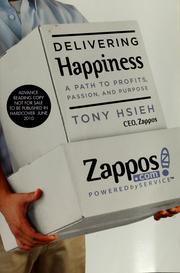
Zappos's story is the most celebrated example of culture-as-CX-strategy; reading it last ties together every prior stage by showing how values, hiring, and service design fuse into a legendary customer experience.
Discussion
Keep reading
Paths that share books, cover the same subject, or open a related topic.