Algorithmic trading is one of the harder self-taught subjects because it demands finance, programming, and statistics at once — and beginners often chase machine learning before they can build and backtest a simple strategy honestly. A good reading order fixes this by starting with practical, testable methods and only later introducing the sophisticated tools that assume that foundation.
This path moves from hands-on strategy building, into machine learning and advanced methods, and finally into the market structure and systematic discipline that make it all robust.
Build real, testable strategies
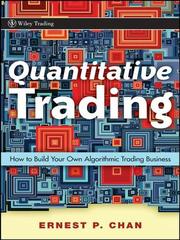
Start with Algorithmic Trading: Winning Strategies and Their Rationale by Ernest Chan, which teaches concrete strategies alongside the reasoning and backtesting behind them. Its predecessor Quantitative trading by Ernest P. Chan is the ideal on-ramp, walking a beginner through setting up and testing an automated strategy end to end.
Advance into machine learning
Once you can backtest without fooling yourself, Advances in Financial Machine Learning by Marcos Lopez de Prado is the field's serious modern text, confronting the traps that make naive ML fail on markets. His Machine Learning for Asset Managers condenses key ideas into a focused, practical volume.
Understand microstructure and evidence
Algorithmic and High-Frequency Trading by Álvaro Cartea grounds you in the mathematics of executing in real markets, and Evidence-Based Technical Analysis by David R Aronson brings scientific skepticism to signals — teaching you to distinguish a real edge from noise.
Systematize and understand the market
Active portfolio management by Richard C Grinold is the classic on building portfolios with disciplined risk control. Systematic Trading by Robert Carver offers a refreshingly honest framework for retail-scale systematic trading. Inside the black box by Rishi K. Narang demystifies how quant funds operate, and Trading and Exchanges by Larry Harris explains the market plumbing every algorithm runs on.
Nothing here is investment advice — treat it as an education in method and rigor, not a guaranteed edge. Follow the full path to build strategies you can actually trust.
Follow the full reading path →
Ready to learn something deeply?
Build a reading path — free