Cryptocurrency trading: the best books to read in order
This curriculum takes a beginner from zero crypto knowledge to confident, risk-aware trading across four progressive stages. It starts by building a rock-solid conceptual foundation in Bitcoin and blockchain, then layers on market structure and exchange mechanics, advances into technical analysis and market cycles, and finally sharpens the edge with professional-grade trading psychology and risk management — the skills that separate survivors from casualties in volatile crypto markets.
Foundations: Bitcoin & Blockchain Basics
BeginnerUnderstand what Bitcoin and blockchain are, why they exist, and how decentralized money works — building the essential vocabulary needed for everything that follows.
▸ Study plan for this stage
Pace: 4–5 weeks, ~40–50 pages/day. Start with "Bitcoin and cryptocurrency technologies" (weeks 1–3, ~300 pages), then move to "The Bitcoin Standard" (weeks 3–5, ~400 pages). Allocate 2–3 days per week for review and exercises.
- Cryptographic hashing and digital signatures: how Bitcoin proves ownership and prevents double-spending without a central authority
- The blockchain as a distributed ledger: how blocks are chained together, why immutability matters, and how consensus is achieved
- Proof of Work and mining: why computational puzzles secure the network and incentivize honest participation
- Decentralization and peer-to-peer networks: how Bitcoin operates without banks or intermediaries, and why this solves the Byzantine Generals problem
- Money as a social technology: the historical evolution from commodity money to fiat currency, and why Bitcoin represents a return to sound money principles
- Monetary economics fundamentals: inflation, purchasing power, time preference, and how Bitcoin's fixed supply differs from government-issued currency
- The incentive structure: how miners, nodes, and users are aligned to maintain network security and honesty
- Bitcoin's technical architecture: addresses, transactions, the UTXO model, and how the ledger actually works in practice
- How does Bitcoin use cryptographic hashing and digital signatures to prove ownership of coins without a trusted third party?
- What is the blockchain, and why is the chain structure (linking blocks via hashes) critical to preventing tampering?
- Explain Proof of Work: why do miners solve computational puzzles, and how does this secure the network?
- What is the double-spending problem, and how does Bitcoin's decentralized consensus mechanism solve it?
- How does Bitcoin's fixed supply of 21 million coins differ from fiat currency, and why does this matter economically?
- Trace the historical evolution of money from commodity-based systems to fiat currency—what problems does Bitcoin attempt to address?
- How are miners incentivized to act honestly, and what would happen if a miner tried to cheat the system?
- Set up a Bitcoin wallet (e.g., Blue Wallet or Electrum) and send a small test transaction; track it on a block explorer (blockchain.com) to see how your transaction appears on the actual blockchain.
- Work through the cryptographic hashing examples in 'Bitcoin and cryptocurrency technologies': compute SHA-256 hashes by hand (or with a simple tool) to internalize how small input changes produce completely different outputs.
- Draw a diagram of a blockchain with at least 5 blocks, showing how each block contains the hash of the previous block; label the nonce, merkle root, and timestamp to understand the structure.
- Calculate the purchasing power erosion of a fiat currency over 10 years using historical inflation rates, then compare it to Bitcoin's fixed supply—create a simple spreadsheet to visualize the difference.
- Read the Bitcoin whitepaper (Satoshi Nakamoto, 2008) and annotate the sections on Proof of Work and the incentive mechanism; write a one-page summary of how miners are motivated to stay honest.
- Explain the Byzantine Generals problem in your own words, then map it to Bitcoin's consensus mechanism—how does decentralized agreement without a trusted leader work?
Next up: This stage equips you with the foundational vocabulary and conceptual framework—cryptography, consensus, monetary economics—that you'll need to understand altcoins, smart contracts, and trading strategies in subsequent stages.

A rigorous yet accessible textbook that explains exactly how Bitcoin works under the hood — cryptography, mining, and consensus — giving you the technical vocabulary every serious crypto trader needs from day one.

Frames Bitcoin as a monetary phenomenon and explains the economic philosophy driving its value proposition, helping you understand *why* people trade it and what long-term narratives move its price.
Market Structure: Exchanges, Altcoins & the Crypto Ecosystem
BeginnerNavigate the broader crypto landscape — altcoins, exchanges, wallets, DeFi, and how the market is actually structured — so you can place informed trades and avoid common beginner traps.
▸ Study plan for this stage
Pace: 4–5 weeks, ~40–50 pages/day (approximately 14–15 hours of reading total across both books)
- Portfolio construction with crypto assets: diversification across Bitcoin, altcoins, and emerging tokens based on risk tolerance and market cycles
- The role of Ethereum and smart contracts in creating a programmable blockchain ecosystem that enables DeFi, NFTs, and alternative use cases beyond payments
- Exchange infrastructure: how centralized exchanges (CEX) function, order books, liquidity, trading pairs, and the risks of custodial platforms
- Altcoin fundamentals: how to evaluate non-Bitcoin cryptocurrencies by technology, adoption, tokenomics, and competitive positioning
- Market structure and cycles: understanding bull/bear markets, correlation patterns, and how macro conditions influence crypto valuations
- Wallet types and custody: self-custody vs. exchange custody, private keys, and security implications for traders
- DeFi and the broader crypto ecosystem: liquidity pools, yield farming, and how decentralized finance reshapes market dynamics
- Common beginner traps: FOMO trading, overexposure to hype projects, ignoring fundamentals, and poor risk management
- How would you construct a diversified crypto portfolio for a beginner trader, and what role do Bitcoin and Ethereum play as anchor assets?
- What are the key differences between evaluating an altcoin and evaluating a traditional stock, and what red flags should you watch for?
- Explain how Ethereum's smart contract functionality created an entirely new category of crypto assets and use cases—why does this matter for traders?
- What are the operational and security risks of trading on centralized exchanges, and when might decentralized alternatives be preferable?
- How do crypto market cycles differ from traditional markets, and what indicators help you identify bull/bear transitions?
- Describe the relationship between Bitcoin dominance, altcoin season, and your trading strategy—how would you adjust positions as this dynamic shifts?
- Map out a sample portfolio allocation across 5–7 crypto assets (Bitcoin, Ethereum, 2–3 altcoins, stablecoins) with clear reasoning for each position based on risk/reward and market cycle stage
- Research and compare 3 major exchanges (Coinbase, Kraken, Binance) on fees, trading pairs, liquidity, security track record, and regulatory status; create a decision matrix for which to use when
- Deep-dive on one altcoin project: analyze its whitepaper, tokenomics, developer activity, use case differentiation, and competitive threats; write a 1-page investment thesis or rejection memo
- Set up a non-custodial wallet (hardware or software), transfer a small amount of crypto to it, and practice sending/receiving—understand private keys and recovery phrases firsthand
- Track Bitcoin dominance and altcoin performance over a 2-week period; document when altseason begins/ends and correlate with macro events (Fed announcements, market sentiment shifts)
- Simulate a trade on a paper-trading platform: identify an entry point for an altcoin using technical or fundamental analysis, set stop-loss and take-profit levels, and review the outcome after 1–2 weeks
Next up: This stage equips you with a mental map of the crypto ecosystem and the discipline to evaluate assets critically; the next stage will teach you the technical and fundamental analysis tools to time entries and exits within this landscape.

The first book to systematically categorize the entire crypto asset class — coins, tokens, and protocols — giving you a framework to evaluate any asset before trading it.

Tells the story of Ethereum's creation and the birth of smart contracts and DeFi, which is essential context for understanding the altcoin and token markets you will encounter on every major exchange.
Technical Analysis & Market Cycles
IntermediateRead price charts, identify trends, understand crypto-specific market cycles (bull/bear/halving), and develop a repeatable process for timing entries and exits.
▸ Study plan for this stage
Pace: 8–10 weeks, ~40–50 pages/day (Murphy first 4–5 weeks, Antonopoulos 3–4 weeks, then 1–2 weeks for integration and live charting practice)
- Support and resistance levels: how to identify and trade off price floors/ceilings using Murphy's frameworks
- Trend identification and confirmation: using moving averages, trendlines, and volume to spot bull/bear transitions
- Chart patterns (head-and-shoulders, triangles, flags, double tops/bottoms) and their predictive power for entry/exit timing
- Bitcoin's halving cycle and its historical correlation with bull/bear markets: why crypto cycles differ from traditional assets
- Candlestick analysis and volume profiles: reading market sentiment and conviction from price action
- Blockchain fundamentals and how network scarcity (halving, supply cap) drives long-term market cycles
- Risk/reward ratio and position sizing: translating technical signals into repeatable, profitable trade rules
- Crypto-specific volatility and liquidity: adapting Murphy's traditional TA methods to 24/7 markets with extreme swings
- How do you identify a support or resistance level on a Bitcoin chart, and what does a break of that level typically signal about future price action?
- Describe the three phases of a bull market and how moving averages can help you confirm you are in each phase.
- What is a halving cycle, why does it occur every ~4 years in Bitcoin, and how has it historically preceded bull markets?
- Walk through a real trade setup: given a 4-hour chart with a trendline break and volume spike, how would you determine entry price, stop loss, and profit target using risk/reward principles?
- How does blockchain scarcity (fixed supply, halving schedule) create market cycles that differ from traditional financial assets, and how should this shape your technical analysis approach?
- Explain the difference between a continuation pattern (flag, pennant) and a reversal pattern (head-and-shoulders), and how you would trade each differently.
- Chart annotation drill: Pull 10 Bitcoin weekly charts from different market phases (2016 bull, 2018 bear, 2020–2021 bull, 2022 bear). Manually draw support/resistance levels, trendlines, and identify which chart pattern (if any) is forming. Compare your annotations to published analysis.
- Moving average crossover strategy: Set up a simple 50/200 MA system on BTC/USD daily charts. Backtest it over 2 years (one full halving cycle), recording every signal, entry, exit, and P&L. Document what worked and what failed.
- Halving cycle timeline: Create a visual timeline of Bitcoin's three completed halvings (2012, 2016, 2020) and the next (2024). Mark the halving date, price 6 months before/after, and the bull/bear phase. Write a 1-page analysis of the pattern.
- Live chart reading: Spend 15 minutes daily for 2 weeks analyzing the current BTC 4-hour chart. Identify the current trend, nearest support/resistance, and one potential entry setup. Do NOT trade real money—use a paper trading app or journal.
- Risk/reward calculation practice: Given 5 real trade setups (with entry, stop loss, and target prices), calculate the risk/reward ratio and position size for a $1,000 account with a 2% risk-per-trade rule. Identify which setups meet a minimum 1:2 ratio.
- Blockchain scarcity essay: Write a 2–3 page explanation of how Bitcoin's fixed 21M supply cap and halving schedule create predictable market cycles, and how this differs from traditional stock or commodity cycles. Reference Antonopoulos's explanation of the protocol.
Next up: This stage equips you with the technical tools to *recognize* market cycles and time individual trades, but the next stage will teach you how to *manage* risk, size positions correctly, and execute a complete trading system with discipline and psychology—turning chart reading into consistent profitability.
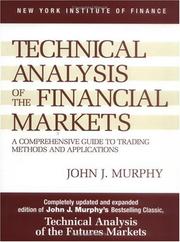
The definitive, canonical reference on chart reading and technical indicators — master these timeless tools first, as every crypto TA concept builds directly on this foundation.

Deepens your understanding of on-chain mechanics and network data, which are unique crypto-native signals (hash rate, mempool, supply schedules) that supplement traditional chart analysis.
Trading Psychology & Risk Management
ExpertDevelop the mental discipline, position-sizing rules, and risk management frameworks needed to survive and profit long-term in one of the most volatile asset classes in the world.
▸ Study plan for this stage
Pace: 8–10 weeks, ~40–50 pages/day with 2–3 reflection days per week. Allocate roughly 3 weeks per book to allow deep engagement with psychological concepts and case studies.
- The trader's mindset: emotional discipline, acceptance of risk, and the distinction between outcome and process (Douglas)
- Probability and expectancy: understanding edge, win rate vs. reward-to-risk ratio, and long-term profitability (Douglas & Lefèvre)
- Position sizing and Kelly Criterion: mathematical frameworks to protect capital and optimize growth (Douglas & Grimes)
- Technical analysis as a tool for entry/exit decisions: chart patterns, support/resistance, and confluence (Grimes)
- Market psychology and crowd behavior: recognizing fear, greed, and herd mentality in price action (Lefèvre & Douglas)
- The cost of trading errors: slippage, overtrading, and emotional decision-making in real markets (Lefèvre)
- Risk-reward ratios and stop-loss discipline: mechanical rules to enforce consistent risk management (Grimes & Douglas)
- Backtesting and simulation: validating edge before risking real capital (Grimes)
- What is the difference between a trader's process and outcome, and why does Douglas argue that focusing on process rather than outcome is essential for long-term success?
- How do you calculate expectancy for a trading strategy, and what does a positive expectancy tell you about your edge?
- Explain the Kelly Criterion and how it applies to position sizing in cryptocurrency trading. What are the risks of over-leveraging?
- What are the key technical analysis tools Grimes emphasizes for identifying high-probability setups, and how do you use confluence to filter trades?
- How does Lefèvre's protagonist (Jesse Livermore) illustrate the dangers of emotional trading and overconfidence? What specific mistakes does he repeat?
- Design a risk management framework for a cryptocurrency trading strategy: define your position size, stop-loss placement, and profit-taking rules based on a 2% risk-per-trade rule.
- Complete the 'Trading in the Zone' workbook exercises: write out your personal trading beliefs, identify emotional triggers that derail your decisions, and define your edge in writing.
- Backtest a simple technical setup (e.g., support/resistance bounce or moving average crossover) on 6–12 months of historical crypto price data using TradingView or similar; document win rate, average win/loss, and expectancy.
- Create a position-sizing spreadsheet: input account size, risk per trade (1–2%), and calculate position sizes for 10 different entry prices on a crypto pair; verify Kelly Criterion calculations.
- Read and annotate the key chapters of 'Reminiscences' (Chapters 1–5, 10–12); extract 5–10 specific trading mistakes Livermore made and map them to modern crypto trading pitfalls.
- Conduct a 2-week paper trading simulation: execute 10–15 trades using your technical setup and risk rules; track emotions in a journal and compare actual performance to your backtest expectations.
- Analyze 3 recent crypto market crashes (e.g., 2022 bear market, FTX collapse, 3AC liquidation): identify crowd psychology patterns from Lefèvre and Douglas, and document how a disciplined trader would have managed risk.
Next up: This stage equips you with the psychological resilience and mechanical risk frameworks to execute trades consistently; the next stage will focus on building and validating specific trading systems and strategies that operationalize these principles into repeatable, profitable setups.
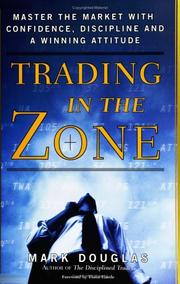
The gold standard book on trading psychology — it dismantles emotional decision-making and teaches probabilistic thinking, which is the single biggest edge a crypto trader can develop.

Bridges rigorous statistical thinking with practical trade management, position sizing, and journaling — turning the TA skills from Stage 3 into a disciplined, repeatable trading system.
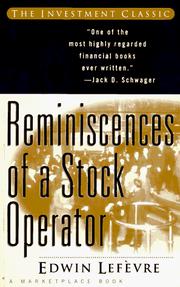
A timeless classic on speculation, crowd psychology, and the emotional traps that destroy traders — its lessons map perfectly onto crypto's extreme volatility and FOMO-driven manias.
Discussion
Keep reading
Paths that share books, cover the same subject, or open a related topic.