Swing trading: an ordered reading list on setups, risk, and discipline
This curriculum is built for intermediate traders who already understand basic market mechanics and want to master swing trading as a complete system. It moves in three tightly sequenced stages: first sharpening your technical reading of price and charts, then layering in the tactical execution skills (entries, exits, position sizing, and risk), and finally hardening the psychological edge that separates consistently profitable swing traders from the rest.
Technical Foundations for Swing Traders
IntermediateBuild a rigorous vocabulary of price action, chart patterns, and trend structure — the visual language every swing trading setup is built on.
▸ Study plan for this stage
Pace: 8–10 weeks, ~40–50 pages/day. Week 1–3: O'Neil (300 pages); Week 4–6: Murphy (600 pages); Week 7–10: Nison (400 pages). Build in 1–2 review days per week.
- CAN SLIM framework (O'Neil): identifying stocks with fundamental and technical strength before they break out
- Support and resistance: how price levels act as psychological barriers and how to identify them on charts
- Trend structure and direction: higher highs/lows in uptrends, lower highs/lows in downtrends, and how to trade with the trend
- Chart patterns (bases, cups-with-handles, flags, triangles): recognizable price formations that precede directional moves
- Volume confirmation: how volume validates price moves and separates real breakouts from false ones
- Candlestick patterns and price action: reading individual candles and multi-candle sequences (engulfing, hammers, dojis) to spot reversals and continuations
- Moving averages and trend lines: mechanical tools to confirm trend direction and entry/exit levels
- Risk management through chart structure: using support/resistance and pattern geometry to set stop losses and position sizing
- What are the five key components of the CAN SLIM framework, and how do you identify each one on a price chart?
- How do you distinguish between true support/resistance and false breakouts, and what role does volume play?
- What is the difference between a base, a cup-with-handle, and a flag pattern, and what does each signal about the next move?
- How do you read a candlestick pattern (e.g., engulfing, hammer, doji) to predict whether price will reverse or continue?
- How do moving averages and trend lines confirm trend direction, and how do you use them to set entry and stop-loss levels?
- Given a real stock chart with price, volume, and candlestick data, can you identify the trend structure, key support/resistance, and a valid swing trade setup?
- Chart annotation exercise (O'Neil): Print 10 charts from O'Neil's examples and manually label support, resistance, bases, and breakout points. Identify which setups fit CAN SLIM criteria.
- Volume confirmation drills (O'Neil + Murphy): Find 5 stocks that broke out on high volume vs. 5 that broke out on low volume. Track which ones followed through over the next 2–4 weeks.
- Trend structure mapping (Murphy): On 15 daily charts, draw trend lines and identify higher highs/lows (uptrend) or lower highs/lows (downtrend). Mark the first sign of trend reversal.
- Candlestick pattern recognition (Nison): Collect 30 real candlestick patterns from historical charts (engulfing, hammer, doji, morning star, evening star). Classify each and note what happened in the next 1–3 candles.
- Moving average alignment exercise (Murphy + Nison): On 20 charts, plot 20-day, 50-day, and 200-day moving averages. Identify when they are in bullish alignment (20 > 50 > 200) and track entry/exit accuracy.
- Live chart pattern identification: Spend 15 minutes daily for 2 weeks scanning 5–10 stocks for emerging bases, flags, or triangles. Screenshot and label them; revisit after 1–2 weeks to see if they broke out as expected.
Next up: This stage equips you with the visual grammar to spot high-probability setups; the next stage will teach you how to size positions, manage risk, and execute entries and exits with discipline and psychology.
O'Neil's CANSLIM framework introduces the core idea of buying technically sound breakouts from proper bases, giving you a disciplined template for what a high-quality swing setup looks like before you study variations.
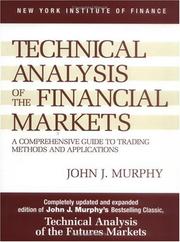
The definitive reference for chart patterns, indicators, and intermarket relationships. Reading this second ensures every pattern and tool you encounter in later books has a rigorous, well-defined foundation.

Swing traders live and die by short-term reversal signals; Nison's canonical text on candlestick patterns gives you the precise entry and exit triggers that complement the broader chart structures from Murphy.
Swing Trading Setups & Tactical Execution
IntermediateLearn specific, repeatable swing trading setups and develop a rules-based process for timing entries, placing stops, and locking in profits.
▸ Study plan for this stage
Pace: 8–10 weeks, ~40–50 pages/day (including note-taking and chart review). Allocate ~3 weeks per book with overlap for comparative study.
- Chart patterns and technical setups that trigger high-probability swing trades (gaps, breakouts, reversals, momentum divergences)
- Entry rules and confirmation signals: how to identify the precise moment to initiate a position based on price action and volume
- Stop-loss placement methodology: using support/resistance, volatility, and risk-per-trade rules to define hard exit points
- Profit-taking strategies: scaling out, trailing stops, and target-based exits aligned with risk-reward ratios
- Position sizing and risk management: calculating shares/contracts based on account size, stop distance, and maximum loss tolerance
- Market context and timeframe selection: choosing swing-appropriate setups and avoiding low-probability conditions
- Trading psychology and discipline: maintaining emotional control during entries, holds, and exits; following rules over impulse
- Backtesting and journaling: validating setups on historical data and recording every trade to refine your process
- What are the 3–4 primary chart patterns or setups Markman and Farley emphasize, and what specific price-action or volume signals confirm each one?
- How do you determine your stop-loss level for a swing trade, and what is the relationship between stop distance and position size?
- Describe a complete entry-to-exit workflow: from identifying a setup, confirming the signal, sizing the position, placing the stop, and executing a profit target.
- What role does risk-reward ratio play in your trade selection, and how do Tharp's concepts of expectancy and system design apply to your setups?
- How do you avoid overtrading or taking low-probability setups, and what market conditions or timeframes should you avoid?
- What information should you record in a trade journal, and how do you use that data to identify which setups are working and which need refinement?
- Chart annotation exercise: Print or screenshot 10 recent price charts (daily or 4-hour timeframe) and mark up every setup you can identify using Markman's and Farley's patterns. Label entries, stops, and profit targets.
- Setup validation backtest: Pick one primary setup (e.g., breakout above resistance with volume confirmation). Manually backtest it on 50+ historical daily charts, recording win rate, average profit, and average loss to calculate expectancy.
- Position sizing calculations: Using Tharp's risk-per-trade framework, calculate position sizes for 10 hypothetical trades with different stop distances and account sizes. Verify that no single loss exceeds your defined risk limit.
- Live trade simulation: Paper-trade (or use a simulator) 15–20 complete swing trades using your chosen setups. Record entry price, stop level, target, exit price, and P&L. Review the journal to identify patterns in your execution.
- Comparative setup analysis: Create a one-page summary for each major setup (Markman's gaps, Farley's swing patterns, etc.), including entry rules, confirmation signals, typical stop placement, and profit target logic.
- Trade journal deep-dive: Review your last 20 recorded trades (real or simulated). Calculate win rate, average winner, average loser, profit factor, and expectancy. Identify the setup(s) with the best edge and the ones to eliminate.
Next up: This stage equips you with a concrete, testable set of swing trading rules and tactics; the next stage will build on this foundation by teaching you how to scale these setups into a robust, psychologically sustainable trading system and how to manage multiple positions and market regimes.
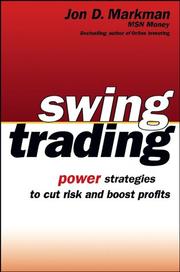
One of the earliest books dedicated entirely to the swing trading style; it bridges general technical knowledge into the specific holding-period logic, scan criteria, and setup selection that define swing trading as a discipline.
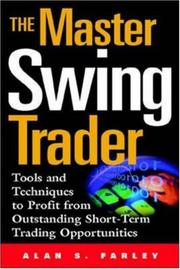
Farley's Pattern Cycles framework is the most comprehensive swing-specific system available in print, covering dozens of setups with precise entry triggers, stop placement, and profit targets — read after Markman to add depth and nuance.
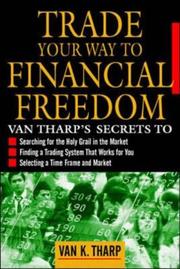
Tharp reframes trading success around system design, expectancy, and position sizing rather than just setups — the perfect capstone to this stage because it shows how to size every swing trade correctly and evaluate whether your edge is real.
Risk Management, Sizing & Trader Psychology
ExpertInternalize professional-grade risk management principles and the psychological discipline required to execute a swing trading system consistently under real market pressure.
▸ Study plan for this stage
Pace: 8–10 weeks, ~25–30 pages/day, with 2–3 days per week dedicated to reflection and psychology exercises
- The Risk/Reward framework: calculating position sizing using the 2% rule and risk-per-trade limits to protect capital across multiple losing trades
- Emotional discipline and the trader's psychology: recognizing fear, greed, and overconfidence as the primary obstacles to consistent execution
- The importance of a written trading plan with predefined entry, exit, and stop-loss rules to remove emotion from decision-making
- Historical lessons from Jesse Livermore's trading career: how psychological mistakes (revenge trading, over-leveraging, ignoring signals) destroyed fortunes
- The concept of 'the zone'—a state of unconscious competence where trading decisions flow naturally without internal conflict or second-guessing
- Belief systems and self-talk: how limiting beliefs about money, risk, and personal capability sabotage trading performance
- Accountability structures: journaling, trade reviews, and performance metrics to maintain objectivity and identify psychological patterns
- The trader's learning curve: accepting small losses as tuition for developing the psychological resilience required for long-term profitability
- How does the 2% risk rule work, and why is it critical for surviving multiple consecutive losing trades?
- What are the three primary emotional states that derail traders, and how did Jesse Livermore's career illustrate each one?
- What is 'the zone' according to Mark Douglas, and what internal conflicts must be resolved to access it consistently?
- How should a trader structure their trading plan to minimize emotional decision-making during live market action?
- What role does self-talk and belief systems play in trading performance, and how can a trader identify and reprogram limiting beliefs?
- Why is trade journaling and post-trade analysis essential for developing psychological discipline, and what should be tracked?
- Calculate your personal risk tolerance: determine your account size, define your 2% risk per trade, and work backward to establish position sizing rules for 5 different trade scenarios from Elder's framework
- Conduct a 'psychological autopsy' of 3 past trades (real or hypothetical): identify the emotional state present at entry, exit, and any deviations from your plan; categorize as fear-based, greed-based, or overconfidence-driven
- Write a detailed trading plan for one swing trade setup, including entry criteria, profit targets, stop-loss placement, and pre-written rules for what to do if the trade moves against you—then practice reading it aloud before entering a trade
- Create a 'Jesse Livermore warning list': extract 5 specific mistakes from Lefèvre's narrative (e.g., revenge trading, ignoring tape signals) and write a personal protocol for each to prevent repeating them
- Daily belief-work exercise: identify one limiting belief about risk, money, or your trading ability; write the belief, its origin, and a counter-statement; repeat the counter-statement for 5 minutes daily for one week
- Maintain a 7-day trade journal with entries for: trade setup, emotional state before entry, plan adherence (yes/no), outcome, and one psychological insight; review patterns at week's end
Next up: This stage equips you with the psychological and risk-management foundation required to execute any swing trading system with discipline; the next stage will focus on technical analysis and market structure, knowing that you now have the mental framework to apply those tools consistently without sabotaging yourself.

Elder's Triple Screen system and his frank treatment of risk (the 2% and 6% rules) give you a battle-tested risk management framework tailored to active traders — start here to anchor the advanced stage in concrete rules.
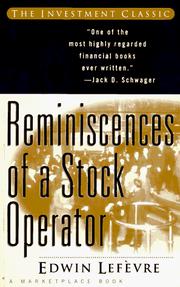
The fictionalized biography of Jesse Livermore remains the richest single source of hard-won wisdom on position sizing, patience, and the psychological traps that destroy traders — its lessons hit differently once you have real setups and rules to apply them to.
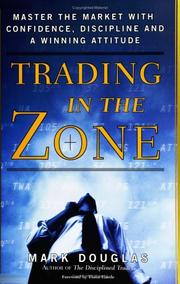
Douglas isolates the exact mental framework — probabilistic thinking, consistency, and detachment from outcome — needed to execute your swing system without fear or overconfidence; the ideal final read because it synthesizes everything into sustainable trader psychology.
Discussion
Keep reading
Paths that share books, cover the same subject, or open a related topic.