Toni Morrison Reading Order: Where to Start
This curriculum moves from Morrison's most accessible novel into her most demanding masterworks, then deepens understanding through her own essays and critical scholarship about her life and art. Because the learner starts at an intermediate level, the path skips introductory hand-holding and instead builds thematic and stylistic fluency stage by stage, so that by the final stage the reader can engage Morrison's ideas as a thinker and theorist, not just a novelist.
The Best Entry Point
IntermediateEstablish an intuitive feel for Morrison's voice, her community-centered storytelling, and her use of myth and folklore — without yet confronting her most formally demanding prose.
▸ Study plan for this stage
Pace: 6–8 weeks total: Weeks 1–4 for Song of Solomon (~25–30 pages/day, reading in named parts), Weeks 5–7 for Sula (~20–25 pages/day, reading by the dated chapter structure), with Week 8 reserved for comparative reflection, re-reading flagged passages, and completing exercises.
- Morrison's oral, lyrical narrative voice — the way her prose mimics the cadence of Black vernacular storytelling and communal speech
- Community as protagonist: how both novels treat the Black neighborhood (Southside/the Bottom) and the extended family/social web as active forces shaping individual characters
- The myth of flight in Song of Solomon: literal and symbolic flight as liberation, escape, inheritance, and loss, anchored in the legend of the flying Africans
- Naming and identity: the political and personal weight of names (Macon Dead, Pilate, Milkman, Sula, Nel) and how Morrison uses naming to encode history and selfhood
- The 'pariah' or outcast figure: Pilate in Song of Solomon and Sula in Sula as women who exist outside social norms and what their marginalization reveals about community values
- Myth, folklore, and the supernatural as realism: Morrison's seamless integration of ghost logic, folk belief, and legend into everyday narrative without framing them as extraordinary
- Female friendship and its limits: the Nel–Sula bond as the emotional spine of Sula, exploring intimacy, betrayal, and the costs of conformity vs. radical selfhood
- The past as a living presence: how ancestral trauma, slavery's aftermath, and generational memory physically inhabit characters' present-day lives in both novels
- In Song of Solomon, what does Milkman's journey south to Shalimar ultimately teach him about his identity, and how does the legend of Solomon reframe his understanding of flight — as gift or abandonment?
- How does Morrison use the character of Pilate in Song of Solomon to embody an alternative model of Black womanhood, and what does her literal lack of a navel signify symbolically?
- In Sula, how does the Bottom function as more than a setting — in what ways does the community itself act as a moral judge, and what are the consequences of that judgment for Sula and Nel?
- Trace the Nel–Sula friendship from childhood to its rupture and Nel's final grief: what does Morrison suggest about the relationship between female selfhood and female friendship?
- Both novels feature acts of shocking violence (Hagar's obsession and death, Chicken Little's drowning, Eva's burning of Plum). How does Morrison present these moments — with what narrative tone — and what do they reveal about love, power, and desperation?
- How do naming conventions in Song of Solomon (the Dead family names, street names like 'Not Doctor Street') function as a form of resistance to, or internalization of, historical erasure?
- Voice journaling: After each major section of Song of Solomon and each dated chapter of Sula, write one paragraph in Morrison's style — use second-person or communal 'we,' incorporate a piece of folk wisdom or local legend, and let a sentence run long before snapping short. Compare your attempts across both books to feel how her voice shifts register.
- Character web mapping: Draw a physical diagram of the community networks in each novel separately. Place the community at the center, then map each character's relationship to it (insider, outcast, mediator, destroyer). Annotate with specific scenes. Then overlay the two maps: what structural similarities do you notice in how Morrison builds her worlds?
- Name archaeology: Make a two-column list of every significant name in both novels. Research or reason through the etymology, irony, or historical resonance of each (e.g., 'Macon Dead,' 'Pilate,' 'Sula,' 'Nel,' 'Shalimar'). Write two to three sentences per name on what Morrison seems to be doing with it.
- Flight and freedom close reading: Identify every passage in Song of Solomon that references flight — literal birds, the Solomon legend, Milkman running, Guitar's ideology. Annotate each: Is flight presented as freedom, tragedy, or both? Write a one-page synthesis arguing for Morrison's ultimate stance on what flight costs the people left behind.
- Comparative character essay (500–700 words): Write an informal essay pairing Pilate (Song of Solomon) with Sula as two versions of the Morrison 'outcast woman.' How are they alike in their freedom? How do their communities' responses differ, and why? What does each woman's fate suggest about the price of living outside the social contract?
- Re-read the final pages of each novel back to back — Milkman's leap toward Guitar and Nel's cry of 'girl, girl, girlgirlgirl' in the cemetery. Sit with both endings for 20 minutes without notes, then free-write for 10 minutes on what emotion Morrison leaves you holding and how she achieves that effect through sentence-level craft.
Next up: Mastering Morrison's communal voice and mythic realism in these two relatively accessible novels builds the interpretive confidence and stylistic attunement needed to navigate the fractured chronology, stream-of-consciousness interiority, and trauma-saturated language of her more formally demanding works ahead.
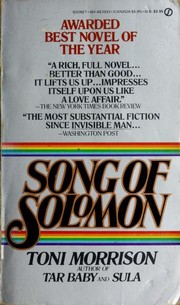
Widely considered the ideal entry novel: it has a propulsive plot, a male protagonist whose journey is easy to follow, and it introduces Morrison's core themes — Black identity, ancestry, flight, and myth — in her most accessible register. Winning the National Book Critics Circle Award on publication, it remains her most celebrated 'readable' work.
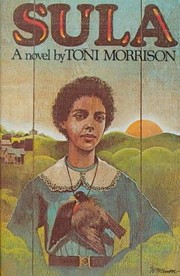
Short and perfectly constructed, Sula deepens the reader's grasp of Morrison's treatment of female friendship, community judgment, and moral ambiguity. Reading it second trains the eye to notice how Morrison withholds and rearranges time — essential preparation for Beloved.
The Masterwork
IntermediateRead and fully reckon with Beloved — Morrison's most celebrated and emotionally demanding novel — and then encounter the companion work that extends its meditation on memory and the body.
▸ Study plan for this stage
Pace: 8–10 weeks total: Weeks 1–6 for Beloved (~20–25 pages/day, allowing deliberate pauses after traumatic passages), and Weeks 7–10 for Jazz (~15–20 pages/day, reading slowly to track the narrator's voice shifts and musical structure).
- Rememory (Beloved): Morrison's coined concept of memory as a physical, place-bound presence that exists independently of the person who experienced it — trauma that outlasts the individual and can be 'bumped into' by others
- The Middle Passage and embodied trauma: How the legacy of the slave ship lives inside characters' bodies, language, and relationships in Beloved, particularly in Sethe's 'tree' scar and Beloved's stream-of-consciousness monologue
- Motherhood under slavery: The radical and devastating logic of Sethe's act — infanticide as an act of protection — and how Morrison refuses to let the reader judge from a safe moral distance
- The haunted house as psychological landscape: 124 Bluestone Road as an externalization of collective and personal grief, and how Morrison uses the Gothic tradition to tell a story American realism cannot hold
- Jazz's narrator as unreliable musical instrument: The novel's unnamed narrator who openly admits to misreading characters, mimicking the improvisational and self-correcting nature of jazz music itself
- The Great Migration and urban desire: How Jazz maps the psychological dislocation of Black Southerners arriving in 1920s Harlem — the city as seduction, promise, and danger
- Call-and-response structure: The way both novels 'answer' each other thematically — Beloved is rooted in the rural South and the past's grip on the body; Jazz is rooted in the urban North and the present's grip on desire
- Fragmented and lyrical prose as form-meaning unity: How Morrison's non-linear, poetic sentence structures in both novels are not stylistic ornament but the only honest form for depicting shattered consciousness and improvised survival
- In Beloved, what does Morrison mean by 'rememory,' and how does the novel demonstrate that rememory is not merely personal but communal and environmental? Use at least two specific scenes to support your answer.
- How does Morrison use Beloved's fragmented, unpunctuated interior monologue (the 'stream-of-consciousness' section) to represent the experience of the Middle Passage? What does this formal choice accomplish that a conventional narrative could not?
- What is the moral and emotional argument Morrison is making through Sethe's act of infanticide? How does the novel position the reader so that simple condemnation becomes impossible?
- In Jazz, the narrator confesses to having misunderstood the characters and misjudged the ending. What does this narrative self-correction reveal about Morrison's view of storytelling, truth, and the nature of jazz improvisation?
- How do Violet and Joe Trace's individual histories of abandonment and loss in Jazz fuel the novel's central act of violence? In what ways does the city of Harlem function as both a catalyst and a mirror for their desires?
- Taken together, how do Beloved and Jazz form a meditation on the Black body — one focused on the body as a site of historical trauma and ownership, the other on the body as a site of desire and self-invention? Where do the two novels most powerfully speak to each other?
- 'Rememory Mapping' for Beloved: Draw a physical map of 124 Bluestone Road and its surroundings. Annotate each location with the memory or trauma it holds for Sethe, Denver, and Paul D. Then write a one-paragraph reflection: how does place itself become a character in the novel?
- Close-reading the body: Select three passages across both novels where a character's body carries historical or emotional weight (e.g., Sethe's back, Beloved's smooth skin, Violet's parrot, Joe's 'trace'). Write a 300-word analysis of each, focusing on how Morrison's word-level choices make the body speak.
- Translate Beloved's stream-of-consciousness section: Re-read Beloved's unpunctuated interior monologue and write a one-page 'translation' of it into conventional prose. Then write a second paragraph explaining what is irretrievably lost in your translation — this gap is the argument for Morrison's form.
- Jazz listening exercise: Before or during your reading of Jazz, listen to three recordings — a Louis Armstrong improvisation, a Billie Holiday vocal, and a Duke Ellington composition from the 1920s. Keep a reading journal noting every moment in the novel where the prose rhythm, structure, or narrator behavior mirrors something you heard in the music.
- Dialogue across novels: Write a 400–500 word imagined dialogue between Sethe (Beloved) and Violet Trace (Jazz). What would these two women, both defined by an act of violence against another woman or girl, say to each other about grief, guilt, and survival? Ground every line in the text.
- Moral pressure test: Write a one-page personal response to the question Morrison herself posed about Beloved: 'What does a woman do when she has no choices?' Argue a position, then steelman the opposite view using evidence from the novel. The goal is not resolution but the ability to hold the tension Morrison demands.
Next up: Beloved and Jazz have built the reader's capacity to sit inside Morrison's most demanding formal and emotional registers — fragmented time, unreliable narration, and trauma encoded in the body — which directly prepares them to engage with her later, more expansive works where these same tools are applied to new historical and philosophical terrain.

The undisputed center of any Morrison curriculum. Having already absorbed her narrative rhythms in Stage 1, the reader is now equipped to follow its fragmented, nonlinear structure and to sit with its unbearable subject matter — the psychic aftermath of slavery — without being lost.
The second novel in Morrison's loosely linked 'Trilogy,' Jazz pushes her formal experimentation further with a narrator who is the novel itself. Reading it directly after Beloved shows how Morrison extends her exploration of trauma, desire, and memory into the Harlem Renaissance era.
The Full Range of Her Fiction
ExpertEncounter Morrison's most formally and philosophically ambitious novels, completing a picture of her entire fictional project — from the origins of racial self-hatred to the legacy of the slave trade.
▸ Study plan for this stage
Pace: 8–10 weeks total: Week 1–3 — The Bluest Eye (~30 pages/day, including re-reading the prologue/epilogue); Week 4–7 — Paradise (~25 pages/day, given its dense, multi-voiced structure); Week 8–10 — A Mercy (~20 pages/day, with close attention to each narrator's distinct voice and syntax).
- Internalized racism and the destruction of Black self-worth: The Bluest Eye traces how white beauty standards are absorbed and weaponized within a Black community, culminating in Pecola's psychic annihilation.
- The male gaze and patriarchal violence as instruments of racial oppression: Cholly Breedlove and the men of Ruby, Oklahoma demonstrate how Black male trauma is displaced onto Black women and girls.
- Utopia, insularity, and the violence of purity: Paradise interrogates how the all-Black town of Ruby constructs its own exclusionary mythology, mirroring the very white supremacist logic it sought to escape.
- Polyphony and narrative fragmentation as political form: Both Paradise (with its rotating, unnamed female perspectives) and A Mercy (with its mosaic of indentured, enslaved, and free voices) use formal fragmentation to resist a single authoritative truth.
- The prehistory of American racial capitalism: A Mercy reaches back to the late 17th century to show slavery's formation as an economic and legal system before it became fully racialized, revealing race as a constructed category rather than a natural one.
- Motherhood, abandonment, and the impossible ethics of survival: Florens's mother's act of surrender in A Mercy echoes Sethe's act in Beloved — both are acts of love legible only through the full weight of historical context.
- Memory, myth, and the unreliable community narrative: Ruby's founding story in Paradise and the fragmented testimonies in A Mercy both show how communities construct self-serving myths that suppress inconvenient truths.
- Morrison's complete fictional arc — from racial self-hatred (The Bluest Eye) through communal self-destruction (Paradise) to the very origins of the slave system (A Mercy) — as a unified philosophical project about freedom, identity, and survival.
- In The Bluest Eye, how does Morrison use the Dick-and-Jane primer as a structural and thematic device, and what does its progressive deterioration enact on the page?
- Paradise opens with the line 'They shoot the white girl first' — how does Morrison use the deliberate withholding of racial identity throughout the novel to implicate the reader in the very act of racial categorization she is critiquing?
- How does the founding mythology of Ruby, Oklahoma in Paradise replicate the exclusionary and violent logic of white American settler colonialism, despite being created by Black men fleeing that same violence?
- In A Mercy, how does Morrison use the novel's 17th-century setting to argue that slavery was an economic institution that only later became a fully racialized one — and what are the implications of that argument?
- Compare the acts of maternal 'surrender' in The Bluest Eye (Mrs. Breedlove's abandonment of Pecola) and A Mercy (Florens's mother's act of giving her daughter away) — how does Morrison frame each act, and what does the difference in framing reveal?
- Across all three novels, how does Morrison deploy narrative voice and point of view as a formal argument — what does the choice of who speaks, who is silenced, and whose interiority we access say about power?
- Close-reading journal: For each novel, select one passage of no more than one page that you consider the formal and thematic heart of the book. Write 400–600 words analyzing how Morrison's sentence-level choices (syntax, diction, rhythm, imagery) enact the novel's central argument.
- Structural mapping: Create a chapter-by-chapter diagram of Paradise, tracking which woman at the Convent each chapter focuses on and which Ruby resident's perspective dominates. Then write a one-page reflection: what does the novel's architecture reveal about whose story is centered and whose is marginalized?
- Comparative essay (1,000–1,500 words): Trace the theme of 'the gaze' — who looks, who is looked at, and with what consequences — across all three novels. Use specific scenes: Pecola's desire to be seen differently in The Bluest Eye, the male elders' surveillance of the Convent women in Paradise, and the blacksmith's consuming gaze on Florens in A Mercy.
- Historical context research: Read a short secondary source on the 1676 Bacon's Rebellion and its role in the legal codification of racial slavery in colonial Virginia. Then re-read the final 20 pages of A Mercy and write a one-page reflection on how this history reframes Florens's mother's final monologue.
- Voice imitation exercise: Choose one minor or silenced character from any of the three novels (e.g., Sammy Breedlove, Steward Morgan's wife Dovey, or Lina in A Mercy) and write a 300–500 word interior monologue in Morrison's style — paying close attention to syntax, free indirect discourse, and the character's specific historical and social position.
- Synthesis discussion or essay: Write a 500-word response to this prompt — 'Morrison has said that her work is always about how Black people survive in a world that does not love them. How do The Bluest Eye, Paradise, and A Mercy each answer that question differently, and what does the progression across the three novels suggest about Morrison's evolving vision?'
Next up: Completing these three novels — which span from the psychic wounds of internalized racism to the legal and economic origins of the slave trade — equips the reader with Morrison's full fictional vocabulary and historical vision, providing the critical foundation needed to engage with her essays, interviews, and non-fiction (such as The Source of Self-Regard) as a unified theoretical framework that

Morrison's debut is read here rather than first because its unflinching portrayal of internalized racism and its fractured narrative structure are best appreciated once the reader has Morrison's mature voice in their ear — it reads as a devastating origin statement for everything that follows.

The final volume of the Trilogy, Paradise is Morrison's most structurally complex and politically ambitious novel, interrogating Black patriarchy, utopia, and violence. It rewards readers who have already spent time in her symbolic universe.
Set in 17th-century colonial America before race was fully codified, A Mercy is a concentrated, lyrical masterpiece that recontextualizes everything the reader has learned about slavery and identity in Morrison's work — a powerful capstone to her fiction.
Morrison as Thinker and Critic
ExpertRead Morrison in her own critical and essayistic voice, understanding the intellectual framework behind her fiction and her foundational contribution to American literary criticism.
▸ Study plan for this stage
Pace: 6–8 weeks total: Weeks 1–2 for "Playing in the Dark" (~30 pages/day, including re-reading dense passages); Weeks 3–7 for "The Source of Self-Regard" (~20–25 pages/day, given its breadth across essays, eulogies, and lectures); Week 8 reserved for synthesis, review, and completing exercises.
- The 'Africanist presence' — Morrison's term for the coded, often unacknowledged Black presence that haunts and shapes the American literary imagination
- Literary whiteness as a construction — how canonical American authors defined 'freedom' and 'individualism' against an enslaved Black 'other'
- Critical 'willful critical blindness' — Morrison's diagnosis of how scholars have historically ignored race in American literature
- The distinction between 'racism' as a social fact and 'Africanism' as a literary and rhetorical device deployed by white authors
- Morrison's aesthetic philosophy — her belief that Black art must be simultaneously political, beautiful, functional, and healing for its community
- The role of memory, history, and ancestor figures in Black literary and cultural production, as theorized across her essays in 'The Source of Self-Regard'
- Morrison's conception of the writer's social responsibility — literature as a civic and moral act, not merely an aesthetic one
- The relationship between Morrison's critical framework and her own fiction — how her essays illuminate the choices she made as a novelist
- In 'Playing in the Dark,' what does Morrison mean by the 'Africanist presence,' and how does she argue it has been systematically ignored by American literary criticism?
- How does Morrison use close readings of Poe, Hemingway, Cather, and others in 'Playing in the Dark' to demonstrate that American literary identity was constructed in relation to Blackness?
- Across the essays and lectures in 'The Source of Self-Regard,' what consistent vision of the writer's social and moral responsibility does Morrison articulate?
- How does Morrison's critical voice in these two books reframe or deepen your understanding of the themes in her novels (e.g., memory, community, the ancestor)?
- What does Morrison argue about the relationship between racism, language, and narrative power — and why does she insist that literary criticism must engage with race?
- How do the eulogies and tributes in 'The Source of Self-Regard' extend Morrison's critical ideas into the realm of lived community and cultural loss?
- Close-reading annotation: Select one chapter from 'Playing in the Dark' and annotate every instance where Morrison makes a claim about a canonical white author. For each claim, write two sentences: one summarizing her argument, one evaluating its evidence.
- Concept mapping: After finishing 'Playing in the Dark,' draw a diagram connecting 'Africanist presence,' 'literary whiteness,' 'freedom,' 'individualism,' and 'fear' — using Morrison's own language and page references to label each connection.
- Comparative essay (500–700 words): Choose one Morrison novel you have previously read and write a short essay arguing how 'Playing in the Dark' serves as a critical key to unlocking a specific theme or character in that novel.
- Thematic index for 'The Source of Self-Regard': As you read, keep a running log organized by theme (e.g., 'the ancestor,' 'language and power,' 'the writer's duty,' 'grief and community'). Note the essay title, page number, and a one-sentence summary for each entry. Review the log at the end to identify Morrison's most persistent preoccupations.
- Rhetorical analysis: Select one eulogy or tribute from 'The Source of Self-Regard' and write a one-page analysis of how Morrison uses the occasion of mourning to advance a broader intellectual or political argument.
- Synthesis reflection (1 page): After completing both books, write a personal reflection answering: 'How does reading Morrison as a critic change the way I will read her — or any American author — as a novelist?'
Next up: By internalizing Morrison's own critical vocabulary and aesthetic philosophy from these two books, the reader is now equipped to return to her fiction with a far more sophisticated analytical lens — ready to engage with her novels not just as stories, but as deliberate intellectual and political acts.
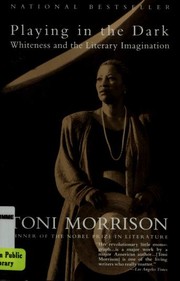
Morrison's landmark work of literary criticism argues that the 'Africanist presence' is central — not peripheral — to the American literary imagination. After reading her novels, this short book reframes the entire Western canon and reveals the theoretical engine driving her own fiction.

A rich collection of Morrison's essays, speeches, and meditations spanning decades, covering race, art, memory, and the role of the writer. It is the fullest picture of her as a public intellectual and is best read last, when the reader can recognize the ideas alive in the novels.
Discussion
Keep reading
Paths that share books, cover the same subject, or open a related topic.