African American Literature: The Best Books to Read, in Order
This curriculum traces African American literature from its earliest documented voices through the Harlem Renaissance, the mid-century giants, and into contemporary Black classics — each stage building the historical, cultural, and stylistic context needed to fully appreciate the next. Starting at an intermediate level, readers will move from the raw testimony of slavery, through the flowering of Black artistic identity, to the dense, visionary prose of Morrison and the urgent essays of Baldwin, and finally to the modern writers who carry that tradition forward.
The Founding Voices: Slave Narratives & Early Protest
IntermediateUnderstand the origins of African American literature as an act of witness and resistance, and absorb the rhetorical and moral frameworks that every later writer inherits.
▸ Study plan for this stage
Pace: 4–5 weeks, approximately 40–50 pages per day. Week 1–2: Douglass's Narrative (~165 pages); Week 2–3: Jacobs's Incidents (~300 pages, slower pace for density); Week 3–4: Du Bois's Souls of Black Folk (~200 pages); Week 5: Review and synthesis.
- Slave narratives as deliberate rhetorical acts: using literacy, logic, and moral argument to assert humanity and demand freedom
- The strategic deployment of Christian theology and Enlightenment ideals to indict slavery and American hypocrisy
- Gender, sexuality, and vulnerability in resistance: how Jacobs's narrative expands the slave narrative genre to address women's specific vulnerabilities
- The concept of double consciousness: Du Bois's framework for understanding the fractured identity of Black Americans navigating a society that denies their full humanity
- Witness and testimony as literary power: how these writers transform personal experience into evidence that slavery is a moral and social catastrophe
- The intellectual and spiritual foundations of African American thought: how these early voices establish the philosophical vocabulary later writers inherit
- The shift from abolitionist-era rhetoric to post-Reconstruction analysis: moving from immediate emancipation arguments to systemic critique of American racism
- How does Douglass use the act of learning to read as both a literal and symbolic assertion of humanity? What does his narrative suggest about the relationship between literacy and freedom?
- How does Jacobs's Incidents expand or challenge the conventions of the slave narrative genre established by male writers like Douglass? What unique rhetorical strategies does she employ?
- What is Du Bois's concept of double consciousness, and how does it build on or depart from the frameworks presented in Douglass and Jacobs?
- How do these three writers use Christian theology and American founding ideals (liberty, equality, natural rights) as weapons against slavery and racism?
- What is the relationship between personal testimony and political argument in these texts? How do the authors move from 'I suffered' to 'America is guilty'?
- How does the historical moment of each text (Douglass in 1845, Jacobs in 1861, Du Bois in 1903) shape its rhetorical approach and concerns?
- Close-read a passage from Douglass where he describes learning to read (e.g., the Baltimore section) and annotate the rhetorical techniques he uses—parallelism, irony, appeals to reason. Write a one-page analysis of how form reinforces meaning.
- Compare Douglass's and Jacobs's treatments of violence and bodily autonomy. Create a two-column chart identifying how each writer addresses trauma differently, then write a short reflection on what these differences reveal about gender and genre.
- Select one chapter from Du Bois's Souls of Black Folk and identify where he references or echoes arguments from Douglass or Jacobs (directly or thematically). Write a 500-word essay on how Du Bois synthesizes earlier voices.
- Write a short sermon or speech (300–400 words) in the voice of one of these three authors, addressing a contemporary audience. Ground it in their actual arguments and rhetoric from the text.
- Create a timeline or concept map showing how the three texts build on each other: What problems does Douglass identify? What does Jacobs add? What framework does Du Bois provide for understanding the whole arc?
- Identify three moments where each author directly addresses the American reader or nation. Analyze the tone and strategy of each appeal. What assumptions does each writer make about their audience's capacity for moral change?
Next up: These foundational texts establish the rhetorical, moral, and intellectual tools—witness, double consciousness, the marriage of personal narrative to social critique—that every subsequent African American writer inherits and transforms, preparing you to recognize how later voices engage, challenge, or build upon these originary frameworks.
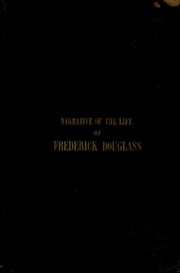
The single most important slave narrative — its clarity, fury, and rhetorical brilliance set the template for Black American self-assertion in writing. Reading it first gives you the moral and political bedrock the entire tradition builds on.

Jacobs adds the indispensable dimension of Black womanhood to the narrative tradition, confronting sexual violence and agency that Douglass could not speak to. It deepens and complicates the picture established by Douglass.
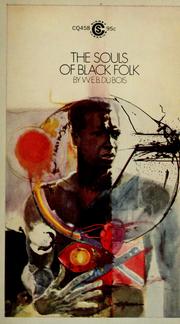
Du Bois introduces the concept of 'double consciousness' and the 'color line' — the theoretical vocabulary that virtually every subsequent African American writer thinks with or against. This is the essential bridge from the 19th to the 20th century.
The Harlem Renaissance: Art, Identity & the New Negro
IntermediateExperience the explosion of Black artistic and intellectual identity in the 1920s–30s, and see how literature became a site of cultural pride, debate, and self-definition.
▸ Study plan for this stage
Pace: 8–10 weeks, ~40–50 pages/day. Allocate 4–5 weeks for *Their Eyes Were Watching God* (~200 pages), then 4–5 weeks for *Native Son* (~390 pages), with 1–2 weeks for synthesis and reflection.
- The reclamation of Black vernacular and oral tradition as literary art: how Hurston's use of dialect and folk speech in *Their Eyes Were Watching God* elevates African American language as a vehicle for self-expression and cultural identity
- Female agency and self-discovery in the context of race and gender: Janie's journey toward autonomy and voice as a model of Black female subjectivity during the Harlem Renaissance
- Naturalism and social determinism in *Native Son*: how Wright uses Bigger Thomas to expose the systemic racism, economic oppression, and psychological violence that constrain Black life in America
- The debate over representation and the 'New Negro': tension between celebrating Black culture and confronting brutal social realities—Hurston's lyrical affirmation versus Wright's unflinching critique
- The role of consciousness and interiority: both novels explore how their protagonists think, desire, and resist within oppressive structures
- Chicago as a character: the urban landscape in *Native Son* as a symbol of both possibility and entrapment for Black migrants
- Sexuality, desire, and power: how both novels use intimate relationships to explore identity, autonomy, and the impact of systemic racism on personal life
- How does Hurston's use of African American vernacular and folk speech in *Their Eyes Were Watching God* function as a form of cultural affirmation, and what does this choice suggest about her vision of Black identity?
- Trace Janie's journey toward self-discovery and voice throughout *Their Eyes Were Watching God*. What does her final position represent in terms of female agency and autonomy?
- How does Wright use Bigger Thomas's consciousness and interior life in *Native Son* to expose the psychological and social effects of racism and economic oppression?
- Compare the two novels' approaches to representing Black life: what are the key differences between Hurston's lyrical, folk-centered narrative and Wright's naturalistic, urban critique?
- What role does the city of Chicago play in *Native Son*, and how does it function as more than just a setting?
- How do both novels engage with questions of desire, sexuality, and power, and what do their treatments of intimate relationships reveal about Black identity under systemic oppression?
- Close-read 3–4 passages from *Their Eyes Were Watching God* that showcase Hurston's use of dialect and vernacular. Annotate them for tone, rhythm, and cultural specificity. Write a 1-page reflection on how the language itself becomes a form of resistance and affirmation.
- Create a character map tracking Janie's relationships (Nanny, Logan, Joe, Tea Cake) and how each shapes her understanding of self, love, and independence. Note the turning points in her consciousness.
- Write a comparative essay (4–5 pages) analyzing how Hurston and Wright each represent Black interiority and consciousness. Use specific scenes from both novels.
- Conduct a close reading of Bigger's first encounter with the white world in *Native Son* (the job interview, the Dalton household). Annotate for his internal thoughts, fears, and reactions. Write a 2-page analysis of how Wright conveys the psychological toll of racism.
- Create a visual or written map of Chicago in *Native Son*: identify key locations (the South Side, the Dalton house, the jail) and what each represents symbolically. Write brief notes on how geography shapes Bigger's options and fate.
- Debate or dialogue exercise: write a fictional conversation between Hurston and Wright about the best way to represent Black life and identity in literature. Ground it in specific scenes and choices from both novels.
Next up: This stage establishes the foundational tension between celebration and critique, lyricism and realism, that will shape subsequent movements in African American literature, preparing you to explore how later writers build on, challenge, or synthesize these competing visions of Black identity and resistance.

Hurston's masterpiece is the Harlem Renaissance's greatest novel — lyrical, grounded in Black folk culture, and centered on a Black woman's inner life. Its vernacular voice is a revelation after the formal rhetoric of the earlier stage.

Wright's brutal, naturalistic counterpoint to Hurston shows the rage and claustrophobia of Northern urban Black life. Reading it directly after Hurston illuminates the great debate at the heart of the tradition: beauty and interiority vs. protest and social indictment.
Baldwin & the Mid-Century Reckoning
IntermediateEngage with James Baldwin's searing synthesis of personal essay and fiction, which fuses the protest tradition with psychological depth and becomes the moral conscience of 20th-century America.
Baldwin's first essay collection is the perfect entry point — it directly responds to Wright (whose title he echoes) while establishing his own more intimate, confessional, and morally complex voice. Read the essays before the novels to hear his argument in its purest form.
Baldwin's debut novel translates the autobiographical and spiritual tensions of the essays into fiction, weaving together the Great Migration, the Black church, and a young man's coming-of-age. It rewards readers who already know his essayistic voice.

Baldwin's most urgent and prophetic work — a letter to his nephew and a meditation on race, religion, and America's future. After the novel, this short book lands with tremendous force and rounds out his essential vision.
Toni Morrison & the Novel as Epic
ExpertGrapple with Morrison's reinvention of the novel form — mythic, non-linear, rooted in Black oral tradition — and understand how she transforms the slave narrative into high literary art.
▸ Study plan for this stage
Pace: 8–10 weeks, ~40–50 pages/day (with close reading and annotation sessions)
- Morrison's use of non-linear, fragmented narrative structure to mirror trauma and memory rather than chronological progression
- The transformation of the slave narrative genre into lyrical, mythic high literature through poetic language and magical realism
- Internalized racism and the destructive impact of white beauty standards on Black identity (The Bluest Eye)
- The haunting of the present by the past: how slavery's trauma persists through supernatural and psychological manifestations (Beloved)
- Oral tradition, call-and-response, and communal storytelling as structural and thematic foundations
- The reclamation of Black female bodies and subjectivity as sites of resistance and agency
- Morrison's use of mythic and archetypal figures to elevate Black experience to epic proportions
- How does Morrison's non-linear narrative structure in both novels function as a formal response to the experience of trauma and fragmented memory?
- In what ways does The Bluest Eye critique and deconstruct the slave narrative tradition, and how does Beloved extend or transform this critique?
- How do Pecola Breedlove and Sethe represent different manifestations of internalized oppression, and what does Morrison suggest about Black female agency in each case?
- What is the role of the supernatural and magical realism in Beloved, and how does it serve Morrison's larger project of transforming the slave narrative into myth?
- How does Morrison employ oral tradition, dialect, and poetic language to create a distinctly Black literary aesthetic in these novels?
- What do Beloved and The Bluest Eye reveal about the relationship between individual trauma and collective historical trauma in the Black American experience?
- Create a timeline of events for The Bluest Eye and Beloved separately, then compare how Morrison deliberately fragments chronology in each—annotate which scenes are presented out of order and theorize why
- Perform a close reading of 2–3 passages from each novel that exemplify Morrison's poetic/lyrical style; analyze her use of metaphor, repetition, and sensory imagery to elevate Black experience
- Trace the figure of the mother across both novels (Pauline/Sethe); write a comparative character study examining how motherhood is constructed, threatened, and reclaimed
- Identify and analyze moments of oral tradition, call-and-response, or communal voice in both texts; record yourself reading these passages aloud to hear the rhythmic/musical qualities
- Create a visual map of how the past intrudes on the present in Beloved (e.g., Beloved's arrival, Sethe's memories); annotate which scenes blur temporal boundaries and discuss the effect
- Write a 3–4 page essay comparing how The Bluest Eye and Beloved each transform the slave narrative genre—what elements do they retain, what do they reject, and what new forms do they create?
Next up: This stage establishes Morrison's revolutionary formal innovations and thematic preoccupations—non-linearity, trauma, oral tradition, and Black female subjectivity—providing the critical vocabulary and analytical tools needed to engage with her later, increasingly experimental novels and to understand her influence on contemporary African American literature.

Morrison's first novel is the most accessible entry into her world — shorter, more linear, and a devastating study of internalized racism. It establishes her themes and her refusal to comfort the reader before you encounter her more demanding work.

Widely considered the greatest American novel of the 20th century, Beloved returns to the slave narrative — the tradition begun with Douglass — and explodes it into myth, trauma, and ghost story. Everything read before this moment prepares you for its full weight.
Modern Black Classics: The Living Tradition
ExpertSee how contemporary writers inherit, challenge, and extend the tradition — addressing mass incarceration, identity, and the ongoing reckoning with race in 21st-century America.
▸ Study plan for this stage
Pace: 8–10 weeks, ~40–50 pages/day (alternating between deep reading and reflection passages)
- The body as a site of vulnerability and racialized violence in America — Coates's meditation on physical existence under systemic threat
- Intergenerational trauma and inherited memory — how Gyasi traces the ripple effects of slavery and colonialism across centuries and continents
- The relationship between personal narrative and historical reckoning — using intimate voice to confront collective injustice
- Geography and diaspora as frameworks for understanding Black identity — Coates's focus on America versus Gyasi's Ghana-to-America trajectory
- The limits and possibilities of individual agency within structural oppression — how both authors explore choice, complicity, and resistance
- Contemporary mass incarceration and policing as extensions of historical racial control — Coates's direct engagement with 21st-century carceral systems
- The role of love and family bonds as acts of resistance and survival across time
- How literary form itself (essay vs. multigenerational narrative) shapes the transmission of Black consciousness and historical knowledge
- How does Coates use the metaphor of 'the body' to explain the experience of being Black in America, and what specific threats does he identify as targeting Black bodies?
- In *Homegoing*, how do the parallel narratives of Effia and Esi establish the long durée of slavery and colonialism, and what does Gyasi suggest about the interconnectedness of African and African American histories?
- What does Coates mean by 'the Dream,' and how does his critique of American mythology differ from how *Homegoing* portrays the seduction of colonial and capitalist systems?
- How do both Coates and Gyasi use intimate, familial relationships (Coates's letter to his son; Gyasi's focus on mothers, daughters, and siblings) to explore larger historical and political questions?
- What role does geography play in each text — how do Coates's reflections on American cities and Gyasi's movement between Ghana and America shape their arguments about Black identity and belonging?
- How do both authors grapple with complicity and moral ambiguity — are there moments where characters or narrators acknowledge their own entanglement in systems of harm?
- Close-read 3–4 key passages from *Between the World and Me* (e.g., the opening meditation on the body, the section on the 'Dream,' the reflection on his son) and annotate how Coates uses sensory language and direct address to create urgency
- Create a family tree or timeline for *Homegoing* tracking Effia and Esi's descendants across generations and continents; note how trauma, migration, and circumstance shape each character's choices and outcomes
- Write a 2–3 page personal essay responding to Coates's letter to his son — what would you want to tell a young person about navigating identity, safety, and hope in the world as you understand it?
- Compare two characters from *Homegoing* (e.g., Esi and her descendants vs. Effia and hers) and analyze how their different starting points (enslaved vs. complicit in slavery) create divergent moral and material legacies
- Research one contemporary case of police violence or mass incarceration and write a 2–3 page analysis connecting it to Coates's arguments in *Between the World and Me* — how does his framework illuminate the case?
- Create a dialogue or debate between Coates and one character from *Homegoing* (e.g., between Coates's pessimism about American change and a character's hope or resignation) exploring their different historical perspectives
Next up: This stage establishes how contemporary Black writers inherit and critique the tradition while directly engaging 21st-century crises; the next stage will likely deepen engagement with experimental forms, intersectional identities (gender, sexuality, disability), and emerging voices that push the boundaries of what Black literature can address and how.

Written as a letter to his son — a direct echo of Baldwin's The Fire Next Time — Coates is the most explicit link between the tradition and the present moment. Reading it last shows how the entire curriculum lives in contemporary Black writing.
Gyasi's multigenerational saga traces a Ghanaian family from the slave trade to modern America, bringing the African origins of the diaspora into the conversation and expanding the tradition's geographic and temporal scope.
Discussion
Keep reading
Paths that share books, cover the same subject, or open a related topic.