Ernest Hemingway Reading Order: Where to Start
This curriculum moves through Hemingway's work in the order that best builds your ear for his style: start with the short stories where his "iceberg theory" prose is most concentrated, then progress through the novels chronologically to watch his themes and ambitions deepen, and finally turn to the nonfiction to understand the real-life experiences that fed everything else. Each stage assumes familiarity with the previous one, so the spare, suggestive power of the late novels lands with full force.
Foundations: The Short Stories
BeginnerDevelop an ear for Hemingway's stripped-down prose, subtext-heavy dialogue, and the 'iceberg theory' — where what is left unsaid carries the most weight.
▸ Study plan for this stage
Pace: 6–8 weeks total: Weeks 1–4 cover "The Nick Adams Stories" (~15–20 pages/day, reading 1–2 stories per sitting and pausing to reflect before moving on); Weeks 5–8 cover "The Snows of Kilimanjaro and Other Stories" (~12–18 pages/day, with slower, more analytical re-reads of key stories like "The Snows
- The Iceberg Theory (Theory of Omission): Hemingway deliberately withholds backstory, emotion, and motivation, trusting the reader to feel the submerged weight beneath the surface — best observed in Nick Adams stories like 'Big Two-Hearted River' where trauma is never named.
- Stripped-down prose style: Short declarative sentences, minimal adjectives, heavy reliance on concrete nouns and active verbs — study how Hemingway's syntax itself creates tension and forward momentum.
- Subtext-heavy dialogue: Characters rarely say what they mean; meaning lives in pauses, deflections, and repetition — 'Hills Like White Elephants' (in Snows collection) is the masterclass example.
- The 'Hemingway hero' (the Code Hero): A protagonist — often Nick Adams — who faces pain, danger, or loss with stoic grace, finding ritual and discipline (fishing, hunting, craft) as a coping mechanism.
- Wound and initiation: Nick Adams stories trace a young man's serial encounters with death, violence, and disillusionment ('Indian Camp,' 'A Way You'll Never Be') — each story is a scar added to a larger portrait.
- Economy of detail: Every object, setting, and gesture that Hemingway includes is load-bearing; nothing is decorative — practice identifying what each chosen detail is doing emotionally or thematically.
- The role of nature and ritual: Landscapes (the Michigan woods, the African plains) are not backdrop but psychological mirror — nature's order contrasts with human chaos and moral ambiguity.
- Tone vs. stated emotion: Hemingway's narrators almost never announce feelings; learn to read tonal shifts in diction and rhythm as the true emotional register of a story.
- In 'Big Two-Hearted River,' Nick Adams never explicitly mentions the war or his trauma. What specific details — objects, actions, physical sensations — signal that something profound is being suppressed, and how does the iceberg theory explain the story's emotional power?
- Compare the dialogue in at least two stories across the two books. How does Hemingway use what characters refuse to say, repeat, or abruptly change as a subject to convey conflict or feeling?
- How does the Nick Adams sequence function as a cumulative portrait? Choose three stories from 'The Nick Adams Stories' that, read together, reveal something about Nick that no single story states outright.
- In 'The Snows of Kilimanjaro,' Harry reflects on his failures as a writer. How does Hemingway's formal choice to italicize Harry's imagined stories-within-the-story comment on the iceberg theory itself — what is being shown versus what is being withheld?
- What is the 'Code Hero' as embodied by Nick Adams, and where do you see that code under stress or breaking down? Use specific scenes as evidence.
- How does Hemingway use physical setting — the Michigan river in 'Big Two-Hearted River,' the African camp in 'The Snows of Kilimanjaro' — as an emotional and thematic instrument rather than mere scenery?
- 'Subtext autopsy' on a single story: Choose one short story from either book (recommended: 'Hills Like White Elephants' or 'Indian Camp') and annotate every line of dialogue. For each exchange, write one sentence describing what the character is actually communicating beneath the literal words.
- Sentence-level imitation: Select a paragraph of pure Hemingway description (the river preparation sequence in 'Big Two-Hearted River' works perfectly) and write a 150–200 word imitation passage about a mundane personal ritual — packing a bag, making coffee — using only his syntactic moves: short declaratives, concrete nouns, no stated emotion.
- The omission experiment: Write a 300-word scene in which a character has just received devastating news, but never name the news, the emotion, or the cause. Use only action, dialogue, and physical detail to carry the weight — then compare your instincts to how Hemingway handles similar moments.
- Story-to-story connection map: After finishing 'The Nick Adams Stories,' draw or outline a timeline of Nick's psychological wounds across the stories. Annotate each entry with the specific story, the wound or initiation, and what Nick does (or refuses to do) in response.
- Detail audit: Re-read 'The Snows of Kilimanjaro' and list every physical object mentioned in the opening camp scene. For each object, write one sentence arguing why Hemingway included it — what emotional, thematic, or character work is it doing?
- Dialogue rewrite: Take a scene of high emotional stakes from either book and rewrite it so the characters explicitly state everything they feel and mean. Then compare the two versions and write a short paragraph (150 words) analyzing what is gained and — more importantly — what is catastrophically lost.
Next up: Mastering Hemingway's short fiction — his compression, subtext, and iceberg architecture — builds the essential interpretive toolkit for tackling his novels, where the same principles operate across a much larger canvas and the stakes of what is omitted become even more consequential.

Collected in chronological order, these linked stories introduce Nick Adams — Hemingway's alter ego — and are the clearest entry point into his voice and recurring themes of youth, war, and disillusionment. Reading them first gives you the biographical and emotional backbone for everything that follows.
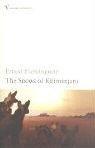
This collection showcases Hemingway at the peak of his short-story craft, including masterpieces like 'Hills Like White Elephants' and the title story. After the Nick Adams apprenticeship, these stories reveal how far his technique could stretch across different settings and characters.
The Early Novels: Paris, War, and Disillusionment
BeginnerExperience Hemingway's first two major novels and understand the Lost Generation worldview — the spiritual and moral wreckage left by World War I — that defines his early career.
▸ Study plan for this stage
Pace: 6–8 weeks total: Weeks 1–3 for The Sun Also Rises (~20–25 pages/day, ~247 pages), and Weeks 4–7 for A Farewell to Arms (~20–25 pages/day, ~332 pages), with Week 8 reserved for reflection, comparative review, and completing exercises. Reading sessions of 30–45 minutes daily are ideal for absorbing He
- The Lost Generation: the spiritual, moral, and psychological disillusionment of young people whose sense of purpose and idealism was shattered by World War I, as embodied by Jake Barnes and his Paris expatriate circle in The Sun Also Rises and by Frederic Henry's desertion in A Farewell to Arms.
- The Iceberg Theory (Theory of Omission): Hemingway's foundational narrative technique — the idea that the deeper emotional truth of a scene is never stated outright but is implied beneath the surface of plain, stripped-down prose. What characters do NOT say is as important as what they do.
- Masculine codes and stoicism: Both novels explore what it means to endure pain, loss, and humiliation with dignity and restraint. Jake's war wound and Frederic's retreat from the Italian front both test an unspoken code of behavior under pressure.
- Love, desire, and futility: The doomed romance between Jake and Brett Ashley in The Sun Also Rises, and between Frederic and Catherine Barkley in A Farewell to Arms, illustrate how war corrupts or destroys the possibility of lasting human connection and happiness.
- War as anti-heroic and absurd: A Farewell to Arms dismantles the romantic notion of glorious warfare. The Caporetto retreat, the arbitrary execution of officers, and Catherine's death all reinforce that war is chaotic, impersonal, and indifferent to individual valor or love.
- Expatriate life and escapism: The Sun Also Rises portrays Paris and Pamplona as stages on which the Lost Generation acts out its restlessness — drinking, traveling, and spectating (the bullfights) as substitutes for meaning they can no longer find in conventional society.
- Hemingway's prose style: Short declarative sentences, heavy use of 'and' as connective tissue (parataxis), concrete nouns over abstractions, dialogue that carries subtext, and a journalistic economy of language that was revolutionary for American fiction in the 1920s.
- Nature and ritual as temporary refuge: Fishing in the Irati River (The Sun Also Rises) and the mountain idyll in Switzerland (A Farewell to Arms) function as brief, almost sacred escapes from chaos — but Hemingway always returns his characters to a world that cannot be escaped permanently.
- How does Jake Barnes's war wound function as both a literal and symbolic representation of the Lost Generation's condition, and how does it shape every relationship he has in The Sun Also Rises?
- Trace Brett Ashley's role in The Sun Also Rises: is she a victim of the same disillusionment as the men around her, a destructive force, or both? Use specific scenes to support your reading.
- How does Hemingway use the Pamplona festival and the bullfights in The Sun Also Rises to contrast authentic experience and 'afición' (passion/mastery) against the hollow escapism of the expatriate group?
- In A Farewell to Arms, what is the significance of Frederic Henry's 'separate peace' — his desertion at Caporetto? How does this act reflect the novel's broader argument about war, loyalty, and self-preservation?
- Compare the two central love stories: Jake-and-Brett versus Frederic-and-Catherine. What does each relationship reveal about whether genuine love is possible in a post-war world, and why does each ultimately fail or remain unfulfilled?
- Identify three or four passages in either novel where what is left UNSAID carries the most emotional weight. How does Hemingway's Iceberg Theory operate in those moments, and what would be lost if he had stated the emotion directly?
- **Prose imitation exercise:** Choose any emotionally charged scene from either novel (e.g., Jake crying alone in his Paris apartment, or the final scene of A Farewell to Arms in the rain) and rewrite it in 200–300 words in your own voice, deliberately imitating Hemingway's style — short sentences, concrete detail, no stated emotion. Then write a second version that states every emotion explicitly.
- **Dialogue subtext analysis:** Select one full dialogue exchange from The Sun Also Rises (the Brett-Jake taxi scene is ideal) and annotate it line by line: What is each character literally saying? What are they actually communicating? What are they deliberately avoiding? This trains close reading of Hemingway's subtext-heavy conversations.
- **Character map and wound inventory:** Draw a simple diagram placing all major characters from The Sun Also Rises at the center, with lines connecting them. For each character, note their specific 'wound' — physical, psychological, or moral — and how it governs their behavior. Repeat for the two main characters of A Farewell to Arms. Look for patterns across both novels.
- **Comparative essay (500–700 words):** Write a short essay responding to this prompt: 'Both The Sun Also Rises and A Farewell to Arms end in a kind of defeat. Which ending feels more devastating, and what does that difference reveal about Hemingway's evolving view of the world between 1926 and 1929?' Use at least two specific textual moments from each novel.
- **Reading journal — track the 'code hero':** As you read A Farewell to Arms, keep a running journal (one paragraph per reading session) noting moments when Frederic Henry either upholds or violates an unspoken code of dignity, courage, or honesty. By the end, assess: does Frederic qualify as a Hemingway 'code hero,' or does he fall short — and why?
- **Historical context pairing:** Read a short primary source alongside the novels — the first chapter of Gertrude Stein's The Autobiography of Alice B. Toklas (which coins 'Lost Generation') or a brief account of the Italian Caporetto disaster of 1917. Write a one-page reflection on how this context changes or deepens your reading of one specific scene in either novel.
Next up: Mastering Hemingway's prose style, the Lost Generation worldview, and the 'code hero' under pressure in these two novels gives the reader the essential interpretive vocabulary to tackle his short fiction and later, more complex works, where the same themes are compressed, refined, and pushed to their limits.
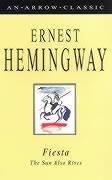
His debut novel is the essential Lost Generation text: spare, ironic, and built on the same iceberg technique you practiced in the stories. Reading it directly after the short fiction, you'll immediately recognize — and feel the power of — his mature style applied at novel length.
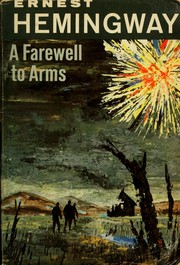
A deeper, more emotionally direct novel than its predecessor, this WWI love story shows Hemingway expanding his range into tragedy and tenderness. It builds naturally on the disillusionment of The Sun Also Rises and is widely considered one of the greatest war novels in English.
The Middle & Late Novels: Maturity and Myth
IntermediateTrace Hemingway's evolving ambitions through his most politically engaged novel and his late-career masterpiece, seeing how his themes of courage, mortality, and grace under pressure reach their fullest expression.
▸ Study plan for this stage
Pace: 6–7 weeks total: Weeks 1–4 for "For Whom the Bell Tolls" (~40 pages/day, given its ~470-page length); Weeks 5–6 for "The Old Man and the Sea" (~30 pages/day, given its ~130-page length); Week 7 reserved for review, comparative reflection, and completing exercises.
- Grace under pressure ('guts') as Hemingway's central moral code — Robert Jordan's willingness to die for a cause he doubts, and Santiago's refusal to quit against the marlin, are twin expressions of this ethic
- Political engagement and ambivalence in 'For Whom the Bell Tolls': Hemingway portrays the Spanish Civil War with unflinching honesty about atrocity on both sides, resisting propaganda while still affirming individual commitment
- The Iceberg Theory at novel scale: in 'For Whom the Bell Tolls,' entire histories, traumas, and ideologies are submerged beneath dialogue and action; in 'The Old Man and the Sea,' the sparse prose carries the full weight of a life's meaning
- Myth, archetype, and Christian symbolism: Santiago's wounded hands, his suffering, and his return with the skeleton invite allegorical readings of sacrifice and redemption that Hemingway simultaneously courts and undercuts
- Mortality as clarifier: the 72-hour countdown in 'For Whom the Bell Tolls' and Santiago's three-day ordeal both use a compressed, high-stakes time frame to strip characters down to their essential selves
- The role of memory and the past: Pilar's storytelling and flashbacks in 'For Whom the Bell Tolls' vs. Santiago's memories of his youth and the lions on the beach — both novels use the past as a source of identity and endurance
- Solidarity, isolation, and love: Robert Jordan's bond with Maria and his guerrilla band contrasts with Santiago's profound solitude, together mapping the full range of human connection in Hemingway's world
- Late-career self-mythology: 'The Old Man and the Sea' is widely read as Hemingway's meditation on his own artistic struggle and legacy — understanding this meta-dimension deepens the novella's resonance
- How does Robert Jordan's internal monologue in 'For Whom the Bell Tolls' complicate the novel's surface-level war narrative — and what does his ultimate acceptance of death reveal about Hemingway's code of honor?
- In what ways does Hemingway present both Republican and Nationalist violence in 'For Whom the Bell Tolls,' and how does this moral evenhandedness affect the reader's relationship to Jordan's mission?
- How does the three-day structure of Santiago's ordeal in 'The Old Man and the Sea' function both as a realistic fishing narrative and as a mythic or symbolic framework?
- Compare the role of a mentor or community figure in each book — Pilar in 'For Whom the Bell Tolls' and Manolin in 'The Old Man and the Sea' — and explain what each relationship reveals about how Hemingway values human bonds in the face of death.
- What does the marlin's skeleton — Santiago's only trophy upon return — suggest about victory, defeat, and the nature of meaningful struggle? How does this ambiguous ending echo the conclusion of 'For Whom the Bell Tolls'?
- How does Hemingway's prose style evolve between the two books, and in what ways does the compressed, parable-like language of 'The Old Man and the Sea' represent a distillation of techniques first deployed at length in 'For Whom the Bell Tolls'?
- **Passage annotation sprint:** Select one of Pilar's oral storytelling passages in 'For Whom the Bell Tolls' and one of Santiago's interior monologues in 'The Old Man and the Sea.' Annotate both for what is *said* versus what is *implied* — map the submerged 'iceberg' content in each and write a one-page comparison of how Hemingway deploys silence differently in each book.
- **Timeline and structure diagram:** Chart the 72-hour timeline of 'For Whom the Bell Tolls' and the three-day arc of 'The Old Man and the Sea' side by side. Mark the emotional and moral turning points on each timeline, then write a short paragraph arguing why Hemingway chose compressed time frames for both stories.
- **Political context research brief:** Write a one-to-two-page factual summary of the Spanish Civil War (1936–1939), focusing on the factions, foreign involvement, and the war's outcome. Then re-read Chapter 10 (the massacre flashback narrated by Pilar) and annotate it with your new context — note where Hemingway is historically precise and where he fictionalizes.
- **Symbolic close-read:** Identify every instance of the lions on the beach in Santiago's dreams throughout 'The Old Man and the Sea.' Write a short essay (300–500 words) arguing for what the lions represent, using only textual evidence from the novella itself — resist importing outside biographical information until after you've made your case.
- **Comparative character essay:** Write a 500-word essay comparing Robert Jordan and Santiago as Hemingway heroes. Use specific scenes from each book to argue: in what ways are they the same archetypal figure, and in what one crucial way does Santiago represent an evolution or refinement of that figure?
- **Reading journal — 'grace under pressure' log:** As you read both books, keep a running log of every moment a character chooses dignity, restraint, or endurance over self-pity or surrender. At the end of the stage, review your log and write a one-paragraph definition of 'grace under pressure' as Hemingway actually dramatizes it — not as an abstraction, but as a set of specific behaviors.
Next up: Mastering how Hemingway's mature novels transform personal and political experience into myth prepares the reader to engage critically with his non-fiction, memoirs, and posthumous work — where the boundary between the author's life and his literary mythology becomes the central subject.
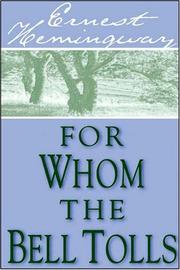
His longest and most politically ambitious novel, set during the Spanish Civil War, marks a clear evolution from the detached irony of the early work toward moral engagement and epic scope. Having read the earlier novels, you'll feel exactly how and why his voice has changed.
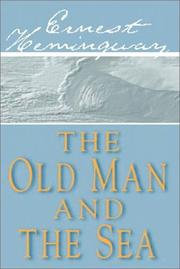
The Nobel Prize-winning novella is the perfect capstone to the fiction: a distilled, almost mythic story that brings every Hemingway theme — endurance, dignity, defeat, and grace — to a single crystalline point. Its brevity makes it feel like the final, concentrated essence of everything before it.
The Nonfiction: Life Behind the Fiction
IntermediateUnderstand the real experiences — Paris in the 1920s, bullfighting, big-game hunting, the sea — that Hemingway transformed into fiction, and see his prose style applied to memoir and reportage.
▸ Study plan for this stage
Pace: 6–7 weeks total: Weeks 1–3 for "Death in the Afternoon" (~20–25 pages/day, including the glossary and photographic plates); Weeks 4–6 for "A Moveable Feast" (~15–20 pages/day, reading each sketch as a self-contained piece before moving on); Week 7 reserved for review, comparative re-reading of key p
- The Iceberg Theory in nonfiction: how Hemingway withholds as much as he shows in 'Death in the Afternoon,' trusting the reader to sense the submerged weight of knowledge about bullfighting, death, and courage
- Bullfighting as moral and aesthetic philosophy: Hemingway treats the corrida not as sport but as a ritualized confrontation with death, using it to articulate his values of grace under pressure, technical mastery, and authentic emotion
- The 'Old Lady' dialogues in 'Death in the Afternoon': a self-conscious, metafictional device in which Hemingway interrogates his own writing choices, blurring the line between author, narrator, and critic
- Autobiography as selective myth-making: 'A Moveable Feast' was written decades after the events it describes, and its portraits of Paris, poverty, and fellow writers (Fitzgerald, Stein, Ford) are shaped by nostalgia, rivalry, and retrospective self-fashioning
- The sketch as prose unit: 'A Moveable Feast' is structured as discrete vignettes rather than a linear memoir, each one functioning almost like a short story with its own arc, image, and emotional payoff
- Hemingway's apprenticeship and craft consciousness: both books reveal a writer obsessively aware of how good prose is made — through cutting, compression, concrete sensory detail, and the avoidance of abstraction
- The relationship between place and creative identity: Paris, the cafés, the racetracks, and the Spanish bullrings are not mere backdrops but active forces that shape Hemingway's sensibility and output
- Nonfiction as source code for fiction: recognizing how the raw material in these two books — the matadors, the expatriate circle, the hunger and ambition — was later transmuted into 'The Sun Also Rises' and other works
- In 'Death in the Afternoon,' how does Hemingway use the technical vocabulary of bullfighting (faena, veronica, estocada) to do more than inform — what emotional and philosophical work does this specialized language perform?
- The 'Old Lady' interlocutor appears throughout 'Death in the Afternoon' — what is her narrative function, and what does Hemingway's use of her reveal about his anxieties as a writer of nonfiction?
- How does 'A Moveable Feast' complicate the idea of a straightforward memoir? What evidence in the text suggests Hemingway is constructing a legend rather than simply recording memory?
- Compare Hemingway's portrait of F. Scott Fitzgerald in 'A Moveable Feast' with his portrait of Gertrude Stein — what do his choices of detail and anecdote reveal about his own values and insecurities as a writer?
- Both books deal centrally with the theme of learning a craft under difficult conditions. How does Hemingway describe the process of becoming a writer in 'A Moveable Feast,' and how does his description of learning to watch bullfighting in 'Death in the Afternoon' mirror that process?
- Where do you see the Iceberg Theory operating in these nonfiction works? Identify a specific passage in each book where what is left unsaid carries as much weight as what is written.
- Prose imitation — select one paragraph from the café scenes in 'A Moveable Feast' and one from the descriptive passages in 'Death in the Afternoon.' Write a 200-word imitation of each, focusing on concrete nouns, active verbs, and the deliberate omission of explanatory adjectives. Then annotate what you cut and why.
- Source-tracing map — create a two-column chart: on the left, list specific scenes, characters, or settings from 'Death in the Afternoon' and 'A Moveable Feast'; on the right, identify the corresponding fictional elements in 'The Sun Also Rises' (e.g., the bullfighting chapters, Jake's expatriate life). Write a short paragraph explaining what Hemingway changed and what the change accomplishes.
- Portrait analysis — choose one of Hemingway's character sketches from 'A Moveable Feast' (Fitzgerald, Stein, Ford Madox Ford, or Evan Shipman). Write a 300-word close reading arguing whether the portrait is primarily an act of tribute, rivalry, or self-definition — using only textual evidence from the book.
- Iceberg excavation — pick a passage of at least one page from 'Death in the Afternoon' where Hemingway seems to be describing only the surface of an event. Write a 250-word 'submerged' version: what knowledge, emotion, or judgment is Hemingway deliberately keeping below the waterline, and how do you know it's there?
- Reading journal — after finishing each chapter of 'A Moveable Feast,' write a single sentence capturing the chapter's dominant image or emotional note (not its plot summary). At the end of the book, review all your sentences: do they form a coherent arc? What does this tell you about how Hemingway structured the book?
- Comparative style audit — find one passage in 'Death in the Afternoon' where Hemingway's prose becomes unusually abstract or digressive (the digressions on writing, on cowardice, on death). Compare it stylistically to a passage of pure description in the same book. Write a paragraph on what the contrast reveals about the tension between Hemingway the theorist and Hemingway the craftsman.
Next up: Having seen how Hemingway's lived experiences and nonfiction voice fed directly into his artistic imagination, the reader is now equipped to return to the fiction with a richer biographical and stylistic lens — ready to trace those same themes of death, craft, place, and masculine identity through his novels and short stories with far greater precision.

His deep study of Spanish bullfighting is also his most explicit statement of his own aesthetic philosophy, including the iceberg theory itself. After reading all the fiction, this book reframes everything you've read and reveals the deliberate craft behind the apparent simplicity.
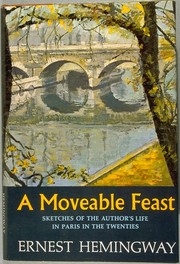
His posthumously published memoir of 1920s Paris is the most personal and beautifully written of his nonfiction — a portrait of the artist as a young man, full of vivid sketches of Fitzgerald, Gertrude Stein, and Pound. It's the ideal final read, sending you back to the early fiction with new eyes.
Discussion
Keep reading
Paths that share books, cover the same subject, or open a related topic.