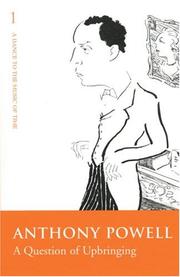
Start with A Question of Upbringing. There is no clever alternative here: Powell wrote one continuous narrative across twelve novels, and the whole effect depends on meeting characters young and watching them recur for fifty years. Beginning anywhere else drops you into a hundred half-finished conversations.
The more useful question is whether to keep going after it, because the opening volume is the least representative thing in the sequence. It is a school-and-Oxford book, deliberately muted, and the narrator Nick Jenkins spends most of it watching rather than doing. If you close it thinking "pleasant enough, but why do people obsess over this?" — that is the standard reaction. The sequence is a slow machine that starts paying out in volume three, when people you barely registered begin colliding with each other across decades. Give it three books before you decide.
The four movements, in publication order
Powell grouped the twelve into four movements of three, and publication order is chronological order, so there is no controversy to resolve. Read them straight through.
Spring: A Question of Upbringing, A buyer's market, The acceptance world. School, then London parties, then the early 1930s. The acceptance world is where the sequence announces itself — if it does not land for you, stop, and you have lost only three short novels.
Summer: At Lady Molly's, Casanova's Chinese restaurant, The kindly ones. The strongest run of the twelve. Casanova's Chinese restaurant contains the Moreland material, the closest Powell comes to writing about art from the inside, and The kindly ones ends with the outbreak of war in one of the best-managed sequences in English fiction.
Autumn — the war trilogy: The valley of bones, The soldier's art, The military philosophers. Jenkins in uniform. Some readers find this the driest stretch because the comedy narrows to military administration; others think it is the best thing Powell wrote. It is short, and it is where Widmerpool finally becomes frightening rather than merely absurd.
Winter: Books do furnish a room, Temporary kings, Hearing secret harmonies. Post-war literary London, then Venice, then the late 1960s.
Where readers genuinely stop
A real minority stop after The military philosophers, treating the nine books to the end of the war as the complete work. The case for that is that the final volume, Hearing secret harmonies, sends Powell into 1960s counterculture and cults, and his touch there is less certain than in the drawing rooms he grew up in. The case against is that the last hundred pages resolve the entire fifty-year design, and skipping them is like leaving a symphony before the recapitulation. Read to the end — but go in knowing that the counterculture material divides people.
Read around the sequence, afterwards
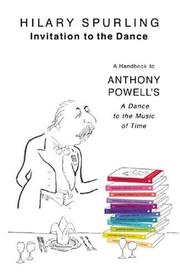
Hilary Spurling's handbook, catalogued as Invitation to the dance and published as Invitation to the Dance: A Handbook to Anthony Powell's Dance to the Music of Time, is the standard companion: a synopsis, a character index and a chronology. It is enormously useful and it spoils everything, so do not open it until you are at least six books in.
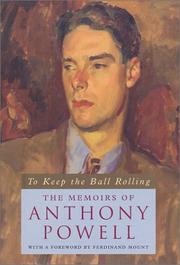
Powell's own memoirs, collected as To keep the ball rolling, show how much of the sequence was drawn from life. Michael Barber's Anthony Powell is the readable biography. And if you want a taste of Powell before committing to a million words, Afternoon men — his 1931 debut, a short, dry comedy of hungover young Londoners — is the fastest way to find out whether the voice suits you.
Browse more literary reading paths on Discover.
Follow the full ordered path here: A Dance to the Music of Time Reading Order.