William Faulkner Reading Order: Where to Start
This curriculum is designed for an expert-level reader who wants to master Faulkner's full arc — from accessible entry points into Yoknapatawpha, through the dense modernist peaks, and finally into the critical and biographical frameworks that illuminate the whole. Each stage builds the narrative vocabulary, stylistic tolerance, and thematic context needed to survive — and love — the next, culminating in a rereading of The Sound and the Fury with full command.
Enter Yoknapatawpha: The Right First Novel
ExpertEstablish fluency in Faulkner's mythic county, his Gothic sensibility, and his multi-generational storytelling before tackling his most formally demanding work.
▸ Study plan for this stage
Pace: 6–8 weeks total: Weeks 1–3 for As I Lay Dying (~25–30 pages/day, reading in section clusters by narrator to track voice shifts); Weeks 4–7 for The Hamlet (~20–25 pages/day, savoring the episodic structure and prose texture); Week 8 reserved for comparative review, re-reading key passages, and comple
- Yoknapatawpha County as a self-contained mythic world: its geography, social hierarchy, and recurring family dynasties (Bundren, Snopes) as building blocks of Faulkner's fictional universe
- Polyphonic narration in As I Lay Dying: how 15 distinct first-person voices — ranging from the lucid to the near-incoherent — collectively construct a single event (Addie Bundren's death and journey) without a single authoritative perspective
- Interior monologue and stream of consciousness: the way Faulkner collapses time, memory, and sensation within a single narrator's section, especially in Darl's visionary passages and Addie's posthumous chapter
- Gothic sensibility: grotesque imagery (the decaying corpse, the flood, the fire), the Southern landscape as a site of doom and decay, and the tension between communal ritual and individual obsession
- The Snopes clan and the rise of amorality: Flem Snopes as an emblem of cold, capitalist cunning displacing the old agrarian order — introduced in The Hamlet as a slow, inexorable social invasion
- Episodic and tall-tale structure in The Hamlet: Faulkner's shift from anguished modernist fragmentation to a looser, folk-narrative mode rooted in oral storytelling, humor, and Southern vernacular tradition
- Multi-generational and communal storytelling: how both novels use community witnesses (neighbors, bystanders, gossips) to mediate and complicate the central narrative, making the community itself a character
- Language as performance and identity: how each character's diction, syntax, and metaphor in As I Lay Dying reveals class, education, psychology, and moral standing — and how Ratliff's voice in The Hamlet functions as a humane, ironic counterweight to Snopesism
- In As I Lay Dying, how does Faulkner use the multiplicity of narrators to create dramatic irony — what does the reader understand that individual narrators cannot, and which narrator is most and least reliable, and why?
- Addie Bundren's single chapter is delivered posthumously and attacks the very concept of language ('words are no good'). How does this chapter reframe everything spoken by the other narrators, and what does it suggest about Faulkner's own narrative method?
- How does the physical journey in As I Lay Dying — crossing the flooded river, the fire, the long decay — function simultaneously as literal plot and as Gothic allegory for the Bundren family's psychological and moral states?
- In The Hamlet, how does Faulkner characterize Flem Snopes's rise to power, and what does the community's inability to resist him suggest about the vulnerabilities of the old Southern agrarian order?
- Compare the narrative voice of V.K. Ratliff in The Hamlet to the chorus of narrators in As I Lay Dying: how does each novel use a community perspective to generate meaning, sympathy, and moral judgment?
- Both novels are set in Yoknapatawpha County but feel tonally very different — one anguished and modernist, the other darkly comic and folk-inflected. What specific formal and stylistic choices produce this tonal difference, and what does each tone reveal about its subject matter?
- Voice mapping for As I Lay Dying: Create a one-page character sheet for each of the 15 narrators, noting their defining syntactic habits, recurring imagery, and what they conspicuously avoid saying — then compare two narrators describing the same event to articulate exactly how Faulkner differentiates consciousness through prose style.
- Close-reading journal: Select Darl's most visionary section and Addie's posthumous chapter and write a 500-word analysis of each, focusing on how Faulkner's sentence structure (length, subordination, fragmentation) enacts the character's psychological state rather than merely describing it.
- Draw a hand-annotated map of Yoknapatawpha County as it emerges from both novels — mark the Bundren farm, the route of the funeral journey, Frenchman's Bend, and the Varner store — then annotate with social and symbolic notes (e.g., 'river = chaos/threshold', 'Jefferson = civilization/judgment').
- Snopes taxonomy: As you read The Hamlet, maintain a running log of every Snopes who appears, their specific form of cunning or transgression, and how the community responds. At the end, write a one-paragraph 'thesis' on what the Snopes family collectively represents as a social force.
- Imitation exercise: Write a 300-word interior monologue in the style of a minor character from either novel (e.g., a Bundren neighbor watching the wagon pass, or a Frenchman's Bend farmer watching Flem's first deal). Focus on replicating Faulkner's use of run-on syntax, embedded memory, and sensory digression.
- Comparative essay (600–800 words): Argue whether As I Lay Dying or The Hamlet more effectively establishes Yoknapatawpha as a 'mythic' rather than merely regional space, using at least three specific textual passages from each book as evidence.
Next up: Having internalized Faulkner's Yoknapatawpha geography, his Gothic registers, and his range from anguished polyphony to folk-comic narration, the reader is now equipped with the thematic and stylistic vocabulary needed to navigate the radical temporal fragmentation and compressed tragedy of his most formally demanding masterworks.
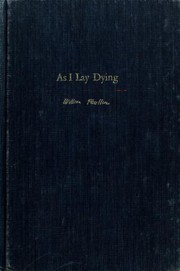
The ideal first Faulkner novel for expert readers: multiple first-person narrators and radical stream-of-consciousness, but a clear plot spine (the Bundren funeral journey) that anchors the formal experimentation. It trains your ear for Faulkner's voices without the full disorientation of The Sound and the Fury.

Introduces the Snopes clan and the rural Yoknapatawpha social world in a more episodic, darkly comic register. Reading it second gives you the county's class geography and Faulkner's range of tones before the heavier tragedies.
The Yoknapatawpha Sequence: Compson & Sutpen
ExpertNavigate the two great dynastic tragedies at the heart of Faulkner's myth — the Compson decline and the Sutpen catastrophe — and master his techniques of fragmented time, unreliable narration, and the weight of Southern history.
▸ Study plan for this stage
Pace: 8–10 weeks total: Weeks 1–4 for The Sound and the Fury (~20–25 pages/day, re-reading the Benjy section after completing the novel); Weeks 5–9 for Absalom, Absalom! (~15–20 pages/day, given its extreme density — pause at the end of each chapter to consolidate narrators and timelines); Week 10 reserve
- Fragmented and non-linear time: Faulkner's radical disruption of chronology — Benjy's associative memory in The Sound and the Fury vs. the layered retrospective narration in Absalom, Absalom! — as a formal argument that the past is never truly past
- Unreliable and multiple narration: the four distinct section-voices of The Sound and the Fury (Benjy, Quentin, Jason, Dilsey) and the chain of nested, second- and third-hand narrators in Absalom, Absalom! (Rosa, Mr. Compson, Quentin, Shreve) each filtering events through desire, trauma, and ideology
- The dynastic tragedy structure: the Compson family's internal collapse through psychological disintegration and moral failure vs. the Sutpen family's externally driven catastrophe through Thomas Sutpen's hubristic 'design' — two models of Southern doom
- The Southern Gothic and the weight of history: how both novels treat the Civil War, Reconstruction, and racial hierarchy not as backdrop but as active, determining forces that haunt and warp every character's consciousness
- Race, miscegenation, and the 'one-drop' logic: Charles Bon's ambiguous racial identity as the pivot of Absalom, Absalom!'s tragedy; the Compson household's relationship to Dilsey and the Black community as a moral counterpoint to white decline
- Stream of consciousness and interior monologue: Faulkner's debt to Joyce and Bergson — how the prose style in Benjy's and Quentin's sections enacts psychological states rather than merely describing them
- The act of storytelling as theme: in Absalom, Absalom! narration itself is foregrounded — Quentin and Shreve's imaginative reconstruction of the Sutpen story dramatizes how the South mythologizes and is imprisoned by its own narratives
- Quentin Compson as connective tissue: tracking the same character across both novels — his obsession with Caddy and honor in The Sound and the Fury, and his obsession with the South's guilt in Absalom, Absalom! — to understand Faulkner's deepest psychological portrait
- In The Sound and the Fury, what does each of the four sections' narrative styles reveal about its narrator's psychology and moral vision — and why does Faulkner order them as he does (Benjy → Quentin → Jason → Dilsey)?
- How does Caddy Compson function as the novel's moral and emotional center despite never receiving her own section, and what does her absence as narrator say about the men who surround her?
- In Absalom, Absalom!, why does Faulkner route the Sutpen story through so many layers of narration (Rosa → Mr. Compson → Quentin → Shreve) rather than telling it directly, and how does each narrator's version differ in emphasis and reliability?
- What is Thomas Sutpen's 'design,' where does it come from, and why does it fail? In what sense is his catastrophe a critique of the founding logic of the antebellum South itself?
- How does the question of Charles Bon's racial identity — and Henry Sutpen's ultimate reason for killing him — function differently depending on which narrator's account you accept, and what does this ambiguity mean thematically?
- Quentin Compson appears in both novels. How does reading Absalom, Absalom! after The Sound and the Fury reframe or deepen your understanding of his suicide, and what does his famous closing line ('I dont hate it') reveal about his impossible relationship to the South?
- Timeline mapping: For each novel, build a physical or digital master timeline. For The Sound and the Fury, chart every date-tagged memory in Benjy's and Quentin's sections in chronological order; for Absalom, Absalom!, reconstruct the Sutpen chronology from 1807 to 1910. Compare your timelines to published guides only after completing your own — the act of reconstruction is the learning.
- Narrator voice journal: After finishing each section of The Sound and the Fury, write one paragraph in that narrator's style — Benjy's associative present-tense, Quentin's spiraling syntax, Jason's bitter sarcasm, Dilsey's grounded third-person. Then write a single paragraph about the same event (Caddy's wedding, for example) from all four voices to feel the technique in your hands.
- Reliability audit for Absalom, Absalom!: Choose one key event (e.g., Sutpen's first marriage in Haiti, or the final confrontation between Henry and Bon). List every narrator who describes it, note what each claims, identify what each narrator could not possibly know firsthand, and write a one-page analysis of what 'actually happened' — and why certainty is the wrong goal.
- Comparative character essay: Write a 600–800 word essay arguing whether Thomas Sutpen or the Compson family patriarch represents the more damning indictment of Southern aristocratic ideology. Force yourself to use specific textual evidence from both novels.
- Re-read the Benjy section of The Sound and the Fury after finishing the entire novel. Annotate it with what you now know — mark every moment where Benjy's 'innocent' perception captures something the adult narrators repress or distort. Note how your experience of the section changes completely with full context.
- Quentin synthesis close-reading: Select one passage featuring Quentin from each novel (e.g., his April 2, 1910 section in TSATF and the final chapter of AA where he and Shreve imagine Henry and Bon). Write a close-reading that treats them as a single continuous psychological portrait, tracing the specific images, obsessions, and syntactic patterns that link them.
Next up: Mastering the Compson and Sutpen tragedies — and Faulkner's techniques of layered time and unreliable narration — gives the reader the interpretive foundation to move outward into the broader Yoknapatawpha world, where these same historical forces and narrative strategies play out across a wider cast of families, races, and social classes.

Now, armed with Faulkner's voice from Stage 1, you are ready. Read the four sections in order; accept disorientation in Benjy's section as intentional. The novel rewards rereading and will be revisited with critical tools in Stage 4.

Faulkner's most architecturally ambitious novel and many critics' pick for his greatest. Read directly after The Sound and the Fury because Quentin Compson is a shared narrator — his voice here deepens and darkens everything you just read about him.
The Wider County: War, Race, and the Law
ExpertExpand your map of Yoknapatawpha into its racial, legal, and historical dimensions, encountering Faulkner's most direct — and most troubled — engagements with slavery, the Civil War, and Black experience.
▸ Study plan for this stage
Pace: 8–10 weeks total: spend weeks 1–4 on Light in August (~25–30 pages/day, including re-reading key chapters), then weeks 5–9 on Go Down, Moses (~20–25 pages/day, treating each section as a self-contained story before reading the whole as a novel), with week 10 reserved for comparative reflection, re-r
- Racial indeterminacy and the 'one-drop rule': Joe Christmas's unknowable racial identity in Light in August as a structural engine of violence and social exclusion
- The Christ-figure and tragic isolation: how Faulkner layers Joe Christmas, Gail Hightower, and Lena Grove as three distinct responses to community, memory, and fate
- The McCaslin ledgers and the weight of inheritance: in Go Down, Moses, the plantation ledger as a literal and moral archive of slavery, rape, and miscegenation that Ike McCaslin must confront and cannot fully repudiate
- Repudiation vs. complicity: Ike's decision to relinquish his inheritance in 'The Bear' as an act simultaneously of moral clarity and evasion, and the novel's refusal to endorse it uncritically
- The wilderness as moral counterspace: the Big Woods in Go Down, Moses as a realm outside white legal and racial order, and its gradual destruction as an index of historical loss
- Black interiority and narrative marginalization: how Faulkner grants and withholds subjectivity to characters like Lucas Beauchamp, Rider, and Molly Beauchamp, and what that tension reveals about the limits of his perspective
- Legal and extralegal violence: lynching, the convict-lease system, and the plantation economy as systems that enforce racial hierarchy across both novels
- Community as chorus and as executioner: the white Jefferson community in Light in August and the white McCaslin clan in Go Down, Moses as collective forces that define, punish, and remember
- In Light in August, why is Joe Christmas's racial identity kept ambiguous rather than resolved, and how does that ambiguity function differently for Joe himself, for the white community of Jefferson, and for the reader?
- Gail Hightower and Lena Grove seem to exist in a separate narrative strand from Joe Christmas — what thematic work does Faulkner accomplish by weaving these three storylines together, and what does each character's ending suggest about the possibility of escape from the past?
- In Go Down, Moses, the McCaslin plantation ledger entries in 'The Bear' record acts of incest and slavery in terse, nearly illegible shorthand — what does Faulkner's choice of this form (fragmented, bureaucratic, resistant to reading) say about how white Southern families encode and suppress their own history?
- Ike McCaslin repudiates his inheritance but his cousin Cass Edmonds argues that repudiation changes nothing — whose argument does the novel ultimately support, and what evidence from 'The Bear' and the later stories ('Delta Autumn,' 'Go Down, Moses') supports your reading?
- How does Faulkner represent Black grief and Black community in 'Pantaloon in Black' (Go Down, Moses), and why is the story immediately followed by the white deputy's incomprehending account of Rider's behavior? What does that structural juxtaposition achieve?
- Taken together, how do Light in August and Go Down, Moses revise or complicate the Yoknapatawpha you encountered in earlier stages — what dimensions of the county's history become visible only through these two books?
- Annotated timeline: Build a dual-column chronology for each book — one column for the story's present action, one for the historical past being excavated (slavery, the Civil War, Reconstruction). Note where Faulkner deliberately blurs or collapses these timelines and write a one-paragraph analysis of one such moment in each novel.
- Close-reading journal — the body under the law: Select three scenes of legal or extralegal violence (e.g., Joe Christmas's castration and death in Light in August; Rider's lynching in 'Pantaloon in Black'; the convict-lease context implied in 'Go Down, Moses'). Write 300–400 words on each, focusing on whose perspective Faulkner adopts, what is shown vs. withheld, and what the prose style itself do
- Ledger transcription and commentary: Locate and transcribe the McCaslin ledger passages from 'The Bear' in Go Down, Moses. Then write your own 'translation' — a prose paragraph that renders the same events in plain, direct language. Reflect in writing on what is lost and what is clarified by the translation, and what that gap tells you about Faulkner's method.
- Character voice exercise: Choose one Black character who is denied extended interiority (e.g., Molly Beauchamp in Go Down, Moses, or Bobbie Allen's perspective adjacent to Joe's story in Light in August). Write a 400–500 word first-person interior monologue for that character during a scene where they appear but do not speak at length. Then write a brief reflection on the ethical risks and interpr
- Comparative essay (600–800 words): Both novels end with a kind of communal mourning or failed mourning — Joe Christmas's death and its aftermath in Jefferson, and Molly Beauchamp's insistence that her grandson's story be published in the newspaper in 'Go Down, Moses.' Compare these two endings as statements about memory, race, and what a community owes its dead.
- Map annotation: Return to any Yoknapatawpha map you have been building across the curriculum. Add at least five new locations, families, or historical layers revealed by these two books (e.g., the McCaslin plantation, the Big Woods hunting camp, the Burden house). Annotate each addition with a sentence explaining what racial or historical dimension it introduces to the county.
Next up: By charting Yoknapatawpha's racial and historical foundations through Joe Christmas's doomed indeterminacy and the McCaslin family's entangled legacy, this stage equips the reader to engage Faulkner's most formally experimental and psychologically extreme work — where these same historical pressures are pushed to the breaking point of narrative itself.
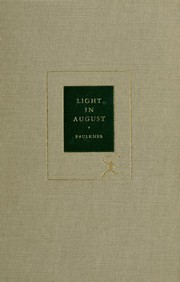
Joe Christmas's story is Faulkner's most sustained meditation on race, identity, and violence, and the novel's structure — parallel plots that barely touch — is a masterclass in thematic counterpoint. It broadens Yoknapatawpha beyond the planter class.

A linked story cycle tracing the McCaslin family across races and generations, culminating in 'The Bear.' Essential for understanding Faulkner's treatment of the land, inheritance, and the moral legacy of slavery — themes that underpin everything else.
Biography & Critical Survival Guide
ExpertAcquire the biographical, historical, and critical frameworks that unlock Faulkner's choices — and return to The Sound and the Fury with the tools to fully inhabit it.
▸ Study plan for this stage
Pace: 10–13 weeks total. Weeks 1–5: Blotner's biography (~40–50 pages/day, focusing on the Mississippi years, WWI mythology, Hollywood, and the Nobel period — use the abridged one-volume edition if available to stay manageable). Weeks 6–10: Bleikasten's The Ink of Melancholy (~20–25 pages/day — dense crit
- Faulkner's self-mythologizing: how Blotner documents the gap between Faulkner's fabricated persona (the wounded RAF veteran, the Southern aristocrat) and the biographical record — and why that gap matters for reading his fiction
- The Yoknapatawpha cosmos as autobiographical displacement: how Oxford, Mississippi, the Falkner family history, and the post-Reconstruction South are transmuted into a fictional county and its dynasties
- Melancholy as a structural principle: Bleikasten's central thesis that Faulkner's style, his fractured chronology, and his obsessive return to loss and failure are expressions of a deep melancholic sensibility rooted in Southern defeat and personal anguish
- Narrative voice and unreliable consciousness: Bleikasten's close analysis of Benjy's, Quentin's, Jason's, and Dilsey's sections as four epistemological registers — sensation, memory, resentment, and endurance — each shaped by Faulkner's biographical and psychological preoccupations
- The Compson family as historical allegory: how Blotner's account of Faulkner's own family decline illuminates the Compsons as a meditation on Southern aristocratic decay, masculine failure, and the burden of the past
- Faulkner's relationship to modernism: his debts to Joyce, Bergson's time-philosophy, and Freudian thought, and how Bleikasten situates The Sound and the Fury within — and against — the Anglo-European modernist tradition
- The role of race and gender in Faulkner's imagination: Blotner's biographical evidence of Faulkner's conflicted attitudes toward Black Southerners and women, read alongside Bleikasten's analysis of Dilsey and Caddy as figures simultaneously idealized and silenced
- Critical methodology — how to read Faulkner: Bleikasten's model of psychoanalytic, structuralist, and close-textual reading combined, offering the reader a replicable critical toolkit
- According to Blotner, which specific episodes in Faulkner's life — his failed military ambitions, his Hollywood screenwriting years, his relationship with Meta Carpenter — left traceable marks on the themes and emotional texture of The Sound and the Fury?
- What does Bleikasten mean by 'the ink of melancholy,' and how does he argue that melancholy operates not just thematically but formally — in syntax, in temporal structure, in the refusal of resolution?
- How does Blotner's account of the Falkner family (the Old Colonel, the Young Colonel, Murry Falkner) help explain Faulkner's obsessive return to failed patriarchs and the weight of ancestral legacy in the Compson narrative?
- Bleikasten argues that Caddy Compson's absence from any single narrative section is not a flaw but the novel's deepest structural meaning. What biographical and psychoanalytic evidence does he marshal for this claim?
- How do Blotner and Bleikasten together reframe the question of Faulkner's 'difficulty'? Is the difficulty a modernist affectation, a psychological symptom, a political act, or all three?
- After reading both books, how would you describe the relationship between Faulkner's historical moment — the post-WWI, post-Reconstruction American South — and the formal innovations of The Sound and the Fury?
- Biographical timeline overlay: Create a two-column timeline — left column: key events from Blotner's biography (1897–1962); right column: corresponding elements in The Sound and the Fury (characters, themes, images). Identify at least five direct or oblique correspondences and write a paragraph on each.
- Melancholy annotation pass: Re-read the Quentin section of The Sound and the Fury with Bleikasten's chapter on Quentin open beside it. Annotate every passage Bleikasten discusses, then find three additional passages he does not discuss and apply his melancholy/temporality framework yourself.
- Voice dissection exercise: Choose one page from each of the four sections of The Sound and the Fury. Using Bleikasten's epistemological framework (sensation / memory / resentment / endurance), write a 200-word close reading of each page that connects the narrator's voice to a specific biographical or historical pressure identified in Blotner.
- The Caddy problem: Write a 500-word critical response to Bleikasten's argument about Caddy's structural absence. Do you find his psychoanalytic reading persuasive? What does Blotner's biography add, complicate, or undermine in that argument?
- Southern history map: Using Blotner's historical chapters, sketch a brief (one page) history of Lafayette County / Oxford, Mississippi from Reconstruction through the 1920s. Then annotate the Appendix to The Sound and the Fury (the Compson genealogy Faulkner wrote in 1945) to show where real history bleeds into fiction.
- Critical synthesis essay: Write a 750–1,000 word essay answering the question: 'What does knowing Faulkner's life and Bleikasten's critical framework allow you to see in The Sound and the Fury that a first reading could not?' Draw explicitly on both Blotner and Bleikasten, with page-level citations.
Next up: Having internalized Faulkner's biography, the Southern historical matrix, and Bleikasten's critical vocabulary for melancholy and narrative fragmentation, the reader is now equipped to move outward into the full Yoknapatawpha cycle — approaching As I Lay Dying, Absalom, Absalom!, and Light in August not as isolated novels but as a sustained, interconnected meditation on the same obsessions, now le

The definitive, exhaustive life by the scholar who knew Faulkner personally. Read the one-volume condensed edition; it contextualizes the Yoknapatawpha myth within Faulkner's Mississippi origins, his Hollywood years, and his Nobel Prize arc.

The most rigorous single-volume critical study of Faulkner's major novels, with landmark chapters on The Sound and the Fury and Absalom, Absalom!. Use it as a companion after finishing the fiction to consolidate and challenge your readings.
Discussion
Keep reading
Paths that share books, cover the same subject, or open a related topic.