Start with One Day in the Life of Ivan Denisovich. It is short, it is complete, and it does in a hundred and fifty pages what the rest of his work does at length: it makes a labour camp ordinary, hour by hour, so that the horror arrives through accumulation rather than through argument. It was also the book that got past Soviet censorship in 1962 and detonated, so reading it first puts you where his first readers stood.
Do not start with The Gulag Archipelago. It is the more important book, but it is a three-volume, two-thousand-page work of testimony from more than two hundred witnesses, structured as investigation rather than narrative. Coming to it cold is the most common way people give up on Solzhenitsyn entirely.
The Gulag Archipelago: read the abridgement first
When you do reach it, read the authorised one-volume abridgement rather than the full three volumes. This is not a compromise — the abridgement was prepared with Solzhenitsyn's approval, it preserves the structure and the major case histories, and it is roughly five hundred pages instead of two thousand. Readers who insist on the unabridged text as a first pass overwhelmingly stall in volume two, where the procedural detail is relentless by design.
Read the full text later if the abridgement leaves you wanting more. Many people never do, and that is a legitimate stopping point.
The two novels
The First Circle is the best entry to his fiction after Ivan Denisovich: a sharashka, a prison research institute where imprisoned scientists live in relative comfort while working for the state that jailed them. Note that the version long available in English was self-censored by Solzhenitsyn to get it published; a restored ninety-six-chapter text was later issued as In the First Circle, and it is the one to seek out.
Cancer Ward is the other major novel — a hospital in Uzbekistan in 1955, patients from every stratum of Soviet society arguing about how to live while dying. Of everything he wrote, it is the most humane and the easiest to read as a novel rather than as testimony.
The Red Wheel: where almost everyone stops
August 1914 is the first knot of The Red Wheel, his multi-volume historical cycle about the origins of the revolution. It is a serious book, and it is also the point at which the general reader parts company with Solzhenitsyn. The cycle runs to thousands of pages, incorporates documentary montage and newspaper collage, and much of it has never been translated into English at all.
Read August 1914 only if you already want more after everything above. Nobody should feel they have an incomplete picture of Solzhenitsyn without the Red Wheel; a reading of One Day in the Life of Ivan Denisovich, the abridged The Gulag Archipelago, The First Circle and Cancer Ward is a full one.
Context and the arguments around him
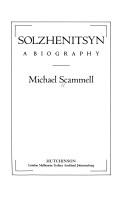
The oak and the calf is his own memoir of the literary struggle with the Soviet state — combative, self-justifying and gripping. Michael Scammell's Solzhenitsyn is the standard biography and the place to get an account that is not Solzhenitsyn's own. Orlando Figes's The Whisperers is not about him at all: it reconstructs private life under Stalin from family archives, and it is the best companion for understanding the society the camps sat inside.
One honest note. Solzhenitsyn's later Russian nationalism, his views on the West after his exile, and the historical claims of his late work are genuinely disputed — admired by some readers as prophetic and criticised by others as reactionary. That argument is worth knowing about before you read the late material, and it is not one this guide will settle for you.
More history and literature paths are on Discover.
Follow the full ordered path here: Solzhenitsyn Reading Order: Where to Start.