The Most Banned Books in America: What to Read, and in What Order
A challenge is a formal request that a book be removed or restricted; a ban is a decision to do it. The American Library Association has tracked both since the 1980s, and the shape of the record changed sharply in the 2020s: challenges reached the highest numbers ever recorded, most are now filed by organised campaigns rather than individual parents, most target lists rather than single titles, and a large majority of the books named have LGBTQ+ content or are by authors of colour. The legal position is narrower than either side usually admits — the Supreme Court held in Island Trees v. Pico that a school board may not remove library books simply because it dislikes the ideas in them, but left curriculum choices largely alone. This path reads the books themselves in order of difficulty, then the argument about them, and treats the objections as things to be understood rather than dismissed.
The Classics That Set the Pattern
BeginnerRead the three most persistently challenged books on American school lists and identify the grounds — profanity, racial language, sexual content — that dominated challenges for fifty years.
▸ Study plan for this stage
Pace: Three to four weeks. All three are short — Of Mice and Men can be done in a single afternoon, Fahrenheit 451 in two evenings, To Kill a Mockingbird in a week at 40 pages a day. Read them in the order given; the point of the stage is the accumulation of grounds across the three, which is lost if you
- The distinction the whole path rests on: a challenge is a formal request to remove or restrict a book, a ban is a decision to do it, and most challenges do not become bans
- Bradbury's own claim that nothing had to be forbidden in Fahrenheit 451 — people stopped reading and the state finished the job — which is a different argument from the one the novel is usually cited for
- The expurgated Fahrenheit 451: a school edition circulated for years with the profanity removed, without Bradbury's knowledge, which makes the book its own case study
- To Kill a Mockingbird challenged from opposite directions across decades — first for sexual content and the rape trial, later for its racial slurs and its white-saviour framing
- Grounds accumulate rather than replace: Of Mice and Men has been challenged for profanity, for racial slurs, for its portrayal of disability and for how it ends, all still in circulation as objections
- Reading the objection accurately as a discipline — most of these challenges cite something genuinely in the text, and the argument is about what the text does with it
- Persistence as data: these three have been near the top of challenge lists for fifty years, which is a different phenomenon from a single viral removal
- Bradbury said censorship was not the cause of the world in Fahrenheit 451. What was, on his account, and does the novel actually support him?
- To Kill a Mockingbird has been objected to by people with opposite political commitments. State both objections in their strongest form, without deciding between them.
- Which specific passages of Of Mice and Men do the recorded challenges cite? Locate them, and say what the book would lose without each.
- The school edition of Fahrenheit 451 was quietly expurgated. Is an expurgation better or worse than a removal? Argue both.
- Across these three, is there any objection that turned out to be about something other than the words on the page?
- For each of the three books, write down the challenge grounds you can identify from your own reading before looking any up, then compare against the recorded objections. The gap is instructive in both directions.
- Take the single most-cited passage from To Kill a Mockingbird and write 300 words on what a teacher would have to do to teach it well. Do not conclude that it teaches itself.
- Read Of Mice and Men in one sitting, then write two paragraphs on the ending — first stating the objection to it as its objectors state it, then stating the defence. Do not pick a winner in writing.
- Find a copy of Fahrenheit 451 with Bradbury's later coda about the expurgation and read it against the novel's own plot.
Next up: You have the old grounds — profanity, sexual content, racial language — in their clearest form, which is what lets you see that the next three books were challenged for something else entirely.
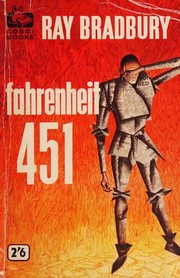
Firemen burn books in a country that stopped wanting them. The obvious first book and also the sharpest, because Bradbury's own account is that nobody had to ban anything — people simply stopped reading, and the state only finished the job. It was itself expurgated for schools for over a decade without his knowledge.
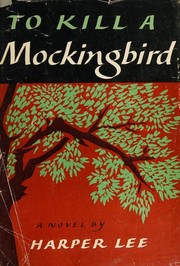
Challenged continuously since the 1960s, but from opposite directions: first for its sexual content and its treatment of a rape trial, later for its racial slurs and its white-saviour framing. Read it second because it is the single clearest case that a challenge tells you as much about the challenger as about the book.
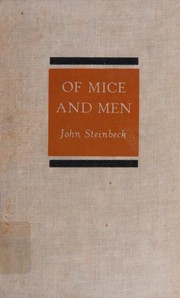
Short enough to read in a sitting and near the top of the challenged list in almost every decade — for profanity, for racial slurs, for its treatment of disability, and for euthanasia. A useful demonstration that the grounds accumulate over time rather than replacing each other.
Challenged for What They Say About Power
IntermediateRead three harder books whose challenges were about the history or politics they depict rather than about language, and be able to state each objection accurately.
▸ Study plan for this stage
Pace: Five to six weeks. The Handmaid's Tale takes about two at 30 pages a day. The Bluest Eye is short but should not be rushed — a week, read in daylight, and it is reasonable to need a break. The Complete Maus reads quickly as a graphic work but rewards a second pass at the framing panels; allow two we
- Atwood's standing defence — that she included nothing in Gilead that had not already happened somewhere — and what that claim does and does not settle about the objections
- The two distinct challenge grounds on The Handmaid's Tale: sexual content, and hostility to religion, which are not the same complaint and are often filed together
- Morrison's use of plainly described incest and child sexual abuse, and why the standard defence of frivolous objections does not apply here: the content is exactly what challengers say it is
- The difference between depicting and endorsing, which is the argument The Bluest Eye forces and which no summary of the book can settle
- Maus and the animal conceit — Jews as mice, Germans as cats — and the frame story of Spiegelman interviewing his father, which is where the book's argument about memory lives
- The 2022 Tennessee removal of Maus over eight words and a small nude drawing, followed by a sales surge, as the clearest recent evidence that a ban is now also a marketing event
- That these three shift the ground from language to what a book asserts about religion, race and history
- Atwood says every detail of Gilead has a historical precedent. Does that answer the objection that the novel is hostile to religion, or does it change the subject?
- The Bluest Eye contains what its challengers say it contains. On what basis, then, would you argue for or against its place on a school shelf? Set out both cases before choosing.
- Why does Spiegelman draw people as animals, and what does the conceit do that a realist Holocaust memoir could not?
- The Tennessee board cited eight words and one drawing in a book about genocide. What does the disproportion suggest — about the board, and about how challenges are made?
- Across all three, who is the reader each book seems to assume? Does that assumption bear on who should be assigned it?
- Write the case against The Bluest Eye in 300 words, as sympathetically as you can manage, then the case for it in 300 words. Do not resolve them; this is the exercise the book is actually for.
- Locate the specific passages of Maus that the Tennessee removal cited and read them in context. Write two sentences on what the context does.
- Take three details of Gilead and check whether each has a real historical antecedent. Record what you find, including any you could not corroborate.
- Read the frame chapters of Maus — Spiegelman with his father, and with his therapist — separately from the wartime narrative, and write 200 words on what the frame is arguing.
Next up: With the older grounds and the political ones both in view, you can see precisely what changed in the 2020s wave, which is the subject of the next four books.
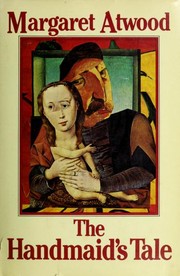
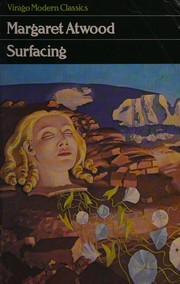
A theocratic United States that assigns fertile women to households. Challenged mainly on sexual content and hostility to religion; Atwood's standing reply is that she included nothing that had not already happened somewhere. Read it before the next two — it is the most argued-over book here and the most straightforwardly readable.

A Black girl in 1940s Ohio prays for blue eyes; the novel includes incest and child sexual abuse, described plainly. Consistently among the most-challenged books in America and the hardest to defend by simply saying the objections are frivolous — the content is exactly what challengers say it is, and the argument has to be about what it is for.

The Holocaust as a graphic memoir, with the Jews drawn as mice. A Tennessee school board removed it in 2022 over eight words and a small nude drawing, and sales multiplied overnight — the clearest recent illustration that a ban is now also a marketing event. Read the single collected volume, which contains both parts.
The Current Front Line
IntermediateRead four books at the centre of the 2020s challenges, and understand how and why the grounds shifted from profanity to sexuality and identity.
▸ Study plan for this stage
Pace: Five to six weeks. Speak and The Absolutely True Diary of a Part-Time Indian are both quick, a few evenings each. Gender Queer and All Boys Aren't Blue are short too, but read them slowly and whole — the entire point of this stage is that both are usually encountered as isolated excerpts. Keep the o
- Speak as the hinge: an assault narrative publicly called soft pornography, which produced one of the first organised online defences of a challenged book and set the template for later campaigns
- How the shift happened — from profanity and violence toward sexuality, gender identity and race as the dominant recorded grounds
- The organised-campaign finding: most current challenges are filed by coordinated groups rather than individual parents, and most name lists of titles rather than a single book
- Category targeting rather than title targeting, which is why Gender Queer and All Boys Aren't Blue are best read as a pair
- The excerpt problem: a handful of panels from Gender Queer are read aloud at board meetings without the memoir around them, so judging the book requires reading the whole
- The Alexie case, where allegations against the author complicated the book's defence, and the unresolved question of whether a book's fate should track its writer's
- That criminal complaints, not only library challenges, have been filed over some of these titles in some states — a different mechanism with different stakes
- Speak was defended online before that was a normal thing to do. What did that defence establish, and what did it not?
- Gender Queer is most often encountered as a few panels. Having read the whole memoir, what do those panels look like in place — and does context change the objection or only its tone?
- Alexie's book and Alexie's conduct are separate facts. Set out the strongest case that they should be treated separately, and the strongest case that they should not.
- The ALA finds most current challenges target lists rather than titles. What follows from that about how a defence should be mounted?
- Read All Boys Aren't Blue and Gender Queer together. What do they have in common besides being challenged, and is that commonality the reason?
- Read Gender Queer end to end in one sitting before reading anything written about it. Then write down your own account of the memoir in 200 words. Do this before you read a single board-meeting quotation.
- For any two of the four books, write out the challenge grounds as the challengers state them, in their own words rather than paraphrased unsympathetically. Getting this right is harder than it looks and is most of the work.
- Compare the objection to Speak with the objection to Of Mice and Men from stage one. Write 300 words on what changed between them and what did not.
- Track one of these four titles through a publicly available challenge record and note who filed, on what grounds, and what the outcome was. Keep the primary document rather than the reporting.
Next up: Having read the current targets themselves rather than excerpts of them, you can take up the long argument about suppression with actual cases in hand rather than slogans.
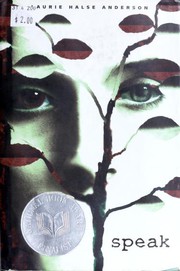
A girl stops speaking after being raped at a party. A Missouri professor publicly called it soft pornography, which produced one of the first organised online defences of a challenged book — a template for everything that followed. Start the stage here, because it is the transitional case between the old grounds and the new.
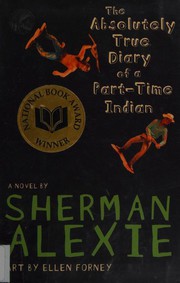
A Spokane teenager transfers to an all-white school. Challenged for masturbation, profanity and alcohol, and later complicated by allegations against its author — worth reading precisely because it forces the question of whether a book's fate should track its writer's.
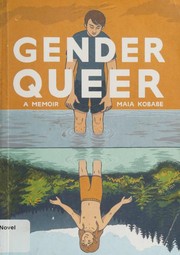
A graphic memoir of working out a nonbinary identity, and for several consecutive years the single most challenged book in the United States. A handful of explicit panels are reproduced at school board meetings, usually without context; read the whole thing so you can judge what the context does.
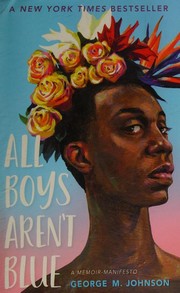
A memoir-manifesto about growing up Black and queer in New Jersey, and the subject of criminal complaints as well as library challenges in several states. Read it last in this stage: alongside Gender Queer it is the clearest evidence for the ALA's finding that the current wave targets a category of book rather than individual titles.
The Argument Itself
IntermediateStep back from the individual titles to the history and law of suppression, and be able to argue the case for open shelves on evidence rather than slogans.
▸ Study plan for this stage
Pace: Eight to ten weeks. Ovenden takes about three at a relaxed pace; it is episodic and can be read a chapter at a time. Mchangama is the longest and most closely argued of the three — allow four weeks. Berkowitz is another three and is the easiest going, so it makes a good closing read. Read them in th
- Ovenden's thesis that the destruction of libraries and archives is an old and deliberate political instrument, from Alexandria through Sarajevo to the Windrush landing cards — not a recent invention
- The distinction between destroying a record and restricting access to one, which Ovenden keeps separate and which most public argument collapses
- Mchangama's long arc of the free-speech idea from Athens onward, and his willingness to state the cases where the principle produces outcomes its own defenders dislike
- The recurring pattern in who demands suppression and what reasons they give — Mchangama's point is that the stated reasons are remarkably stable across centuries and factions
- Berkowitz on sex, blasphemy and political heresy as the perennial categories, and his observation that censors have consistently lost in the long run while never expecting to
- The narrower legal picture: the Supreme Court's decision in Island Trees v. Pico held that a school board may not remove library books simply because it dislikes the ideas in them, while leaving curriculum decisions largely untouched — a distinction both sides tend to overstate in their own favour
- That library removal, curriculum selection and outright prohibition are three different things with three different histories, and conflating them is the most common error in the public argument
- Ovenden treats archive destruction as political. Is a school library removal the same kind of act on his terms, or a different one? Argue it from his cases.
- Mchangama gives free-speech absolutism its hardest cases rather than its easiest. Pick one and say what you would do with it.
- Berkowitz finds censors reliably on the losing side of history. Does that observation constitute an argument, or only a prediction?
- Where the law distinguishes removing a library book from choosing a curriculum, what practical difference does that make to how a challenge should be answered? Note that this is a question about how the argument is framed, not a substitute for advice on any particular dispute.
- Return to the books in stage three. Having read all three histories, has your view of any individual challenge changed — and if not, has your view of the argument changed?
- Write a 500-word defence of open shelves that cites at least three historical cases from Ovenden or Berkowitz and no slogans at all. Then write the strongest 300-word reply to your own defence.
- Build a timeline of the challenge grounds across all ten books on this path — decade, book, stated ground. The shift the path is about should be visible on one page.
- Take one case from Mchangama where free-speech principles produced a result he finds uncomfortable, and set out how each of the three authors would handle it.
- Reread your notes on The Bluest Eye from stage two after finishing Berkowitz, and write 300 words on whether the long history changed how you weigh that particular argument. Say honestly if it did not.
Next up: This is the end of the path. The natural next step is to follow one live challenge in your own area through its primary documents, which is where everything above stops being historical.

The head of the Bodleian on three thousand years of deliberate destruction of libraries and archives, from Alexandria to Sarajevo to the Windrush landing cards. The right first book here because it establishes that removal is a very old political tool, not a recent culture-war invention.

A global history of the idea from Athens to social media, written by a lawyer who is candid about the cases where free-speech absolutism produces results its defenders dislike. Read it for the mechanics: who has historically demanded suppression, and what they have always said their reasons were.

A history of censorship focused on sex, blasphemy and political heresy, and on how consistently the censors have been on the losing side of history without ever believing they would be. A good last stop, because it returns you to the specific books in stage three with a much longer sense of the pattern they sit in.
Discussion
Keep reading
Paths that share books, cover the same subject, or open a related topic.