Gothic and horror literature: an ordered reading path from the classics to modern dread
Gothic and horror literature spans over two centuries, evolving from Romantic-era tales of the sublime and monstrous to psychologically complex modern nightmares. This curriculum traces that arc in four stages — building from the genre's foundational texts, through its Victorian peak, into 20th-century psychological horror, and finally arriving at contemporary masters who reinvent and subvert the tradition. Each stage deepens your sensitivity to the genre's core obsessions: the uncanny, the body, the past that refuses to die, and the darkness within.
Foundations: Birth of the Gothic
BeginnerUnderstand the origins of Gothic and horror fiction, meet its archetypal monsters, and grasp the genre's core anxieties about creation, death, and the unknown.
▸ Study plan for this stage
Pace: 8–10 weeks, ~40–50 pages/day. Frankenstein (3 weeks), Dr. Jekyll and Mr. Hyde (2 weeks), Dracula (3 weeks), with 1–2 weeks for synthesis and reflection.
- The scientist as creator and transgressor: how Frankenstein establishes the archetype of the ambitious human who overreaches natural and moral boundaries
- The duality of human nature: how Dr. Jekyll and Mr. Hyde explores the repressed shadow self and the danger of denying our darker impulses
- The vampire as invasion and corruption: how Dracula embodies anxieties about foreign threat, sexuality, and the vulnerability of modern society
- Epistolary and fragmented narrative: how letters, journal entries, and multiple perspectives create unreliability and psychological depth
- The monster as sympathetic figure: understanding how these texts generate horror while also inviting empathy for their creatures
- Technology, modernity, and loss of control: how these novels express anxiety about scientific progress and the inability to contain what we create
- Death, immortality, and the body: the obsession with transcending or defiling mortality that drives each protagonist
- Gothic atmosphere and the uncanny: how setting, tone, and the familiar-made-strange generate dread
- What are Victor Frankenstein's motivations for creating the creature, and how does the novel complicate our judgment of him as a villain?
- How does Robert Louis Stevenson use the structure of Dr. Jekyll and Mr. Hyde (letters, testimonies, confessions) to reveal the truth about Jekyll's duality?
- What does the creature in Frankenstein want from Victor, and what does this reveal about the novel's central anxieties?
- How do the three novels use the body—whether stitched, chemically transformed, or undead—to express horror and transgression?
- Compare the three monsters (the creature, Hyde, Dracula): which is most sympathetic, and why? What does each represent about human nature?
- How do Frankenstein, Dr. Jekyll and Mr. Hyde, and Dracula each depict the failure of science, reason, or social order to contain danger?
- Create a timeline of each monster's 'birth' (Victor's creation, Jekyll's transformation, Dracula's arrival in England) and annotate the emotional and narrative turning points around it.
- Write a letter from the creature in Frankenstein to Victor, or from Dracula to Mina, explaining their perspective and desires—practice inhabiting the monster's voice.
- Compare two key scenes of horror across the novels (e.g., the creature's first appearance, Hyde's brutality, Dracula's seduction of Lucy) in a 2–3 page analytical essay.
- Create a character map for each novel showing relationships, secrets, and power dynamics; note how information is withheld or revealed to different characters.
- Identify and collect 5–7 passages from each novel that best capture Gothic atmosphere (dread, uncanniness, decay); annotate what techniques Shelley, Stevenson, and Stoker use.
- Debate or write a reflection: Is the creature in Frankenstein, Hyde, or Dracula the 'real' villain of their respective novel? Defend your answer with textual evidence.
Next up: This stage establishes the foundational archetypes, narrative techniques, and thematic obsessions of Gothic horror—the mad scientist, the divided self, the undead invader—which will allow you to recognize, critique, and build upon these patterns in later works and subgenres.
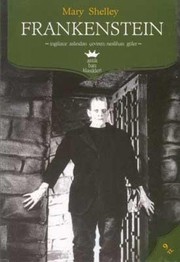
The genre's ground zero — it establishes the horror of playing God, the pathos of the monster, and the framing-narrative structure that Gothic fiction loves. Read first to anchor everything that follows.
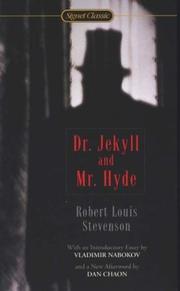
A compact, propulsive novella that introduces the Gothic's obsession with the divided self and repressed evil. Its brevity makes it a perfect second step before tackling longer Victorian works.
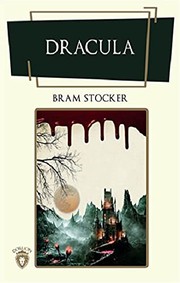
The definitive vampire novel and a masterclass in epistolary Gothic storytelling. Reading it after Shelley and Stevenson lets you see how the genre escalated its monsters and its anxieties about sexuality and foreign threat.
The Uncanny Interior: Short Fiction Masters
BeginnerDevelop fluency with the Gothic short story form and learn how horror operates through atmosphere, suggestion, and psychological dread rather than explicit monsters.
▸ Study plan for this stage
Pace: 4–5 weeks, ~20–25 pages/day (approximately 2 weeks per book, accounting for re-reading key passages and reflection)
- Unreliable narration as a tool for psychological horror: how Poe and James use first-person perspective to blur reality and madness
- Atmosphere and mood as primary horror mechanisms: the power of suggestion, silence, and what is left unsaid over explicit gore
- The Gothic interior as psychological space: how confined domestic settings (the narrator's room in 'The Tell-Tale Heart,' the governess's chambers in 'The Turn of the Screw') become sites of psychological terror
- Ambiguity and interpretive uncertainty: learning to sit with multiple possible readings rather than seeking definitive answers
- Pacing and accumulation: how Gothic short fiction builds dread through repetition, escalation, and structural control
- The supernatural as metaphor for internal states: ghosts, heartbeats, and apparitions as manifestations of guilt, obsession, and fractured consciousness
- How does the narrator's unreliability in 'The Tell-Tale Heart' make the reader question what is real versus what is imagined, and what is the effect of this uncertainty?
- Compare how Poe and James use silence, pauses, and what characters do NOT say to create horror. Give specific examples from both texts.
- What role does the domestic interior play in both 'The Tell-Tale Heart' and 'The Turn of the Screw'? How does confinement intensify the psychological dread?
- In 'The Turn of the Screw,' what evidence supports both the 'ghosts are real' and 'the governess is unreliable' interpretations? Why does James leave this ambiguous?
- How do Poe's use of the heartbeat and James's use of the children's behavior function as horror devices without relying on explicit violence or monsters?
- What is the relationship between guilt, obsession, and supernatural manifestation in these texts? How does internal psychological state become externalized as horror?
- Close-read the opening paragraphs of 'The Tell-Tale Heart' and 'The Turn of the Screw' side-by-side. Annotate how each narrator establishes their credibility (or fails to). What techniques does each use?
- Track the heartbeat motif throughout 'The Tell-Tale Heart' in a chart: note where it appears, how its description changes, and what emotional state it correlates with. What does this reveal about the narrator's mental deterioration?
- Write a 500-word alternative ending to 'The Tell-Tale Heart' from the perspective of the police officers. What do they actually see and hear? How does this expose the narrator's unreliability?
- Create a detailed floor plan or map of the house in 'The Turn of the Screw' based on James's descriptions. Mark where key supernatural encounters occur. What patterns emerge about the geography of horror?
- Rewrite a scene from 'The Turn of the Screw' (e.g., the governess's first sighting of the ghost) from the children's perspective. How does this shift change what seems plausible or suspicious?
- Compose two competing critical arguments: one defending the ghosts as real in 'The Turn of the Screw,' one arguing the governess is delusional. Use textual evidence for both. Which is more convincing and why?
Next up: This stage establishes the foundational techniques of psychological Gothic horror—unreliable narration, atmospheric dread, and ambiguity—which will deepen when you encounter longer, more complex works that layer multiple perspectives and expand the scope of supernatural terror beyond the domestic interior.

Poe invented the grammar of horror short fiction — unreliable narrators, claustrophobic settings, and dread built from within. His stories are essential vocabulary for every horror reader.
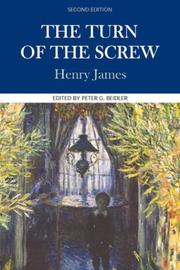
James weaponizes ambiguity: are the ghosts real, or is the governess mad? Coming after Poe, this novella shows how psychological uncertainty can be more terrifying than any monster.
Cosmic Dread & Haunted Houses: The 20th-Century Leap
IntermediateEncounter the genre's mid-century evolution — from Lovecraft's cosmic indifference to the psychological haunted-house novel — and understand how horror internalized its terrors.
▸ Study plan for this stage
Pace: 8–10 weeks, ~40–50 pages/day. Week 1–2: Lovecraft stories (120 pp); Week 3–4: *The Haunting of Hill House* (180 pp); Week 5–7: Levin's three novels (450 pp total); Week 8–10: Review, reflection, and synthesis exercises.
- Cosmic horror as a philosophy: the insignificance of humanity in an indifferent, alien universe (Lovecraft's core innovation)
- The unreliable narrator and psychological ambiguity: how Jackson uses Eleanor's perspective to blur reality and delusion
- The haunted house as psychological projection: how spaces become mirrors of internal trauma and desire
- Paranoia and conspiracy as narrative engines: Levin's use of escalating suspicion to create dread without supernatural confirmation
- The shift from external monsters to internal threats: how mid-century horror internalizes terror within social systems and the mind
- Atmosphere and accumulation over shock: how dread builds through suggestion, repetition, and the mundane made sinister
- The body as a site of horror: violation, transformation, and loss of autonomy in Levin's work
- Genre hybridity: how these works blend science fiction, psychological thriller, and domestic realism with horror conventions
- How does Lovecraft's concept of 'cosmic indifference' differ from earlier Gothic horror's focus on supernatural evil, and what philosophical anxieties does it express?
- What is the significance of Eleanor's unreliable perspective in *The Haunting of Hill House*, and how does Jackson use it to make the reader question whether Hill House is genuinely haunted or a projection of Eleanor's psychological state?
- How do Lovecraft's stories use scientific or pseudo-scientific language to make the impossible seem plausible, and what effect does this have on the reader's sense of dread?
- In what ways do the three Levin novels (*Rosemary's Baby*, *The Stepford Wives*, *This Perfect Day*) explore the horror of losing autonomy and identity within seemingly normal social structures?
- How does the setting of Hill House function as a character in Jackson's novel, and what does the house's ambiguous nature suggest about the relationship between environment and psychology?
- Compare the sources of horror across the three authors: how do Lovecraft's cosmic entities, Jackson's ambiguous haunting, and Levin's human conspiracies each create fear through different mechanisms?
- Close-read one Lovecraft story (e.g., 'The Call of Cthulhu') and annotate passages where scientific language is used to normalize the impossible; write a 500-word analysis of how this technique creates credibility.
- Track Eleanor's mental state throughout *The Haunting of Hill House* by keeping a journal entry for each chapter from her perspective, then write a reflection on how your interpretation of her reliability shifted.
- Create a detailed map or floor plan of Hill House based on Jackson's descriptions, noting which rooms Eleanor visits and which remain mysterious; reflect on what the house's incompleteness suggests thematically.
- Write a comparative character study of the female protagonists in Jackson's novel and Levin's *Rosemary's Baby*: how does each author use a woman's vulnerability and isolation to generate horror?
- Rewrite a scene from one Levin novel from the perspective of a character who is part of the conspiracy (e.g., a Stepford husband, a member of the society in *This Perfect Day*); what does this reveal about how horror operates through hidden knowledge?
- Create a visual timeline or infographic showing the evolution of horror's focus across the three authors—from cosmic entities to psychological spaces to social systems—and write a brief statement about what this progression suggests about 20th-century anxieties.
Next up: This stage establishes how horror moved inward—from cosmic indifference to psychological fragmentation to social paranoia—preparing you to explore contemporary horror's engagement with technology, trauma, and the dissolution of reality itself in the next stage.
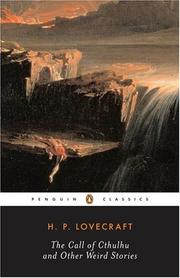
Lovecraft reoriented horror away from the human scale toward cosmic insignificance. His 'weird fiction' is a pivotal bridge between Victorian Gothic and modern horror, and his influence on the genre is impossible to overstate.

Widely considered the greatest haunted-house novel ever written, Jackson's masterpiece fuses Gothic architecture with deep psychological character study — a direct answer to Lovecraft's impersonal dread, and far more humane.
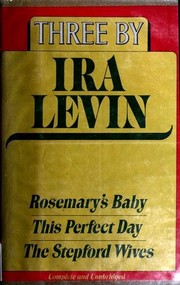
A propulsive, paranoid novel that transplants Gothic horror into 1960s urban domesticity. It demonstrates how the genre adapted to modern settings while retaining its core terror of bodily violation and disbelieved women.
Modern Masters: Horror Reinvented
ExpertEngage with contemporary authors who consciously inherit, subvert, and expand the Gothic tradition — using horror to interrogate race, gender, grief, and the American experience.
▸ Study plan for this stage
Pace: 8–10 weeks, ~40–50 pages/day, with 1–2 week breaks between books for reflection and exercises
- Psychological horror as a vehicle for exploring trauma and fractured identity (The Shining's descent into madness as both personal and systemic breakdown)
- Haunting as a metaphor for historical trauma and the persistence of slavery in the American psyche (Beloved's ghost as embodied memory)
- Gothic architecture and domestic space as sites of colonial violence and inherited corruption (Mexican Gothic's house as character and archive)
- The subversion of Gothic conventions through non-white perspectives and experiences—reclaiming the genre from its Eurocentric origins
- Horror as a tool for interrogating power structures: patriarchy, racism, imperialism, and their intimate psychological costs
- The blurred boundary between supernatural and social horror—what is 'monstrous' about the human systems that create these narratives
- How does King use the Overlook Hotel's history and isolation to externalize Jack Torrance's internal psychological collapse, and what does this suggest about the relationship between place and madness?
- In Beloved, how does Morrison use the ghost of Beloved to literalize and interrogate the trauma of slavery, and what is the difference between Beloved as supernatural presence versus Beloved as manifestation of grief and historical violence?
- How do the three novels each use Gothic domestic spaces (the hotel, the house, the mansion) to explore different forms of inherited trauma—psychological, racial, and colonial?
- What role does the supernatural play in each novel—does it function as metaphor, literal haunting, or something else entirely—and how does this choice reflect the author's interrogation of their specific historical moment?
- How do King, Morrison, and Moreno-Garcia each subvert or reinvent traditional Gothic tropes (the haunted house, the monster, the damsel in distress) through their treatment of race, gender, and power?
- What connections exist between the three novels in their use of horror to expose systemic violence—how does each author use the genre to make visible what polite society obscures?
- Close-read 2–3 key scenes from The Shining (e.g., the hedge maze, Room 217, the final descent) and annotate how King uses sensory detail and narrative perspective to blur Jack's internal state with external supernatural events. Write a 500-word analysis of one scene.
- Create a genealogy of Beloved: map out the timeline of Sethe's trauma (enslavement, escape, infanticide, haunting) and write a character study exploring how Morrison uses Beloved's presence to externalize what Sethe cannot articulate in conventional narrative.
- Comparative close-read: Select one Gothic trope (haunted house, supernatural intrusion, corruption of innocence) and trace how King, Morrison, and Moreno-Garcia each deploy it differently. Write a 750-word essay analyzing the variations.
- Research and write a 600-word reflection on the historical contexts behind each novel: the American hotel industry and labor exploitation (The Shining), slavery and its aftermath (Beloved), and Mexican colonialism and land dispossession (Mexican Gothic). How does each author embed history into horror?
- Create a visual or written 'map' of the three domestic spaces (Overlook Hotel, 124 Bluestone Road, the Mexican mansion) as characters themselves. Annotate how architecture, geography, and atmosphere reflect the psychological and historical traumas of the narratives.
- Write a creative response (500–800 words): compose a scene or monologue from the perspective of one of the supernatural presences (the hotel's malevolence, Beloved, or the mansion's haunting) that reveals what the ghost 'knows' about the human systems that created it.
Next up: This stage establishes how contemporary authors weaponize Gothic and horror conventions to expose systemic violence and historical trauma, preparing you to examine how 21st-century horror continues to evolve these techniques—whether through new media, global perspectives, or radical formal experimentation.
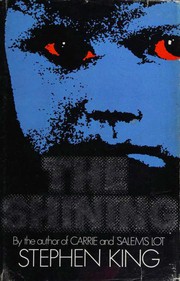
King synthesizes the entire tradition — haunted house, psychological breakdown, family horror — into a maximalist modern epic. After the earlier stages, you'll recognize every Gothic thread he's weaving.

Morrison's Pulitzer-winning novel uses Gothic haunting as a lens for the trauma of slavery, proving the genre's power to carry the weight of historical atrocity. It permanently expands what horror literature can do.
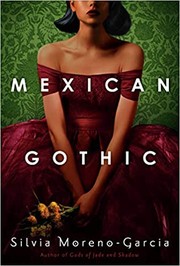
A recent, acclaimed novel that consciously remixes the Gothic tradition through a Mexican lens — colonialism, eugenics, and female agency — showing the genre's living, evolving relevance in the 21st century.
Discussion
Keep reading
Paths that share books, cover the same subject, or open a related topic.