American Literature: Best Books to Read, in Order
This curriculum traces American literature from its earliest accessible classics through its major movements—Romanticism, Realism, Modernism, and the postwar novel—building the reader's historical awareness, thematic vocabulary, and literary sensitivity at each stage. Beginning with foundational stories and novels that are immediately engaging, the path deepens into more challenging and experimental works, so that by the final stage the reader can appreciate the full arc of the American literary tradition.
Foundations: The American Voice Emerges
BeginnerGet comfortable with the essential tone, themes, and storytelling traditions of early American literature—individualism, nature, freedom, and moral struggle—through highly readable, iconic texts.
▸ Study plan for this stage
Pace: 4–5 weeks, ~40–50 pages/day. Week 1: Irving's Sketch Book (including "Legend of Sleepy Hollow"); Weeks 2–3: The Scarlet Letter; Weeks 4–5: Adventures of Huckleberry Finn, with overlap for reflection and note-taking.
- The American individual as protagonist: how Irving, Hawthorne, and Twain each portray characters navigating independence, identity, and self-determination
- Nature as mirror and moral landscape: the forest, river, and wilderness as spaces where characters confront truth and freedom
- Moral ambiguity and the burden of conscience: how these authors complicate simple judgments of right and wrong (Hester's scarlet letter, Huck's slavery dilemma, Ichabod's superstition)
- Irony and satire as tools: how Irving uses humor to critique society, Hawthorne uses symbolism to expose hypocrisy, and Twain uses vernacular voice to reveal social injustice
- The tension between civilization and freedom: how each text questions whether society's rules liberate or constrain the human spirit
- Narrative voice and perspective: how first-person (Huck), third-person omniscient (Irving, Hawthorne), and unreliable narrators shape meaning
- Symbolism and allegory: the scarlet letter, the forest, the river, and the headless horseman as carriers of thematic weight
- How does Washington Irving use humor and irony in 'The Legend of Sleepy Hollow' to critique American society and superstition, and what does Ichabod Crane's character reveal about the clash between reason and tradition?
- What is the significance of the scarlet letter as a symbol in Hawthorne's novel, and how does Hester Prynne's journey challenge the Puritan community's moral authority?
- Why does Mark Twain use Huck Finn's vernacular voice and first-person perspective, and how does this narrative choice reinforce the novel's themes about freedom and conscience?
- Across all three texts, how do the authors portray the relationship between the individual and nature—as a source of truth, danger, or moral clarity?
- What role does moral ambiguity play in each novel? Can you identify a moment in each text where the 'right' choice is unclear, and what does the author suggest about such dilemmas?
- How do Irving, Hawthorne, and Twain each use their settings (the Hudson Valley, Puritan New England, the Mississippi River) to explore what it means to be American?
- Character comparison chart: Create a table comparing Ichabod Crane, Hester Prynne, and Huck Finn across dimensions like 'relationship to society,' 'moral struggle,' 'use of freedom,' and 'growth.' Write a paragraph synthesizing what these three characters reveal about the American individual.
- Symbol tracking journal: As you read each text, keep a running list of key symbols (scarlet letter, forest, river, headless horseman, etc.). For each, note where it appears, what it seems to represent, and how its meaning shifts. Write a reflection on how symbolism differs across the three authors.
- Irony and satire analysis: Select one passage from Irving that uses humor to critique society, one from Hawthorne that uses symbolism to expose hypocrisy, and one from Twain that uses vernacular voice to reveal injustice. Annotate each passage and write a short essay on how tone and technique shape the author's critique.
- Moral dilemma debate: Identify the central moral conflict in each novel (Hester's adultery, Huck's decision to help Jim, Ichabod's fear). Write two opposing arguments for each dilemma, then a paragraph explaining why the author leaves the 'right' answer ambiguous.
- Narrative voice experiment: Rewrite a key scene from The Scarlet Letter (e.g., Hester on the scaffold) in Huck Finn's vernacular first-person voice, or rewrite a scene from Huckleberry Finn in Hawthorne's formal third-person omniscient style. Reflect on how the change in voice alters the scene's meaning and emotional impact.
- Nature and freedom mapping: Create a visual map or timeline showing how nature functions in each text—as refuge, threat, mirror, or teacher. Write a comparative analysis of how Irving, Hawthorne, and Twain each use landscape to explore the tension between civilization and freedom.
Next up: This stage establishes the foundational American literary voice—individualism, moral complexity, and the use of landscape and irony—preparing you to trace how these themes evolve and deepen in later periods of American literature, from Transcendentalism and the Civil War era through Realism and Modernism.
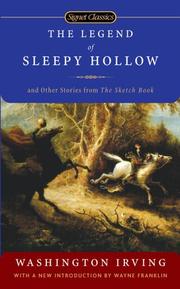
Irving is America's first celebrated fiction writer; these short, atmospheric tales introduce early American storytelling, folklore, and the national obsession with identity and place. Starting here keeps the reading light and engaging.
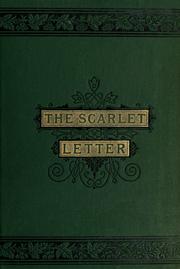
A cornerstone of American Romanticism, this novel introduces the Puritan conscience, sin, and symbolism that run through centuries of American writing. It builds the moral and allegorical vocabulary needed for deeper works ahead.
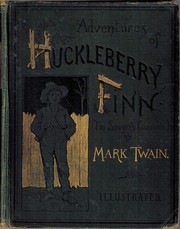
Often called the great American novel, Twain's masterpiece introduces Realism, vernacular voice, race, and freedom—themes central to the entire tradition. Its accessible, humorous style makes it a perfect bridge from Romanticism to Realism.
The 19th-Century Canon: Realism and the American Self
BeginnerUnderstand the Transcendentalist and Realist movements, and encounter the visionary poetry and prose that defined America's philosophical and democratic ideals.
▸ Study plan for this stage
Pace: 8–10 weeks, ~40–50 pages/day (with poetry read more slowly). Walden: 3 weeks (~25 pages/day); Leaves of Grass: 3–4 weeks (~20 pages/day, accounting for rereading); The Portrait of a Lady: 2–3 weeks (~50 pages/day)
- Transcendentalism as a philosophical foundation: self-reliance, nature as spiritual teacher, and the individual's direct access to truth (Walden)
- Democratic vision and the expansive self: Whitman's celebration of the common person and the interconnected 'I' of America (Leaves of Grass)
- Realism's psychological depth: James's shift toward interior consciousness and the moral complexity of individual choice (The Portrait of a Lady)
- Nature as both literal refuge and metaphor for self-discovery and authenticity across all three texts
- The tension between idealism and constraint: how each author grapples with freedom, society, and the cost of self-determination
- Form as philosophy: how Thoreau's aphoristic style, Whitman's free verse, and James's narrative technique embody their ideas about consciousness and democracy
- What does Thoreau mean by 'simplicity' in Walden, and how does his experiment at Walden Pond serve as a critique of American materialism and social conformity?
- How does Whitman's concept of the 'I' in Leaves of Grass differ from the Romantic individual, and what does his cataloging technique suggest about American democracy and human connection?
- What is James's critique of American innocence and freedom in The Portrait of a Lady, and how does Isabel Archer's journey complicate the Transcendentalist faith in individual self-determination?
- How do Thoreau, Whitman, and James each use nature or landscape to explore questions of authenticity and selfhood?
- What is the relationship between form and content in each text—how do the authors' stylistic choices (aphorism, free verse, psychological realism) reflect their philosophical positions?
- How does The Portrait of a Lady represent a literary and philosophical shift from the optimism of Transcendentalism and Whitman toward a more skeptical, nuanced Realism?
- Keep a 'Walden journal': spend one week living with deliberate simplicity (minimal spending, reduced digital use, daily nature observation). Record your reflections in the style of Thoreau's aphorisms and compare your experience to his stated goals.
- Annotate 3–4 key passages from each text (e.g., Thoreau on 'economy,' Whitman's 'Song of Myself' opening, James's final chapter) and write a 1-page analysis of how form and content align in each.
- Create a visual map or diagram tracing the evolution of 'the self' across the three texts: from Thoreau's solitary, self-reliant individual → Whitman's democratic, interconnected self → James's constrained, psychologically divided self.
- Write a comparative essay (1500–2000 words) on how each author treats the relationship between the individual and society, using specific textual evidence.
- Perform or record a dramatic reading of 3–5 passages from Leaves of Grass, paying attention to rhythm, breath, and cadence. Reflect on how Whitman's form creates meaning.
- Rewrite a scene from The Portrait of a Lady in Thoreau's aphoristic style or Whitman's expansive voice, then reflect on what is gained and lost in the translation.
Next up: This stage establishes the philosophical and formal foundations of American literature—Transcendentalist idealism, democratic vision, and the emergence of psychological realism—preparing you to trace how later authors either deepen, challenge, or abandon these ideals in response to industrialization, war, and modernism.
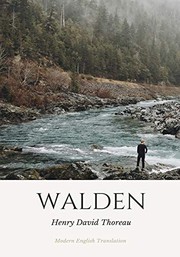
Thoreau's meditation on simplicity, nature, and self-reliance is the definitive Transcendentalist text and a direct ancestor of American environmental and countercultural thought. Reading it after Hawthorne shows the optimistic counterpoint to Puritan darkness.
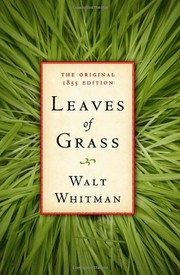
Whitman's free-verse celebration of democracy, the body, and the American landscape revolutionized poetry and influenced virtually every writer who followed. Even reading a selection of key poems here reshapes how the reader hears the American literary voice.
James elevates American Realism to psychological depth, exploring freedom, identity, and the clash of American innocence with European sophistication. It prepares the reader for the interior, character-driven novels of the 20th century.
Modernism and the Lost Generation
IntermediateGrasp the Modernist revolution in form and voice—fragmented narratives, stream of consciousness, disillusionment—and understand how WWI and the Jazz Age transformed American literature.
▸ Study plan for this stage
Pace: 8–10 weeks, ~40–50 pages/day. Allocate roughly 2–3 weeks per novel to allow for close reading, rereading key passages, and reflection between books.
- Fragmented narrative and stream of consciousness as modernist techniques for capturing psychological interiority and disillusionment
- The 'Lost Generation' archetype: alienation, moral emptiness, and the search for meaning in post-WWI America
- Jazz Age aesthetics and the tension between surface glamour and underlying spiritual decay
- Hemingway's minimalist style ('iceberg theory'): what is left unsaid carries as much weight as explicit statement
- Hurston's reclamation of African American vernacular and oral tradition as a modernist innovation equal to white male literary experimentation
- The role of setting (New York/East Egg, Spain/Paris, rural Florida) as both literal and symbolic space reflecting characters' internal states
- Modernist disillusionment with the American Dream and traditional values in the aftermath of WWI
- How do Fitzgerald, Hemingway, and Hurston each use narrative technique (point of view, fragmentation, dialect) to convey modernist themes of alienation and disillusionment?
- What is the 'Lost Generation' and how is this concept embodied differently in Gatsby, the expatriates in The Sun Also Rises, and Janie in Their Eyes Were Watching God?
- How does each novel use setting and imagery to reflect the spiritual or emotional state of its characters?
- What does Hemingway's minimalist style reveal that traditional narrative exposition would conceal, and how does this differ from Hurston's approach?
- How do these three novels challenge or redefine the American Dream, and what role does race, class, and gender play in each author's critique?
- How does the Jazz Age function as both a historical backdrop and a symbol of modernist fragmentation in these texts?
- Close-read 2–3 key passages from each novel (e.g., Gatsby's green light scene, the bullfight in The Sun Also Rises, Janie's hurricane passage) and annotate for narrative technique, imagery, and emotional subtext.
- Create a character map for each novel showing relationships, desires, and disillusionment; compare how each author portrays internal conflict through external action (or inaction).
- Write a comparative essay (1,500–2,000 words) analyzing how two of the three novels use setting as a modernist device to externalize psychological states.
- Track the use of dialogue and silence across the three novels: identify moments where what characters don't say is more revealing than what they do, and discuss how this reflects modernist aesthetics.
- Rewrite a scene from one novel in the style of another (e.g., a Gatsby scene in Hemingway's minimalist voice, or a Sun Also Rises scene using Hurston's vernacular and interiority) to internalize stylistic differences.
- Create a visual timeline or collage representing the Jazz Age, WWI disillusionment, and the Harlem Renaissance, then annotate it with quotes from all three novels showing how each author responds to this historical moment.
Next up: This stage establishes the formal and thematic foundations of modernism—fragmentation, interiority, and disillusionment—that will deepen in the next stage as you encounter more experimental forms (like Faulkner's nested narratives or Dos Passos's collage technique) and explore how modernist techniques evolved through the mid-20th century.
Fitzgerald's slim, perfectly crafted novel is the ideal entry into American Modernism—its prose is luminous, its critique of the American Dream razor-sharp, and its themes of class and illusion echo throughout the century.
Hemingway's iceberg style and the Lost Generation's disillusionment are best encountered here, right after Fitzgerald, showing a starker, more stripped-down Modernist response to the same postwar world.

A jewel of the Harlem Renaissance, Hurston's novel brings Black Southern vernacular and female interiority into the Modernist conversation, expanding the reader's sense of whose story counts as 'American literature.'
Mid-Century America: Social Realism and the Postwar Novel
IntermediateEngage with the social and existential crises of Depression-era and postwar America—poverty, race, alienation, and the search for meaning—through novels of maximum cultural impact.
▸ Study plan for this stage
Pace: 8–10 weeks, ~40–50 pages/day. *The Grapes of Wrath* (2.5 weeks), *Invisible Man* (3–3.5 weeks), *The Catcher in the Rye* (2–2.5 weeks), plus 1 week for synthesis and comparative analysis.
- Social realism as a literary mode: how Steinbeck, Ellison, and Salinger use concrete detail and vernacular language to expose systemic injustice and individual suffering
- The Dust Bowl and Depression as crucible: *The Grapes of Wrath* as historical document and moral indictment of capitalist exploitation and class disparity
- Invisibility and racial identity: Ellison's metaphor of social erasure and the psychological toll of racism on Black American consciousness and selfhood
- Alienation and inauthenticity in postwar America: Salinger's critique of phoniness, consumerism, and the loss of genuine human connection in an increasingly conformist society
- The search for meaning and belonging: how each protagonist (Tom Joad, the Invisible Man, Holden Caulfield) grapples with existential questions amid social fragmentation
- Narrative voice and perspective: the role of first-person narration (*Invisible Man*, *Catcher in the Rye*) versus omniscient realism (*Grapes of Wrath*) in shaping reader empathy and moral judgment
- Collective versus individual struggle: tension between social movements and personal redemption across the three novels
- The American Dream interrogated: how these works challenge, complicate, or reject the myth of upward mobility and national promise
- How does Steinbeck use the Joad family's journey to indict both capitalist agriculture and the false promises of the American Dream? What is the significance of the novel's ending?
- What does Ellison mean by 'invisibility,' and how does the Invisible Man's journey through various social institutions (college, factory, Brotherhood) reveal the mechanisms of racial erasure in America?
- How does Holden Caulfield's critique of 'phoniness' reflect broader postwar anxieties about authenticity, and what does his breakdown suggest about the possibility of genuine connection in modern America?
- Compare the narrative strategies of the three novels: how do first-person versus omniscient narration shape the reader's relationship to each protagonist and their social worlds?
- What role does community or collective action play in *The Grapes of Wrath* and *Invisible Man*, and how does Salinger's focus on individual alienation in *Catcher in the Rye* represent a different response to social crisis?
- How do these three novels collectively interrogate the American Dream, and what alternatives (if any) do they offer to the myth of individual success and national progress?
- Close-read a passage from each novel (e.g., the turtle crossing in *Grapes of Wrath*, the Liberty Paints factory scene in *Invisible Man*, Holden's encounter with Sally Hayes in *Catcher in the Rye*) and analyze how language, imagery, and dialogue reveal character psychology and social critique.
- Create a timeline or map of each protagonist's journey—physical, psychological, and ideological—and identify key turning points where their understanding of society or self shifts.
- Write a comparative essay (1,500–2,000 words) on how two of the three novels address the same social problem (e.g., exploitation, racism, alienation) from different angles and with different conclusions.
- Develop character profiles for Tom Joad, the Invisible Man, and Holden Caulfield, noting their values, contradictions, and growth. How does each character's voice and perspective reflect their social position?
- Research and present on the historical context of one novel (the Dust Bowl and Depression for *Grapes of Wrath*, Jim Crow and the Great Migration for *Invisible Man*, postwar conformity and youth culture for *Catcher in the Rye*), then trace how that history is embedded in the narrative.
- Conduct a Socratic dialogue or debate: Does each novel ultimately endorse social activism, individual redemption, or resigned acceptance? Use textual evidence to defend your position.
Next up: This stage establishes the mid-century American novel as a vehicle for social diagnosis and existential questioning, preparing readers to explore how later writers (whether modernist experimentalists, postmodern metafictionalists, or contemporary voices) inherit, challenge, or transcend the realist tradition and its moral imperatives.
Steinbeck's Depression-era epic is the definitive novel of American suffering and solidarity, and a direct heir to the Realist tradition. It deepens the reader's understanding of class and the American Dream's darker side.
Ellison's novel is one of the greatest American novels of any era, weaving race, identity, and existentialism into a formally dazzling narrative. It is essential for understanding 20th-century Black American experience and postwar literature.
Salinger's first-person voice captures postwar alienation and adolescent rebellion with unforgettable intimacy, and its influence on confessional and countercultural writing that follows is enormous.
Late 20th Century: Pluralism, Postmodernism, and the Contemporary Novel
ExpertEncounter the diversification and formal experimentation of late American literature—postmodern playfulness, multicultural voices, and the novel's reinvention—to understand where the tradition stands today.
▸ Study plan for this stage
Pace: 8–10 weeks, ~40–50 pages/day (with reflection days). Beloved (4 weeks), Blood Meridian (3 weeks), White Noise (2–3 weeks)
- Postmodern narrative fragmentation: how non-linear storytelling, nested narratives, and temporal disruption (as in Beloved's memory sequences and White Noise's digressive structure) challenge traditional realism
- Trauma and historical consciousness: how Morrison and McCarthy represent unspeakable violence (slavery, genocide) through formal innovation rather than straightforward documentation
- Magical realism and the supernatural as literary tools: Beloved's ghost as both character and metaphor for historical haunting; the blending of the real and impossible
- Intertextuality and cultural pastiche: how DeLillo's White Noise samples consumer culture, media, and other texts to critique contemporary American life
- Multicultural and marginalized voices: how Morrison and McCarthy center Indigenous, African American, and other historically silenced perspectives as central to American literature
- The novel's formal reinvention: how these three authors reject conventional plot-driven narrative in favor of philosophical inquiry, linguistic play, and structural experimentation
- Language as both barrier and revelation: McCarthy's biblical/archaic diction, Morrison's lyrical density, DeLillo's deadpan corporate speak—each author's style as thematic content
- How does Morrison use non-linear narrative and magical realism in Beloved to represent the psychological and spiritual aftermath of slavery in ways that conventional realism cannot?
- What is the relationship between McCarthy's sparse, biblical language in Blood Meridian and his depiction of American westward expansion as apocalyptic rather than progressive?
- How does DeLillo use repetition, media saturation, and absurdist dialogue in White Noise to critique consumer culture and the American family's vulnerability to spectacle?
- Compare the narrative strategies of all three novels: how does each author's formal choices reflect their thematic concerns about history, violence, and meaning-making?
- What role do intertextuality and cultural allusions play in each novel, and how do they signal a shift away from the realist tradition toward postmodern self-consciousness?
- How do these three novels collectively demonstrate the 'pluralism' of late 20th-century American literature through their different formal approaches and cultural perspectives?
- Create a timeline of Beloved's narrative: map the chronological order of events versus Morrison's presentation, then write a 1–2 page reflection on how this fragmentation affects your understanding of Sethe's trauma
- Annotate 5–10 passages from Blood Meridian that exemplify McCarthy's biblical/apocalyptic language; analyze how his diction differs from 19th-century frontier literature and what this signals thematically
- Track consumer products, brand names, and media references in White Noise (aim for 20–30 examples); create a visual collage or list and write about what DeLillo achieves through this saturation
- Write a comparative close reading (3–4 pages) of how each novel handles a moment of violence or crisis—compare Beloved's infanticide scene, a massacre in Blood Meridian, and the toxic-cloud sequence in White Noise
- Rewrite a key scene from one novel in the style of another (e.g., a Beloved scene in McCarthy's sparse, biblical voice, or a White Noise scene in Morrison's lyrical density); reflect on what is gained and lost
- Research the historical contexts these novels engage with (the Middle Passage and slavery, the Indian Wars and westward expansion, 1980s consumer capitalism); write a 2–3 page essay on how formal innovation allows each author to critique their historical moment
Next up: This stage establishes postmodernism, multicultural voices, and formal experimentation as defining features of contemporary American literature, preparing you to explore how 21st-century authors build on, challenge, or move beyond these innovations in response to digital culture, globalization, and new social movements.

Morrison's Pulitzer Prize-winning masterpiece confronts the trauma of slavery with lyrical, non-linear power; it is widely considered the greatest American novel of the late 20th century and demands the full literary toolkit built in earlier stages.
McCarthy's brutal, biblical Western pushes American prose style to its extreme, interrogating the violence at the heart of the nation's mythology. Its difficulty is earned after the journey through the full curriculum.
DeLillo's postmodern satire of consumer culture, media, and death anxiety captures the late 20th-century American condition and shows how the novel can be both intellectually playful and deeply serious—a fitting capstone.
Discussion
Keep reading
Paths that share books, cover the same subject, or open a related topic.