The Waste and Recycling Industry: The Best Books, in Order
Waste is a business before it is an environmental issue: somebody is paid to collect it, somebody buys it, and the price of scrap steel or baled cardboard decides what gets recycled far more than any household's sorting does. This path starts by following the bin, moves to the global scrap trade that is the actual recycling industry, goes back for the history and archaeology of throwing things away, then confronts the gap between recycling as a promise and recycling as a market — including what happened when China stopped buying. It ends on plastic and on who lives next to the disposal.
Follow the bin
BeginnerFind out where household waste physically goes and who moves it — collection routes, transfer stations, landfills, incinerators and materials recovery facilities. Finish able to describe the journey of a bag of rubbish and to name the point at which someone starts making money on it.
▸ Study plan for this stage
Pace: About four weeks for 891 pages, all three reported nonfiction at 40 pages an evening. Humes's Garbology (288pp) first, ten days — American waste volumes, the landfill that receives them, and the economics of municipal collection, reported rather than asserted; it establishes the scale everything els
- The physical route: kerbside collection, transfer station, and either landfill, incinerator or a materials recovery facility
- The tipping fee as the price that makes collection a business, and who pays it
- What a materials recovery facility does mechanically, and what it cannot separate
- Municipal contracting: who owns the trucks, who owns the landfill, and where the margin sits
- Landfill engineering — liners, leachate, gas capture — and the operating costs each adds
- Sanitation as skilled and hazardous work, and the knowledge the workforce holds about the system
- Describe the journey of one bag of household rubbish and name the point at which someone first makes money on it.
- What does a tipping fee cover, and how does it change what a municipality chooses to do?
- What can a materials recovery facility separate reliably, and what defeats it?
- How does municipal collection differ where the contractor also owns the disposal site?
- What does Nagle's account establish about the job that an operations description would miss?
- Find out how your own household waste is collected and disposed of, and map it against Royte's route step by step.
- Cost out one tonne of waste from kerb to landfill using the figures in Garbology, listing every assumption and its date.
- List the materials your local recycling scheme accepts and, for each, name the physical separation step it requires.
- Write half a page on what the sanitation workforce knows about the waste stream that no operator's report records.
Next up: Following the bin ends at a sorted bale, and a bale is only worth sorting if somebody will buy it — which is the actual recycling industry.

The best general orientation: American waste volumes, the landfill that receives them, and the economics of municipal collection, reported rather than asserted. Start here because it establishes the scale that everything else argues about.

Royte physically follows her own household's waste, recycling and sewage through New York's systems and meets the operators at each stage. The most concrete book on the path and a useful check on any claim about what happens after collection.
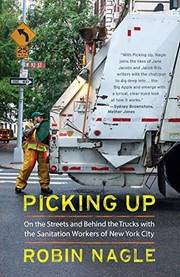
An anthropologist who trained and worked as a New York sanitation worker, on the labour, the danger and the invisibility of the job. Read it third: it turns the system the first two books describe into a workforce with its own knowledge and politics.
Recycling is a global commodity trade
BeginnerLearn the industry's central fact: recycling is scrap trading, and it happens because a mill somewhere will pay for the material. Understand what a bale's contamination rate does to its price, why exporting was rational, and what China's 2018 National Sword import restrictions did to municipal recycling economics worldwide.
▸ Study plan for this stage
Pace: Five to six weeks. Two lengths are recorded — Minter's Junkyard planet at 284pp and Secondhand at 320pp, 604 pages between them — and Franklin-Wallis's Wasteland has no page count in our catalogue, so allow it a fortnight on difficulty. Junkyard planet first, ten days: Minter grew up in a family scr
- Recycling as scrap trading: material moves because a mill will pay for it, not because it was sorted
- Contamination rate and what it does to a bale's price, which is the single most important number in the industry
- Why exporting was rational — back-haul shipping economics and the location of demand
- The 2018 National Sword import restrictions and the effect on municipal recycling economics worldwide
- Reuse as a separate industry that keeps material out of the waste stream entirely
- Commodity price cycles as the thing that determines what actually gets recycled in any given year
- Two well-reported books reaching opposite conclusions about the same trade, and what each is weighting
- What does a one percent rise in contamination do to a bale's value, and who bears the loss?
- Why was it cheaper to ship recyclables across an ocean than to process them domestically?
- What changed for a municipal recycling programme after the import restrictions?
- On what specific point do Minter and Franklin-Wallis disagree, and what evidence would settle it?
- What does Secondhand show about the limits of reuse as a solution?
- Look up current prices for baled cardboard, mixed paper, aluminium and mixed plastics, and write what each price implies about whether that material gets recycled.
- Set Minter's and Franklin-Wallis's accounts of one export destination side by side and list every factual difference and every difference of emphasis.
- Trace one used garment from donation to final destination using Secondhand, naming who profits at each step.
- Write a page on which of Minter's arguments survives the post-2018 market and which does not.
Next up: Both the collection system and the scrap trade assume a society that throws a great deal away, which turns out to be recent and manufactured.

Minter grew up in a family scrapyard and reports from Chinese and American recycling businesses on how the trade actually clears. The single most useful book here, and it argues — against most environmental writing — that the export trade was largely a good thing.
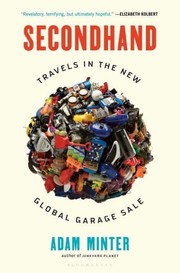
The companion volume on reuse rather than recycling: thrift stores, the used-clothing trade to Africa, electronics repair, and the economics of stuff nobody wants. Extends the previous book into the part of the industry that keeps material out of the waste stream entirely.

The most current reporting on the path — Ghanaian textile dumps, Indian landfills, nuclear waste, and the post-National Sword collapse of Western recycling markets. Read it as the corrective to Minter's optimism; the two disagree substantively and both are well reported.
The history and archaeology of throwing things away
IntermediateEstablish that the disposable society is recent and was manufactured. Municipal collection, packaging, and the very idea of an object having no further use all have datable origins, and the sorting of that work by race and class is part of the same history. This stage also supplies the only reliable method anyone has for finding out what people actually throw away.
▸ Study plan for this stage
Pace: Five weeks for 893 pages, and all three are history — read them as evidence about origins, not as descriptions of present practice. Rubbish! (250pp) by William L. Rathje and Cullen Murphy first, ten days: the Tucson Garbage Project, in which archaeologists excavated landfills and sorted fresh househ
- Excavation and sorting as the only reliable method for finding out what people actually discard
- The gap between self-reported and observed disposal, which invalidates most survey-based waste data
- Landfill decomposition rates as measured rather than assumed
- The manufacture of disposability: packaging, single use, and the marketing that established them
- Reuse and mending as the normal case within living memory
- The racial and class sorting of waste work, and of where waste was put
- Why a history of ideas about cleanliness is load-bearing for a siting argument
- What did the Garbage Project find that surveys had got wrong, and by how much?
- What decomposes in a landfill and what does not, on the excavation evidence?
- How was disposability sold, and to whom first?
- What did rag-collecting and mending economies look like, and what displaced them?
- How did waste work come to be racially sorted, on Zimring's evidence?
- Keep a written record of what you expect to throw away in a week, then weigh and sort what you actually do. Compare the two the way the Garbage Project did.
- Take three household objects and trace, from Strasser, what would have happened to each a century ago.
- List the specific decomposition findings from the excavations and note which contradict common assumptions.
- Using Zimring, write half a page on how the siting of disposal facilities in one city came to be what it is.
Next up: If disposability was manufactured, the obvious question is who benefited from the solution that was offered — household recycling.

The Tucson Garbage Project — archaeologists excavating landfills and sorting fresh household waste — which repeatedly found that what people report discarding and what they discard are different things. The methodological foundation of the whole subject; ask for it with the exclamation mark, which is part of the published title.

A social history of American trash showing that reuse, mending and rag-collecting were normal until packaging and disposability were deliberately sold. The book that makes the current recycling debate legible as a return to an older problem.

A historian on how American ideas of cleanliness, race and waste work were entangled — who was assigned the handling of refuse and where it was put. The essential background to the environmental-justice argument the path ends on.
Recycling as a promise versus recycling as an industry
IntermediateConfront the gap directly. Municipal recycling was adopted partly because industry preferred it to bottle bills and producer responsibility, and household diversion rates are small next to industrial and construction waste. Weigh the critical accounts against the best-known redesign proposal, and note which of these books is reporting and which is advocacy.
▸ Study plan for this stage
Pace: Four to five weeks for 788 pages, and the three books occupy three different genres, which the schedule should keep visible. Rogers's Gone Tomorrow (264pp) first, ten days: a political history arguing that municipal recycling was promoted by packaging and beverage interests to shift responsibility o
- Diversion rate: what it counts, what it excludes, and why it is smaller than the rhetoric implies
- Household waste against industrial, construction and demolition waste by volume
- Bottle bills and extended producer responsibility as the alternatives municipal recycling displaced
- Responsibility-shifting as a lobbying strategy with a documentary record
- Design-out-waste as a proposal, and the material-separation problem it has to solve
- Technical versus biological nutrient cycles as Cradle to Cradle defines them
- How to read an advocacy book: what it concedes, and what it never has to cost out
- What does a published diversion rate actually measure, and what does MacBride say it leaves out?
- What proportion of total waste is household waste, and what follows from that for policy?
- What is the documentary evidence for Rogers's claim about industry promotion of recycling?
- What would a bottle bill or a producer-responsibility scheme do that kerbside recycling does not?
- What does Cradle to Cradle assume about separation, and what do the previous two stages say about that assumption?
- Which of these three books is reporting, which is scholarship, and which is advocacy? Justify each.
- Take your own municipality's published diversion rate and reconstruct what it counts, using MacBride's categories.
- Check three of Rogers's lobbying claims against a primary source you can find, and record what you could and could not verify.
- Apply the Cradle to Cradle nutrient-cycle test to five products in your home and note which fail and why.
- Write a page arguing that municipal recycling is worth doing, using only evidence from these three books.
Next up: One material broke the model faster than any policy argument did, and the disposal it produced lands in specific places rather than everywhere.
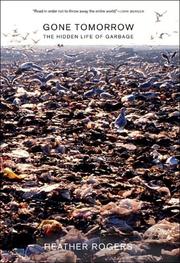
A political history arguing that municipal recycling was promoted by packaging and beverage interests to shift responsibility onto consumers and forestall regulation. Openly a critique from the left, and specific enough about the lobbying record to be checkable.

A former New York sanitation official's scholarly assessment of what recycling programmes actually divert and why the numbers are so much smaller than the rhetoric. The most rigorous book in this stage and the one to consult before quoting any diversion statistic.
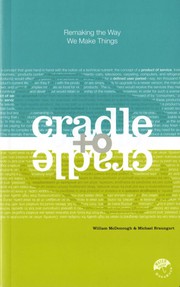
McDonough and Braungart's design manifesto — eliminate waste at the design stage rather than manage it afterwards — and the source of most circular-economy language. A manifesto, not an assessment, and criticised for underrating how hard material separation actually is; read it as the proposal the previous two books are testing.
Plastic, and who lives next to it
IntermediateClose on the material that broke the recycling model and on the question of where disposal is sited. Finish able to explain why most plastic is not economically recyclable regardless of the symbol on it, and why waste siting is treated as an environmental-justice issue rather than only an engineering one.
▸ Study plan for this stage
Pace: Three to four weeks for 544 pages, and the two books are deliberately unlike each other. Freinkel's Plastic (320pp) first, two weeks: a balanced history told through eight objects, honest about the genuine benefits as well as the disposal problem, and it explains resin-type sorting clearly enough th
- Resin types and why sorting them is the binding constraint on plastic recycling
- Down-cycling: a recycled plastic that cannot re-enter its original use
- Virgin resin price as the competitor every recycled plastic must beat
- The genuine benefits of plastics — weight, sterility, preservation — that a disposal-only account omits
- Assimilative capacity as a regulatory model, and what it assumes about available land
- Environmental justice in siting: the distribution of disposal rather than its total volume
- Reading a theoretical challenge without either dismissing it or treating it as settled
- Why is most plastic uneconomic to recycle regardless of the symbol on it?
- What does the resin identification code actually tell a sorter, and what does it not?
- Which of Freinkel's eight objects makes the strongest case for plastics, and why?
- What is the assimilative-capacity model, and what does Liboiron say it presupposes?
- How would a siting decision be made differently under Liboiron's argument?
- Where do Freinkel's and Liboiron's framings of the same material genuinely conflict?
- Collect a week of plastic packaging, sort it by resin code, and check which types your local scheme actually accepts.
- Compare current virgin resin prices with recycled prices for one polymer and state what that implies for a recycler's business.
- Map the disposal facilities nearest you and record what the surrounding population looks like demographically.
- Write 800 words connecting one claim from every stage of this path — collection, scrap price, history, diversion, and siting — into a single account of what happens to one plastic bottle.
Next up: You can now read any waste or recycling claim and ask the questions that decide it: what does it cost to collect, who buys the output, and where does the residue go.

A balanced history of plastics told through eight objects, honest about the genuine benefits as well as the disposal problem. The right book on plastic because it refuses the easy position, and it explains resin-type sorting well enough to see why plastic recycling economics fail.

A scientist and Indigenous scholar arguing that the assimilative-capacity model underlying pollution regulation presumes access to land that was taken. The most theoretically demanding book here and a deliberate challenge to the industrial framing of everything before it — take it as an argument to engage with, not a summary of consensus.
Discussion
Keep reading
Paths that share books, cover the same subject, or open a related topic.