The Insurance Industry: The Best Books on How It Works, in Order
Insurance turns an unbearable individual loss into a predictable collective cost, and everything else about the industry follows from that one trick: underwriting decides who joins the pool, reserves and reinsurance decide whether the pool survives a bad year, and claims handling decides whether the promise is actually kept. This path starts with where the idea of measurable risk came from, moves through the textbook machinery of the business, then into law and claims where the promise is tested, and ends with the two situations that break the model — correlated catastrophe and a firm that stopped pricing risk at all.
The idea of insurable risk
BeginnerUnderstand that risk had to be invented before it could be sold: probability, the law of large numbers and expected value are what make a pool work, and they are historically recent. By the end you should be able to say why some risks are insurable and some are not.
▸ Study plan for this stage
Pace: Six to seven weeks for 1,131 pages, split very unevenly. Bernstein's Against the gods is 383 pages of narrative history and reads like popular non-fiction; two weeks at a comfortable pace, and read it first because it supplies the idea the textbooks simply assume. Rejda's Principles of risk manageme
- The law of large numbers as the mechanism that makes pooling work: individual losses are unpredictable, aggregate losses over a large enough pool are not, and everything about insurance follows from that gap.
- Bernstein's historical point that risk had to be invented as a measurable quantity before it could be sold, running from Pascal and Bernoulli through Lloyd's coffee house to portfolio theory.
- The conditions Rejda gives for a risk to be insurable — a large number of similar exposures, accidental and unintentional loss, determinable and measurable loss, a loss that is not catastrophic to the pool, and a calculable chance of loss.
- Why some risks fail those conditions, which is the question stage four returns to at length: correlated losses defeat the fourth condition and are the standing problem of the industry.
- Adverse selection and moral hazard as the two informational problems that shape every product design, both of them named in Rejda and both visible in Bernstein's history long before anyone had the vocabulary.
- The structure of a policy as a document: declarations, insuring agreement, exclusions, conditions. Nearly every dispute in stage three turns on one of the last two.
- Expected value versus expected utility, and why a rational person pays more than the expected loss for coverage. This is the demand-side foundation the behavioural books in stage four attack.
- State the requirements of an insurable risk from Rejda, then name a real risk that fails each one.
- Trace Bernstein's account of how probability moved from gambling problems to commercial risk. At which point does something recognisable as insurance appear?
- Define adverse selection and moral hazard, and give a product feature from Rejda that exists specifically to counter each.
- Why does someone buy insurance at a price above the expected loss, and what does that imply about how much of the premium is not the loss itself?
- Which parts of Rejda would you expect to have changed most between our record's edition and the current one, and why?
- Take a policy you actually hold and locate its declarations, insuring agreement, exclusions and conditions using Rejda's framework. Read the exclusions in full; almost nobody does, and they are where the product is defined.
- Work through Rejda's numerical examples on pooling with a spreadsheet rather than reading past them, varying the pool size to see the variance shrink. That single exercise is the whole industry in one calculation.
- For three risks you face personally, apply the insurability test from Rejda and decide which are insurable, which are self-insured by default, and which nobody would write.
- As you read Bernstein, keep a one-line note of each conceptual advance and who made it. By the end you will have a timeline showing how recent measurable risk really is.
Next up: With risk established as a measurable, poolable thing, the next stage is the machinery an actual company uses to decide whom to pool and how much to charge.
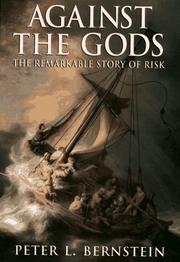
The narrative history of how humanity learned to measure risk, from Pascal and Bernoulli through Lloyd's coffee house to modern portfolio theory. It is not an insurance textbook, and that is why it goes first — it supplies the idea the textbooks assume.
The standard American introductory text and the one most insurance courses are built on, covering risk pooling, the major lines of coverage and how a policy is structured. Our record is an early edition of a book revised roughly every three years, so identify it here and buy the current printing.
How the business actually runs
IntermediateLearn the machinery: underwriting and selection, premium and reserve, the difference between life and property-casualty economics, and why insurers themselves buy insurance. This stage is textbook work and it is where the real vocabulary is acquired.
▸ Study plan for this stage
Pace: Four to five months, and the largest reading load on the path: Vaughan's Fundamentals of risk and insurance at 698 pages and Black and Skipper's life and health text at 1,072 come to 1,770 pages between them, plus Strain's Reinsurance for which we hold no page count, so plan that one by chapter rath
- Underwriting as selection: deciding whom to admit to the pool and on what terms, which is the decision that determines whether the pricing assumptions hold.
- The reserve as a liability. An insurer's largest balance-sheet item is money it expects to pay out and has not yet paid, and reserve adequacy is the single number that determines solvency.
- Why life and property-casualty are almost different industries: life insurance is a long-dated savings and mortality product, property-casualty is short-tail risk transfer with an investment float attached.
- Mortality tables and how a price is derived from them in Black and Skipper, including the difference between a table used for pricing and one used for reserving.
- The combined ratio as the property-casualty scorecard — losses plus expenses over premiums — and why an insurer can run above 100 and still be profitable on investment income.
- Treaty versus facultative reinsurance in Strain: whether the reinsurer takes a defined slice of a whole book automatically or negotiates each risk individually.
- Retrocession and the chain of risk transfer, which is how a single hurricane loss ends up distributed across the world's balance sheets rather than ending one company.
- Distribution and its cost. Vaughan is more attentive than most textbooks to agents, brokers and the expense load, which is the part of the premium the critics in the next stage go after.
- Walk through how a property-casualty premium is built, from expected loss to expenses to profit load, and say who bears the risk if the loss estimate is wrong.
- What is a reserve, why is estimating it hard, and what happens to a company's reported earnings if its reserves prove inadequate?
- Name four ways the economics of a life insurer differ from those of a property-casualty insurer, using Black and Skipper against Vaughan.
- Explain treaty and facultative reinsurance from Strain, and say when a primary insurer would want each.
- Where do Rejda and Vaughan place different emphasis on the same topic? Pick one and say what the difference tells you about the field.
- What is the float, how does it change an insurer's incentives on pricing, and what happens to those incentives when interest rates are near zero?
- Build a simple combined-ratio calculation from Vaughan's figures and then vary the loss ratio to find the point at which underwriting profit disappears. Do it as a spreadsheet, not on paper.
- Take a published mortality table and price a term life policy for a specific age and term using Black and Skipper's method. The gap between your answer and a real quote is expenses, profit and selection.
- Read an actual insurer's annual report alongside Vaughan and locate the reserves, the combined ratio, the investment income and the reinsurance recoverable. Nothing makes the textbook concrete faster.
- Diagram the chain of risk transfer from Strain for a single hypothetical catastrophe loss — policyholder, primary insurer, reinsurer, retrocessionaire — and mark who pays what at each level.
- List every place in Vaughan where the text depends on a specific regulation or tax rule. That list is your edition-sensitivity map, and it is why the current printing matters.
Next up: You now know how the promise is priced and funded, which is the only basis on which to judge the argument that the industry systematically fails to keep it.
The other long-running American survey text, more attentive than Rejda to insurer operations and the institutional structure of the industry. Read it alongside rather than after Rejda; where the two disagree in emphasis you are seeing the genuine boundary of the field.

Black and Skipper's standard treatment of life and health insurance — mortality tables, policy design, the economics of a product sold decades before it pays. Our record displays it as 'Life & health insurance', which is the later title of the same work; read it because life and property-casualty are almost different industries.

The insurance the insurers buy, and the reason a single hurricane does not end a company: treaty and facultative structures, retrocession and how risk gets passed up the chain. Placed last in this stage because reinsurance only makes sense once you know what a primary insurer's balance sheet looks like.
The promise, and whether it is kept
IntermediateA policy is a contract, and the industry's critics argue that the incentives at claim time run against the policyholder. Read the law first, then the accusations, and keep track of which claims are documented and which are inferred.
▸ Study plan for this stage
Pace: Three to four months for 1,633 pages, and the order is the argument. Baker and Logue's Insurance Law and Policy is 760 pages of American casebook with commentary and is the grounding — six to eight weeks, working through the cases rather than the notes, on how insurance contracts are interpreted, wh
- Contra proferentem as Baker and Logue set it out: ambiguities in an insurance contract are construed against the drafter, which is the doctrinal lever behind most policyholder wins.
- The reasonable expectations doctrine and its limits, and why American courts treat an insurance policy differently from a negotiated commercial contract.
- Bad faith as a distinct cause of action beyond breach of contract, and what a policyholder must show to get there. This is the legal hinge Feinman's whole argument turns on.
- Feinman's specific claim: that American claims handling was re-engineered from the 1990s onward, with consulting-driven systems treating the claims department as a cost centre rather than as the point of the business.
- The structural criticism Tobias makes, which is not about fraud but about the share of premium consumed by acquisition, distribution and administration before any claim is paid.
- Potter's account of how a health insurer's communications function operates on public debate, written by someone who ran one — a narrower case than Feinman's and made from inside the building.
- The distinction between a documented practice, an inferred motive and an industry-wide generalisation. All four of these books mix the three, and separating them is the actual skill of the stage.
- Explain contra proferentem and the reasonable expectations doctrine from Baker and Logue, and say what an insurer can do at drafting time to blunt each.
- What must a policyholder prove to establish bad faith in the American cases Baker and Logue cover, and why is it hard?
- State Feinman's causal claim about the 1990s in three steps. Which step is documented and which is inferred?
- Tobias wrote in 1982. Which of his specific claims are certainly obsolete, and which structural argument survives unchanged?
- Potter is a former executive. Which parts of Deadly Spin could only have been written from inside, and which parts should be weighted as advocacy?
- Reading the four together, is the industry's claims problem a legal problem, an incentive problem or a measurement problem? Defend the answer with a specific case from Baker and Logue.
- Take three coverage disputes from Baker and Logue and write the insurer's argument and the policyholder's argument for each in one paragraph apiece, before reading the court's resolution.
- Read Feinman with a two-column list open: documented practice on the left, inferred motive on the right. The proportions will tell you how to weight the book.
- Find a current state insurance department's complaint statistics or market conduct report and check whether it supports or undercuts Feinman's picture. This is the check his own book cannot perform for you.
- Pick one claim in Tobias about premium going to expenses rather than claims and find the equivalent modern figure in an insurer's annual report. Note whether the ratio has moved.
- Write a one-paragraph defence of the industry that Feinman and Potter would both have to answer, using only the doctrinal material in Baker and Logue. If you cannot build it, say which fact blocks you.
Next up: Those disputes all assume the pool is solvent and the losses are independent, which is exactly what the next stage removes.

Baker and Logue's American casebook-with-commentary on how insurance contracts are interpreted, what bad faith means and why courts read ambiguities against the insurer. United States law specifically, and the necessary grounding before any of the critiques.

A law professor's argument that American claims handling was deliberately re-engineered from the 1990s to treat claims as a cost centre rather than a promise. The central indictment on this path — read it immediately after Baker so you can judge it against the doctrine.

Tobias's 1982 exposé of the American insurance industry as a financial institution that happens to sell policies, and of how much of the premium never comes back as claims. Dated in every specific and still the clearest statement of the structural criticism, so read it as history with a live argument inside it.

A former Cigna communications executive on how American health insurers shaped public debate about their own industry — a narrower case than Feinman's but from inside the building. Read it last in this stage and note that it is a participant's account, with the reliability that implies in both directions.
When the model breaks
IntermediateInsurance assumes losses are independent and buyers are rational, and neither holds for catastrophe. Work out where private markets stop functioning, what governments end up doing about it, and why people simultaneously over-insure trivia and under-insure disaster.
▸ Study plan for this stage
Pace: Three months. Kunreuther, Pauly and McMorrow's Insurance and behavioral economics has no page count in our catalogue, so plan it by chapter over three weeks and read it first: it explains the demand-side failure, why consumers buy the wrong coverage and why insurers misprice low-probability events,
- Correlated loss as the thing that defeats pooling. Independence is the assumption every insurance calculation rests on, and a hurricane, an earthquake or a pandemic breaks it for an entire book of business at once.
- Why catastrophe risk pushes an insurer toward reinsurance, catastrophe bonds and geographic diversification, and why those tools have limits that stage five's case studies illustrate.
- The demand-side anomalies Kunreuther, Pauly and McMorrow document: people insure trivial and frequent losses while declining coverage for rare catastrophic ones, which is the reverse of what expected utility predicts.
- Availability and threshold effects — coverage bought immediately after an event and dropped a few years later — and what that pattern does to an insurer trying to maintain a stable book.
- The public risk-management thesis in Moss: deposit insurance, flood insurance, workers' compensation and limited liability itself are all instances of government acting as risk manager of last resort.
- How a public scheme changes private incentives, including the moral-hazard critique of subsidised flood insurance and building in exposed places.
- Why the catastrophe problem is now the industry's central one. At war with the weather makes the case on hurricane data alone, and the direction of climate loss has only sharpened it.
- Why does correlated loss break the law of large numbers you learned in stage one, and what specifically does an insurer do about it?
- Name three consumer behaviours Kunreuther, Pauly and McMorrow document that expected utility theory does not predict, and say what each does to an insurer's book.
- What did the 2004 and 2005 hurricane seasons reveal about American catastrophe insurance that the preceding decades had not?
- State Moss's thesis and give three examples of American government acting as risk manager of last resort that you would not previously have called insurance.
- Where private markets withdraw, what are the options besides a public scheme, and what does each do to incentives?
- Which findings in these three books would be different if written today, and which are structural?
- Take a catastrophe loss figure from At war with the weather and work out what premium a pool would need to charge to cover it, then compare that with what the market actually charged. The gap is the whole policy problem.
- List every insurance decision you have made in the last five years and score each against the behavioural patterns Kunreuther, Pauly and McMorrow identify. Most readers find at least two.
- For your own region, find out which catastrophe perils are covered privately, which by a public scheme and which by nothing at all. Then check when that arrangement was last changed.
- Apply Moss's framework to a government programme that is not called insurance — a loan guarantee, a bailout, a liability cap — and write out who is being insured against what, and who pays the premium.
- Reread the insurability conditions you wrote out in stage one and mark which ones catastrophe risk violates. That short list is the entire subject of this stage.
Next up: Two famous failures show what happens when institutions with every technical means of measuring exposure decline to use them.

Kunreuther, Pauly and McMorrow on why consumers buy the wrong coverage and insurers misprice low-probability events — the behavioural correction to the textbook stage. Read it first here because it explains demand-side failure before the supply-side failure that follows.

A detailed study of United States catastrophe insurance after the 2004 and 2005 hurricane seasons, and of why correlated losses defeat ordinary pooling. The most important stage-four book if you care about climate risk, and increasingly the industry's central problem.
Moss argues that the American government has always been the risk manager of last resort — deposit insurance, flood insurance, limited liability itself — which reframes public policy as an insurance question. Read it after Kunreuther, as the answer to what happens where private markets withdraw.
Two institutions that failed
IntermediateClose with case studies, because an industry's mechanics are clearest at the point of breakdown. Both books describe organisations that had every technical means of measuring their exposure and did not use them.
▸ Study plan for this stage
Pace: Six weeks for 681 pages, and both read as narrative rather than as analysis, so the pace is comfortable. Raphael's Ultimate risk is 332 pages on the Lloyd's of London disaster of the late 1980s and early 1990s, when unlimited-liability Names were bankrupted by asbestos and pollution claims written d
- Long-tail liability: claims arising decades after the policy was written, from asbestos and pollution exposure, against reserves set on the assumption that the tail was finite.
- The Lloyd's Names structure — individuals with unlimited personal liability backing syndicates — and why unlimited liability that had been an asset for three centuries became the mechanism of ruin.
- Reinsurance spirals as Raphael describes them, where the same loss is passed around a closed circle of syndicates and returns to its origin magnified rather than dispersed.
- The distinction Boyd draws between AIG's insurance operations, which were genuinely well run, and the financial products unit that destroyed the company. This is the whole point of the book and is frequently lost in summaries.
- Writing credit default protection without a reserve is not insurance. There was no pool, no law of large numbers and no premium calculated against a loss distribution — it was an unpriced option sold as though it were coverage.
- Collateral calls as the immediate mechanism of failure: the exposure did not have to produce losses, it only had to be marked down, which is a liquidity risk no underwriting model captures.
- The common thread across both cases, which is that measurement capability existed and was not applied. Neither failure is a story about missing tools.
- How did asbestos and pollution claims written decades earlier reach the Names, and which reserving assumption failed?
- Explain a reinsurance spiral in your own words, and say what should have prevented one.
- What exactly did AIG Financial Products sell, and in what specific respects was it not insurance as defined in stage one?
- Boyd argues AIG's insurance business was sound. What does the failure of the financial products unit demonstrate about how a group is supervised?
- Both institutions could have measured their exposure. Why did neither do it, and were the reasons the same in both cases?
- Which of the concepts from stage two — reserves, reinsurance, the combined ratio — would have flagged each failure in advance if anyone had been looking?
- Draw the flow of a single asbestos claim from the original policy to the Name who ended up paying, using Raphael's account, and mark every point at which someone could have stopped it.
- Write out the AIG Financial Products position as though it were an insurance policy — insured peril, premium, reserve, limit — and note which of those fields is empty. The empty fields are the story.
- Compare the two failures against the insurability conditions you listed in stage one and identify which condition each institution violated.
- Take the collateral-call mechanism from Boyd and explain why a solvent insurer can still fail. Then check whether that risk appears anywhere in Vaughan's textbook treatment from stage two.
- Write a one-page memo, in the voice of a regulator in 1988 and again in 2006, setting out what you would have asked each institution for. Being specific about the question is harder than identifying the failure.
Next up: The mechanics, the law, the failures and the catastrophe problem are now all in hand, and what remains is watching a live industry price risks that no historical book can settle for you.
The Lloyd's of London disaster of the late 1980s and early 1990s, when unlimited-liability Names were bankrupted by asbestos and pollution claims written decades earlier. A study in what happens when long-tail liabilities meet a market structure that assumed they were finite.
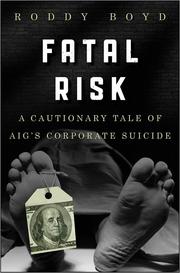
How AIG's financial products unit wrote enormous credit default protection with no reserve behind it and brought down a genuinely well-run insurance company. The right book to finish on: it shows precisely what an insurer becomes when it stops pooling risk and starts selling an unpriced option.
Discussion
Keep reading
Paths that share books, cover the same subject, or open a related topic.