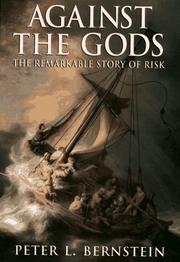
Start with Against the gods. It is not an insurance textbook, which is exactly why it goes first: Peter Bernstein narrates how humanity learned to measure risk at all, from Pascal and Bernoulli through the Lloyd's coffee house to modern portfolio theory. Every textbook after it assumes the idea this book explains — that probability, the law of large numbers and expected value are what make a pool work, and that they are historically recent inventions rather than obvious ones.
The order matters because insurance is one subject where the technical vocabulary has to come before the criticism. Underwriting decides who joins the pool, reserves and reinsurance decide whether the pool survives a bad year, and claims handling decides whether the promise is actually kept. If you read the exposés first, you will not be able to tell which of their claims are documented and which are inferred.
The textbook stage
Principles of risk management and insurance is the standard American introductory text and the one most insurance courses are built on: risk pooling, the major lines of coverage, how a policy is structured. Our record is an early edition of a book revised roughly every three years, so identify it here and buy the current printing. The same caveat applies to Fundamentals of risk and insurance, the other long-running survey, which is more attentive to insurer operations and the institutional structure of the industry. Read the two alongside each other rather than in sequence; where they differ in emphasis you are seeing the genuine boundary of the field.
Life & health insurance is the standard treatment of mortality tables, policy design and the economics of a product sold decades before it pays. Our catalogue displays it under that title, which is the later name of the same work by Kenneth Black and Harold Skipper. Read it because life and property-casualty are almost different industries. Then Reinsurance — the insurance that insurers buy, and the reason a single hurricane does not end a company. It covers treaty and facultative structures and retrocession, and it belongs last in the stage because it only makes sense once you know what a primary insurer's balance sheet looks like.
The promise, and whether it is kept
Insurance Law and Policy is the American casebook-with-commentary on how insurance contracts are interpreted, what bad faith means, and why courts read ambiguities against the insurer. It is United States law specifically, and it is the grounding you need before any of the critiques.
Delay, Deny, Defend is the central indictment: a law professor arguing that American claims handling was deliberately re-engineered from the 1990s onward to treat claims as a cost centre rather than a promise. Read it immediately after the casebook so you can judge it against the doctrine. The invisible bankers is Andrew Tobias in 1982 on the industry as a financial institution that happens to sell policies, and on how much of the premium never returns as claims — dated in every specific and still the clearest statement of the structural criticism. Deadly Spin is narrower and from inside the building: a former Cigna communications executive on how American health insurers shaped public debate about their own industry. It is a participant's account, with the reliability that implies in both directions.
When the model breaks
Insurance and behavioral economics explains the demand-side failure — why consumers buy the wrong coverage and insurers misprice low-probability events — and should be read before the supply-side failure that follows. At war with the weather is a detailed study of United States catastrophe insurance after the 2004 and 2005 hurricane seasons, and of why correlated losses defeat ordinary pooling. It is the most important book here if you care about climate risk, which is increasingly the industry's central problem. When All Else Fails then reframes public policy itself as insurance: David Moss argues that the American government has always been the risk manager of last resort, through deposit insurance, flood insurance and limited liability itself.
Two institutions that failed
Ultimate risk is Adam Raphael on the Lloyd's of London disaster of the late 1980s and early 1990s, when unlimited-liability Names were bankrupted by asbestos and pollution claims written decades earlier. Our record credits a second author that is in fact a run-together publisher string, so do not go looking for a co-author who does not exist. Finish with Fatal risk, on how AIG's financial products unit wrote enormous credit default protection with no reserve behind it and brought down a genuinely well-run insurance company. It is the right last book because it shows exactly what an insurer becomes when it stops pooling risk and starts selling an unpriced option.
The staged version, with study plans, is at /paths/pt_ai_the-insurance-industry.
Ready to learn something deeply?
Build a reading path — free