Environmental Justice: The Best Books on Pollution, Race and Place, in Order
Environmental justice asks a simple empirical question with uncomfortable answers: why does environmental harm land where it does, and on whom. This path starts with the two books that created the field's public and scholarly frames, then reads the long history of how waste and race became entangled, then a set of specific communities studied closely, then the two best books on Flint and rural sanitation, and closes with the health, legal and global picture. It is organised so that the general claims arrive after you have seen enough specific places to test them against.
Where the field starts
BeginnerRead the book that made environmental harm a public subject and the one that made its distribution a research question.
▸ Study plan for this stage
Pace: Two to three weeks. Silent Spring is around 300 pages of careful, chapter-by-chapter prose and is worth a fortnight; Dumping in Dixie is a short academic monograph of roughly 170 pages and reads in a week, though the tables repay slow attention. Read Carson first even though Bullard is the founding
- Carson's actual argument, which is narrower and better evidenced than its reputation: that broad-spectrum persistent pesticides, DDT above all, accumulate through food chains and cause harm remote in time and place from their application, and that the public has a right to know about exposures impos
- The two claims in Carson worth separating: the ecological one about bioaccumulation, which held up, and the epidemiological one about human cancer, which was more speculative when written. Read her chapter on cancer knowing that.
- What the movement Carson launched did not ask: where the exposures landed and on whom. That absence is the reason this path starts here rather than with Bullard alone, and it is the omission Dorceta Taylor documents historically in the next stage.
- Bullard's design in Dumping in Dixie: five Black communities in Houston, Dallas, Alsen, Institute and Emelle, examined for the siting of waste facilities, with survey data on residents' attitudes and mobilisation alongside the siting record.
- The distributional finding that founded the field — waste facilities are disproportionately sited in Black communities — and the fact that Bullard's original Houston research was produced for litigation, Bean v. Southwestern Waste Management, which is why the data exists at all.
- Distributive justice versus procedural justice, a distinction Bullard uses throughout: whether the burden is unequally distributed, and separately whether the affected community had any say in the decision. Both recur in every later stage.
- The race-versus-class question, posed here and answered properly in stage two: is the pattern about race, or about income, and can the two be separated in the American South?
- The chronological versus causal problem that will haunt every siting study: was the facility placed in a Black neighbourhood, or did the neighbourhood change after the facility arrived? Bullard raises it; Toxic Communities is where it is tested.
- What exactly does Carson claim about DDT, and which of her claims rest on wildlife evidence rather than human evidence?
- State Bullard's finding in Dumping in Dixie precisely: what was measured, in how many communities, against what comparison?
- Distinguish distributive from procedural injustice using one of Bullard's five communities as the example.
- Why does Bullard's data originate in a lawsuit, and what does that tell you about how this evidence gets produced?
- Carson's book created a movement that Bullard says overlooked his subject entirely. On the evidence of Silent Spring itself, is that fair?
- Take one of Bullard's five communities and write out the siting decision as a sequence: who proposed the facility, who approved it, what process the residents had access to, and at what point they learned of it. The sequence is the procedural justice claim made concrete.
- Read Carson's chapter on human cancer and mark every sentence that states a mechanism, every sentence that reports an observation, and every sentence that infers from one to the other. This is the fastest way to see where her evidence was strong and where it was ahead of itself.
- Reproduce Bullard's basic comparison with data you can get: find the locations of permitted waste facilities in one American county and overlay them on census tract demographics. You will hit the same limitations he did, which is the point.
- Write down, before reading further, your own answer to the race-versus-class question and the evidence you would need to settle it. Seal it and come back to it after Toxic Communities.
Next up: Bullard establishes the pattern in five communities in the 1980s; the next stage shows that the pattern is a century older than the environmental movement and was built into conservation itself.
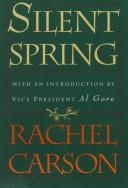
Carson's 1962 book created the modern environmental movement and, more usefully here, the argument that invisible chemical exposure is a public matter. The origin point, though the movement it launched had a blind spot the rest of this path is about.
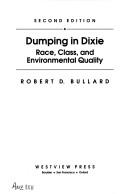
Bullard's study of five Black southern communities and the siting of waste facilities is the founding text of environmental justice as a discipline. Everything after this is in conversation with it.
The long history of who gets the waste
IntermediateUnderstand that the pattern is centuries old and was built into both industry and the conservation movement.
▸ Study plan for this stage
Pace: Five to six weeks. All three are academic monographs and none is quick. Clean and White runs around 280 pages of dense historical argument; The Rise of the American Conservation Movement is a very long book of roughly 500 pages with extensive archival detail and is best taken in parts; Toxic Communi
- Zimring's thesis: American ideas of cleanliness and of whiteness developed together from the nineteenth century, so that waste work — scavenging, rag-picking, sanitation, scrap — was racially assigned long before there were environmental regulations to violate.
- The specific historical mechanisms Zimring documents: the association of immigrant and Black labour with dirt in public health discourse, the segregation of the scrap trades, and the way residential zoning and industrial siting reinforced each other.
- Taylor's argument in The Rise of the American Conservation Movement: that the early conservation and preservation movements were shaped by the class position, racial assumptions and gender norms of their founders, and that access to protected land and to the movement itself was structured accordingl
- The eugenic and nativist strands in some early conservation figures, which Taylor documents rather than editorialises about. This is the historical answer to why the movement Carson inherited had the blind spot Bullard identified.
- Toxic Communities as the methodological centre of the path: Taylor sets out the competing explanations for siting patterns — deliberate discrimination, path dependence, market dynamics with residential sorting after siting, the politics of least resistance — and assesses the evidence for each.
- The market-dynamics counter-argument in full: that facilities are sited where land is cheap, and that poorer and disproportionately minority residents move in afterwards, which would make the pattern real but not the result of siting discrimination. Taylor takes it seriously; do the same.
- Why longitudinal data settles this and cross-sectional data cannot. A snapshot of who lives near a facility today cannot distinguish siting from sorting; you need the demographics at the time of siting.
- The politics-of-least-resistance account, which sits between the two poles: siting decisions follow expected opposition rather than race directly, and expected opposition tracks organisational capacity, which tracks wealth and race.
- How, according to Zimring, did waste work become racially assigned? Name the specific institutions and periods.
- What does Taylor show about who the early conservation movement excluded, and by what means? Distinguish formal exclusion from effective exclusion.
- List the competing explanations for siting patterns in Toxic Communities and state, for each, what evidence would confirm it.
- What does the longitudinal evidence show about siting versus post-siting demographic change? Be precise about what is settled and what remains contested.
- Does the market-dynamics explanation, if true, dissolve the injustice claim or relocate it? Argue it carefully.
- Return to the sealed answer you wrote in stage one. What would you now change?
- Build a timeline from Zimring's evidence, from roughly 1870 to 1970, with waste-industry developments on one line and racial policy developments on the other. His argument is that the two lines are the same line, and the timeline is how you test that.
- Take three figures Taylor discusses in the conservation history and, for each, write down what they advocated for the land and what they said about who belonged on it. Use their own quoted words from her text rather than characterisations.
- Work through one of the empirical studies Toxic Communities evaluates and reconstruct its design: unit of analysis, comparison group, timing of the demographic measure, and the confounder it fails to handle. Then write the design you would use instead.
- Take the county map you made in stage one and try to date the sitings. The difficulty of doing this is the whole methodological problem of the field, and finding that out directly is more useful than reading about it.
- Write a one-page summary of what the evidence supports, aimed at someone who thinks environmental justice claims are exaggerated. Use only Toxic Communities and cite specific findings.
Next up: The general claim has now been made and tested; the next stage narrows to three communities documented closely enough that you can see what the aggregate statistics are made of.

Zimring traces how American ideas of cleanliness and whiteness developed together, and how waste work was racially assigned from the nineteenth century onward. The deepest historical grounding available.

Taylor's history of how race, class and gender shaped early conservation, including who was excluded from it. Read it to see why mainstream environmentalism arrived at environmental justice so late.
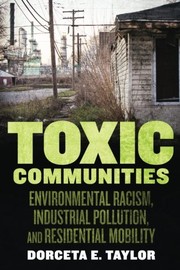
Taylor's systematic assessment of the competing explanations for why hazardous facilities end up where they do, including the market-dynamics counter-argument. The most rigorous treatment of the causal question.
Specific places, studied closely
IntermediateTest the general claims against communities documented in detail.
▸ Study plan for this stage
Pace: Four to five weeks. Diamond is around 350 pages of reported narrative and reads quickly; Noxious New York is a shorter academic study of around 250 pages; Wastelanding is a dense theoretical and historical work of around 250 pages that is slower than its length suggests. A book every ten days is a r
- The fenceline community as a unit of analysis: Lerner's Diamond neighbourhood in Norco sits directly against the plant boundary, and the book is about a campaign for relocation rather than for cleanup — a demand that concedes the plant will stay.
- What relocation actually means as a remedy, and what it costs a community that has been in one place for generations. This is the specific question Diamond forces and that the aggregate literature cannot ask.
- Sze's reframing in Noxious New York: asthma treated not as a medical problem to be managed but as a land-use outcome produced by waste transfer stations, bus depots and power plants concentrated in particular neighbourhoods.
- Planning and zoning as environmental policy — Sze's central point, and the mechanism by which a health outcome is produced by decisions nobody thought of as environmental at the time.
- Voyles's concept of wastelanding: the process by which a landscape is designated as already ruined, empty or valueless, and therefore available for uses nobody would accept elsewhere. This concept does more work in the rest of the path than any other single idea in it.
- The specific history in Wastelanding: uranium extraction on Navajo land from the 1940s, the exposure of miners, contaminated water and housing built with mine tailings, and the long delay in remedy and compensation.
- Settler colonialism as a distinct frame from environmental racism, which Voyles insists on: the harm is not only unequal distribution of a burden but the prior designation of a people and a place as expendable.
- Three different methods in three books — reported narrative, urban policy analysis, critical historical theory — and each captures something the other two cannot. Notice which questions each method is unable to ask.
- What did the Diamond residents demand, why relocation rather than emissions control, and what did they eventually get?
- How does Sze establish the link between land use and asthma rates? What is the strength and the limitation of her evidence?
- Explain wastelanding in your own words, and apply it to one of the communities in Bullard's Dumping in Dixie.
- What did the uranium industry know, when, and what does Voyles use to establish it?
- Compare the three methods. Which of the three books would you trust most on causation, which on process, and which on framing?
- Each community organised differently. What determined whether organising worked?
- Write the Norco campaign as a sequence of demands, from first complaint to final settlement, noting what was asked for at each stage and what changed the ask. Lerner gives you enough to do this and it shows how a campaign's goals are shaped by what seems winnable.
- Take Sze's account of one New York neighbourhood and map the facilities she names onto its actual geography. The concentration is the argument, and seeing it on a map is different from reading the count.
- Apply Voyles's wastelanding concept to a place you know — a brownfield, a quarry, an industrial estate, a decommissioned site — and write down the specific language used to describe it in planning documents or local news. The concept is testable in this way and doing it once makes it usable.
- Set Diamond's residents against Bullard's Alsen or Emelle communities on four dimensions: what was sited, what was demanded, who supported them, and what the outcome was. The differences are more instructive than the similarities.
- For each of the three books, write one sentence on what its method cannot see. Then check whether one of the other two sees it.
Next up: Three communities show the pattern at close range; the next stage takes the two most consequential recent American cases, where the failing infrastructure was public rather than industrial.
Lerner's account of a Black neighbourhood in Louisiana's chemical corridor fighting for relocation from beside a Shell plant. The clearest single case study of what a fenceline community actually experiences.
Sze on asthma, waste transfer stations and power plants in New York City neighbourhoods, and on how activists reframed a health problem as a planning one. The best urban case.

Voyles on uranium mining on Navajo land, and on how a landscape gets designated as already ruined and therefore available. It supplies the concept the rest of the path keeps needing.
Flint, and rural America
IntermediateRead the two most consequential recent American cases, one urban and one rural.
▸ Study plan for this stage
Pace: Four weeks. What the Eyes Don't See is about 350 pages of memoir and reads fast; The Poisoned City is around 300 pages of reported institutional history and is denser; Waste is a shorter book of around 250 pages. Read the two Flint books together and in the order given, then Waste. The material: bot
- The Flint mechanism, which is worth getting exactly right: the switch of water source without corrosion control treatment caused lead to leach from service lines, so the harm came from the absence of a chemical additive rather than from a contaminant added.
- Hanna-Attisha's evidence and how she produced it — blood lead levels in children from her own hospital's records, compared before and after the switch, by zip code. The book is a first-person account by the paediatrician who did this and then defended it publicly against official denial.
- The pattern of institutional denial the data ran into, and what it took to overcome: this is the procedural injustice from stage one appearing as the refusal to credit residents' own reports.
- Clark's institutional half, which the memoir cannot cover: emergency management of a majority-Black city by a state-appointed manager, the fiscal logic that produced the switch, the regulatory failures at state and federal level, and the decades of disinvestment that preceded it.
- Why the two Flint books have to be read together. Hanna-Attisha shows how the harm was proved; Clark shows how the decision was made. Neither alone is a full account and the memoir in particular is not a substitute for the institutional history.
- Flowers's subject in Waste, which extends the field beyond the industrial city: rural sanitation, where there is no municipal system at all, households are legally responsible for their own septic systems, the soil will not take them, and residents have been fined or threatened with prosecution for
- The hookworm finding — a parasitic infection associated with untreated sewage, documented in Lowndes County in the twenty-first century — and what it means that this was a surprise to national institutions.
- Flowers is an organiser writing about her own campaign and her own county, and Bryan Stevenson contributes the foreword; this is a participant's account and reads as one.
- Explain in mechanistic terms why the Flint water switch caused lead exposure. What single step was omitted?
- How did Hanna-Attisha construct her evidence, and what were the specific objections raised against it at the time?
- What does Clark's institutional account show that the memoir does not? Name at least three decisions and who made them.
- In Lowndes County, who is legally responsible for waste disposal, and why does that allocation of responsibility produce the outcome Flowers documents?
- What made hookworm's presence hard for outside institutions to believe, and what does that tell you about how rural poverty is measured?
- Compare the remedy sought in each case. Which was achieved, and what does the difference turn on?
- Reconstruct Hanna-Attisha's analysis from her own description: the comparison she ran, the population, the time periods, the geographic split. Then write the objection a state official would raise and her answer to it. Both are in the book.
- Build a single timeline of Flint from the two books together — Clark's decisions on one line, Hanna-Attisha's discovery on another, residents' complaints on a third. The staggering between the three lines is the finding.
- Take Flowers's account of the legal position of a Lowndes County household and write out the choices actually available to a resident with a failing system and no money. Then price each option using her figures.
- Apply the procedural and distributive distinction from Dumping in Dixie to all three cases. Where the injustice is primarily procedural, say so; the fit is not the same in all three, and working out where it strains is the point.
- Write a paragraph on what Voyles's wastelanding concept from stage three does and does not explain about Lowndes County. Flowers is describing a place designated as not requiring infrastructure at all, which is a variant worth naming precisely.
Next up: The cases are now in hand; the last stage scales back up to what unequal exposure does to bodies over a lifetime, what the law could and could not deliver, and how the same pattern looks globally.

The paediatrician who proved the lead poisoning in Flint, writing about the data, the resistance and the children. The first-person account.
Clark's reported history of how Flint's water decision was made, which is the institutional half that a doctor's memoir cannot cover. Read the two together.

Flowers on failing septic systems and hookworm in Lowndes County, Alabama, and on rural sanitation as an unexamined American scandal. The book that moved the field beyond the industrial city.
The body, the law and the global picture
IntermediateScale up from cases to health effects, legal strategy and the international frame.
▸ Study plan for this stage
Pace: Five to six weeks. A Terrible Thing to Waste is around 350 pages and reviews a great deal of primary research, so it is slower than a trade book's length suggests; From the Ground Up is a legal and movement history of around 250 pages; Slow Violence is the most theoretically demanding book in the pa
- Washington's central claim: that documented pollutant exposures — lead, mercury, manganese, particulates, certain pesticides — impair cognitive development, that these exposures are unequally distributed, and that a share of measured group differences in cognitive test scores is therefore environmen
- The argumentative structure of that claim and why the ordering matters: Washington is using an established toxicological literature to displace hereditarian explanations. Read her evidence chapter by chapter and note where a mechanism is established in animals, where it is established in humans, and
- Cumulative and synergistic exposure — the point that regulation sets standards one substance at a time while a body receives all of them at once, and that risk assessment as practised has no good way to handle the combination.
- Cole and Foster's account of movement strategy: how environmental justice organising actually proceeded, from local mobilisation to national campaigns, and their argument that grassroots pressure achieved more than litigation did.
- Why civil rights law underdelivered — the requirement to show discriminatory intent rather than disparate impact under equal protection doctrine, and the narrowing of private rights of action under Title VI. This is the specific legal reason environmental justice claims so rarely won in court, and i
- Nixon's concept of slow violence: harm that is dispersed across time, incremental, and therefore lacks the spectacular character that mobilises attention or fits legal categories of injury. This reframes every case in the path.
- The representational problem Nixon adds, which is a genuinely different claim from the distributional one: harms without a visible event are hard to narrate, and what cannot be narrated is hard to prosecute or fund.
- Nixon's global cases — the Niger Delta, Bhopal's aftermath, the Marshall Islands, drought and dispossession in South Asia — which test whether an American framework built on siting and civil rights transfers to places with different legal systems and no comparable movement.
- Which of Washington's exposure-to-cognition links are best established, and which rest on the weakest evidence? Answer with specific pollutants.
- What is cumulative exposure, and why can single-substance standards not address it? What would a regulatory regime that could look like?
- Why did civil rights litigation fail environmental justice plaintiffs? State the doctrinal reason precisely.
- What do Cole and Foster claim grassroots organising achieved that litigation did not, and what is their evidence?
- Define slow violence and apply it to Lowndes County and to the Navajo uranium history. Where does the concept fit best, and where does it strain?
- Does the American environmental justice framework transfer to Nixon's global cases? Name what carries over and what does not.
- Take one exposure Washington discusses and trace its evidence chain yourself: animal study, human observational study, dose-response, population-level inference. Mark the weakest link. Doing this for one pollutant tells you how to read the rest of the book.
- Write out the legal test a plaintiff would have to satisfy to win a siting case on civil rights grounds, using Cole and Foster, and then apply it to the facts of any community from stage three. The exercise makes the doctrinal failure concrete rather than abstract.
- Pick one of Nixon's global cases and one American case from earlier stages and write two parallel accounts of each: what happened, and how it was narrated at the time. The gap between the two accounts is what Nixon means.
- Assemble the path's argument in one page: the pattern, its history, the causal dispute and where it stands, the cases, the health consequences, the legal failure, and the representational problem. Note the two places where you think the evidence is weakest.
- Take the county mapping exercise from stage one, now with everything else you have read, and write down what you would need in order to say something honest about it — which data, over what period, with what comparison. That list is the difference between the field's rhetoric and its evidence.
- For each of the fourteen books in this path, write one line naming whether the author is a researcher, a participant or an advocate. Several are more than one, and knowing which is which is the most useful single thing to carry out of the subject.
Next up: This is the final stage; between the founding studies, the history, the close cases, Flint and Lowndes County, and the health, legal and global picture, you have the field's evidence and its arguments and can now judge new claims in it on their own terms.

Washington on the evidence linking pollutant exposure to cognitive outcomes, and on what unequal exposure therefore compounds. The most disturbing book here and the one with the widest implications.
Cole and Foster on the movement's legal strategies, what civil-rights law could and could not deliver, and why grassroots organising outperformed litigation. The practical stage of the path.
Nixon's argument that harm distributed across decades is structurally hard to see, narrate or prosecute, developed through global cases. The best conceptual close, and it reframes everything above it.
Discussion
Keep reading
Paths that share books, cover the same subject, or open a related topic.