This is the story of how a prohibited crop became a licensed industry: the movement that pushed for it, the policy choices that shape every legal market, and the businesses that formed once the law changed. One caution governs the entire list. Cannabis law and cannabis economics move faster than books do, so several titles here describe a legal landscape that no longer exists. Each entry below says how badly it has dated. Read them for the mechanisms and the arguments, and check every specific claim about legal status, licensing or tax against a current source — nothing here is legal or business advice, and none of it is current enough to be either.
The reading order is built around one idea: legalisation is not a single decision but dozens of design choices, and a market's outcomes are mostly determined by those choices rather than by legality itself. You need the political history first to see why the choices were made the way they were.
How prohibition happened, and how it came apart
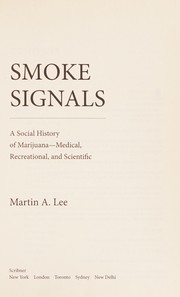
Smoke signals (Martin A. Lee, 524 pages) is the fullest social and political history of cannabis in America — nineteenth-century medical use, Anslinger and the 1937 tax act, the counterculture, and the AIDS-era medical movement that made legalisation possible. It ends around 2012, so it predates every adult-use market except Colorado and Washington. Grass roots (Emily Dufton) is a historian's account of the pendulum between reform and backlash, and the best thing on the list for understanding the parent-led anti-marijuana movement of the late 1970s that reversed an almost-won decriminalisation. Our catalogue record for it gives only 156 pages, which is low enough that it may be a partial or condensed record rather than the full book — worth checking before you order.
The drug war it was reacting against
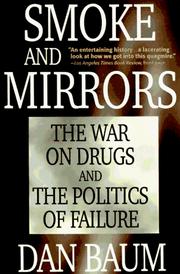
Smoke and mirrors (Dan Baum, 396 pages) is the political history of the American war on drugs from Nixon onward, reported from inside the agencies that ran it. Written in 1996, it is now entirely historical, and that is its value: it captures the enforcement consensus at full strength. Chasing the Scream (Johann Hari, 400 pages) is a global tour of prohibition and its alternatives, including Portugal's decriminalisation — vivid, openly polemical, and with some of its scientific claims about addiction contested, so read it for the reporting. Brave New Weed (Joe Dolce) travels through the emerging legal and quasi-legal cannabis world as it was being built, and is the most dated book here in its market specifics.
Designing a legal market
This is the analytical core. Marijuana Legalization: What Everyone Needs to Know® (304 pages) is Caulkins, Kilmer and Kleiman laying out the design space — licence caps, potency taxes, home growing, advertising, ownership rules — without advocating a position, which is rare in this literature. Our record is the 2016 second edition, and there is an earlier record of the same book in the catalogue, so do not buy both; expect the market data to be a decade old. Marijuana (John Hudak, 254 pages) is a Brookings scholar's compact account of the federal-state collision, and the place to go for the banking and tax problems that follow from a Schedule I substance being state-licensed; our record shows it under the bare title. Drugs and Drug Policy is Kleiman, Caulkins and Hawken on drug policy as a whole in the same question-and-answer format, and reading it last in this group shows where cannabis is genuinely unlike other drugs and where reformers assume it is.
The business that formed
Weed the people (Bruce Barcott, 325 pages) reports Washington and Colorado in the first years of adult-use legalisation, when nobody knew how any of it would work — the best narrative of the founding period and the baseline against which later consolidation should be read. Weed Land (Peter Hecht, 264 pages) is the California story specifically: medical dispensaries, federal raids, the defeat of Proposition 19. The cannabis manifesto (Steve DeAngelo, 325 pages) is a participant's brief by the founder of one of the largest American dispensaries — read it as advocacy and as the clearest statement of the movement's self-understanding as it turned commercial. Can Legal Weed Win? is the most current and most quantitative book on the path: two agricultural economists on falling wholesale prices, why illicit supply persists under high taxes, and why most licensed operators lose money.
Where the supply came from
Home grown (Isaac Campos, 344 pages) shows that Mexico banned cannabis before the United States did, driven by its own beliefs about madness and violence — rigorous archival history that overturns the standard account of prohibition being exported southward. Marijuana Boom (Lina Britto, 352 pages) traces the rise and collapse of Colombia's marijuana export economy in the 1970s and how its bust set the stage for cocaine. Together they stop the subject reading as a purely American one.
The staged version, with study plans and the dating caveats attached to each book, is at /paths/pt_ai_the-cannabis-industry.