The Gambling Industry: The Best Books on Casinos and the Business of Betting, in Order
Gambling is one of the few businesses whose product is a known negative-expectation transaction, so the whole industry is an exercise in making a mathematically losing proposition feel worth repeating. This path takes it from the operator's side: the long history and the Nevada corporate takeover, how a casino floor and its comps actually work, the slot machine as an engineered behavioural device, the mathematics and the people who have beaten it, and finally the online and sports-betting expansion that has moved the same machinery onto phones. Where a book is a first-person yarn rather than a documented account, the note says so.
How the business got here
BeginnerEstablish the long arc: gambling as a near-universal human activity, its criminal-financing phase in mid-century Nevada, and the corporate and regulatory shift that turned casinos into publicly traded companies. You should end able to explain why licensing regimes, not demand, determine where this industry can operate.
▸ Study plan for this stage
Pace: Seven weeks for 1,311 pages, and the three sit at different points on the survey-to-argument scale. Schwartz's Roll the Bones (592pp) is the longest and is the reference survey — three weeks at 30 pages a session, scholarly, running from dice in antiquity to Macau and online, and the book everything
- Gambling as a near-universal activity with a legal status that varies entirely by jurisdiction
- The criminal-financing phase of mid-century Nevada, and what actually changed it
- The Corporate Gaming Act era and the shift to publicly traded ownership
- Licensing regimes rather than demand as the thing that determines where the industry can operate
- The integrated resort: gambling as one revenue line among rooms, food, retail and entertainment
- Investigative history as a genre — how a named allegation is sourced and what makes it hold up
- Why did casino ownership have to change before institutional capital could enter?
- What does Schwartz identify as the invention in the resort format, and what did it replace?
- Denton and Morris name specific people. What kind of source supports each of their central allegations?
- Where does a survey history and a prosecution case describe the same event differently?
- Why does licensing, rather than consumer demand, decide where a casino can exist?
- Build a timeline of the Nevada regulatory regime from Schwartz, then mark each entry that Denton and Morris treat as contested.
- Take the revenue mix of a modern integrated resort and trace each line back to the format change Suburban Xanadu describes.
- For three allegations in The money and the power, record the source type: court record, testimony, interview, or inference.
- Write half a page distinguishing what this stage establishes as documented from what it argues.
Next up: History explains why the industry is legal where it is; the next stage is how the thing actually runs once the licence is in hand.
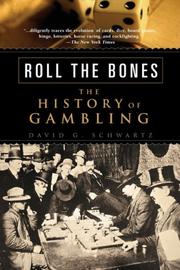
The standard general history of gambling, by the former director of UNLV's gaming research centre — dice in antiquity through to Macau and online. Scholarly, comprehensive, and the reference point for everything that follows.

Schwartz's academic study of how the casino resort format was invented and sold as respectable middle-class leisure. The best explanation of the business model shift from gambling hall to integrated resort, which is where the industry's modern revenue mix comes from. The catalogue lists the author with the initial inverted.

Denton and Morris on Las Vegas as a laundering and political-financing machine from 1947 to 2000, naming the operators, mob figures and politicians involved. Documented investigative history rather than mob legend, and firmly a case for the prosecution — read it as such.
How a casino floor is actually run
IntermediateGet inside the operation: hold percentage and drop, the comp system as a customer-value calculation, credit and markers, the difference between grind players and whales, and why the surveillance and the marketing department are looking at the same data. This is the operational reality every policy argument later is about.
▸ Study plan for this stage
Pace: Six to seven weeks for 1,137 pages of reported narrative, all readable at 40 pages a session but each with a different standing. Earley's Super Casino (449pp) first, three weeks: a reporter given long access to a Las Vegas property during the corporate era, and the most complete inside account of ru
- Hold percentage and drop, and the difference between what is wagered and what is kept
- The comp system as a computed share of a player's expected loss, not a gift
- Credit and markers, and the collection machinery behind them
- Grind players versus whales, and why the two require different operations
- Theoretical win as the number the whole customer relationship is priced from
- Why surveillance and marketing read the same player data for different purposes
- The skim as it worked before corporate ownership, and what made it possible
- Define hold and drop and explain why a rise in one does not imply a rise in the other.
- How is a comp calculated, and what does the calculation assume about the player's future behaviour?
- What does a casino host actually do, and what authority do they have?
- How did the skim work mechanically, and which controls ended it?
- Which parts of Earley's account describe practices that would still be recognisable, and which are of their era?
- Work out a comp for a hypothetical player from the theoretical-win formula the books describe, stating every input.
- List the controls that make a modern count room auditable, using Pileggi's account of what was being defeated.
- For Whale Hunt in the Desert, write the full lifecycle of one high-roller relationship from identification to credit to settlement.
- Mark every operational figure in this stage with a date, and note which are likely to have moved since.
Next up: Table games carry the drama; the next stage shows that most of the revenue comes from a machine designed to hold a player in front of it.
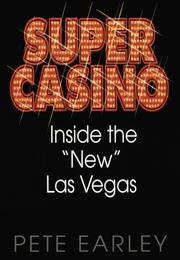
A reporter given long access to the Las Vegas Hilton during the corporate era, covering the executives, the dealers and the high-roller business in operational detail. The most complete inside account of running a casino as a business rather than as a story.
The economics of the high-roller trade told through a casino host — how a whale is valued, comped, flown in and extended credit. Narrow, specific, and the clearest illustration of a casino treating a customer as an expected-value calculation.
Pileggi's reconstruction of the Teamsters-financed Stardust and the skim, built from FBI wiretaps and interviews. Better sourced than its film reputation suggests, and the clearest picture of what the industry looked like immediately before the regulatory clean-up.
The machine is the product
IntermediateUnderstand that slots and lotteries — not table games — are where most gambling revenue comes from, and that both are deliberately designed products. Learn what near-miss design, losses disguised as wins and time-on-device optimisation mean, and how state lotteries make a government the marketer of the same proposition.
▸ Study plan for this stage
Pace: Six weeks. Two lengths are recorded — Schüll's Addiction by design at 442pp and Clotfelter and Cook's Selling hope at 323pp, 765 pages between them — while Cohen's For a Dollar and a Dream carries no page count in our catalogue, so allow it a fortnight on difficulty. Start with Addiction by design,
- The machine zone: time-on-device as the design objective rather than a by-product
- Near-miss design and losses disguised as wins, and how each is engineered and regulated
- Where the revenue actually comes from — machines and lotteries rather than table games
- The implicit tax rate of a lottery and its distribution across income groups
- A government as the marketer of a negative-expectation product, and the fiscal argument used to justify it
- Earmarking, and the difference between money labelled for schools and money added to school budgets
- Regulation as a specification: what the regulator permits becomes what the machine does
- What is a loss disguised as a win, and how would a player notice one?
- How does time-on-device change what a machine is optimised for, compared with maximising a single wager?
- What is the implicit tax rate of a typical lottery, and how do Clotfelter and Cook compute it?
- What happened to earmarked lottery revenue, on Cohen's account?
- Schüll interviewed designers and regulators as well as players. Which of her claims rest on which?
- Why is a slot machine a harder object to regulate than a table game?
- Take one machine feature Schüll describes and write out the player experience, the design intent, and the regulatory rule that permits it.
- Recompute a lottery's expected value from published odds and prize structure, then compare it to the implicit tax rate in Selling hope.
- Track one state's lottery revenue claim from campaign promise to budget outcome, using Cohen's material.
- Return to the hold figures from stage two and estimate how much of a property's revenue the machine floor accounts for.
Next up: Every one of these products has a published edge, which raises the question of when, if ever, that edge can be overcome.

Fifteen years of fieldwork with machine gamblers and with the designers, regulators and industry conferences that shape the machines, showing addiction as a product specification rather than a side effect. The most important book on this path and the one that changed how the subject is discussed.
Clotfelter and Cook's economic analysis of state lotteries — who plays, what the implicit tax rate is, and how states market them. Older than the rest of the stage and still the standard scholarly treatment of the largest legal gambling channel in America.

A historian's account of how state lotteries were sold to voters as painless revenue for schools and what the money actually did. The modern update to Selling Hope, and the bridge to the political-economy question of who profits from all this.
The mathematics, and the people who beat it
IntermediateSee the industry from the other side of the table. The house edge is not a trick but a published parameter, and the small number of situations where it can be overcome are instructive about the rest. Finish able to explain why advantage play is possible in blackjack and sports betting and essentially impossible on a modern slot machine.
▸ Study plan for this stage
Pace: Three weeks for 508 pages, the shortest stage on the path and the most technically satisfying. Kucharski's The perfect bet (280pp) first, ten days: a mathematician's survey of every serious attempt to beat gambling with science — roulette computers, card counting, betting syndicates, algorithmic spo
- House edge as a published parameter, not a hidden trick
- Expected value and variance, and why a positive edge still loses over short runs
- Card counting and the specific structural feature of blackjack that makes it possible
- Why advantage play is essentially impossible on a modern slot machine
- Where an edge exists in sports betting, and what it costs to maintain
- Bankroll management and the Kelly criterion as the practical constraint on any edge
- The operator's countermeasures as evidence that an edge was real
- What structural feature of blackjack makes counting work, and what would remove it?
- Why can a game with a known edge not be beaten by a betting system alone?
- What countermeasures did the industry adopt after Thorp, and what did each cost the house?
- Which of Kucharski's cases are documented and which are claimed? Name one of each.
- Explain precisely why a modern slot cannot be beaten by observation.
- Work a simple count through a real deck and record your running count against the true count at three points.
- Compute the house edge for two versions of one game from the published rules, and say which rule change matters most.
- For one syndicate in The perfect bet, list the inputs to its model and the cost of obtaining each.
- Write a page on why the countermeasures described by Thorp are the strongest evidence his system worked.
Next up: The same edge, the same machine and the same customer data now sit on a phone, which is where the argument has moved.

A mathematician's survey of every serious attempt to beat gambling with science — roulette computers, card counting, betting syndicates, algorithmic sports models. The best single explanation of where an edge can exist and why almost every claimed one does not.
The 1962 book that proved blackjack could be beaten and forced the industry to change its rules, shuffling and surveillance in response. A primary document: read it for the operator's reaction as much as for the system.
Online, offshore and sports betting
IntermediateBring the story to the current expansion, in which a phone is the machine and the regulatory question is being re-argued state by state. Note that this is the fastest-dating part of the subject: the legal position described in any of these books has already moved, so read them for the mechanics and the incentives rather than for the current rules.
▸ Study plan for this stage
Pace: Five to six weeks for 921 pages, and this is the fastest-dating stage on the path: the legal position described in every one of these books has already moved, so read them for the mechanics and the incentives and never for the current rules. Schwartz's Cutting the Wire (282pp) first, ten days — the
- The statutory machinery — wire-based prohibitions and their reinterpretation — that all current arguments run through
- Offshore licensing and why an operator's jurisdiction is a business decision
- How sports-betting corruption actually operates: the information advantage, the syndicate, the line movement
- Line movement as a detection signal, and what monitoring can and cannot see
- Daily fantasy's regulatory argument and how it positioned the companies for what followed
- Customer acquisition economics in a phone-based market, and the promotional spend behind it
- Why every legal fact in this stage should be checked against the present before it is repeated
- What did the wire-based statutes actually prohibit, and on what did the modern reinterpretation turn?
- In the scandal Griffin reconstructs, what was the information advantage and how was it monetised?
- What does unusual line movement indicate, and what are the limits of that signal?
- What argument did the daily-fantasy companies make about their product, and what did it get them?
- Which claims in Billion Dollar Fantasy are shaped by the author's access to the founders?
- Which parts of this stage are mechanics that will hold, and which are legal facts that have already changed?
- Take every legal rule stated across these three books and check whether it still stands, recording the answer and the date of your check.
- Reconstruct the flow of information and money in Griffin's case as a diagram from the court-record detail he gives.
- Compare the customer economics of a phone sportsbook with the comp calculation from stage two and note what is the same.
- Write 800 words on which of the machine-design findings from stage three apply to a betting app, citing Schüll and at least one book here.
Next up: You can now read any gambling story — a new market, a scandal, a regulatory change — and identify the mechanics, the incentives and the author's position underneath it.
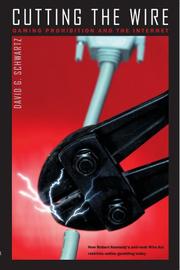
The history of American attempts to regulate gambling across communications wires, from telegraph race wires to the Wire Act and early internet betting. Written before the modern legal sports-betting era and precisely for that reason the best explanation of the statutory machinery all of it turns on.

A criminologist's reconstruction of the Tim Donaghy NBA betting scandal and the professional syndicate around it, built on court records and interviews. The documented account of how sports betting corruption actually works, as opposed to how it is imagined.

The business history of DraftKings and FanDuel, from daily fantasy sports through the regulatory fight to the eve of legal sports betting. Business journalism written close to its subjects, and the origin story of the companies now dominating the American market.
Discussion
Keep reading
Paths that share books, cover the same subject, or open a related topic.