Environmental science reading path: from ecosystems to climate and sustainability
This curriculum takes a beginner from the foundational principles of how Earth's living systems work, through the human pressures driving pollution and climate change, to an advanced understanding of sustainability, policy, and the path forward. Each stage builds the scientific vocabulary and systems-thinking needed for the next, ensuring no reader is left behind as the complexity deepens.
Foundations: How Earth Works
BeginnerUnderstand the basic principles of ecology, ecosystems, and the natural systems that sustain life on Earth — building the vocabulary needed for everything that follows.
▸ Study plan for this stage
Pace: 8–10 weeks, ~40–50 pages/day. Allocate roughly 3 weeks to "A Sand County Almanac" (essays, slower pace for reflection), 3 weeks to "The Web of Life" (dense concepts, requires re-reading), and 2–3 weeks to "Ecology" (technical foundation, reference-style reading).
- Land ethic and Leopold's concept of the biotic community as an interconnected whole deserving moral consideration
- Ecosystem structure and function: energy flow, nutrient cycling, and the role of different trophic levels
- Systems thinking and holistic interconnectedness: how organisms, populations, and environments form nested, self-regulating systems
- Biodiversity and ecological relationships: competition, predation, mutualism, and succession as drivers of ecosystem dynamics
- The distinction between reductionist and holistic approaches to understanding nature, and why both matter
- Human impact on natural systems and the concept of ecological limits and carrying capacity
- Adaptation, natural selection, and evolution as mechanisms shaping life within ecological constraints
- What is Leopold's 'land ethic' and how does it challenge the traditional view of humans' relationship with nature?
- How do energy flow and nutrient cycling maintain the stability of ecosystems, and what happens when these cycles are disrupted?
- What does Capra mean by 'systems thinking,' and how does this perspective change the way we understand ecological problems?
- Describe the major ecological relationships (predation, competition, mutualism) and explain how they structure communities and influence population dynamics.
- What is ecological succession, and how does it demonstrate the self-organizing capacity of ecosystems?
- How do biodiversity and genetic variation contribute to ecosystem resilience and the ability of species to adapt to environmental change?
- Keep a nature journal while reading 'A Sand County Almanac': observe a local ecosystem (park, garden, or forest) monthly and record species, interactions, and seasonal changes. Reflect on Leopold's observations in your own observations.
- Create a systems diagram of a local or familiar ecosystem (e.g., a pond, forest, or backyard): map organisms, energy flows, and nutrient cycles. Identify feedback loops and tipping points.
- Read and annotate one essay from 'A Sand County Almanac' per week, then write a one-page reflection connecting Leopold's ideas to a current environmental issue.
- Build a food web for a real ecosystem (research online or from field observation), then trace energy flow from producers to top predators. Calculate approximate energy transfer efficiency between trophic levels.
- Conduct a biodiversity survey of a small area (10m × 10m): count and identify species, then discuss how diversity might affect ecosystem stability using concepts from Capra and Ghazoul.
- Write a comparative analysis (2–3 pages) of how Leopold, Capra, and Ghazoul each explain why ecosystems are resilient or fragile. Use specific examples from all three books.
Next up: By mastering these foundational principles of how ecosystems work—their structure, dynamics, and interconnectedness—you will be equipped to examine specific environmental challenges (climate change, biodiversity loss, pollution) and evaluate solutions in the next stage.

A beautifully written, accessible classic that introduces ecological thinking and the idea of a 'land ethic,' giving beginners an intuitive feel for how nature is interconnected before any technical detail.
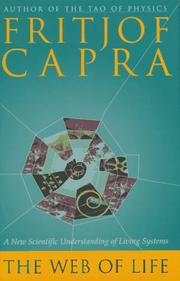
Explains systems thinking and how living networks — from cells to ecosystems — are organized, giving readers the conceptual framework to understand ecology as an interconnected whole.

A concise, authoritative primer on core ecological concepts — energy flow, food webs, nutrient cycles, and biodiversity — that prepares readers for more detailed environmental science texts.
Human Pressures: Pollution & Environmental Degradation
BeginnerRecognize how human industrial and agricultural activity disrupts natural systems through pollution, habitat loss, and chemical contamination.
▸ Study plan for this stage
Pace: 6–8 weeks, ~40–50 pages/day. Start with "Silent Spring" (3–4 weeks), then move to "Cradle to Cradle" (3–4 weeks) to shift from problem identification to solution-oriented thinking.
- Bioaccumulation and biomagnification: how synthetic chemicals like DDT concentrate up the food chain and persist in ecosystems
- Unintended ecological consequences: how pesticides and industrial chemicals kill non-target species and disrupt predator-prey relationships
- The precautionary principle: acting despite incomplete scientific certainty when potential harms are severe
- Industrial metabolism and cradle-to-cradle design: moving from linear 'take-make-waste' models to cyclical systems that eliminate the concept of waste
- Chemical contamination as a systemic problem: understanding how pollution stems from industrial and agricultural practices, not isolated accidents
- Natural capital and ecosystem services: recognizing what healthy ecosystems provide and what we lose through degradation
- Design for the environment: how product design and manufacturing processes can either perpetuate or solve pollution problems
- Human responsibility and agency: understanding that environmental degradation is a direct result of human choices and can be reversed through different choices
- What is bioaccumulation, and why does DDT become more concentrated in predators than in the organisms they consume?
- How did Carson argue that synthetic pesticides cause unintended harm to non-target species, and what examples did she provide?
- What is the difference between the linear 'cradle-to-grave' industrial model and the 'cradle-to-cradle' model proposed by McDonough?
- What does it mean for a chemical to be persistent in the environment, and why is persistence a key concern in Silent Spring?
- How do McDonough and Braungart argue that pollution is actually a design problem rather than an inevitable cost of production?
- What role does the precautionary principle play in Carson's argument for restricting pesticide use despite industry claims of safety?
- Create a bioaccumulation diagram: trace DDT or another persistent chemical through a food chain (plankton → fish → bird), calculating concentration increases at each level based on Carson's data.
- Analyze a modern product (e.g., a smartphone, plastic bottle, or piece of clothing) and map its lifecycle using cradle-to-grave thinking; then redesign it using cradle-to-cradle principles from McDonough's framework.
- Research a contemporary pesticide or industrial chemical and write a 2–3 page report examining its environmental persistence, bioaccumulation potential, and ecological effects—applying Carson's methodology to a modern case.
- Conduct a local pollution audit: identify three sources of pollution in your community (agricultural runoff, industrial discharge, consumer waste) and propose a cradle-to-cradle solution for one of them.
- Debate exercise: argue both sides—industry's defense of synthetic pesticides (as presented in Silent Spring) versus Carson's precautionary stance—then synthesize how McDonough's design approach might resolve the conflict.
- Design a poster or infographic explaining one key concept from each book (e.g., biomagnification from Silent Spring and industrial metabolism from Cradle to Cradle) for a general audience.
Next up: This stage establishes that human activities cause widespread environmental harm through pollution and degradation; the next stage will explore how ecosystems respond to these pressures, how we measure environmental damage, and what ecological limits and tipping points we face.
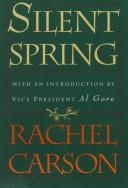
The landmark book that launched the modern environmental movement; it vividly illustrates how pesticides cascade through ecosystems, making pollution tangible and urgent for any reader.

Reframes waste and industrial design as environmental problems with design-based solutions, bridging the gap between understanding pollution and beginning to think about remedies.
Energy & Climate: The Core Crisis
IntermediateUnderstand the science of climate change, the role of fossil fuels and energy systems, and the real-world consequences already unfolding across the planet.
▸ Study plan for this stage
Pace: 10–12 weeks, ~40–50 pages/day (with reflection breaks). Weart (~320 pages): 2 weeks; Wallace-Wells (~576 pages): 3 weeks; Rhodes (~700 pages): 4–5 weeks.
- The historical development of climate science: how scientists discovered and validated the greenhouse effect and anthropogenic warming (Weart's core narrative)
- Feedback loops and tipping points: how warming triggers cascading effects (ice-albedo feedback, methane release, ocean circulation changes) that amplify climate disruption
- The multifaceted consequences of warming: heat waves, sea-level rise, ecosystem collapse, agricultural stress, migration, and conflict across interconnected systems (Wallace-Wells' synthesis)
- Fossil fuel energy systems: their dominance in modern civilization, the physics of energy extraction and conversion, and their carbon intensity (Rhodes' historical and technical foundation)
- The lag between emissions and climate response: why even if we stopped emitting today, warming would continue for decades, and why early action is critical
- The difference between climate science (well-established) and climate impacts (uncertain but increasingly severe): how to evaluate risk under uncertainty
- Energy alternatives and transitions: the technical and economic feasibility of renewable and nuclear energy as replacements for fossil fuels
- How did scientists in the 19th and 20th centuries discover that CO₂ traps heat, and what evidence convinced the scientific community that human activities were warming the planet? (Weart)
- What are the major feedback mechanisms that could accelerate climate change beyond linear warming projections, and why do they matter for long-term planning? (Weart and Wallace-Wells)
- Describe at least three cascading consequences of warming that Wallace-Wells emphasizes (e.g., heat stress, crop failure, ecosystem disruption) and explain how they interact to compound global risk.
- What is the historical role of fossil fuels in powering industrial civilization, and what technical and energetic advantages made them dominant? (Rhodes)
- Why does atmospheric CO₂ continue to warm the planet for decades after emissions stop, and what does this imply for climate policy?
- Compare the energy density, scalability, and carbon footprint of at least three energy sources (fossil fuels, nuclear, renewables) based on Rhodes' analysis.
- How would you explain to a skeptic why climate science is reliable despite uncertainty about specific regional impacts?
- Timeline exercise: Create a visual timeline of climate science milestones from Weart (Fourier, Arrhenius, Keeling, IPCC) with key evidence and dates. Annotate with corresponding CO₂ levels and global temperature anomalies.
- Feedback loop mapping: Draw or diagram 4–5 feedback mechanisms (ice-albedo, water vapor, methane hydrate, cloud effects) and trace how each amplifies warming. Use Weart and Wallace-Wells to label tipping points.
- Impact cascade analysis: Choose one Wallace-Wells scenario (e.g., heat death, crop failure, ocean acidification). Map how it triggers secondary and tertiary consequences across food, water, migration, and conflict systems.
- Energy audit: Calculate your household's annual energy consumption (electricity, heating, transport, food). Identify the fossil fuel sources and estimate CO₂ emissions using Rhodes' energy-to-carbon ratios. Propose three realistic reductions.
- Comparative energy analysis: Create a table comparing coal, oil, natural gas, nuclear, solar, and wind on: energy density (joules/kg), EROI (energy return on investment), carbon intensity (g CO₂/kWh), and scalability. Use Rhodes as the primary source.
- Policy scenario writing: Write a 2–3 page memo outlining an energy transition strategy for a specific country or region, drawing on Rhodes' technical analysis and the urgency framed by Weart and Wallace-Wells. Include timelines, trade-offs, and feasibility.
- Debate preparation: Prepare arguments for and against a specific climate policy (e.g., carbon tax, nuclear expansion, fossil fuel divestment) using evidence from all three books. Identify where science ends and values/economics begin.
Next up: This stage establishes the scientific foundation and urgency of the climate crisis; the next stage will likely focus on solutions, policy frameworks, and individual/collective action—requiring readers to move from understanding the problem to evaluating and implementing responses.
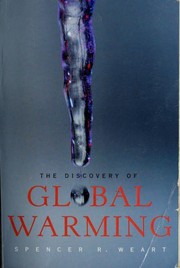
Traces the history of climate science in a clear, narrative style — ideal at this stage because it explains the evidence and mechanisms of climate change without assuming prior scientific expertise.
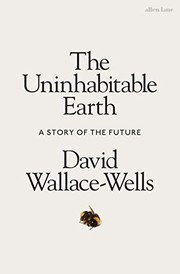
A rigorously researched survey of climate change's cascading consequences — heat, famine, flooding, conflict — that translates intermediate climate science into vivid, concrete human stakes.

Provides essential historical context for how humanity came to depend on fossil fuels, making it easier to understand why transitioning away from them is so structurally difficult.
Sustainability & Solutions
ExpertEvaluate credible, evidence-based solutions to the environmental crisis — spanning renewable energy, sustainable agriculture, policy, and economic redesign — and think critically about trade-offs.
▸ Study plan for this stage
Pace: 6–8 weeks, ~40–50 pages/day (accounting for dense data tables and solution profiles)
- The concept of 'drawdown' — the point at which greenhouse gas concentration in the atmosphere begins to decline — as a framework for evaluating solutions
- Ranking and prioritizing climate solutions by impact potential, cost-effectiveness, and feasibility across sectors (energy, food, materials, land use)
- The interconnectedness of solutions: how addressing one problem (e.g., food waste) cascades to solve others (e.g., methane emissions, land restoration)
- Evidence-based evaluation of renewable energy, regenerative agriculture, and nature-based solutions with quantified impact projections
- The role of policy, market mechanisms, and behavioral change in scaling solutions globally
- Trade-offs and limitations in proposed solutions: cost, scalability, regional applicability, and unintended consequences
- Systems thinking: understanding how solutions interact within social, economic, and ecological systems rather than in isolation
- What does 'drawdown' mean, and why is it a more useful framework than simply reducing emissions?
- According to Hawken's analysis, what are the top 5–10 most impactful climate solutions, and what metrics does he use to rank them?
- How do renewable energy solutions compare to land-use and agricultural solutions in terms of their potential to reach drawdown?
- What are the key trade-offs or limitations Hawken identifies for major solutions (e.g., cost, scalability, land requirements, or regional feasibility)?
- How do solutions in different sectors (energy, agriculture, materials) reinforce or depend on each other?
- What role do policy, economic incentives, and behavior change play in making solutions viable at scale?
- Create a ranked comparison table of 8–10 solutions from Drawdown, scoring each on impact potential, cost, scalability, and feasibility for your region or country
- Select one solution from the book and research a real-world implementation project; write a 2–3 page analysis of how it aligns with or diverges from Hawken's projections
- Map the interconnections between three solutions (e.g., regenerative agriculture → reduced methane → land restoration → carbon sequestration); diagram how solving one creates co-benefits
- Identify a solution Hawken presents and articulate its major trade-offs: What does it require? What does it risk? Who bears the costs vs. benefits?
- Debate exercise: Choose two competing solutions and argue which should receive priority funding, using Hawken's data and your own critical analysis
- Design a hypothetical policy or market mechanism that could accelerate one of Hawken's solutions in a specific sector or region
Next up: This stage equips you with a comprehensive, evidence-based toolkit for evaluating climate solutions and their trade-offs, preparing you to engage critically with implementation challenges, policy debates, and the question of how to navigate competing priorities in the transition to a sustainable economy.
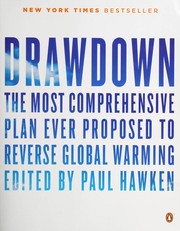
A data-driven compendium of the 100 most substantive solutions to climate change, ranked by impact — the essential reference for moving from problem diagnosis to solution analysis.
Discussion
Keep reading
Paths that share books, cover the same subject, or open a related topic.