The Lymond Chronicles Reading Order and Guide
The Lymond Chronicles is a densely layered, linguistically demanding series that rewards — and requires — sequential reading: each novel builds its emotional, political, and psychological architecture on the last, and Dunnett deliberately withholds revelations that only pay off if you have lived through every prior volume. Starting at expert level, this curriculum moves from the series itself (read in strict order) through the historical and literary contexts that unlock Dunnett's deepest allusions, and finally into the craft and scholarship that lets you re-read with full mastery.
The Six Novels — In Sequence, No Exceptions
ExpertComplete the Lymond Chronicles in the exact order Dunnett wrote them, experiencing the cumulative revelation of Francis Crawford's identity, psychology, and fate as the author intended — each book's ending is a key that unlocks the next.
▸ Study plan for this stage
Pace: 6–9 months total (one novel per month, with a flex week between each for reflection and notes); target ~25–35 pages per day on reading days, allowing 4–5 reading days per week. Suggested monthly breakdown: Month 1 = The Game of Kings, Month 2 = Queens' Play, Month 3 = The Disorderly Knights, Month 4
- The cumulative identity reveal of Francis Crawford of Lymond: each novel strips away another layer of his self-constructed mask, and the reader must track what is performance versus what is authentic self
- Chess as structural and thematic metaphor: Dunnett uses chess terminology (pawn, queen, king, checkmate) not decoratively but architecturally — each title signals the power dynamics and sacrificial logic of that book's plot
- The cost of brilliance and self-suppression: Lymond's compulsive self-destruction, his refusal to accept love, and his use of cruelty as armor are a sustained psychological study across all six novels
- Historical immersion as narrative method: Dunnett embeds the reader in mid-16th-century Scotland (Game of Kings), France (Queens' Play), the Knights of St. John and Scotland (The Disorderly Knights), the Ottoman Empire (Pawn in Frankincense), Muscovite Russia (The Ringed Castle), and France/Scotland
- The women of the Chronicles as moral and dramatic counterweights: Sybilla, Mariotta, Christian Stewart, Oonagh O'Dwyer, Güzel, Philippa Somerville — each represents a different claim on Lymond's soul, and Philippa's arc across the final three novels is the emotional spine of the series
- Secrets, parentage, and the burden of the past: the mystery of Lymond's true origins, seeded in The Game of Kings and resolved only in Checkmate, is the series' central dramatic engine — readers must actively track clues across all six books
- The ensemble as Greek chorus: the members of Lymond's company (Jerott Blyth, Archie Abernethy, Adam Blacklock, and others) reflect and refract his choices, and their fates are moral commentaries on his leadership
- Dunnett's prose style as an active reading challenge: dense literary allusion, untranslated Latin/French/Italian, unreliable free indirect discourse, and deliberate withholding of information require the reader to tolerate ambiguity and reward re-reading
- By the end of The Game of Kings, what has the reader learned about Lymond's guilt or innocence regarding the charges against him, and what remains deliberately unresolved about his character and past?
- How does Queens' Play reframe Lymond's relationship to loyalty and nation — and what does his mission to protect Mary Queen of Scots in France reveal about the tension between his public duty and private disintegration?
- In The Disorderly Knights, how does Graham Reid Malett (Gabriel) function as Lymond's dark mirror, and what does Lymond's failure to stop him in time cost the people around him — specifically Jerott and the Knights of St. John?
- Pawn in Frankincense is widely considered the series' emotional breaking point: what is the nature of the impossible choice Lymond is forced to make, and how does it permanently alter his psychology and his relationship to hope?
- The Ringed Castle relocates Lymond to Muscovite Russia under Ivan the Terrible: how does this setting — a court of absolute, capricious power — serve as an externalization of Lymond's own internal tyranny, and what does Philippa's growing role in this novel signal about the series' final movement?
- After completing Checkmate, how does Dunnett's resolution of Lymond's parentage recontextualize moments from The Game of Kings and Queens' Play, and in what sense is the ending both an earned conclusion and a deliberate refusal of conventional heroic closure?
- Keep a 'Lymond Mask Log' — after finishing each novel, write one page describing what new layer of Lymond's true self was revealed and what new defense mechanism replaced it; by Checkmate you will have a six-entry psychological portrait to compare against the final pages
- Map the chess metaphor explicitly: for each novel, identify at least three scenes where the title's chess concept (king in jeopardy, queen's gambit, pawn sacrifice, etc.) is literalized in the plot or dialogue, and write a short paragraph connecting the chess logic to the human stakes of that scene
- Maintain a 'Secrets and Clues' running document: every time a piece of information about Lymond's parentage, his time before The Game of Kings, or Sybilla's hidden knowledge is hinted at, log the page, the hint, and your current best theory — then annotate it after finishing Checkmate
- After Pawn in Frankincense, write a 500-word response to the question: 'Was Lymond's choice at the novel's climax the right one?' — argue a position, then write a 250-word rebuttal from the opposing view; this forces engagement with Dunnett's moral ambiguity rather than passive absorption
- Trace Philippa Somerville's arc across The Disorderly Knights, Pawn in Frankincense, The Ringed Castle, and Checkmate by writing a one-paragraph character summary after each of those four books, focusing on how her understanding of Lymond changes and how her own agency grows — compile the four paragraphs into a single essay after Checkmate
- Create a 'Company Roster' document at the start of The Game of Kings and update it after every novel: for each member of Lymond's company, track their status (alive/dead/departed), their loyalty level, and one defining moment — this prevents character confusion across 3,000+ pages and reveals Dunnett's pattern of stripping Lymond of every support
Next up: Completing all six novels in sequence — with the synthesis documents, mask log, and Philippa essay in hand — gives the reader the full emotional and intellectual architecture of the Chronicles, preparing them to either deepen their understanding through Dunnett's companion work on the historical figures encountered (particularly Mary Queen of Scots and Ivan the Terrible), or to transition to Dunne
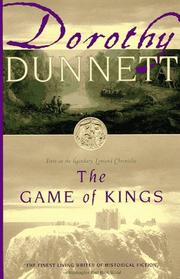
The essential entry point: introduces Lymond as an outlaw in 1540s Scotland, establishes Dunnett's polyglot, allusion-saturated prose style, and plants the identity mystery that drives the entire series. Reading this first is non-negotiable.
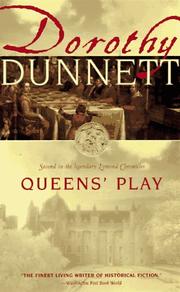
Moves the action to the French court and deepens the political chess-game metaphor; must follow Book 1 because Lymond's hard-won reputation and relationships from Scotland are the currency he spends here.
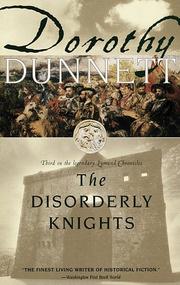
The darkest pivot of the early series, introducing the Knights of St John and the catastrophic siege of Malta; the moral collapse depicted here is only devastating if you have watched Lymond's careful self-construction in Books 1–2.
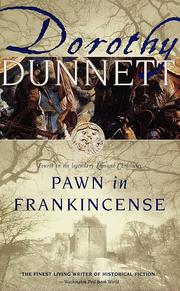
Widely considered the emotional climax of the series; its final scene is one of the most harrowing in historical fiction and is completely unintelligible — and unearnable — without the three preceding volumes of accumulated dread.
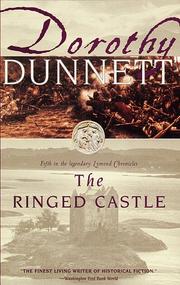
Lymond in Muscovy under Ivan the Terrible; the stripped, almost silent register of this book is a deliberate contrast to earlier volumes and only registers as such if you have heard Dunnett's full rhetorical voice in Books 1–4.
The final resolution of every mystery, relationship, and identity question seeded across five books; reading this out of order would be meaningless — it is the answer sheet to a six-volume examination.
Historical Scaffolding — The World Dunnett Built In
ExpertUnderstand the real 16th-century political, military, and cultural landscape — Tudor-Stewart Scotland, Valois France, the Ottoman Empire, Muscovy — so that Dunnett's historical liberties and accuracies can be fully appreciated on a re-read.
▸ Study plan for this stage
Pace: 10–12 weeks total. MacCulloch's "The Reformation" is dense and long (~700 pages of text): plan 6–7 weeks at roughly 25–30 pages/day, reading thematically rather than racing — pause at the end of each major section to take notes on Scotland, France, and the Ottoman frontier. Troyat's "Ivan the Terrib
- The fracturing of Western Christendom: how the Lutheran, Calvinist, and Catholic Reform movements created the ideological fault-lines that define every court Lymond moves through — Edinburgh, Paris, Constantinople, and Moscow alike
- Tudor-Stewart Scotland's precarious sovereignty: the 'Rough Wooing,' the French alliance (the Auld Alliance), Mary of Guise's regency, and the Protestant Lords of the Congregation — the exact political weather of 'The Game of Kings' and 'Queens' Play'
- Valois France as a confessional battleground: Henri II's court, the Guise ascendancy, the Italian Wars' legacy, and the slow slide toward the Wars of Religion — the world Lymond inhabits in 'Queens' Play' and 'The Disorderly Knights'
- The Ottoman Empire as a European great power: Suleiman the Magnificent's strategic reach into the Mediterranean and Central Europe, the role of Dragut and the corsair networks, and why a Christian mercenary serving the Porte was a political — not merely moral — scandal
- Muscovy under Ivan IV: the early 'good Tsar' phase, the Boyar power struggle, the conquest of Kazan, the founding of the Oprichnina, and the psychology of autocratic terror that Troyat renders so vividly — the backdrop to 'The Ringed Castle'
- The Council of Trent and the Catholic response: how reform-from-within shaped the Jesuit order, the Inquisition's reach, and the loyalties of characters like Graham Reid Malett in 'The Disorderly Knights'
- Military technology and the 'gunpowder revolution': the transformation of siege warfare, galley warfare in the Mediterranean, and steppe cavalry tactics — all of which Dunnett renders with technical precision
- The role of humanist learning and Renaissance court culture: how Erasmian education, Neoplatonism, music, and classical scholarship shaped the ideal of the 16th-century gentleman — and Lymond himself as a living embodiment of that ideal under stress
- After reading MacCulloch, can you explain why a Protestant Scotland allied to England was, from a French Valois perspective, an existential dynastic threat — and how that tension drives the plot mechanics of 'Queens' Play'?
- Troyat portrays Ivan's early reign as genuinely reformist before the paranoid terror sets in. How does this dual nature — visionary legislator and pathological tyrant — map onto Dunnett's portrayal of the Tsar in 'The Ringed Castle,' and where does Dunnett take historical liberties?
- MacCulloch gives substantial attention to the Knights of St John (the Hospitallers) and the fall of Rhodes and the siege of Malta. How does this institutional history deepen your reading of Graham Reid Malett and the Order's internal politics in 'The Disorderly Knights'?
- Using both books, can you construct a rough account of why the Ottoman Empire was a rational diplomatic partner for Valois France in the 1540s–50s, and what that Franco-Ottoman alliance meant for a Scottish mercenary captain operating in the Mediterranean?
- What does MacCulloch's treatment of the Scottish Reformation — Knox, the Lords of the Congregation, the role of Geneva — add to your understanding of the religious atmosphere Lymond is fleeing or navigating in the early chronicles?
- Troyat describes the Oprichnina as a state-within-a-state built on personal terror. How does this institution reframe the dangers Lymond and his company face in Muscovy beyond simple physical peril?
- **Annotated Timeline:** Build a single master timeline (a large sheet of paper or a spreadsheet) spanning 1540–1565. As you read each book, add dated political events — the Rough Wooing, the death of Henri II, the conquest of Kazan, the siege of Malta — then, after the stage, overlay the fictional dates of each Lymond Chronicle volume. The overlaps and deliberate displacements will reveal exactly
- **Character–Historical Figure Dossiers:** For five major historical figures who appear (named or thinly veiled) in the Chronicles — e.g., Mary of Guise, Henri II, Suleiman, Ivan IV, and one Guise cardinal — write a half-page 'real vs. Dunnett' comparison using only what MacCulloch and Troyat provide. Note what Dunnett gets forensically right and what she bends for narrative.
- **Mapping Exercise:** Using the maps in both books (MacCulloch's European confessional maps; Troyat's maps of Muscovy and the Khanates), trace Lymond's physical journey across the six novels on a single blank map of Europe and western Asia. Annotate each stop with the dominant political/religious force MacCulloch or Troyat describes for that location at that moment.
- **Close-Reading Comparison:** Choose one battle or siege described in MacCulloch (e.g., the siege of Boulogne or a Mediterranean engagement) and one from Troyat (e.g., the siege of Kazan). Write 300 words on each: the military technology involved, the command structure, the political stakes. Then re-read the corresponding action sequence in the relevant Chronicle volume and note where Dunnett's pr
- **Thematic Essay (500–700 words):** 'The Lymond Chronicles are, at their core, a novel-sequence about what the Reformation did to the idea of personal loyalty.' Using evidence drawn exclusively from MacCulloch and Troyat, argue for or against this proposition — without yet re-reading Dunnett. Save the essay; revisit it after the re-read stage to see how your view has changed.
- **Glossary of Institutions:** Compile a one-page reference glossary of the key institutions that recur across the Chronicles — the Scots Guard, the Order of St John, the Janissaries, the Boyar Duma, the Privy Council of Scotland, the Parlement of Paris. For each, write two sentences: what it actually was (sourced from MacCulloch or Troyat) and what dramatic function it serves in the Chronicles.
Next up: This stage arms the reader with the real 16th-century world as a measuring stick, so that the next stage — a guided, annotated re-read of the Chronicles themselves — becomes an active dialogue between Dunnett's fiction and the verified historical record, transforming passive enjoyment into critical appreciation.
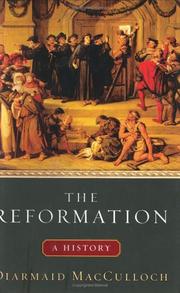
Provides the sweeping religious and political context for every court Lymond moves through; MacCulloch's authoritative account makes Dunnett's factions, martyrs, and diplomats three-dimensional rather than decorative.

The essential companion to The Ringed Castle; Troyat's biography of Ivan IV illuminates exactly how Dunnett compresses, fictionalises, and inhabits the Muscovite court that forms Book 5's terrifying backdrop.
Literary & Linguistic Keys — Cracking Dunnett's Allusions
ExpertGain command of the classical, Renaissance, and poetic sources Dunnett quotes — often without attribution — so that the epigraphs, songs, and embedded verse that punctuate every chapter can be heard at full volume.
▸ Study plan for this stage
Pace: 8–10 weeks total. Week 1–3: Read "The Merry Wives of Windsor" (annotated edition) at a leisurely but attentive pace — roughly 15–20 pages of text plus annotations per sitting, 3–4 sittings per week. Pause after each act to study the annotations in full. Weeks 4–10: Work through Wyatt's Collected Poe
- Shakespearean comic register and its shadow-side: how festive, bawdy, and carnivalesque language in 'Merry Wives' encodes social critique — the same double-coding Dunnett uses when Lymond quotes the plays ironically or self-mockingly
- Annotation literacy: using the scholarly apparatus of the annotated Shakespeare to decode early modern idiom, puns, and topical allusions — a transferable skill for reading Dunnett's unattributed quotations
- The Petrarchan tradition in Wyatt: the lover-as-prisoner, the cruel mistress, the hunt metaphor ('Whoso list to hunt'), and the tension between desire and reason — all recurring emotional registers in Lymond's interior world
- Wyatt's metrical experimentation and the 'rough' iambic line: understanding that deliberate metrical irregularity carries expressive weight, which explains why Dunnett's embedded verse quotations often feel jagged or unresolved
- Courtly dissimulation and the coded lyric: Wyatt's poems as political survival documents written under Henry VIII — the art of saying dangerous things beautifully, a mode Lymond himself embodies
- The Renaissance blazon and its critique: how Wyatt both employs and subverts the convention of cataloguing a beloved's features, relevant to Dunnett's ironic use of idealization and deflation
- Intertextual layering: recognizing that a single Dunnett epigraph may simultaneously invoke a Shakespeare scene, a Wyatt lyric, and a classical source — and that the collision of those layers is the meaning
- The music of the lyric: Wyatt's poems were composed to be sung; attending to their musical phrasing trains the ear to hear Dunnett's verse quotations as performance, not decoration
- After reading 'The Merry Wives of Windsor' with its annotations, can you identify at least three moments where Shakespeare uses comic or festive language to expose a character's vulnerability or social anxiety — and explain how Dunnett might deploy the same passage to comment on Lymond?
- What does Wyatt's sonnet 'Whoso list to hunt' reveal about the relationship between erotic pursuit, political danger, and enforced renunciation, and why would Dunnett find this cluster of themes structurally useful across the Chronicles?
- How does the annotated Shakespeare edition model the process of unpacking an early modern allusion — what steps does the editor take, and how can you replicate that process when you encounter an unattributed quotation in Dunnett?
- Wyatt frequently adapts Petrarch rather than translating him literally. What does he add, suppress, or distort — and what does that tell you about the difference between a 'source' and an 'allusion' as Dunnett uses them?
- Both Shakespeare's Windsor and Wyatt's court lyrics are saturated with questions of honor, reputation, and public performance of virtue. How do these texts together construct a Renaissance vocabulary of shame and self-fashioning that Dunnett inherits?
- Can you identify a passage in 'Merry Wives' and a poem in Wyatt's Collected Poems that, placed side by side, would illuminate the same facet of Lymond's character — and articulate why the juxtaposition works?
- Annotation imitation: Choose any 10 lines from 'Merry Wives' and write your own marginal annotations in the style of the edition's editor — tracing puns, historical references, and tonal registers. Then ask: if Dunnett quoted these lines without attribution, what would a reader miss without your note?
- Wyatt 'translation' journal: For each Wyatt poem you read, write a two-sentence modern paraphrase and then a one-sentence statement of what the paraphrase destroys — this trains you to value exactly the layer of meaning Dunnett is quoting when she lifts a line.
- Cross-text concordance: Build a personal index card (physical or digital) for each major theme — e.g., 'the hunt,' 'the cage/prison,' 'the face that cannot be read,' 'service and betrayal' — and populate it with specific passages from both Shakespeare and Wyatt. This becomes a reference tool for the Chronicles.
- Dramatic reading aloud: Read at least one full scene from 'Merry Wives' and five Wyatt poems aloud, recording yourself. Play it back and mark where the rhythm surprises you or where you stumbled — those are the metrically or tonally charged moments Dunnett is most likely to exploit.
- Epigraph reverse-engineering: Take three chapter epigraphs from any volume of the Lymond Chronicles and, using only your Shakespeare and Wyatt texts, attempt to locate or approximate the source. Note what contextual knowledge you still lack — this gap-map guides your reading in the next stage.
- Comparative close-reading essay (500 words): Select the Wyatt poem 'They flee from me' and the Falstaff humiliation scene in 'Merry Wives' (Act V, scene v) and write a short essay arguing how both texts dramatize the collapse of a self-constructed persona — then reflect on how Dunnett uses that collapse as a structural motif for Lymond.
Next up: Mastering the Shakespearean comic register and Wyatt's courtly-coded lyric gives you the two primary English-language frequencies on which Dunnett broadcasts; the next stage can now move into the classical and Continental Renaissance sources — Virgil, Ronsard, Ariosto — that complete the harmonic chord she strikes in every chapter.

Dunnett quotes Shakespeare more than any other source; having the plays and sonnets internalized means you catch the ironic, tragic, or prophetic weight she loads onto a single lifted phrase.
Wyatt's courtly love poetry — written in the exact Tudor milieu of the early Lymond books — is woven into the series' emotional texture; recognising his voice transforms ambiguous scenes into explicit commentary on power and desire.
Craft & Scholarship — Reading Dunnett as a Master Technician
ExpertUnderstand how Dunnett constructs her unreliable, withholding narrative — the chess-game structure, the use of free indirect discourse, the management of reader knowledge versus character knowledge — so you can re-read the series as a study in novelistic architecture.
▸ Study plan for this stage
Pace: 6–8 weeks total: Week 1–3 cover "The Art of Fiction" (~30 pages/day, reading slowly and annotating); Weeks 4–7 cover "The Rhetoric of Fiction" (~20–25 pages/day, which is denser — pause frequently to apply Booth's vocabulary to Dunnett passages you keep beside you); Week 8 is a synthesis week with n
- Authorial distance and the 'implied author' (Booth) — the constructed persona behind the text distinct from both the real author and any narrator, crucial for understanding how Dunnett shapes reader sympathy for Lymond while withholding his interiority
- Unreliable narration and the spectrum of narrator/author distance (Booth) — how Dunnett's third-person limited and free indirect discourse create systematic gaps between what characters perceive, what the narrator reports, and what the reader can infer
- Free indirect discourse as a tool of concealment (Gardner + Booth) — the technique of inhabiting a character's consciousness without full commitment, which Dunnett uses to let Lymond's thoughts surface and vanish without ever being fully declared
- The 'chess-game' structure as narrative architecture — Gardner's concept of fictional 'vivid continuous dream' deliberately interrupted versus Dunnett's strategic opacity: how withholding information is itself a structural device, not a flaw
- Scene vs. summary and the management of reader knowledge (Gardner) — Dunnett's choice of when to render events in full scene versus elide them entirely, controlling exactly what the reader knows and when
- The rhetoric of irony and the reader's double awareness (Booth) — how Dunnett constructs dramatic irony by letting the reader accumulate knowledge that characters lack, and vice versa, producing the famous 're-read revelation' effect
- Showing vs. telling and the ethics of withholding (Gardner) — Gardner's argument that the author owes the reader a 'fair witness' experience, and how Dunnett deliberately and ethically violates this for cumulative payoff
- Point of view as an epistemological contract — how the choice of whose consciousness to enter (and whose to refuse) in any given scene is a political and architectural decision with consequences for the entire series arc
- After reading Booth, can you define the 'implied author' of the Lymond Chronicles and distinguish her from Dorothy Dunnett the person and from any scene's focal character? What evidence in the text constructs this implied author?
- Gardner argues that fiction must sustain a 'vivid continuous dream.' Where and why does Dunnett deliberately shatter this dream — and using Booth's framework, what rhetorical contract with the reader justifies those ruptures?
- Using Booth's taxonomy of narrators, how would you classify Dunnett's narrative voice across the Chronicles? Is it reliable, unreliable, or something more slippery — and does that classification shift from book to book?
- How does Dunnett use free indirect discourse (as theorized by both Gardner and Booth) to grant the reader access to Lymond's consciousness while simultaneously denying them certainty about his true motivations?
- Booth distinguishes between 'telling' and 'showing' as rhetorical choices rather than moral absolutes. How does this reframe your reading of the scenes in the Chronicles where Dunnett summarizes rather than dramatizes a key emotional moment?
- What is the relationship between the chess-game structure of the Chronicles and Gardner's concept of 'fictional architecture'? How does knowing the ending of the series change your understanding of the structural choices in the opening books?
- The Implied Author Audit: Choose three scenes from different Chronicles books where you felt manipulated, misled, or surprised. Re-read each scene with Booth's 'implied author' concept in hand and write a one-paragraph analysis of each: what did the implied author want you to believe, what did she actually give you, and how did she engineer the gap?
- Free Indirect Discourse Marking: Take a 5–10 page passage centered on Lymond from any book in the series. Go sentence by sentence and mark each one: Is this the narrator's voice? Lymond's consciousness in FID? A character's spoken words? A blend? Then write a short essay on what the pattern reveals about Dunnett's technique of controlled access.
- The Withheld Scene Reconstruction: Identify a scene that Dunnett famously elides or summarizes rather than dramatizes (a key emotional confrontation, a decision made off-page). Using Gardner's principles of scene-building, write the scene as Dunnett might have written it — then write a paragraph explaining why she chose NOT to.
- Reliability Spectrum Mapping: Using Booth's spectrum of narrator reliability, create a visual map or written taxonomy of every significant point-of-view character in the Chronicles. For each, note: what do they misunderstand, what do they conceal, and how does the implied author signal their limitations to the attentive reader?
- The Re-Read Annotation Project: Re-read the first chapter of the first book in the Chronicles with both Gardner and Booth beside you. Annotate every sentence where the narrative withholds, misdirects, or ironizes. Write a 500-word essay titled 'What the First Chapter Promises and Conceals.'
- Comparative Rhetoric Exercise: Find one passage in the Chronicles where Dunnett 'tells' rather than 'shows' an emotional truth. Apply Gardner's critique of telling, then apply Booth's defense of telling as a legitimate rhetorical choice. Write a verdict: does this passage succeed or fail, and by whose standard — and what does the disagreement between Gardner and Booth reveal about Dunnett's method
Next up: By internalizing Gardner's and Booth's technical vocabulary for narrative construction, the reader is now equipped to move from analyzing Dunnett's craft in the abstract to examining the specific historical, linguistic, and intertextual materials she builds that craft from — the next natural stage of study.
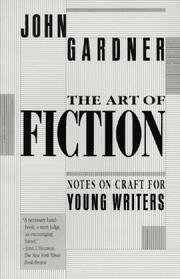
Gardner's rigorous breakdown of how literary fiction creates and sustains fictional dream is the ideal analytical lens for Dunnett's technique; it gives you the vocabulary to articulate why her prose is so unusually demanding and rewarding.
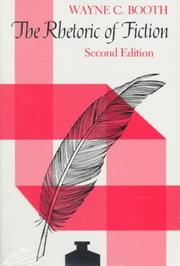
Booth's concept of the unreliable narrator and the implied author is directly applicable to Dunnett's strategy of systematically withholding Lymond's interiority; this book explains, technically, how she makes you trust and distrust her simultaneously.
Discussion
Keep reading
Paths that share books, cover the same subject, or open a related topic.