The Reformation: the best books on the split that remade Europe
This four-stage curriculum takes a beginner from the medieval world that made the Reformation possible all the way to its long-run consequences for politics, culture, and the modern mind. Each stage builds on the last: you first grasp the context and drama, then the theology and sociology of why it spread, then the violence and statecraft it unleashed, and finally the deep intellectual legacy it left behind.
The World Before Luther — Setting the Stage
BeginnerUnderstand the late-medieval Catholic world — its power, its corruption, its spiritual hunger — so that Luther's protest feels inevitable rather than accidental.
▸ Study plan for this stage
Pace: 4–5 weeks, ~25–30 pages/day (Huizinga's dense prose requires slower, deliberate reading)
- The late-medieval worldview: a culture caught between sacred and secular, mysticism and materialism
- Chivalric ideals and courtly culture as both spiritual aspiration and hollow performance
- The Church's institutional power and its paradoxical spiritual crisis—corruption coexisting with genuine piety
- The cult of the Virgin Mary and saints as expressions of popular religious hunger and anxiety
- Decay of feudalism and rise of urban merchant culture, creating social instability and spiritual unease
- Art, literature, and ritual as windows into late-medieval psychology and religious preoccupation
- The concept of 'autumn'—a civilization in decline, aware of its own mortality and seeking renewal
- What does Huizinga mean by describing the late Middle Ages as an 'autumn'? What are the signs of cultural decline and spiritual exhaustion he identifies?
- How did chivalric ideals shape both the spiritual aspirations and the moral contradictions of late-medieval society?
- What role did the veneration of saints and the Virgin Mary play in the religious life of ordinary people, and what does this reveal about their spiritual anxieties?
- How did the Church maintain institutional power while simultaneously being perceived as corrupt? What was the gap between official doctrine and lived practice?
- What evidence does Huizinga provide that late-medieval people were conscious of living in a time of crisis or transition?
- How did the rise of urban merchant culture and the decay of feudalism create both material prosperity and spiritual hunger in this period?
- Create a two-column chart: 'Ideals vs. Reality' in late-medieval Christendom. Use Huizinga's examples (chivalry, piety, Church authority) to show the gap between what society claimed to value and what it actually practiced.
- Select one chapter from Huizinga on art, literature, or ritual (e.g., his discussion of courtly love, religious processions, or manuscript illumination). Write a 500-word analysis of what this cultural artifact reveals about late-medieval spiritual psychology.
- Sketch or collect images of late-medieval religious art (altarpieces, devotional manuscripts, sculptures). Annotate 3–4 images with observations about the emotional tone, theological emphasis, and signs of anxiety or longing Huizinga would highlight.
- Write a character sketch of a fictional late-medieval person (a nobleman, merchant, priest, or peasant) based on Huizinga's descriptions. Show how their daily life, beliefs, and anxieties reflect the broader cultural contradictions he identifies.
- Create a timeline of late-medieval Europe (1350–1500) marking key events Huizinga references: political upheavals, Church crises, cultural movements. Note which events suggest instability or spiritual hunger.
- Rewrite one of Huizinga's key passages in your own words, then explain in a paragraph why the late-medieval mindset he describes would make someone like Luther's critique feel necessary and inevitable.
Next up: By understanding the spiritual hunger, institutional corruption, and cultural anxiety of Huizinga's late-medieval world, you'll recognize why Luther's challenge to Church authority wasn't a bolt from the blue, but the inevitable eruption of tensions that had been building for generations.

A vivid, literary portrait of late-medieval European culture — its piety, its anxiety, its excess — giving you the emotional and spiritual atmosphere from which the Reformation erupted. Read this first to feel the world Luther was born into.
The Spark — Luther and the Break
BeginnerFollow the Reformation's dramatic opening act: who Luther was, what he believed, why his protest ignited a continent, and how the movement immediately fractured into competing visions.
▸ Study plan for this stage
Pace: 8–10 weeks, ~40–50 pages/day (Bainton first: ~3 weeks; MacCulloch second: ~5–7 weeks, accounting for denser prose)
- Luther's personal spiritual crisis and the doctrine of justification by faith alone as the theological core of his protest
- The 95 Theses as a challenge to papal indulgence practices and ecclesiastical authority, not an immediate call for schism
- The role of print culture, translation, and political patronage (especially German princes) in amplifying Luther's message across Europe
- The radical fragmentation of the Reformation into Lutheran, Reformed (Zwinglian/Calvinist), Anabaptist, and other competing movements within Luther's lifetime
- The tension between Luther's conservative theology (retained Catholic sacramentology, hierarchy) and the revolutionary social consequences his ideas unleashed
- The Diet of Worms (1521) as the pivotal moment where Luther refused recantation and became a fugitive, forcing the movement to survive without its figurehead
- How early Reformation theology intersected with Renaissance humanism, late medieval piety, and economic grievances of the German estates
- The role of violence, peasant uprisings, and political fragmentation in shaping the Reformation's trajectory after Luther's initial protest
- What was Luther's personal spiritual struggle, and how did his understanding of justification by faith alone emerge from his monastic experience and biblical study?
- Why did the 95 Theses provoke such a massive, continent-wide response when similar critiques of indulgences had been voiced before?
- How did the printing press, vernacular translation, and the political interests of German princes transform Luther's academic dispute into a mass movement?
- What were the major theological and social differences between Lutheran, Reformed, and Anabaptist branches of the Reformation, and why did they emerge so quickly?
- How did Luther's own theology remain conservative in some respects (sacraments, church structure) while his ideas produced radical social upheaval?
- What happened at the Diet of Worms, and why was Luther's refusal to recant a turning point for the Reformation's survival as a decentralized movement?
- Read selections from Luther's own writings (excerpts in Bainton or MacCulloch) and annotate his key theological claims; compare his language in the 95 Theses to his later polemical works to track how his thinking evolved
- Create a timeline of key events (1483–1530s) with dual columns: Luther's personal milestones and concurrent political/religious events; identify which external factors shaped his decisions
- Map the geographic spread of Reformation ideas using MacCulloch's narrative: mark which regions adopted Lutheran, Reformed, or Anabaptist theology, and hypothesize why based on political and economic factors discussed
- Write a 2–3 page character study of Luther from Bainton's biographical lens, focusing on his personality, fears, and convictions; then write a 1-page critique of how biography might distort historical understanding
- Debate or write opposing position papers: one defending Luther's refusal to recant at Worms as principled conscience, the other arguing it was reckless and fractured Christendom unnecessarily
- Create a visual comparison chart of Lutheran, Reformed (Zwingli/Calvin), and Anabaptist positions on: salvation, the sacraments, church-state relations, and social order; cite specific passages from MacCulloch
Next up: This stage establishes the theological foundations and immediate political fractures of the Reformation, preparing you to explore how these competing visions consolidated into regional churches, how the Catholic Counter-Reformation responded, and how the movement reshaped European society, politics, and culture over the next two centuries.
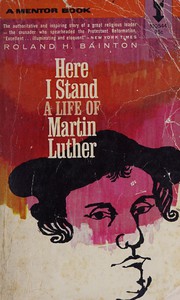
The classic, beautifully written biography of Luther — the single best entry point for any beginner. It tells the human story while making his theology accessible, and it has introduced millions of readers to the Reformation.
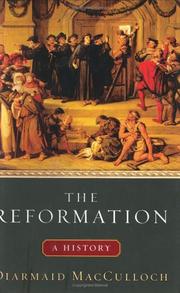
The definitive one-volume history of the entire Reformation across Europe. Read after Bainton so you already know Luther's story; MacCulloch then expands the lens to Zwingli, Calvin, the English Reformation, and the Catholic response, showing how fast and how far the fracture spread.
Going Deeper — Theology, Society, and Why It Spread
IntermediateMove beyond narrative into analysis: understand the theological ideas at stake, the social and economic forces that carried the Reformation forward, and how ordinary people experienced it.
▸ Study plan for this stage
Pace: 8–10 weeks, ~40–50 pages/day (with 1–2 rest days per week). Althaus (~400 pp): 2 weeks; Lindberg (~500 pp): 3 weeks; Weber (~300 pp): 2–3 weeks, plus 1 week for synthesis and review.
- Luther's doctrine of justification by faith alone and its radical break from medieval Catholic theology
- The relationship between theological reform and social/economic grievances in 16th-century Europe
- How the printing press, urban merchant networks, and peasant/artisan discontent created conditions for Reformation spread
- The concept of the 'priesthood of all believers' and its implications for church authority and lay agency
- Denominational diversity: how different reformers (Luther, Zwingli, Calvin) created competing theological and institutional visions
- Weber's thesis on the Protestant ethic as a cultural force shaping capitalism and modern work discipline
- The lived experience of ordinary people—merchants, peasants, women, clergy—navigating religious change
- How institutional and economic factors (not theology alone) determined which regions adopted reform and which remained Catholic
- What is the core of Luther's theological innovation in Althaus, and how does it differ fundamentally from medieval Catholic soteriology?
- According to Lindberg, what social and economic conditions in different European regions made them receptive or resistant to Reformation ideas?
- How does Weber argue that Protestant theology (particularly Calvinist predestination) created psychological and cultural conditions favorable to capitalist accumulation?
- What does the 'priesthood of all believers' mean, and what were its practical consequences for church hierarchy, literacy, and lay participation?
- How did the Reformation spread differently in urban versus rural areas, and among different social classes, according to Lindberg?
- What tensions or contradictions do you see between Luther's theology (in Althaus) and the social outcomes Weber describes?
- Create a detailed outline of Luther's doctrine of justification by faith (from Althaus, Part 1–2) and write a 500-word explanation of why this was theologically revolutionary.
- Map the Reformation's spread across Europe using Lindberg's regional analyses: for 3–4 regions, note the theological appeal AND the specific social/economic factors that enabled adoption.
- Read and annotate one of Luther's primary texts (e.g., 'The Freedom of a Christian' or 'Address to the Christian Nobility') alongside Althaus's interpretation; identify where Althaus's analysis clarifies or simplifies Luther's actual argument.
- Construct a comparative table of how Lindberg describes the experiences of three different social groups (e.g., merchants, peasants, clergy) during the Reformation; note what they gained and lost.
- Trace Weber's argument in his essay on the Protestant ethic step-by-step: identify his causal chain from Calvinist theology → psychological anxiety → worldly asceticism → capitalist discipline. Evaluate where it is strongest and weakest.
- Write a 750-word analytical essay: 'Did the Reformation cause capitalism, or did capitalism cause the Reformation?' Use evidence from all three books to develop a nuanced answer.
Next up: This stage equips you with both the theological substance and the socio-economic context of the Reformation, preparing you to examine its long-term consequences—institutional development, religious conflict, the emergence of confessional states, and the reshaping of European culture and politics.

The most thorough and readable scholarly treatment of Luther's actual ideas — justification by faith, Scripture alone, the two kingdoms. Essential for moving from story to substance.

A superb academic survey that examines the Reformation's social dimensions — how printing, urban networks, peasant revolts, and gender shaped who adopted reform and why. Pairs perfectly with Althaus by grounding theology in lived reality.

Weber's landmark argument that Calvinist theology reshaped attitudes toward work, vocation, and wealth — one of the most influential ideas about the Reformation's long-run cultural consequences. Reading it here, after the narrative foundations, makes its argument land with full force.
Wars, States, and the Modern World — The Reformation's Legacy
ExpertReckon with the Reformation's violent and political aftermath — the wars of religion, the reshaping of European states — and its deepest legacy: the making of the modern individual, conscience, and secular order.
▸ Study plan for this stage
Pace: 10–12 weeks, ~40–50 pages/day. Wedgwood's *The Thirty Years War* (approx. 550 pages) over 5–6 weeks; Gregory's *Rebel in the Ranks* (approx. 400 pages) over 4–5 weeks; final week for synthesis and review.
- The Thirty Years War as a watershed between religious and political motivations: how confessional identity became entangled with state power and territorial ambition
- The fragmentation of Christendom and the rise of sovereign nation-states: how the Peace of Westphalia (1648) institutionalized religious pluralism and state sovereignty
- Martin Luther as a reluctant revolutionary: how his theological challenge to authority unleashed forces he could not control, leading to peasant revolts, sectarian violence, and social upheaval
- The emergence of the modern individual conscience: how Reformation theology (sola scriptura, sola fide) created new expectations of personal moral responsibility and inward conviction
- The secularization of political order: how religious wars paradoxically produced secular reasoning about statecraft, toleration, and the separation of church and state
- The role of print, propaganda, and competing narratives in sustaining religious conflict and shaping public opinion across the sixteenth and seventeenth centuries
- The unintended consequences of reform: how radical Reformation movements (Anabaptists, spiritualists) challenged both Catholic and Lutheran establishments, revealing the destabilizing power of democratized scripture
- How did the Thirty Years War transform religious conflict into a struggle for state sovereignty and territorial power? What role did confessional identity play in this transformation?
- What were Martin Luther's original theological aims, and how did his ideas become weaponized in ways he opposed? How does Gregory's account complicate the narrative of Luther as a hero of freedom?
- How did the Peace of Westphalia represent both a religious compromise and a fundamentally new political order? What does it mean that a religious war ended by institutionalizing religious pluralism?
- What is the relationship between the Reformation's emphasis on individual conscience and the emergence of the modern secular state? How are these seemingly opposed developments actually connected?
- How did radical Reformation movements (Anabaptists, spiritualists) radicalize Reformation theology in ways that threatened both Catholic and Protestant establishments?
- What role did print culture, propaganda, and competing interpretations of scripture play in sustaining religious conflict across the sixteenth and seventeenth centuries?
- Timeline mapping: Create a detailed chronology of the Thirty Years War's major phases (Palatinate, Swedish, French, Peace of Westphalia), noting the shifting religious and political alliances. Annotate with key territorial changes and how confessional lines did or did not align with military objectives.
- Character study: Write a 2–3 page analytical portrait of Martin Luther based on Gregory's account, focusing on the gap between his intentions and the consequences of his ideas. How did his theology enable movements he explicitly condemned?
- Primary source analysis: Read 3–4 key documents from the period (e.g., excerpts from Luther's writings, the Peace of Westphalia, a radical Reformation manifesto). Identify how each author frames religious authority, individual conscience, and political legitimacy differently.
- Comparative table: Create a matrix comparing Catholic, Lutheran, Reformed, and Radical Reformation positions on scripture, authority, salvation, and the relationship between church and state. Use this to trace how theological differences generated political conflict.
- Counterfactual essay: Write a 3–4 page reflection on how European political development might have differed if the Reformation had remained a purely theological debate without military and political consequences. What does this reveal about the inseparability of ideas and power?
- Propaganda analysis: Collect and analyze 2–3 examples of sixteenth- or seventeenth-century religious propaganda (woodcuts, pamphlets, or descriptions thereof in the texts). How did print culture amplify and sustain religious division?
Next up: This stage establishes how the Reformation's violent aftermath and the resulting secular political order created the conditions for the next stage—understanding how Reformation theology and the modern individual conscience became embedded in culture, law, and everyday life.
The masterful narrative of the catastrophic war (1618–1648) that was the Reformation's bloodiest consequence. Wedgwood shows how religious fracture became geopolitical catastrophe and ultimately forced Europe toward a new, more secular political order.

A concise, provocative argument that the Reformation — by shattering Christian unity — inadvertently created the pluralism, secularism, and individualism of the modern West. A perfect capstone that ties every earlier book together into a single, challenging thesis.
Discussion
Keep reading
Paths that share books, cover the same subject, or open a related topic.