English grammar and style, without the pain
This curriculum builds from the ground up — starting with the most accessible, myth-busting introduction to how English actually works, then layering in sentence-level craft, classic style guides, and finally the advanced texts that treat prose as an art form. Each stage assumes the vocabulary and instincts built in the one before it, so reading in order matters.
Foundations: How English Actually Works
BeginnerUnderstand the real rules of English grammar (versus the myths), build confidence with parts of speech and sentence structure, and shed the anxiety that blocks clear writing.
▸ Study plan for this stage
Pace: 6–7 weeks total: Weeks 1–4 for "Woe Is I" (~20–25 pages/day, reading one chapter at a time and pausing to apply each rule); Weeks 5–7 for "The Mother Tongue" (~25–30 pages/day, read more fluidly as it is narrative-driven). Budget an extra review day at the end of each book before moving on.
- Descriptive vs. prescriptive grammar — O'Conner's core insight that many 'rules' are myths invented by pedants, not laws of the language
- Parts of speech in real use: how nouns, pronouns, verbs, adjectives, adverbs, prepositions, and conjunctions actually function in sentences (as taught through O'Conner's plain-English explanations)
- Pronoun case and agreement — one of the most misunderstood areas O'Conner demystifies (I vs. me, who vs. whom, they as singular)
- Verb tense, mood, and the subjunctive — when and why they shift, and which 'violations' are actually acceptable in modern English
- Punctuation as a tool for clarity, not a minefield of rules — O'Conner's practical guidance on commas, apostrophes, and the possessive
- The living, evolving nature of English — Bryson's historical narrative showing that the language has always changed, borrowed, and broken its own rules
- The global spread and diversity of English — Bryson's account of dialects, Americanisms, and why no single variety is 'correct'
- Grammar anxiety as a cultural construct — synthesizing both books to understand that confidence comes from understanding the language's real history and flexibility
- According to O'Conner, which commonly taught grammar 'rules' are actually myths, and what is the real guideline in each case (e.g., splitting infinitives, ending a sentence with a preposition)?
- How does O'Conner distinguish between formal and informal registers, and why does that distinction matter more than memorizing rigid rules?
- After reading Bryson, how would you explain to someone why English spelling is so irregular and why that is a feature of the language's history rather than a flaw?
- What does Bryson's account of English's origins and borrowings reveal about the idea of a 'pure' or 'correct' English?
- How do the two books complement each other — where O'Conner gives you practical rules, what larger perspective does Bryson add?
- Can you identify the parts of speech in a sentence of your own writing and explain the grammatical role each word plays?
- 'Myth-busting journal': As you read Woe Is I, keep a running list of every grammar rule you previously believed was iron-clad. After O'Conner addresses it, write one sentence in your own words explaining the real guideline.
- Pronoun workout: Write 10 sentences that deliberately use tricky pronoun situations (who/whom, I/me after prepositions, singular 'they'). Then use O'Conner's explanations to self-correct and annotate why each choice is right.
- Punctuation rewrite: Find a paragraph from anything you have written before (an email, a note, a social-media post) and rewrite it three ways — over-punctuated, under-punctuated, and O'Conner-approved — to feel the difference clarity makes.
- Etymology treasure hunt: While reading The Mother Tongue, pick 10 words Bryson discusses and trace their origin using a free online etymology dictionary (e.g., etymonline.com). Write a two-sentence story for each word that reflects its journey into English.
- Dialect observation log: After reading Bryson's chapters on dialects and Americanisms, spend one week noting words, phrases, or pronunciations in your daily environment (TV, podcasts, conversations) that reflect regional or social variation. Reflect on what Bryson would say about their 'correctness'.
- Synthesis essay (one page): After finishing both books, write a short personal essay answering: 'What did I believe about English grammar before this stage, and what do I believe now?' Use at least one specific insight from each book as evidence.
Next up: Having shed grammar myths and gained a feel for how English evolved and flexes, the reader is now ready to move from understanding the language to actively shaping it — making the leap into studying deliberate style, voice, and the choices that separate competent writing from compelling writing.
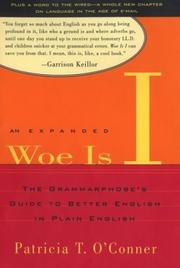
The friendliest, most myth-busting grammar primer available — it separates real rules from invented ones with humor and clarity, making it the perfect first book for an anxious or rusty beginner.

A lively history of the English language that explains why grammar is the way it is, giving the learner cultural and historical context that makes the rules feel logical rather than arbitrary.
The Classic Guides: Rules Worth Knowing
BeginnerInternalize the canonical dos and don'ts of English usage and style through two of the most widely cited guides in the language, now read with enough foundation to evaluate their advice critically.
▸ Study plan for this stage
Pace: 4–5 weeks total: Week 1–2 — "The Elements of Style" (~10–15 pages/day, including re-reading key rules and applying them to your own writing); Week 3–5 — "Eats, Shoots & Leaves" (~15–20 pages/day, pausing after each punctuation chapter to review examples and practice marking up real texts).
- Strunk's elementary rules of usage: the possessive apostrophe, the serial comma, independent clauses joined by conjunctions, and the proper use of the semicolon
- Strunk & White's principles of composition: the active voice, parallel construction, keeping related words together, and omitting needless words
- The concept of 'style' as distinct from 'grammar': rules vs. taste, and when breaking a rule is a deliberate choice vs. an error
- Truss's historical and cultural account of each punctuation mark — apostrophe, comma, semicolon, colon, dash, hyphen — and how their usage has evolved
- The 'zero-tolerance' vs. 'descriptivist' debate introduced by Truss: prescriptivism, descriptivism, and why both extremes have limits
- Punctuation as a tool for controlling rhythm, emphasis, and clarity in prose, not merely as a set of arbitrary rules
- Critical reading of style guides: recognizing that even canonical guides reflect the era, biases, and preferences of their authors
- The relationship between punctuation choices and a writer's voice — how marks like the dash or semicolon carry tonal weight
- According to Strunk in 'The Elements of Style,' what is the core principle behind 'omit needless words,' and can you identify three types of constructions he flags as typically needless?
- Strunk lists several elementary rules of usage — which ones deal with the comma, and how do they differ from Truss's treatment of the comma in 'Eats, Shoots & Leaves'?
- Truss traces the history of the apostrophe and its two main jobs. What are those two jobs, and what does she identify as the most common modern misuse?
- How does Truss use humor and anecdote to argue for punctuation standards? Does her approach strengthen or weaken her prescriptivist position, and why?
- Both books are considered 'canonical' guides, yet both have been criticized. What is one limitation or bias you can identify in each book, now that you've read them?
- After reading both books, how would you define the difference between a grammar rule and a style preference? Give one example from each book to support your answer.
- Rule audit: Take a piece of your own writing (an email, essay, or journal entry of ~300 words) and apply every applicable rule from Strunk's 'Elementary Rules of Usage' chapter, annotating each change you make and why.
- Omission drill: Choose any three consecutive paragraphs from a newspaper article or blog post and rewrite them following Strunk's principle of omitting needless words. Aim to cut 20–30% of the word count without losing meaning.
- Punctuation mark journal: After finishing each chapter of 'Eats, Shoots & Leaves,' write a one-paragraph summary — in your own words — of the mark Truss just covered, then find three real-world examples of that mark used correctly and one used incorrectly (in signs, menus, social media, etc.).
- The 'Eats, Shoots & Leaves' game: Collect five ambiguous or incorrectly punctuated sentences from real sources (packaging, headlines, social media). Rewrite each one two ways — once preserving the apparent (wrong) meaning, once correcting it — to dramatize how punctuation changes meaning.
- Critical comparison essay (300–400 words): Write a short piece arguing whether Strunk or Truss is more useful to a beginner writer today. You must cite at least two specific rules or passages from each book and acknowledge one weakness in the guide you favor.
- Active-voice transformation: Find a passage of ~200 words written heavily in the passive voice (a government document, academic abstract, or Wikipedia article works well). Rewrite it in the active voice following Strunk's guidance, then reflect in 2–3 sentences on what changed in tone and clarity.
Next up: Internalizing these canonical rules and learning to question them prepares the reader to engage with more nuanced, linguistically grounded treatments of grammar and usage — moving from "what the rules say" to "why language actually works the way it does."
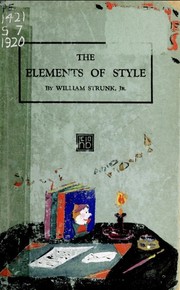
The most famous style guide in English — short enough to read in an afternoon, dense enough to revisit for years. Read it now to absorb its core principles, and again later to question them.
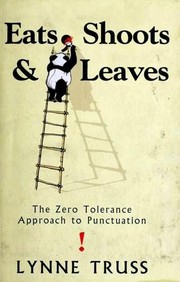
A witty, memorable deep-dive into punctuation — the most under-taught and most consequential layer of grammar — that makes the rules stick through laughter and outrage.
Sentence Craft: Writing with Clarity and Force
IntermediateMove from knowing the rules to actively shaping sentences — learning to diagnose weak prose and rewrite it with precision, economy, and rhythm.
▸ Study plan for this stage
Pace: 10–12 weeks total, roughly 20–25 pages/day, 5 days/week. Week 1–3: "On Writing Well" (read the full text, ~300 pp, focusing on Parts I–II deeply and skimming Parts III–IV for genre application). Week 4–7: "Style: Ten Lessons in Clarity and Grace" (~280 pp; slow, deliberate pace — re-read each lesson
- Clutter and economy: Zinsser's core principle that every word must earn its place — stripping adverbs, redundancies, qualifications, and throat-clearing from prose
- The Writer's Voice and Humanity: Zinsser's argument that clear writing reflects a clear, honest self — style is not decoration but identity on the page
- The Old-New Contract (Williams): readers process sentences most easily when familiar/old information comes first and new/complex information comes last — the 'stress position' at the end of a sentence carries the most weight
- Characters and Actions as Subjects and Verbs (Williams): strong prose puts real agents as grammatical subjects and their actions as verbs, rather than burying them in nominalizations ('the implementation of' → 'we implemented')
- Nominalization and its costs (Williams): turning verbs and adjectives into nouns ('decision,' 'failure,' 'analysis') drains energy from sentences and forces weak verbs like 'is,' 'has,' and 'make'
- Cohesion and Coherence (Williams): cohesion is the sentence-to-sentence flow of topics; coherence is the paragraph-level logic — both must be engineered, not hoped for
- The Curse of Knowledge (Pinker): writers forget what it is like NOT to know something, leading to jargon, assumed context, and prose opaque to readers — the antidote is classic style
- Classic Style as a Guiding Metaphor (Pinker): the writer's stance is that of a peer showing the reader something true and interesting through a clear window — not performing expertise, not hedging, not signposting excessively
- Syntactic awareness (Pinker): understanding how the tree-structure of sentences — right-branching vs. left-branching, center-embedding — affects readability and how to exploit or avoid each pattern
- Revision as the primary craft: all three books converge on the idea that first drafts are raw material; the real work is diagnostic re-reading and deliberate rewriting
- According to Zinsser, what is 'clutter,' and what are the four most common forms it takes in nonfiction prose? Can you find and eliminate each form in a paragraph of your own writing?
- Williams distinguishes between 'cohesion' and 'coherence' — what is the difference, and why can a passage be locally cohesive (sentence to sentence) yet globally incoherent (as a whole)?
- What is the 'stress position' in a sentence (Williams), and how does misplacing new or important information undermine a reader's ability to follow an argument?
- Pinker argues that the 'curse of knowledge' is the single greatest source of bad writing — what exactly is it, and what concrete strategies does he recommend to counteract it?
- How does Williams's advice about nominalizations connect to Zinsser's advice about clutter? Where do the two frameworks reinforce each other, and where, if anywhere, do they differ in emphasis?
- What does Pinker mean by 'classic style,' and how does it differ from 'practical style,' 'postmodern style,' and 'self-conscious style'? Which style does Zinsser implicitly advocate, and how can you tell?
- The Clutter Audit (Zinsser): Take a 300-word piece of your own writing — an email, essay, or report — and mark every word that could be cut without losing meaning. Aim to reduce the passage by 20–30% without losing a single idea. Read both versions aloud and note the difference in rhythm and authority.
- Subject-Verb Excavation (Williams, Lessons 3–4): Find 10 sentences in your writing (or a news article) that use weak verbs ('is,' 'has,' 'involves,' 'provides'). Identify the hidden action buried in a nominalization, then rewrite each sentence so the real character is the subject and the real action is the verb.
- Stress-Position Reordering (Williams, Lesson 2): Take a paragraph of dense academic or professional prose. Underline the last three words of each sentence — these are the stress positions. Ask: is the most important new information landing there? Rewrite any sentence where it does not.
- Curse-of-Knowledge Test (Pinker, Ch. 3): Give a paragraph you have written to someone outside your field or area of expertise. Ask them to mark every phrase where they lost the thread. For each marked phrase, rewrite using Pinker's classic-style principle: show, don't announce; use a concrete example or analogy instead of an abstract label.
- Sentence-Tree Diagram (Pinker, Ch. 4): Choose three long, difficult sentences from a newspaper editorial or academic paper. Draw a rough syntactic tree (or bracket the clauses). Identify any center-embedded clauses. Rewrite each sentence to be right-branching, and compare the readability of both versions.
- Three-Pass Revision Drill (synthesis of all three books): Write a 500-word argumentative paragraph on any topic. Then revise it three times in sequence — Pass 1: Zinsser's lens (cut every redundant word and qualifier); Pass 2: Williams's lens (fix subjects/verbs, old-new order, stress positions); Pass 3: Pinker's lens (remove curse-of-knowledge moments, adopt classic style). After each pass, note
Next up: Mastering sentence-level clarity and force here creates the diagnostic eye and revision instinct needed to tackle the next stage's focus on larger structures — argumentation, paragraph architecture, and the logic of sustained prose across an entire essay or document.

The essential guide to nonfiction prose — Zinsser's advice on clutter, clarity, and voice is concrete and immediately applicable, bridging the gap between grammar knowledge and real writing improvement.

The most analytically rigorous sentence-level style guide available, teaching readers to diagnose exactly why a sentence fails and how to fix it — a major step up in precision from Strunk & White.

A cognitive scientist and linguist explains style through the lens of how the mind actually processes language, updating classic advice with modern linguistics and debunking persistent grammar myths with evidence.
Advanced Mastery: Prose as an Art Form
ExpertDevelop a personal, conscious style — understanding the deeper architecture of prose, the music of sentences, and the choices that separate competent writing from genuinely graceful writing.
▸ Study plan for this stage
Pace: 6–8 weeks total: Weeks 1–3 on "Several Short Sentences About Writing" (~10–15 pages/day, read slowly and re-read passages — Klinkenborg's aphoristic style rewards deliberate, non-linear reading); Weeks 4–8 on "The Art of Fiction" (~20–25 pages/day, pausing to attempt Gardner's exercises as they appe
- The sentence as the fundamental, self-sufficient unit of prose — Klinkenborg's insistence that every sentence must stand on its own and earn its place
- Eliminating transitional 'connective tissue' and trusting the reader: the power of parataxis and white space between ideas
- The writer's act of noticing — how perception, observation, and genuine attention precede and shape every sentence written
- Prose rhythm and the 'music' of sentences: how length variation, stress patterns, and syntax create or destroy momentum (Klinkenborg and Gardner both)
- Gardner's concept of the 'fictional dream' — the unbroken, vivid, continuous dream the writer creates in the reader's mind, and how any false note shatters it
- Psychic distance: Gardner's spectrum from wide narrative distance to deep interiority, and how controlling it is a primary lever of style and effect
- The distinction between 'telling' and 'showing' as Gardner frames it — not a rule but a sophisticated craft choice with specific consequences for the fictional dream
- Metafiction, aesthetic philosophy, and the moral dimension of fiction: Gardner's argument that great fiction is always, at some level, life-affirming and morally serious
- After reading Klinkenborg, can you articulate in your own words why he distrusts long, heavily subordinated sentences — and do you agree or disagree, and why?
- What does Klinkenborg mean when he says the problem is almost never 'what to write about' but rather 'how to notice'? How does this reframe the writer's daily practice?
- How does Gardner define the 'fictional dream,' and what specific writerly failures — at the level of word choice, tense, or point of view — does he identify as most likely to rupture it?
- Explain Gardner's psychic distance scale with an original example of your own at each of the five levels. What emotional or narrative effect does each level produce?
- Both Klinkenborg and Gardner are deeply concerned with the sentence, yet they approach it from very different angles. What does each author ultimately argue the sentence is *for*?
- Gardner argues that fiction has a moral dimension — not that it must preach, but that it must be 'life-affirming.' What does he mean, and where do you find this argument convincing or limited?
- Klinkenborg Sentence Audit: Take one page of your own past writing and break every sentence onto its own line, as Klinkenborg instructs. Read each in isolation. Mark every sentence that cannot stand alone, that relies on the previous sentence to mean anything, or that exists only as a transition. Rewrite or cut each marked sentence.
- Noticing Journal (3 weeks, daily): Spend 10 minutes each morning writing 5–10 sentences about something you physically observed that day — a texture, a sound, a social exchange. Apply Klinkenborg's discipline: no filler, no throat-clearing, no 'I noticed that…' Each sentence must contain a specific, earned observation.
- Rhythm Rewrite: Choose a paragraph from any author you admire. Rewrite it three times — once with all sentences shortened to under 10 words, once with all sentences extended and subordinated, once varying length deliberately for rhythmic effect. Read each version aloud and annotate what the rhythm does to meaning and pace.
- Psychic Distance Ladder (Gardner Exercise): Write the same scene — a character arriving home to find something unexpected — at all five levels of Gardner's psychic distance scale. Each version should be 150–200 words. Compare how intimacy, tension, and the reader's relationship to the character shift across the five versions.
- Fictional Dream Stress Test: Write a scene of 400–500 words designed to sustain the fictional dream as Gardner defines it. Then deliberately introduce three 'dream-breaking' moments (an anachronism, a tonal inconsistency, an authorial intrusion). Share with a reader and ask them to identify where the dream broke — and why.
- Synthesis Essay — Your Aesthetic Manifesto: After completing both books, write a 500-word personal statement of your prose aesthetic. Draw explicitly on Klinkenborg's philosophy of the sentence and Gardner's philosophy of fiction. Where do the two authors agree? Where do they pull you in different directions? What do *you* believe about what prose should do?
Next up: Internalizing Klinkenborg's sentence-level consciousness and Gardner's architectural thinking about fiction equips the reader to engage critically with any further study of genre, voice, or literary tradition — because they now have both a micro-level tool (the deliberate sentence) and a macro-level framework (the sustained fictional dream and moral seriousness) to bring to any text or craft chall
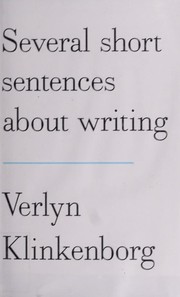
A radical, meditative book that forces the reader to think about every single sentence in isolation — it rewires how you compose prose at the most fundamental level and is best appreciated after the earlier stages.
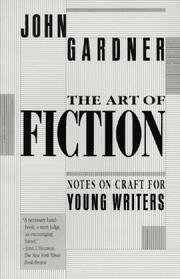
Gardner's demanding, philosophical treatment of prose style — covering rhythm, diction, and the 'fictional dream' — elevates the conversation from correctness to artistry, the fitting capstone of this curriculum.
Discussion
Keep reading
Paths that share books, cover the same subject, or open a related topic.