Narnia Reading Order: Publication or Chronological?
This curriculum guides a first-time reader through The Chronicles of Narnia by starting with the stories themselves, then building critical context around the publication-order vs. chronological-order debate, and finally deepening understanding through Lewis's own thinking and scholarly analysis. Each stage builds the vocabulary and lived reading experience needed to meaningfully engage with the next layer of insight.
Read Narnia First — Publication Order
BeginnerExperience the seven Narnia books as Lewis's original readers did, in the order they were published, so you have a firsthand sense of how the story unfolds, surprises land, and the world is gradually revealed.
▸ Study plan for this stage
Pace: 6–8 weeks, roughly 20–25 pages per day (each book averages 180–250 pages). A suggested weekly breakdown: Week 1 — The Lion, the Witch and the Wardrobe; Week 2 — Prince Caspian; Week 3 — The Voyage of the Dawn Treader; Week 4 — The Silver Chair; Week 5 — The Horse and His Boy; Weeks 6–7 — The Magicia
- Publication order vs. chronological order: reading as Lewis's first audience did, letting each book's revelations land fresh and unspoiled
- Aslan as the moral and spiritual center: tracking how each book deepens (or reframes) your understanding of his character, from the Stone Table in LWW to his role as creator revealed only in The Magician's Nephew
- The gradual world-building of Narnia: noticing how Lewis reveals geography, history, and rules of magic incrementally — Narnia's past is a mystery until The Magician's Nephew deliberately unlocks it
- The 'portal fantasy' device: how different characters enter Narnia (the wardrobe, the Horn, the painting, the silver chair's signs, Calormen roads, the magic rings) and what each method says about the story's themes
- Heroism and obedience: each protagonist faces a test of courage tied to following instructions or trusting Aslan — Edmund's betrayal, Eustace's transformation, Jill's forgotten Signs, Shasta's identity — and the consequences of failure
- The role of Calormen and cultural contrast: The Horse and His Boy introduces a fully realized foreign civilization; examining how Lewis uses Calormen to explore themes of freedom, fate, and false gods versus Aslan
- Transformation and redemption arcs: Eustace (Dawn Treader), Edmund (LWW), and Aravis (Horse and His Boy) all undergo profound character change — identifying the pattern Lewis uses across books
- The 'inside-out' revelation effect of publication order: The Magician's Nephew, read last here, recontextualizes everything — the lamp-post, the wardrobe's wood, the White Witch's origin — rewarding the reader who has experienced the earlier books first
- After reading The Lion, the Witch and the Wardrobe first, what is your initial understanding of Aslan's nature and the 'Deeper Magic'? How does that understanding shift — or get confirmed — as you move through each subsequent book?
- In what specific ways does The Magician's Nephew, read last, recontextualize details you encountered in The Lion, the Witch and the Wardrobe (e.g., the lamp-post, the wardrobe itself, the White Witch's backstory)? Would those moments have felt different if you had read The Magician's Nephew first?
- Trace the portal device across all six books: how does each method of entering (or moving within) Narnia reflect the theme or emotional stakes of that particular story?
- Compare the redemption arcs of Edmund (LWW) and Eustace (Dawn Treader): what triggers each character's fall, what is the turning point, and what does Aslan's role in each restoration have in common?
- The Silver Chair gives Jill a set of Signs to memorize and follow. How does her failure to keep them perfectly drive the plot, and what does Lewis seem to be saying about obedience, memory, and trust?
- The Horse and His Boy is set during the reign established in LWW yet was published after Dawn Treader and Silver Chair. How did reading it fifth — rather than second — affect your sense of Narnia's world and the Pevensies' legendary status?
- Keep a 'First Impressions Journal': after finishing each book, write one paragraph capturing your immediate emotional reaction and one paragraph noting any new information about Narnia's world or Aslan that surprised you. Compare all six entries at the end.
- Draw or sketch a running map of Narnia and its surrounding lands, adding new locations as each book introduces them (Archenland and Calormen in Horse and His Boy, the Eastern Ocean islands in Dawn Treader, Underland in Silver Chair). Note how your map grows and how The Magician's Nephew finally explains the world's origin.
- Create a 'Revelation Timeline': a simple two-column chart listing (a) a mystery or unexplained detail you noticed in an earlier book and (b) the later book that answered it. Pay special attention to what The Magician's Nephew resolves.
- Write a one-page character comparison between any two protagonists from different books (e.g., Lucy vs. Jill, or Shasta vs. Eustace), focusing on how each character's central flaw or fear shapes their journey and what Aslan demands of them specifically.
- After finishing The Magician's Nephew, re-read only the first two chapters of The Lion, the Witch and the Wardrobe. Annotate or highlight every detail that now carries extra meaning (the wardrobe's wood, the Professor's reaction, the lamp-post). Reflect in writing on how the reading experience changed.
- Host or simulate a 'publication-order book club' discussion — even if solo, write out answers to this prompt for each book: 'What did I know going in, what did I learn, and what questions am I left with for the next book?' This builds the habit of reading as an unfolding experience rather than a completed puzzle.
Next up: Having now experienced all six books as Lewis's original readers did — with surprises intact and the world revealed layer by layer — you are perfectly positioned for the next stage, which will introduce the seventh book and invite you to step back and examine the series as a complete, architected whole, exploring its theological allegory, literary sources, and the debate over reading order with ge
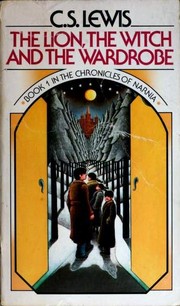
The first published book and the natural entry point — it introduces Narnia with no prior knowledge assumed and delivers the emotional and thematic core of the entire series.
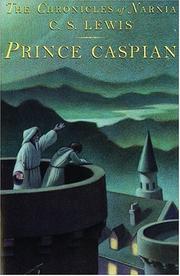
The direct sequel deepens the world and shows how Narnia changes over time, building on the familiarity established in the first book.

Expands the geography and spiritual themes of Narnia; reading it third, as Lewis intended, makes Reepicheep's arc and the world's eastern edge feel earned.
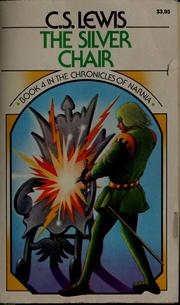
Introduces new protagonists and a darker tone — placed here so readers already trust the world enough to follow a story with less direct Aslan presence.

Set during the timeline of Book 1 but published fifth — reading it here lets you appreciate the clever narrative layering rather than being confused by the timeline jump.
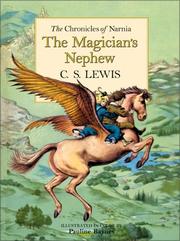
The creation story of Narnia; reading it sixth (as published) makes it a rich revelation and recontextualization rather than a dry prologue — this is central to the publication-order argument.
Complete the Story — The Last Battle
BeginnerFinish the series with its apocalyptic final volume, experiencing the full emotional and theological conclusion Lewis built toward across all seven books.
▸ Study plan for this stage
Pace: 2–3 weeks, ~15–20 pages per day; the book is roughly 200 pages, so a relaxed pace leaves room for reflection and re-reading emotionally heavy chapters
- The Stable as a threshold symbol — how a place of apparent defeat becomes the doorway to 'further up and further in' and the true Narnia beyond the shadow world
- Apocalypse and endings — Lewis draws on biblical imagery (Revelation, the Last Judgment) to portray the literal end of Narnia: the stars fall, the sun is extinguished, and time itself closes
- Deception and false gods — the ape Shift's manipulation of Puzzle and the invention of 'Tashlan' illustrates how truth can be corrupted by those in power, and what happens to a society that loses its moral compass
- Emeth and the inclusive vision of salvation — the Calormene soldier who sincerely sought Tash is welcomed by Aslan, raising questions about sincere faith, intent, and the nature of divine mercy
- The real vs. the shadow — Lewis's Platonic idea that the Narnia the children knew was only a copy; the 'real' Narnia inside the stable is more vivid, more solid, and more beautiful than anything before
- Susan's absence — her exclusion from the final gathering invites reflection on the danger of growing up in a way that abandons wonder, imagination, and belief
- Reunion and continuity — the gathering of characters from across all seven books (though only this book is in scope here) gives the ending its emotional weight and signals that nothing good is truly lost
- Joy and longing (Sehnsucht) — Lewis's lifelong theme reaches its culmination: the ache for 'home' is finally answered, and the adventure is shown to have 'only just begun'
- How does Lewis use the stable door as a symbol, and what does it mean that the same door leads to terror for some characters and glory for others?
- What is the significance of the phrase 'further up and further in,' and how does it describe the characters' experience of the true Narnia?
- Why is Susan not present at the end, and what does Lewis seem to be saying about the choices she made as she grew older?
- How does the story of Emeth challenge or complicate a simple reading of Aslan as exclusively available to Narnians and Pevensies?
- In what ways does The Last Battle draw on apocalyptic literature (e.g., imagery of final judgment, the end of the world), and how does Lewis adapt those images for a children's fantasy?
- How does the ending of The Last Battle serve as an emotional and thematic conclusion to everything built across the series — even for a reader encountering it as a standalone book?
- Symbolic mapping: Draw or diagram the stable door as Lewis describes it — label what each character experiences on either side and annotate why their experience differs based on their beliefs and choices.
- Close-reading journal: Choose the chapter where Aslan greets Emeth and copy out the key passage. Write a one-page response exploring what Lewis is arguing about the relationship between sincere seeking and divine truth.
- Apocalypse comparison: Find and read a short summary of the Book of Revelation chapters 20–22. List five specific images or events that appear in both Revelation and The Last Battle, then note how Lewis adapts each one for his story.
- Character farewell letters: Pick any two characters who appear in the final chapters and write a short letter (half a page each) in their voice, describing what it feels like to arrive in the 'real' Narnia.
- Susan reflection essay: Write a one-to-two page personal essay responding to Susan's exclusion. Do you find Lewis's reasoning convincing? What might a reader today find troubling or thought-provoking about it?
- Series retrospective timeline: Even though only this book is being read now, use the characters and references mentioned in The Last Battle to reconstruct a rough timeline of Narnian history as Lewis implies it — noting which eras feel most present in the final chapters and why that matters to the emotional payoff.
Next up: Completing The Last Battle gives the reader the full arc of Narnia's creation and destruction, providing the thematic and emotional foundation needed to revisit the series analytically — exploring Lewis's sources, theology, and literary craft at a deeper level in any subsequent study.

The seventh and final book — reading it last in publication order gives it maximum weight, as every character and theme from the previous six books converges here.
Understand Lewis the Man and Thinker
BeginnerLearn who C. S. Lewis was, what he believed, and why he wrote Narnia — essential context for understanding the choices behind both reading orders and the meaning embedded in the stories.
▸ Study plan for this stage
Pace: 6–8 weeks total: Weeks 1–3 cover "Surprised by Joy" (~20–25 pages/day, reading reflectively and journaling as you go); Weeks 4–7 cover "C. S. Lewis: A Life" (~25–30 pages/day, cross-referencing McGrath's analysis against Lewis's own voice); Week 8 is a consolidation week for review, re-reading marke
- Joy (Sehnsucht) as Lewis's central lifelong experience — the bittersweet longing for something beyond the world, which he traces from childhood through conversion in 'Surprised by Joy'
- Lewis's intellectual and spiritual autobiography: his journey from childhood faith → atheism → theism → Christianity, and how each stage shaped his imagination
- The role of myth and imagination in Lewis's conversion — particularly the influence of Norse mythology, George MacDonald, and J. R. R. Tolkien in convincing him that myth could carry truth
- McGrath's biographical correctives: how 'C. S. Lewis: A Life' challenges and refines the self-portrait Lewis paints in 'Surprised by Joy', including revised dating of his conversion
- Lewis as a 'translator' of Christianity — his self-appointed mission to make Christian ideas accessible to ordinary readers, which directly motivates the allegorical and mythic texture of Narnia
- The Oxford and Cambridge intellectual world: how Lewis's academic life as a medievalist and literary scholar informed his storytelling instincts and his suspicion of 'chronological snobbery'
- The Inklings as creative community — how regular dialogue with Tolkien, Charles Williams, and others shaped Lewis's confidence in writing mythopoeic fiction
- Lewis's theory of 'supposal': Narnia is not strict allegory but a imaginative 'supposition' — what might it look like if a Narnian world existed and Aslan entered it?
- According to 'Surprised by Joy', what does Lewis mean by 'Joy' (Sehnsucht), and why does he consider it the most important thread of his inner life?
- How does McGrath's account in 'C. S. Lewis: A Life' revise or complicate the timeline of Lewis's conversion that Lewis himself presents in 'Surprised by Joy'?
- What role did myth, story, and imagination — rather than purely rational argument — play in Lewis's path to Christianity, and which figures were most influential?
- What was Lewis's stated purpose in writing the Narnia stories, and how does his concept of 'supposal' distinguish his project from straightforward allegory?
- How did Lewis's academic identity as a medieval and Renaissance literature scholar influence the themes, images, and moral framework he would later embed in Narnia?
- In what ways did the Inklings community, as described across both books, function as a creative and intellectual catalyst for Lewis's fiction writing?
- Conversion timeline chart: After finishing both books, draw a side-by-side timeline of Lewis's spiritual journey — one column using Lewis's own account from 'Surprised by Joy', one column using McGrath's revised chronology from 'C. S. Lewis: A Life'. Note every point where the two accounts diverge and write one sentence explaining why the difference matters.
- Joy journal: While reading 'Surprised by Joy', keep a running list of every moment Lewis describes experiencing 'Joy' (Sehnsucht). After finishing, write a short paragraph (150–200 words) in your own words defining what Lewis means by the term, using only examples from the text.
- Influence web: Create a simple diagram mapping the key people and books that shaped Lewis's imagination and beliefs (e.g., George MacDonald, Tolkien, Norse mythology). Draw arrows showing how each influence connects to a specific shift in Lewis's thinking, drawing evidence from both books.
- Supposal vs. allegory: Write a one-page response (300–400 words) explaining the difference between allegory and Lewis's concept of 'supposal', using Lewis's own statements as reported in either book. End with one example of how this distinction might change how a reader approaches a Narnia story.
- Biographical fact-check: Choose any three specific claims Lewis makes about himself in 'Surprised by Joy' and look up how McGrath addresses each one in 'C. S. Lewis: A Life'. Write a brief note on whether McGrath confirms, qualifies, or challenges each claim — this builds the habit of reading Lewis critically rather than taking his self-portrait at face value.
- Pre-Narnia prediction: Based solely on what you have learned about Lewis's beliefs, influences, and intentions from these two books, write a half-page prediction of the themes, images, or moral questions you expect to find running through the Narnia series. Save this and revisit it at the end of the full curriculum.
Next up: Having established who Lewis was, what he believed, and why he wrote Narnia, the reader is now equipped to approach the debate over reading order — chronological vs. publication — not as a trivial preference but as a meaningful question about how Lewis's intentions and the stories' internal logic should govern the reading experience.

Lewis's own spiritual autobiography explains the longing and imagination that drove Narnia; reading his own words first makes all secondary biographies richer.

A rigorous, well-researched biography that places the writing of Narnia in historical and personal context, and directly addresses Lewis's own statements about reading order.
Engage the Reading-Order Debate Directly
IntermediateUnderstand the full publication-order vs. chronological-order argument — its history, the letter Lewis wrote that sparked it, and what scholars and critics conclude a first-time reader should do.
▸ Study plan for this stage
Pace: 6–8 weeks total: Weeks 1–2 read The Discarded Image (~25 pages/day, ~180 pages); Weeks 3–6 read Planet Narnia (~20 pages/day, ~320 pages); Weeks 7–8 reserved for review, re-reading flagged passages, and completing exercises.
- The Medieval Model of the cosmos as Lewis reconstructs it in The Discarded Image — the seven planetary intelligences (Moon, Mercury, Venus, Sun, Mars, Jupiter, Saturn) and their associated qualities, temperaments, and symbolic registers
- Lewis's own imaginative absorption of the Medieval Model: how The Discarded Image shows that Lewis did not merely study this worldview academically but inhabited it creatively, making it the hidden architecture of his fiction
- Michael Ward's central thesis in Planet Narnia: that each of the seven Chronicles is secretly governed by one of the seven medieval planets, giving the series a deliberate, concealed unity that Lewis never publicly disclosed
- The publication-order vs. chronological-order debate — its origins, the 1957 letter Lewis wrote to a young reader named Laurence Krieg in which Lewis appeared to endorse the chronological order, and why Ward argues this letter has been widely misread or over-weighted
- Ward's distinction between 'donegality' (the atmospheric, tonal spirit of a planet permeating a Chronicle) and surface-level plot or allegory — understanding why the planetary scheme is felt rather than decoded
- The scholarly and critical consensus (as Ward surveys it) on reading order: why most Lewisian scholars ultimately recommend publication order for first-time readers, and what is lost when the chronological order is followed from the start
- How Lewis's doctrine of 'kappa element' (the hidden, atmospheric quality in a story that cannot be extracted without destroying it) relates to his concealment of the planetary scheme — a concept illuminated by both books together
- The interpretive stakes of the debate: how reading order shapes a reader's experience of Aslan, the cosmological symbolism, and the emotional arc of the entire series
- According to The Discarded Image, what are the defining characteristics — temperament, imagery, and symbolic associations — of each of the seven medieval planets, and why does Lewis argue this model was not merely believed but imaginatively lived by medieval people?
- What is Michael Ward's core argument in Planet Narnia, and what primary evidence (textual, biographical, and historical) does he marshal to support the claim that Lewis organized the Chronicles around the seven planets?
- What exactly did Lewis write in his 1957 letter regarding reading order, and how does Ward interpret that letter differently from those who use it to champion the chronological sequence — what does Ward say the letter does and does not prove?
- What does Ward mean by 'donegality,' and how does this concept — rooted in Lewis's own critical vocabulary — explain why the planetary scheme had to remain hidden to function as Lewis intended?
- Drawing on both books, what is the strongest case for publication order for a first-time reader, and what, if anything, is the legitimate appeal of the chronological order that scholars acknowledge?
- How does The Discarded Image function as a key that unlocks Planet Narnia — which specific passages or chapters in Ward's book become significantly richer or more verifiable once a reader has Lewis's own account of the Medieval Model in hand?
- Create a two-column reference sheet: on the left, list each of the seven medieval planets with their qualities drawn directly from The Discarded Image; on the right, record Ward's corresponding Chronicle and the specific textual evidence he cites — use this sheet as a running annotation tool while reading Planet Narnia.
- Locate and transcribe Lewis's 1957 letter to Laurence Krieg (quoted and discussed in Planet Narnia). Write a 300-word close reading of the letter itself, then write a second 300-word paragraph summarizing Ward's interpretation of it — note every point where you agree or disagree with Ward's reading and why.
- After finishing Planet Narnia, write a 500-word 'editorial' addressed to a hypothetical first-time Narnia reader explaining which order you recommend and why, citing specific arguments from both The Discarded Image and Planet Narnia as your evidence base.
- Choose any two Chronicles that Ward analyzes in Planet Narnia and, using The Discarded Image as your guide, independently test Ward's planetary attribution: find three passages in each Chronicle that you believe support his thesis and one passage that you think complicates or challenges it. Write up your findings in a short annotated list.
- Draft a mock 'debate transcript' of 400–600 words in which one speaker argues for chronological order and the other argues for publication order — each speaker must cite at least two specific points drawn from Planet Narnia and/or The Discarded Image, not general impressions.
- Build a timeline of the publication-order vs. chronological-order controversy as Ward traces it in Planet Narnia: mark the original publication dates of each Chronicle, the date of the Laurence Krieg letter, the date HarperCollins renumbered the series, and the publication of Planet Narnia itself — annotate each entry with one sentence explaining its significance to the debate.
Next up: Having mapped the cosmological architecture and reading-order debate through Lewis's own Medieval Model and Ward's scholarly thesis, the reader is now equipped to enter the Chronicles themselves with a fully informed interpretive lens — ready to experience and evaluate these arguments firsthand in the actual texts.
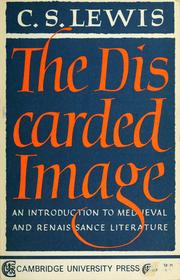
Lewis's own lectures on the medieval worldview that underpins Narnia's cosmology — reading this reveals why the order of discovery matters so much to how the world feels.
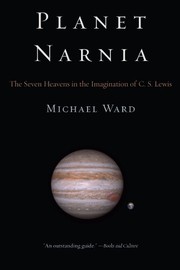
A landmark scholarly work arguing each Narnia book is shaped by a medieval planet — Ward's thesis only makes full sense after you've read all seven books and deepens the case for publication order.
Deep Critical Reflection
ExpertSynthesize everything — literary criticism, theology, and narrative theory — to form your own fully informed view on reading order and the series' lasting significance.
▸ Study plan for this stage
Pace: 3–4 weeks, ~20–25 pages/day — Jacobs is dense with biographical, theological, and literary analysis, so allow time to annotate, pause, and cross-reference your own prior reading of the Narnia series itself.
- C.S. Lewis's imaginative biography: how his life, losses, and intellectual journey directly shaped the world of Narnia
- The 'baptized imagination' — Jacobs's central thesis that Lewis used story to smuggle Christian meaning into the reader's imagination before the intellect could resist it
- Lewis's synthesis of Romanticism, Medievalism, and Christian theology as the philosophical skeleton of the Chronicles
- The role of Joy (Sehnsucht) in Lewis's aesthetics and how it functions as a narrative and spiritual device throughout Narnia
- Lewis as a literary critic and scholar (of medieval literature, allegory, and myth) and how that scholarly identity shaped his fiction-writing choices
- The debate over reading order (publication vs. chronological) reframed through Lewis's own stated intentions and Jacobs's biographical evidence
- Narnia's lasting cultural significance: how a mid-20th-century children's series continues to generate theological, literary, and pedagogical debate
- Forming a defensible personal critical stance: synthesizing literary criticism, theology, and narrative theory into a coherent, evidence-based view
- What does Jacobs mean by the 'baptized imagination,' and how does the biographical evidence he presents support or complicate this thesis?
- How did specific events in Lewis's life — his mother's death, his atheist years, his friendship with Tolkien, his late marriage — leave traceable marks on the Chronicles as Jacobs reads them?
- What is Sehnsucht, how did Lewis theorize it, and where does Jacobs show it operating most powerfully within the Narnia stories?
- Based on Jacobs's biographical and authorial evidence, what is the strongest case for each reading order (publication vs. chronological), and which do you find more compelling and why?
- How does Lewis's identity as a medieval scholar and literary critic — rather than a professional novelist — shape the Chronicles' strengths and weaknesses according to Jacobs?
- What is your own fully formed, evidence-based argument for the lasting literary and cultural significance of The Chronicles of Narnia, drawing on Jacobs's analysis?
- Annotate for thesis: As you read, flag every passage where Jacobs makes a direct claim about Lewis's imaginative or theological intentions. At the end, write a one-page summary of Jacobs's central argument in your own words — then write one paragraph agreeing and one paragraph pushing back.
- Reading-order verdict essay: Using Jacobs's biographical evidence alongside your own reading experience of the Chronicles, write a structured 600–800 word essay defending your preferred reading order. Cite specific passages from The Narnian as primary evidence.
- Sehnsucht tracking journal: Keep a running log of every moment Jacobs identifies (or you independently identify) where longing, Joy, or Sehnsucht is the emotional engine of a scene or character arc in Narnia. At the end, write a paragraph on whether this concept is sufficient to explain the series' emotional power.
- Biographical-to-textual mapping exercise: Choose three major events in Lewis's life as described by Jacobs and trace each one to a specific scene, character, or theme in the Chronicles. Present your findings as an annotated diagram or outline.
- Critical conversation simulation: Write a 1–2 page imagined dialogue between Jacobs and a skeptic (e.g., a secular literary critic, or a theologian who finds Lewis's approach too indirect) debating whether Narnia succeeds as both literature and theology.
- Capstone synthesis statement: Draft a 400–500 word personal critical manifesto on The Chronicles of Narnia — your view on reading order, its literary merit, its theological method, and its lasting significance — fully grounded in evidence from The Narnian and your own reading of the series.
Next up: Completing The Narnian equips the reader with a fully integrated critical vocabulary — biographical, theological, and literary — that transforms any future re-reading of the Chronicles themselves from passive enjoyment into active, informed interpretation.
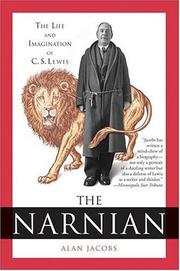
A literary biography focused specifically on Lewis's imagination and the making of Narnia; Jacobs engages the reading-order question with nuance and is ideal as a capstone critical text.
Discussion
Keep reading
Paths that share books, cover the same subject, or open a related topic.