Rhetoric & persuasion: the art of moving minds
This curriculum moves from the timeless classical foundations of rhetoric through the modern psychology of persuasion, and finally into advanced practice — how to construct, deliver, and ethically wield arguments that genuinely change minds. Each stage builds the vocabulary and mental models needed for the next, so no step feels like a leap.
Foundations: The Classical Art of Argument
BeginnerUnderstand what rhetoric is, where it comes from, and master the core classical toolkit — ethos, pathos, logos, the three genres of speech, and the basic structure of a persuasive argument.
▸ Study plan for this stage
Pace: 10–12 weeks total. Week 1–4: "Thank You for Arguing" (~25–30 pages/day, reading casually but actively — annotate examples of ethos, pathos, logos as you go). Weeks 5–9: "Rhetoric" by Aristotle (~15–20 pages/day — this is dense; read each Book twice before moving on, and keep a running glossary). Wee
- The three modes of persuasion — ethos (credibility/character), pathos (emotional appeal), and logos (logical/reasoned argument) — as introduced accessibly by Heinrichs and systematized by Aristotle
- The three classical genres of rhetoric: deliberative (future-focused, legislative), epideictic (praise/blame, ceremonial), and forensic (past-focused, judicial), drawn from Aristotle's Rhetoric Book I
- The enthymeme: Aristotle's rhetorical syllogism — a probabilistic, audience-dependent argument that is the workhorse of persuasion, distinct from formal logical proof
- The five canons of classical rhetoric (invention, arrangement, style, memory, delivery) as the structural backbone underlying all three books
- Stasis theory and the concept of 'the issue' — identifying exactly what is in dispute (fact, definition, quality, or procedure) as Heinrichs frames it in his 'argument toolkit'
- Arrangement: the classical speech structure (exordium, narration, partition, confirmation, refutation, peroration) and how Heinrichs modernizes it as a practical persuasion sequence
- Figures of speech as tools of persuasion: Forsyth's 'Elements of Eloquence' demonstrates how specific rhetorical figures (anaphora, antithesis, climax, etc.) operate on the audience's emotions and memory, connecting style back to pathos and ethos
- The concept of kairos — the right moment and context for an argument — and how all three books treat timing and audience-awareness as inseparable from effective rhetoric
- What are ethos, pathos, and logos, and can you identify a real-world example of each drawn from your own reading of Heinrichs or Aristotle?
- What distinguishes the three genres of speech (deliberative, forensic, epideictic) from one another, and what is the primary temporal orientation and goal of each?
- What is an enthymeme, how does it differ from a formal syllogism, and why does Aristotle consider it the central instrument of rhetorical proof?
- How does Heinrichs's concept of 'changing the tense' of an argument relate to Aristotle's three genres — and why is moving a dispute from forensic to deliberative often a winning rhetorical move?
- How do the figures of speech catalogued by Forsyth (e.g., anaphora, antithesis, anadiplosis) function as more than decoration — in what way do they serve ethos, pathos, or logos?
- What is kairos, and how do Heinrichs and Aristotle each account for the role of timing and audience in determining whether an argument succeeds?
- Aristotle's Triad Journal: For one week, collect 5 real arguments per day (ads, op-eds, speeches, conversations). Label every appeal as ethos, pathos, or logos and write one sentence explaining why. At the end of the week, tally which mode dominates in which context.
- Enthymeme Drill: Take 10 claims from the news. For each, reconstruct the hidden premise that makes the argument work (e.g., 'You should vote for X because X is a veteran' — hidden premise: 'Veterans make trustworthy leaders'). Then challenge the hidden premise in writing.
- Genre Rewrite: Write the same 150-word argument three times — once as a deliberative speech (what should we do?), once as a forensic speech (who was responsible?), and once as an epideictic speech (who deserves praise or blame?) — using the same underlying facts.
- Forsyth Figure Practice: After reading each chapter of 'The Elements of Eloquence,' write three original sentences using that figure. Then find or recall a famous quote that uses the same figure. Keep a running 'figure bank' document you can return to when writing.
- Classical Speech Outline: Using the six-part classical structure (exordium → narration → partition → confirmation → refutation → peroration), outline a 3-minute persuasive speech on a topic you care about. Deliver it aloud, record yourself, and evaluate your use of all three appeals.
- Heinrichs 'Persuasion Autopsy': Choose one argument you recently lost or failed to land. Using Heinrichs's framework, diagnose what went wrong — which appeal was missing or mishandled, what was the stasis point, and did you misjudge kairos? Write a one-page post-mortem and a revised version of the argument.
Next up: Mastering the classical skeleton — the three appeals, the genres, the enthymeme, and the figures — gives the reader a stable analytical grammar that the next stage can stress-test against Renaissance, Enlightenment, and modern theories of persuasion, where these foundations are both extended and challenged.
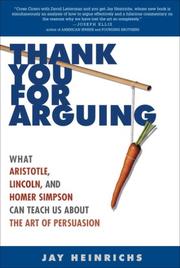
The perfect entry point: a witty, modern guide that translates Aristotle's classical rhetoric into everyday language. It builds the essential vocabulary (ethos, pathos, logos, kairos) before any heavier reading.

The foundational text of the entire tradition. Read it now that Heinrichs has primed the concepts — you'll recognize the ideas and appreciate the source without being overwhelmed.

A joyful tour of classical rhetorical figures (anaphora, chiasmus, antithesis, etc.) that shows how language is shaped at the sentence level — the craft layer beneath the argument layer.
The Psychology of Persuasion
BeginnerUnderstand the cognitive and psychological mechanisms that make people say yes — social proof, scarcity, authority, reciprocity — and see how they map onto the classical framework already learned.
▸ Study plan for this stage
Pace: 6–8 weeks total: Weeks 1–4 for "Influence" (~25–30 pages/day, reading one principle per sitting and pausing to observe it in the wild before moving on); Weeks 5–8 for "Pre-Suasion" (~20–25 pages/day, slower pace to absorb the more nuanced "channeling attention" framework).
- Cialdini's Six Principles of Influence (Reciprocity, Commitment & Consistency, Social Proof, Authority, Liking, Scarcity) — the psychological triggers that bypass deliberate reasoning
- The concept of 'click, whirr' automatic responses: how fixed-action patterns make humans vulnerable to influence shortcuts
- Reciprocity as a social contract: why unsolicited gifts and concessions create felt obligation, and how the 'rejection-then-retreat' technique exploits it
- Commitment & Consistency: how small initial commitments (foot-in-the-door) escalate into larger ones, and the role of written/public declarations in locking in behavior
- Social Proof and uncertainty: why people look to others' behavior most strongly in ambiguous situations, and how pluralistic ignorance amplifies this
- Authority cues (titles, clothing, trappings) and how they trigger compliance independent of actual expertise
- Scarcity and psychological reactance: why perceived loss of availability increases desire and perceived value
- Pre-Suasion's core thesis — that the most powerful moment to influence someone is just BEFORE the message arrives, by directing attention to shape what feels relevant and true
- The concept of 'privileged moments': how channeling attention to a concept (e.g., safety, love, exclusivity) primes receptivity to a subsequent request linked to that concept
- Mapping Cialdini's principles onto classical rhetoric: Reciprocity/Liking ↔ Ethos; Scarcity/Social Proof ↔ Pathos; Authority ↔ Logos & Ethos
- Can you name and define all six principles from Influence, give a real-world example of each, and identify which classical rhetorical appeal (Ethos, Pathos, Logos) each maps onto most closely?
- What does Cialdini mean by 'click, whirr' responses, and why does he argue that these shortcuts are rational in most contexts but exploitable in others?
- How does Pre-Suasion's concept of 'directing attention' differ from — and extend — the six principles in Influence? In other words, what does pre-suasion add that influence alone doesn't cover?
- Choose one of the six principles and trace the full mechanism: the psychological need it exploits, a legitimate use, a manipulative use, and a defense against it.
- How does the 'rejection-then-retreat' technique combine reciprocity and commitment/consistency simultaneously? Walk through a concrete example.
- According to Pre-Suasion, why is the moment just before a message is delivered often more important than the message itself, and what practical techniques does Cialdini describe for engineering that moment?
- Influence Audit Journal (ongoing, both books): Keep a daily log for the full 6–8 weeks. Each day, record at least one real-world instance of a Cialdini principle you encountered — in advertising, conversation, news, or social media. Note the principle, the trigger used, your emotional response, and whether it worked on you.
- Principle Mapping Table: After finishing Influence, build a two-axis table mapping each of the six principles against (a) the classical appeal it resembles most (Ethos/Pathos/Logos) and (b) a specific rhetorical device from any prior stage reading. Write 2–3 sentences justifying each mapping.
- Reverse-Engineer an Ad: Select three advertisements (print, video, or digital) and write a 1-page breakdown of each: which principle(s) are deployed, what pre-suasive 'attention primer' is used (if any), and how the ad would change if the principle were removed.
- Foot-in-the-Door vs. Door-in-the-Face Experiment: In low-stakes, ethical everyday situations (asking a favor from a friend or colleague), consciously try the foot-in-the-door technique once and the rejection-then-retreat (door-in-the-face) technique once. Write a half-page reflection on what happened and what you felt doing it.
- Pre-Suasion Opener Design: Write three different 'openers' (an email subject line, a conversation starter, and a presentation first slide) for the same persuasive goal (e.g., convincing a friend to try a new restaurant). Each opener should prime a different psychological concept (e.g., adventure, social belonging, scarcity). Compare which feels most natural and why.
- Inoculation Reflection: After finishing both books, write a one-page personal 'defense memo' — identify the two principles you are most personally susceptible to, explain why using Cialdini's psychological mechanisms, and outline concrete mental habits you will use to pause before complying.
Next up: Mastering the psychological triggers in Influence and the attentional priming in Pre-Suasion gives the reader a scientific vocabulary for why persuasion works on audiences, which makes the next stage — studying the craft of constructing actual arguments and narratives — feel purposeful rather than mechanical, because every structural choice can now be evaluated against a known psychological effect
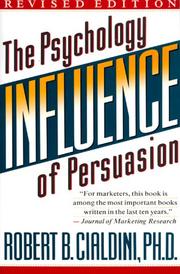
The canonical modern text on persuasion psychology. Its six principles are the empirical backbone of pathos-based persuasion and are referenced by virtually every later book in the field.
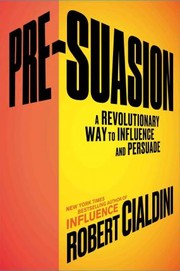
Cialdini's follow-up focuses on the moment before the message — how context, framing, and attention shape receptivity. Read after Influence to extend the model from content to timing.
Thinking, Framing & the Mind
IntermediateGo deeper into how humans actually reason — heuristics, biases, and mental frames — so you can craft arguments that work with the grain of the mind rather than against it.
▸ Study plan for this stage
Pace: 6–7 weeks total. Weeks 1–5: "Thinking, Fast and Slow" (~25–30 pages/day, reading in thematic clusters: Systems 1 & 2 → Heuristics & Biases → Prospect Theory & Framing). Weeks 6–7: "Don't Think of an Elephant!" (~20–25 pages/day — it's short but dense with application; re-read key chapters twice). Re
- System 1 vs. System 2 thinking (Kahneman): automatic/intuitive vs. slow/deliberate cognition, and how persuaders can target each
- Cognitive heuristics and biases (Kahneman): availability, representativeness, anchoring, and how they shape judgment without conscious awareness
- Prospect Theory and loss aversion (Kahneman): people feel losses more acutely than equivalent gains — framing choices as losses or gains dramatically shifts decisions
- The Framing Effect (Kahneman): logically equivalent information presented differently produces systematically different responses
- Cognitive frames (Lakoff): mental structures — stored as neural networks — that filter and interpret incoming information before conscious reasoning begins
- Frame activation through language (Lakoff): every word evokes a frame; using the opponent's language reinforces their frame even when negating it ('Don't think of an elephant')
- Strategic reframing (Lakoff): winning arguments requires offering a competing moral frame, not just correcting facts — facts alone don't dislodge entrenched frames
- Values-first communication (Lakoff): effective persuasion leads with shared values and moral worldview, then introduces specific policies or arguments as expressions of those values
- According to Kahneman, what is the difference between System 1 and System 2, and why does System 1 do most of the heavy lifting in everyday decisions — including how people respond to arguments?
- What are the availability and anchoring heuristics, and can you give a real-world example of each being deliberately exploited in a persuasive message?
- How does Prospect Theory explain why framing a policy as preventing a loss is often more persuasive than framing it as achieving an equivalent gain?
- Lakoff argues that 'negating a frame reinforces it.' What does this mean in practice, and what should a communicator do instead when they want to counter a damaging narrative?
- What is the difference between 'strict father' and 'nurturant parent' moral frames as described by Lakoff, and how do these underlying worldviews shape which policy arguments feel intuitively right to different audiences?
- How do Kahneman's framing effects and Lakoff's concept of cognitive frames complement each other — and where, if anywhere, do they tension or contradict?
- **Bias Audit of Real Rhetoric:** Collect 5 political speeches, op-eds, or advertisements. Annotate each one identifying at least two cognitive biases or heuristics (from Kahneman) being leveraged — intentionally or not. Note whether the message works with or against System 1.
- **Loss vs. Gain Rewrite:** Take a single argument you care about (a policy, a product pitch, a personal request) and write it twice — once framed around gains, once around losses. Test both versions on a friend or colleague and record which lands more powerfully and why.
- **Frame Excavation:** Choose a charged political or social term (e.g., 'tax relief,' 'illegal alien,' 'pro-life'). Following Lakoff's method, map out the full cognitive frame each term activates: Who are the actors? What are the implied values? What narrative does it assume? Then craft an alternative term that activates a competing frame.
- **The Elephant Test:** Write a short paragraph arguing against a well-known position (e.g., 'we should not cut public education funding'). Identify every moment you accidentally activated the opponent's frame. Rewrite the paragraph leading with your own frame and values, never borrowing the other side's language.
- **Dual-System Message Design:** Design a persuasive message on any topic with two explicit layers — a System 1 layer (vivid image, story, emotional hook, or analogy that bypasses deliberation) and a System 2 layer (data, logical structure, evidence for those who engage analytically). Reflect on how the two layers reinforce each other.
- **Cross-Book Synthesis Journal:** After finishing both books, write a 500-word personal essay answering: 'If Kahneman explains *why* frames work neurologically and psychologically, and Lakoff explains *how* to deploy them strategically, what is the unified model of persuasion that emerges?' Use specific concepts and examples from both books.
Next up: Mastering how minds process and filter information sets the foundation for the next stage, where you'll learn to translate that psychological understanding into the concrete craft of constructing arguments — moving from how people think to how to build the specific logical and rhetorical structures that move them.

The definitive account of System 1 vs. System 2 thinking. Understanding dual-process cognition is essential for knowing when to appeal to intuition and when to make a logical case.
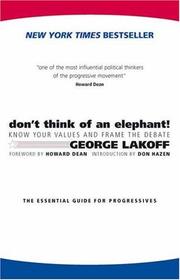
Introduces cognitive framing — the idea that the words and metaphors you choose activate mental frames that determine how an argument is received, regardless of its logical content.
Advanced Rhetoric: Argument, Debate & Changing Minds
IntermediateLearn to construct rigorous arguments, identify and counter fallacies, navigate disagreement, and understand why people resist changing their minds — and what actually works.
▸ Study plan for this stage
Pace: 3–4 weeks, ~20–25 pages/day (the book is ~300 pages); read one chapter per sitting, pausing after each to reflect and journal before moving on
- Deep Canvassing: how extended, empathy-driven conversations produce durable attitude change — unlike debate or fact-dumping
- Identity-Protective Cognition: people resist changing their minds when a belief is tied to their sense of self, tribe, or values
- The Backfire Effect (and its nuances): why direct confrontation with counter-evidence can sometimes entrench beliefs rather than dislodge them
- Motivational Interviewing: asking open-ended, non-judgmental questions that let people talk themselves toward change
- The Illusion of Explanatory Depth: people overestimate how well they understand complex issues, and exposing this gap gently opens them to revision
- Street Epistemology: a Socratic method of probing the reliability of someone's reasoning process rather than attacking their conclusions
- Social Proof and Tribal Epistemology: how group identity shapes what evidence people accept as credible
- The Role of Emotions and Narrative: personal stories and emotional resonance are often more persuasive than statistics or logical arguments alone
- What is deep canvassing, and what makes it more effective at producing lasting belief change than traditional debate or fact-based persuasion?
- How does identity-protective cognition explain why presenting stronger evidence to a committed believer can sometimes backfire?
- What is the illusion of explanatory depth, and how can a persuader use it ethically to help someone become more epistemically humble?
- Describe the core moves of Street Epistemology — how does it differ from arguing about the truth of a claim versus the quality of the reasoning behind it?
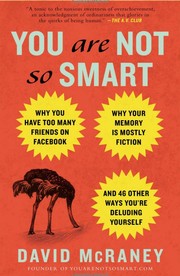
- Why does McRaney argue that emotional connection and personal narrative are not rhetorical shortcuts but are actually central to genuine persuasion?
- What conditions — in the speaker, the listener, and the conversation itself — does McRaney identify as necessary for real mind-change to occur?
- **Belief Audit Journal:** Choose 3 of your own strongly held beliefs. For each, write a paragraph on (a) what evidence would theoretically change your mind, and (b) how much of your confidence is tied to your identity or social group. Use McRaney's frameworks to diagnose your own cognition.
- **Deep Canvassing Role-Play:** Pair with a friend or study partner. Pick a genuinely contested topic where you disagree. One person practices deep canvassing — asking open questions, sharing a personal story, listening without rebutting — for 10 minutes. Debrief: what shifted, even slightly?
- **Illusion of Explanatory Depth Test:** Pick a policy or technical topic you feel confident about (e.g., how a carbon tax works, how vaccines produce immunity). Try to explain it in writing, step by step, from first principles. Note where your explanation breaks down — then research the gaps.
- **Street Epistemology Practice:** Find a low-stakes disagreement online or in person. Instead of challenging the claim, ask only questions about *how* the person came to believe it: 'How did you arrive at that?' / 'How confident are you, on a scale of 1–10, and why that number?' Write up what happened.
- **Persuasion Autopsy:** Recall a time someone genuinely changed your mind, or you changed someone else's. Write a 1-page analysis mapping the experience onto McRaney's concepts — what techniques were at play, what made the listener ready to shift, and what would have caused the conversation to fail?
- **Reframe a Debate:** Take a real argument you've had or witnessed that went nowhere. Rewrite it as a deep canvassing conversation — replace every counter-argument with a question or personal story. Compare the two versions and reflect on what was gained or lost.
Next up: McRaney establishes *why* minds change and what psychological conditions make persuasion possible — the next stage can build directly on this foundation by introducing the formal tools of argument construction, logical structure, and fallacy identification that give a rhetorician the technical precision to act on these insights.

A research-driven investigation into why people hold beliefs and what actually causes genuine belief change — the capstone on persuasion psychology before moving to mastery.
Mastery: Rhetoric in Practice
ExpertSynthesize everything into a practiced, ethical, and sophisticated rhetorical identity — studying a master stylist and the philosophical ethics of persuasion to become not just effective, but responsible.
▸ Study plan for this stage
Pace: 8–10 weeks total: Weeks 1–4 cover On Writing Well (~25–30 pages/day, reading in thematic clusters — craft, nonfiction forms, and attitude); Weeks 5–10 cover The Rhetoric of Fiction (~20–25 pages/day, slower pace to absorb Booth's dense theoretical framework and close readings).
- Clarity and simplicity as ethical acts — Zinsser's argument that clutter is not just bad style but a form of dishonesty that disrespects the reader
- The writer's 'humanity' and voice — Zinsser's insistence that personality, warmth, and individuality are non-negotiable elements of effective nonfiction prose
- Stripping to the essential — Zinsser's principle of ruthless editing: every word must earn its place, and ornamentation without function is a rhetorical failure
- The implied author — Booth's distinction between the real author, the implied author (the version of the author constructed by the text), and the narrator, and why this matters for trust and persuasion
- Unreliable narration as a rhetorical device — Booth's analysis of how authors deliberately create narrators whose credibility is compromised, and the ethical questions this raises about reader manipulation
- The author–reader 'contract' — Booth's concept of the rhetorical relationship between text and audience as a form of implicit agreement about norms, values, and interpretive expectations
- Show vs. tell as a rhetorical choice — Booth's deconstruction of the dogma that 'showing' is always superior, revealing that both modes carry distinct persuasive and ethical weight
- The ethics of persuasion — synthesizing Zinsser's practical honesty with Booth's philosophical framework to define what it means to be a responsible, trustworthy rhetor
- According to Zinsser, why is clutter a moral problem and not merely an aesthetic one — and how does his solution connect to the broader goals of ethical rhetoric?
- How does Zinsser define 'voice,' and what practical techniques does he offer for discovering and sustaining an authentic writerly identity across different nonfiction forms?
- What is Booth's concept of the 'implied author,' and how does it differ from both the real author and the narrator? Why is this distinction rhetorically significant?
- How does Booth use the concept of 'unreliable narration' to reveal the hidden persuasive machinery inside fiction — and what ethical responsibilities does this place on authors?
- In what ways do Zinsser and Booth agree or disagree on the relationship between clarity, honesty, and the reader's trust? Where do their frameworks productively tension each other?
- How does Booth challenge the 'show don't tell' orthodoxy, and what does his critique reveal about the assumptions embedded in conventional rhetorical and craft advice?
- Clutter audit: Take a piece of your own writing (500–1,000 words) and apply Zinsser's editing principles ruthlessly — cut every word that does not carry weight. Then write a one-paragraph reflection on what the cuts reveal about your rhetorical habits and defaults.
- Voice imitation and divergence: Choose one chapter from On Writing Well and write a 300-word passage in Zinsser's voice on a topic of your choice. Then rewrite the same passage in your own distinct voice. Compare the two and articulate in writing what makes each voice rhetorically effective or limiting.
- Implied author mapping: Select a short story or novel excerpt (outside the reading list) and write a 400-word analysis identifying the implied author — what values, assumptions, and personality does the text construct? Then identify where the real author may diverge from that construction.
- Reliability spectrum exercise: Using Booth's framework, find three narrators from fiction you have read and rank them on a spectrum from fully reliable to deeply unreliable. For each, write 2–3 sentences explaining the textual evidence and the rhetorical/ethical effect of that reliability level on the reader.
- Show vs. tell rewrite: Take a paragraph of pure 'telling' from any nonfiction or fiction source and rewrite it as pure 'showing,' then reverse the exercise. Write a brief Booth-informed analysis of what each version persuades the reader to feel, believe, or do differently.
- Ethical rhetor manifesto: Drawing on both Zinsser's craft ethics and Booth's philosophical framework, write a personal 500-word manifesto defining your own principles for ethical persuasion — what you will and will not do as a writer and rhetor, and why.
Next up: By internalizing Zinsser's disciplined craft ethics and Booth's philosophical architecture of author–reader trust, the reader has built a complete, principled rhetorical identity — the ideal foundation for any subsequent stage focused on applying rhetoric across specialized domains, public discourse, or original research and production.

The master class in clear, persuasive prose. After studying argument structure and psychology, this book sharpens the actual writing — the delivery vehicle for every idea you want to land.

A sophisticated, advanced text on how narrative itself persuades — how authors construct implied authors, unreliable narrators, and reader relationships to shape belief. The deepest level of rhetorical craft.
Discussion
Keep reading
Paths that share books, cover the same subject, or open a related topic.