The Chronicles of Amber Reading Order
The Chronicles of Amber is a ten-novel epic by Roger Zelazny, split into two five-book cycles: the Corwin Cycle and the Merlin Cycle. This curriculum reads them in internal publication order — the intended sequence — starting with pure story immersion, then deepening appreciation through Zelazny's broader craft, and finally exploring the mythological and philosophical ideas woven into Amber's DNA.
The Corwin Cycle — Amber Begins
BeginnerExperience the first five Amber novels in order, following Corwin's journey from amnesia to the heart of Chaos. Build fluency with Amber's world, the Pattern, Trumps, and shadow-walking.
▸ Study plan for this stage
Pace: 8–10 weeks total; read roughly 20–25 pages per day. Suggested pacing: Nine Princes in Amber (Week 1), The Guns of Avalon (Weeks 2–3), Sign of the Unicorn (Weeks 4–5), The Hand of Oberon (Weeks 6–7), The Courts of Chaos (Weeks 8–10). Each book is short (150–200 pages), so this allows time for reflect
- Amber as the one true world: All other worlds ('shadows') are reflections of Amber, and only members of the royal family can navigate between them — a cosmological hierarchy that underpins every plot event.
- Shadow-walking: The ability of Amberites to shift reality incrementally by altering details of their surroundings, effectively traveling to any imaginable world — introduced through Corwin's escapes and journeys across the five books.
- The Pattern: The great design inscribed beneath Amber by Dworkin, which grants Amberites their power over Shadow; walking it is a rite of passage and a recurring plot device, culminating in the damaged Black Road Pattern revealed in The Hand of Oberon.
- Trumps: Tarot-like cards depicting members of the royal family and key locations, used for instantaneous communication and teleportation — introduced in Nine Princes and central to nearly every twist in the cycle.
- Corwin's amnesia and identity: The entire Corwin Cycle is filtered through a first-person narrator who must reconstruct who he is, making unreliable memory a structural theme from the first page of Nine Princes to the revelations in The Hand of Oberon.
- The succession conflict and family politics: The nine princes (and princesses) of Amber are locked in a ruthless game for the throne; tracking alliances, betrayals, and shifting loyalties across all five books is essential to following the plot.
- The Black Road and the Courts of Chaos: Beginning in The Guns of Avalon, a supernatural corruption spreads toward Amber; The Courts of Chaos reveals it as an existential war between Order (Amber/the Pattern) and Chaos (the Logrus/the Courts), giving the cycle its mythic stakes.
- Corwin's moral evolution: Zelazny traces Corwin's transformation from cynical amnesiac schemer in Nine Princes to a figure capable of genuine sacrifice in The Courts of Chaos — tracking this arc is the emotional core of the beginner stage.
- By the end of Nine Princes in Amber, what does Corwin remember about his identity, and what does he do that sets the central conflict of the entire cycle in motion?
- How does shadow-walking work mechanically and philosophically — what does it imply about the nature of reality in Amber's universe, and which scenes across the five books best illustrate it?
- What is the significance of the damaged Pattern first hinted at in Sign of the Unicorn and confirmed in The Hand of Oberon, and who is ultimately responsible for the damage?
- How do Trumps function as both a communication tool and a plot device — give at least two examples from different books where a Trump contact changes the course of events.
- Trace the shifting alliances among Amber's royal siblings across all five books: who does Corwin trust at the start of Nine Princes, and how has that map of trust changed by The Courts of Chaos?
- What choice does Corwin make at the climax of The Courts of Chaos, and how does it reflect the moral journey he has undergone since waking up in a hospital with no memory in Nine Princes in Amber?
- Family tree journal: After each book, update a hand-drawn diagram of Amber's royal family, annotating each sibling with their current allegiance, last known location, and one word describing their relationship with Corwin. Compare your first draft (after Nine Princes) with your final draft (after The Courts of Chaos) to visualize the shifting politics.
- Shadow-walking log: Each time Corwin (or another character) walks through Shadow, write a two-sentence entry describing (a) what environmental detail they change and (b) what narrative purpose the journey serves. Aim to collect at least 10 entries across the five books.
- Trump deck index: Create a reference card for every Trump mentioned or used across the cycle — who or what it depicts, who holds it, and when it is activated. Note any Trump that is destroyed, stolen, or blocked, and theorize why.
- Chapter-end 'unreliable narrator' flags: Because Corwin narrates in first person with incomplete knowledge, mark any moment where you suspect he is wrong, withholding information, or rationalizing his actions. After finishing The Hand of Oberon (where several of his assumptions are corrected), review your flags and score your suspicions.
- Pattern vs. Chaos comparison essay (500 words): After completing The Courts of Chaos, write a short essay arguing whether Zelazny presents the conflict between Amber/Pattern and the Courts of Chaos as a straightforward good-vs.-evil struggle or something more morally ambiguous. Use at least one scene from each of the last three books as evidence.
- Reread the opening chapter of Nine Princes in Amber after finishing The Courts of Chaos, then write a one-page reflection on what details land differently now that you know Corwin's full history — focusing on foreshadowing, word choice, and what the amnesiac narrator cannot yet see.
Next up: Completing the Corwin Cycle establishes the world's rules and its first great conflict, making the reader ready to encounter Merlin's perspective in the Merlin Cycle — where the Courts of Chaos shift from distant threat to home ground, and the Logrus challenges the Pattern's supremacy in entirely new ways.
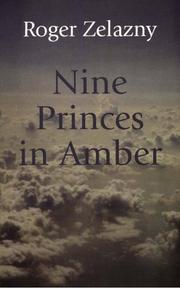
The entry point: Corwin wakes with no memory and the reader discovers Amber alongside him. Establishes every core concept — the Pattern, shadow, the royal family — in a propulsive noir-fantasy voice.
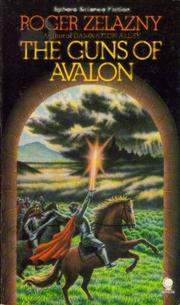
Corwin's quest deepens and the stakes of the war for Amber become clear. Read immediately after Nine Princes to maintain narrative momentum and meet key allies and enemies.
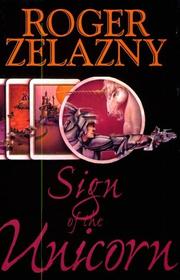
The mystery of Amber's origins begins to surface. This middle chapter rewards the vocabulary built in the first two books and sets up the cosmological revelations to come.
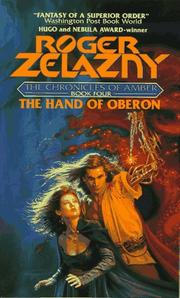
The penultimate Corwin book pulls every thread together — the true Pattern, the Black Road, family betrayal. Essential reading before the cycle's climax.

Corwin's cycle concludes in a hallucinatory ride through shadow to the Courts of Chaos. Completes the first arc and provides the emotional and cosmological foundation for the Merlin Cycle.
The Merlin Cycle — A New Generation
IntermediateRead the second five-book cycle following Merlin, son of Corwin, as he navigates Earth, Amber, and the Courts of Chaos. Appreciate how Zelazny shifts tone, expands the cosmology, and passes the torch.
▸ Study plan for this stage
Pace: 5–6 weeks, roughly 25–35 pages per day. Each book is short (~180–220 pages), so aim to finish one book every 7–9 days. Suggested pacing: Week 1 — Trumps of Doom; Week 2 — Blood of Amber; Week 3 — Sign of Chaos; Weeks 4–5 — Knight of Shadows; Week 6 — Prince of Chaos + review. Read each book in one u
- Merlin as a dual-heritage protagonist — born of Corwin (Amber) and Dara (Courts of Chaos), he embodies the tension between order and entropy that defines the entire cycle
- Ghostwheel: Merlin's self-constructed Trump computer, representing the fusion of Pattern-based magic with Chaos-born creativity, and the ethical questions of creating sentient tools
- The shift in narrative tone from Corwin's chivalric, mythic voice to Merlin's modern, sardonic, Earth-acclimated perspective — Zelazny deliberately grounds the second cycle in contemporary (1980s) sensibility
- Expanded cosmology: the introduction of the Logrus (the Chaos equivalent of the Pattern) as a competing initiatory power, and what it means that Merlin has walked both
- The web of conspiracies — the Mask/Jurt/Julia/Luke (Rinaldo) plotlines illustrate how Zelazny layers multiple antagonists whose motives are not simply evil but rooted in loyalty, grief, and rival dynastic ambitions
- Spikards and constructs: the escalating magical arms race in Knight of Shadows and Prince of Chaos, and how artifact-based power complicates questions of agency and free will
- The Courts of Chaos as a fully realized setting — Prince of Chaos finally brings the reader inside the Courts, completing the geographic and political picture begun in the Corwin Cycle
- The 'passing of the torch' theme: Merlin must ultimately choose his own identity rather than live in Corwin's shadow, mirroring the reader's own transition from the first cycle to the second
- How does Merlin's dual initiation into both the Pattern and the Logrus create internal conflict throughout the five books, and how is that conflict (partially) resolved by Prince of Chaos?
- What is Ghostwheel, why does Merlin build it, and why does it become a source of danger — what does this say about the theme of creation and responsibility in the Merlin Cycle?
- Trace Luke/Rinaldo's arc from apparent antagonist in Trumps of Doom to something more ambiguous by Prince of Chaos — what motivates him, and how does Zelazny use him to complicate the idea of villainy?
- How does Zelazny use Merlin's years on Earth (as a software engineer) to change the texture of the prose and the kinds of problems Merlin solves, compared to Corwin's more sword-and-sorcery approach?
- By the end of Prince of Chaos, what has Merlin accepted about his place in the Courts, and does the cycle feel resolved or deliberately open-ended — and why might Zelazny have chosen that ending?
- Dual-heritage character map: Draw a diagram placing Merlin at the center with two branches — Amber (Pattern, family, allies) and Chaos (Logrus, Courts, rivals). After each book, add new characters, artifacts, and allegiances to the correct branch, and mark anyone who crosses between them. This makes the conspiracy layers visible.
- Tone comparison journal: Choose one action scene from Trumps of Doom and find a comparable scene from the Corwin Cycle (from memory or notes). Write a one-page comparison of the prose style, vocabulary, and the protagonist's internal monologue. Identify at least three specific ways Merlin's voice differs from Corwin's.
- Ghostwheel ethics debate: Write a short (300–400 word) argument either defending or prosecuting Merlin's decision to build Ghostwheel, using evidence from Blood of Amber and Sign of Chaos. Consider: consent, sentience, and the consequences of the creation turning on its creator.
- Conspiracy timeline: On a single sheet, create a chronological timeline of the assassination attempts, identity reveals, and faction shifts across all five books. Mark the moment each antagonist's true motive is revealed. This exercise forces close attention to Zelazny's deliberately tangled plotting.
- Cosmology expansion essay: After finishing Prince of Chaos, write a one-page 'updated cosmology' entry — as if you were adding to an in-world encyclopedia — describing the Logrus, the Courts of Chaos, and Spikards, and how they relate to (and complicate) the Pattern-centric worldview established in the Corwin Cycle.
- Reflection letter: Write a short letter from Merlin to Corwin (who is absent for most of the cycle) summarizing what Merlin has learned about himself by the end of Prince of Chaos. This creative exercise forces synthesis of Merlin's entire arc and his relationship to his father's legacy.
Next up: By completing the Merlin Cycle, the reader now holds the full dual-sided cosmology of Amber — Pattern and Logrus, order and chaos, two generations of protagonists — which provides the thematic and structural foundation needed to engage critically with Zelazny's craft, legacy, and the broader genre conversations his work participates in at the next stage.
Opens the Merlin Cycle with a modern-Earth thriller feel. Having finished the Corwin books, readers can immediately spot how Zelazny reuses and subverts familiar Amber tropes through a new protagonist's eyes.
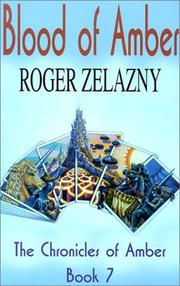
Merlin's enemies multiply and the ghost-wheel mystery deepens. Builds directly on Trumps of Doom and rewards readers who remember Corwin-era lore.
A wilder, more surreal installment that leans into Zelazny's playful literary allusions. Best appreciated mid-cycle once Merlin's voice and relationships are established.
The penultimate Merlin novel draws the Courts of Chaos back to center stage, echoing the Corwin Cycle's structure. Readers now see the full symmetry Zelazny designed across all ten books.
The cycle — and the entire Chronicles — concludes here. Merlin's identity and destiny resolve against the backdrop of the eternal war between Order and Chaos, paying off a decade of storytelling.
Zelazny's Craft — The Author Behind Amber
IntermediateRead two of Zelazny's other landmark works to understand the stylistic and thematic toolkit he brought to Amber: mythic retellings, first-person voice, and the blending of genres.
▸ Study plan for this stage
Pace: 5–6 weeks total: spend roughly 3 weeks on "Lord of Light" (~20–25 pages/day, given its density and mythic layering) and 2–3 weeks on "This Immortal" (~25–30 pages/day, as it is shorter and faster-paced). Set aside one additional day between books for comparative reflection notes.
- Mythic retelling as subversion: both novels borrow from established mythologies (Hindu pantheon in Lord of Light; Greek myth and post-apocalyptic folklore in This Immortal) not to retell them faithfully but to interrogate power, identity, and mortality through them.
- The immortal protagonist archetype: Sam in Lord of Light and Conrad Nomikos in This Immortal are both ancient, world-weary figures who mask vast capability behind ironic detachment — a direct prototype for Corwin of Amber.
- First-person unreliable voice: This Immortal is narrated by Conrad in a clipped, sardonic first person that withholds as much as it reveals, training the reader to read between the lines — a skill essential for Amber.
- Genre blending as a deliberate aesthetic: Lord of Light fuses science fiction with Hindu religious epic; This Immortal fuses post-apocalyptic SF with Greek myth and spy thriller. Zelazny treats genre boundaries as raw material, not constraints.
- Economy of prose and the 'cool' style: Zelazny consistently favors compression, implication, and understatement over exposition. Noticing where he tells you almost nothing — and how that creates tension — is central to appreciating Amber.
- Power, legitimacy, and the cost of godhood: both novels ask whether those who hold godlike power have any right to it, and what it does to them over centuries — the central moral question of the Amber series.
- Setting as mythic geography: Zelazny builds worlds that feel ancient and layered even when they are technologically advanced, using landscape and architecture as symbolic extensions of character and theme.
- The reluctant hero who is never truly reluctant: Sam and Conrad both perform reluctance while being the most competent and driven person in the room — a character dynamic Zelazny perfects with Corwin.
- In Lord of Light, how does Zelazny use the structure of Hindu myth — karma, reincarnation, the Accelerationist conflict — to comment on colonialism and the abuse of technological power? What specific scenes or passages make this critique most explicit?
- Conrad Nomikos in This Immortal narrates events with consistent irony and selective omission. Identify two or three moments where his narration is demonstrably unreliable or incomplete. What does Zelazny gain by choosing this voice over third-person omniscient?
- Both Sam and Conrad are defined by a tension between engagement and withdrawal — they want to be left alone but cannot stop intervening. How does each novel dramatize this tension, and how does it differ between the two protagonists?
- Zelazny blends science fiction and mythology in both books, but the blend works differently in each. Describe the specific mechanism of genre fusion in Lord of Light versus This Immortal. Which do you find more seamless, and why?
- After reading both novels, how would you characterize Zelazny's prose style at the sentence level? Find one paragraph from each book that you consider exemplary of his craft and explain what specific techniques make it work.
- How do the endings of Lord of Light and This Immortal each handle the question of whether the protagonist 'wins'? What does Zelazny seem to believe about heroic resolution, and how might that belief shape the ten-volume Amber saga?
- Voice imitation exercise: Write a 300–400 word scene from the point of view of an immortal character who has just witnessed a historical event (real or invented). Consciously imitate Conrad's first-person style from This Immortal — sardonic, compressed, withholding backstory. Then annotate your own draft: where did you resist over-explaining? Where did you slip into exposition?
- Myth-mapping exercise for Lord of Light: Create a two-column reference sheet. In the left column, list the Hindu mythological figures and concepts Zelazny draws on (Brahma, Vishnu, karma, the Wheel, etc.). In the right column, write the science-fictional or political 'translation' Zelazny gives each one. Reflect in a short paragraph on what this mapping reveals about his thematic intentions.
- Comparative character sketch: Write a one-page profile of Sam (Lord of Light) and Conrad (This Immortal) as if you were casting them in the same story. What are their overlapping traits? Where do they diverge? Then write a single sentence predicting how Corwin of Amber will synthesize or depart from both.
- Close-reading annotation: Select one chapter from Lord of Light and one chapter from This Immortal. Read each with a pen in hand and mark every instance of: (a) a mythological or literary allusion, (b) a moment of deliberate narrative withholding, and (c) a tonal shift between registers (e.g., epic to sardonic). Compare your two annotated chapters — which techniques appear in both?
- Genre-fusion analysis: Draft a short essay (500–700 words) arguing which of the two books achieves a more successful fusion of its source genres. Use specific textual evidence — scenes, dialogue, structural choices — rather than general impressions. This essay will serve as a reference document when you later analyze Amber's own genre blending.
- Thematic throughline journal entry: After finishing both books, write a free-form journal entry (no minimum length) answering this question: 'What does Roger Zelazny seem to believe about what it costs a person to live forever?' Draw on specific moments from both novels. Keep this entry — you will want to revisit it when you reach the Amber books themselves.
Next up: Having internalized Zelazny's mythic imagination, his immortal-protagonist archetype, and his compressed first-person voice through Lord of Light and This Immortal, the reader is now equipped to recognize these same tools — deployed at their most ambitious and sustained — the moment Corwin begins narrating in Nine Princes in Amber.
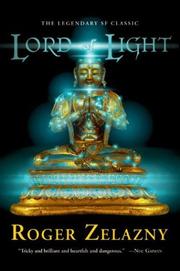
Zelazny's Hugo-winning masterpiece uses Hindu mythology the way Amber uses Arthurian and Norse myth. Reading it after Amber reveals the author's consistent obsessions — godhood, identity, power — in their most celebrated form.
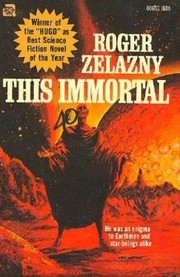
Zelazny's first novel showcases the sardonic, first-person, mythologically-charged voice that defines Corwin. A short, punchy read that deepens appreciation for how deliberately Amber's style was crafted.
Mythic & Philosophical Roots
ExpertExplore the real-world mythological and philosophical sources Zelazny drew on — Norse cosmology, Platonic idealism, and the concept of the multiverse — to read Amber as the layered literary work it is.
▸ Study plan for this stage
Pace: 2–3 weeks, ~20–25 pages/day — Crossley-Holland's retellings are dense with proper nouns and cosmological detail, so a measured pace allows for annotation and cross-referencing with Amber's imagery as you go.
- Yggdrasil as the World Tree: the Norse model of a single cosmic axis connecting multiple realms, which maps directly onto Zelazny's concept of the Pattern as the organizing principle underlying all shadow worlds
- The Nine Worlds and shadow multiplicity: how Norse cosmology imagines distinct, co-existing realms (Asgard, Midgard, Jotunheim, etc.) as a structural precursor to Amber's infinite Shadow
- Fate, the Norns, and narrative determinism: the role of Urðr, Verðandi, and Skuld in weaving destiny, and how Zelazny translates this into the fatalistic, prophecy-haunted dynastic struggles of the Amberites
- The trickster archetype — Loki: his dual nature as both creative force and agent of destruction, and how this informs morally ambiguous Amber characters, most notably Merlin and the shapeshifter Dworkin
- Ragnarök and cyclical cosmology: the Norse end-of-worlds as a reset rather than a terminus, paralleling Amber's recurring threats to the Pattern and the possibility of remaking reality
- Divine kingship and its burdens: Odin as the sacrificial, knowledge-hungry sovereign who pays a personal price for power — a direct template for Oberon and Corwin's relationship to the throne and the Pattern
- The unreliable narrator and mythic truth: Crossley-Holland's introduction foregrounds how myths encode cultural truths rather than literal facts, training the reader to treat Corwin's first-person narration in Amber with the same critical lens
- Cosmological dualism — Order vs. Chaos: the Norse tension between the structured Aesir gods and the entropic giants (Jotnar) as the mythological root of Amber's central conflict between Amber (Order) and the Courts of Chaos
- How does Yggdrasil's structure — a single true tree with all worlds branching from it — function as a mythological blueprint for Zelazny's Amber-as-true-reality and Shadow-as-reflection cosmology?
- In what ways does Odin's self-sacrifice on Yggdrasil and his perpetual pursuit of hidden knowledge prefigure the sacrifices Corwin and other Amberites make to walk or repair the Pattern?
- How does Crossley-Holland's portrayal of Loki illuminate the function of the trickster in a dynastic narrative — and which Amber characters most clearly inherit this archetype?
- What does the Norse concept of Ragnarök suggest about how Zelazny frames existential threats to Amber — as apocalypse, as renewal, or as both simultaneously?
- How do the Norns' weaving of fate challenge or complicate the apparent free will of the Amber princes, given that Zelazny's characters constantly believe they are acting autonomously?
- In what ways does the Order/Chaos dualism embedded in the conflict between the Aesir and the Jotnar give philosophical weight to what might otherwise read as a simple good-vs-evil conflict in the Amber series?
- Cosmological mapping exercise: Draw a side-by-side diagram of Yggdrasil's Nine Worlds and Amber's cosmological structure (Amber → Shadow → Courts of Chaos). Label each Norse realm with its closest Amber analogue and write two sentences justifying each pairing.
- Character archetype journal: For each major Norse figure encountered in Crossley-Holland (Odin, Thor, Loki, Freya, the Norns), write a short paragraph identifying which Amber character most closely mirrors them and citing at least one specific scene or trait from the Amber novels as evidence.
- Close-reading annotation: Select any three myths from Crossley-Holland that feature a journey between worlds (e.g., Odin's descent to Hel, Thor in Jotunheim). Annotate them specifically for structural parallels to Trump travel, Shadow-walking, or Pattern-walking in Amber.
- Thematic essay (500–700 words): Argue whether Zelazny's Amber is better understood as a *reinterpretation* of Norse cosmology or merely an *inspiration* drawn from it. Use at least three specific examples from Crossley-Holland's retellings to support your position.
- Ragnarök reflection: Reread Crossley-Holland's account of Ragnarök, then write a one-page scene analysis of a climactic moment in the Amber series (e.g., the battle to repair the Pattern in *The Courts of Chaos*) through the lens of cyclical mythic destruction and renewal.
- Vocabulary and proper-noun index: As you read, maintain a running glossary of Norse terms (e.g., Wyrd, Hamingja, Bifröst, Ginnungagap) and write a one-line note next to each explaining how the concept either appears directly or is transmuted in Zelazny's world-building.
Next up: Mastering the Norse cosmological architecture and its archetypes in Crossley-Holland gives the reader the mythic grammar needed to next examine the philosophical scaffolding — particularly Platonic idealism and multiverse theory — that Zelazny layered on top of it, transforming inherited myth into a rigorous metaphysical system.
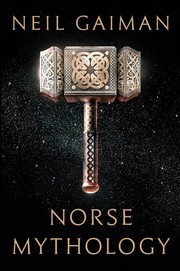
Amber's cosmology — the World Tree, the war between order and chaos, the doomed royal family — maps closely onto Norse myth. This accessible retelling lets readers trace Zelazny's borrowings precisely.
Discussion
Keep reading
Paths that share books, cover the same subject, or open a related topic.