Hugo Award-Winning Novels: Where to Start and What to Read Next
The Hugo is not a jury prize. It has been voted since 1953 by the paying members of the World Science Fiction Convention, which makes it a record of what an organised readership loved in a given year rather than what a committee judged best — and explains both its unusual reliability and its occasional collapses. That fan-vote structure is also why the award has been fought over: the 2013–2016 slate campaigns forced a change to the counting system, and the 2023 Chengdu convention was found to have quietly disqualified finalists. Read by era and by difficulty rather than by year, the winners make a real curriculum in how science fiction learned to write.
The Best First Hugos
BeginnerRead three winners that need no prior science fiction at all, and see immediately that the award's best books are novels of ideas rather than gadget stories.
▸ Study plan for this stage
Pace: Six to eight weeks. The Left Hand of Darkness is around 300 pages but slow — it is an anthropological novel with a long journey at its centre, so allow three weeks rather than assuming its length. The Dispossessed is a little longer and reads faster once you accept its alternating structure. Ancilla
- What kind of award this is: the Hugo is voted by the paying members of the World Science Fiction Convention, not chosen by a jury, so a winner records what an organised readership loved that year rather than what a committee judged best
- Le Guin's method — an envoy or observer sent into a society whose organising assumption differs from ours by exactly one variable, with the plot generated by the misunderstanding
- Gethenian ambisexuality in The Left Hand of Darkness as a thought experiment rather than a setting, and Le Guin's own later reconsideration of her pronoun choice, which she wrote about publicly
- The Dispossessed's alternating chapters, which run forward on one world and backward on the other and meet at the ends — a structure that is the argument, not decoration
- Anarchism and propertarian capitalism presented as two working societies with real costs each, which is why the book resists being read as an endorsement
- Ancillary Justice's central device: a warship's intelligence distributed across many bodies, reduced to one, narrated in the first person by something that used to be plural
- The novel's use of a default feminine pronoun for a language that does not mark gender, which is a deliberate reading difficulty and the thing most first-time readers ask about
- That all three are novels of ideas rather than gadget stories, which is the single most useful correction to what people expect a science fiction award to reward
- What does the Gethenian sexual cycle change about their politics, and where does Le Guin let her narrator be wrong about it?
- In The Dispossessed, which society does Shevek find harder to live in, and does the novel agree with him?
- Trace one pair of alternating chapters in The Dispossessed and say what each does for the other. The structure is legible only in pairs.
- How does Leckie handle the shift from many bodies to one, and at what point did you stop being confused? The confusion is engineered and its duration is the design.
- All three books use a narrator who does not share the reader's categories. What does each gain from that, and which does it best?
- Read the winter crossing in The Left Hand of Darkness in as few sittings as possible. It is the emotional centre and it is defeated by fragmentation.
- Diagram The Dispossessed's chapter order on one page — which world, which direction in time. Ten minutes, and the novel's shape becomes obvious.
- For the first fifty pages of Ancillary Justice, keep a note of which scenes are one body and which are many. After fifty pages you will not need the note, which is the point of making it.
- Write 200 words on what The Dispossessed concludes about property, using only what happens rather than what characters say. It is harder than it sounds and it is how to read a political novel.
- Look up the Hugo shortlist for the year Ancillary Justice won and read the other titles' premises. Seeing what it beat tells you what the voters were choosing between.
Next up: Having seen what the award rewards when it is working, you can go back to its founding decades and read the early winners on their own terms rather than as period curiosities.
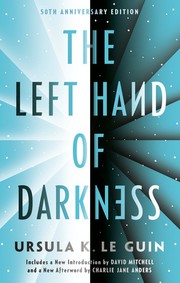
An envoy on a world where people have no fixed sex. Le Guin is the correct entry point to the whole award because she writes plainly, plots slowly and thinks hard, and this is the novel that made the Hugo voters take anthropology seriously as science fiction.
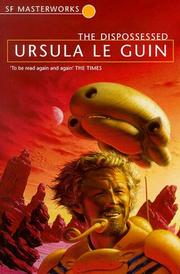
A physicist travels from an anarchist moon to the capitalist world it seceded from, in chapters that alternate forward and backward. Read it straight after Left Hand of Darkness: same author, same restraint, but a far more direct political argument, and the best single demonstration of what the award rewards when it is working.
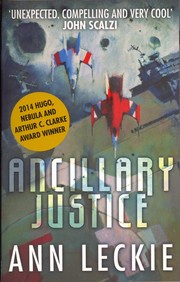
A warship's artificial intelligence, reduced to a single human body, sets out for revenge. The clearest modern winner — a debut that swept every major award — and the one that shows how much of the old space-opera furniture the Hugo now expects a writer to rebuild rather than inherit.
The Golden Age and the New Wave
IntermediateCover the award's founding decades and learn to read fifties and sixties prose on its own terms, including where it has dated badly.
▸ Study plan for this stage
Pace: Ten to twelve weeks. A Canticle for Leibowitz is around 320 pages in three sections separated by centuries and reads best with a pause between sections. The Moon Is a Harsh Mistress is around 360 pages, written in an invented clipped dialect that takes thirty pages to absorb. Lord of Light is only 2
- A Canticle for Leibowitz's three-part structure across centuries, in which the same institution preserves knowledge it cannot use and the reader watches history rhyme
- Miller's central irony: the monks copy engineering diagrams as illuminated art because they cannot read them, and the joke turns serious in the third section
- Heinlein as the writer Hugo voters loved most and the one modern readers argue with hardest — the plotting and the invented Loonie dialect are the craft, the politics are the argument
- The self-aware computer Mike as a device for making a revolution legible: it lets Heinlein show organisation, cell structure and propaganda as mechanisms rather than as sentiment
- Lord of Light's premise, which the novel withholds for a hundred pages: colonists on another world have assumed the roles of the Hindu pantheon and use technology to enforce them
- Zelazny's chronology, which begins near the end and loops back — the disorientation of the opening chapters is structural, not stylistic clumsiness
- The Forever War as a direct answer to Heinlein's Starship Troopers, written by a Vietnam veteran, using relativistic time dilation to make each homecoming a return to an unrecognisable society
- The New Wave's arrival: by the late sixties the award is rewarding style, structure and moral complication rather than engineering, which is visible in the gap between Heinlein and Zelazny
- What survives across A Canticle for Leibowitz's three sections, and what does Miller conclude about whether preservation is enough?
- Which of Heinlein's political claims does the novel demonstrate and which does it merely assert through a character? The distinction is where the arguing happens.
- In Lord of Light, when did you work out what the gods are, and what did Zelazny gain by making you wait?
- The Forever War answers Starship Troopers. What exactly is it answering — the politics, the depiction of combat, or the idea of the soldier?
- Which of these four has dated worst, and is it dated in its prose, its assumptions, or its science? Be specific about which.
- Read A Canticle for Leibowitz with a pause of a few days between its sections. The centuries are supposed to feel long and reading it continuously collapses that.
- Read the first page of The Moon Is a Harsh Mistress aloud. The dropped articles are a constructed dialect and hearing it once makes the next 350 pages easy.
- After The Forever War, write 300 words on where it agrees with Heinlein rather than where it differs. The agreements are the more interesting half and are usually missed.
- For Lord of Light, write down the order of events as you understand them at page 100, then again at the end. Comparing the two versions is the whole experience of the book.
- Look up which novels lost to each of these four in their years. The Hugo shortlists of the sixties are a compact history of the field's changing taste.
Next up: With the founding decades behind you, the recent winners become legible as a change in what the same voting body counts as science fiction, rather than as an unrelated set of books.
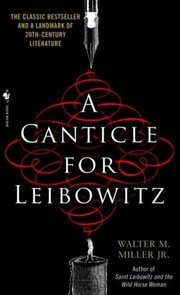
Monks in a post-nuclear American desert preserve fragments of engineering they cannot understand, across three sections separated by centuries. The best-written winner of the early years and the least dated; start the era here.
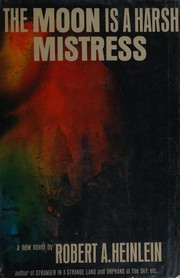
A lunar penal colony revolts, with a self-aware computer running the revolution. Heinlein is the writer the Hugo voters loved most and the one modern readers argue with hardest — read him for the plotting and the invented dialect, and read the politics as an argument rather than a conclusion.
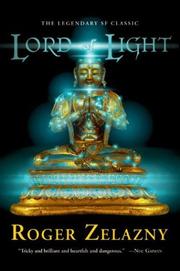
Colonists on another world have taken on the roles of the Hindu pantheon, and one of them starts a Buddhist insurgency. The most stylish winner of the sixties; its opening chapters are deliberately disorienting, so read it after the two straightforward books above.

Relativity means a soldier returns from each tour to a civilisation centuries older than the one he left. Written by a Vietnam veteran as a direct answer to Heinlein's Starship Troopers — read it immediately after Heinlein, because the reply only lands if the original is fresh.
The Modern Turn
IntermediateRead three winners from the award's recent decades and understand what changed in whom the Hugo votes for and what it now counts as science fiction.
▸ Study plan for this stage
Pace: Eight to ten weeks. The Fifth Season is around 510 pages, partly in second person, and needs three weeks — read it first because it is the anchor of the award's recent decade. Doomsday Book is the longest here at around 560 pages, structurally conventional and emotionally the hardest; three weeks wi
- The Fifth Season's three interleaved narratives, one of them in second person, and the structural reason for that choice which the novel does not disclose until the end
- Jemisin winning three years running for the three volumes of one trilogy — the only writer to have done so — which is itself a statement about what the voting body had become
- Orogeny as an ability that makes its possessors both essential and enslaved, and the book's use of a fantasy premise to write about a system rather than a villain
- The award's widening definition: The Fifth Season is a secondary-world fantasy on any conventional taxonomy, and the voters gave it the science fiction award without much argument
- Doomsday Book as the rest between formally aggressive novels — one straightforward structure, two timelines, and its effect achieved entirely through accumulation
- Willis's method of comic frustration in the contemporary timeline set against unrelieved catastrophe in the historical one, and the argument about whether that contrast works
- Among Others as a novel about reading the field itself: a diary that names, ranks and argues with dozens of earlier classics, several of them Hugo winners
- That the Hugo's fan-vote structure has made it contestable — organised slate campaigns in the mid-2010s forced a change to the counting system, and a later convention was found to have disqualified finalists without disclosure
- Why is one strand of The Fifth Season in second person, and when did the reason become clear to you?
- The Fifth Season is structurally fantasy. What is the case for calling it science fiction, and does the case matter?
- In Doomsday Book, what is the contemporary timeline for? Argue that it is essential, then that it is a mistake.
- Among Others names dozens of books. Pick three of its judgements and say whether the narrator is a reliable critic or an enthusiastic fifteen-year-old.
- The award has been fought over as an institution — slate campaigns, a change to the vote-counting method, and a disclosure scandal at a later convention. What do those episodes tell you about the difference between a fan-voted prize and a jury prize? Set out what each structure protects and what each exposes.
- Keep a page for The Fifth Season listing the three strands and what you know about each. The book is designed to be reread and the page makes the reread far richer.
- Read the last thirty pages of Doomsday Book in one sitting. Its whole effect is cumulative and stopping inside them wastes 500 pages of setup.
- As you read Among Others, list every real book the narrator names and mark the ones you have read. That list is the most efficient reading plan for the rest of the award that exists.
- Look up the Hugo rules change made in response to the slate campaigns and read a plain summary of how the new counting method works. It takes fifteen minutes and it explains what kind of object this award is.
- Write 200 words on what The Fifth Season and The Dispossessed have in common. Forty years apart, same award, and the continuity is more interesting than the change.
Next up: You now know what the award rewards across three eras, which is the only preparation that makes the deliberately difficult winners worth the effort rather than merely hard.

A world that ends regularly, told partly in second person, by an author who then won three years running — the only writer to do so. The single most important recent winner, and the one to read if you want to understand the award's last decade.
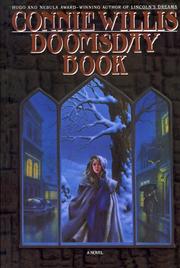
A history student is sent to the fourteenth century and lands in the plague year. Emotionally the hardest book here and structurally the most conventional, which makes it a good rest between the formally aggressive novels either side.
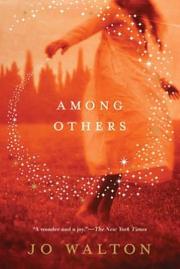
A Welsh girl at boarding school in 1979 reads her way through the science fiction section, in a diary that is also a quiet story about fairies and grief. Read it here as a guide to the rest of the award: it names and judges dozens of the field's classics, and will tell you which of the older Hugo winners you actually want next.
The Demanding Ones
IntermediateFinish with the three winners that are genuinely difficult on the sentence level, and see how far the award's readership will follow a writer who refuses to explain.
▸ Study plan for this stage
Pace: Ten to twelve weeks and the hardest reading on the path. Neuromancer is only around 320 pages but its first fifty are the standard test — compressed slang, no glossary, no explanation — so give it two weeks and expect the first chapter twice. Stand on Zanzibar is around 570 pages assembled from adve
- Gibson's withholding: Neuromancer introduces cyberspace, the matrix and its whole economy without a single explanatory passage, and the reader is expected to infer the world from its slang
- That the novel took the Hugo, Nebula and Philip K. Dick awards in one year, the first book to do so, which is a fact about how completely it reset the field's expectations
- Style as the actual content in Neuromancer — the plot is a heist and the innovation is entirely in texture, register and what is left out
- Brunner's assembled structure: continuity chapters, context chapters, tracking chapters and a torrent of advertising and news fragments, decades before that collage became common
- Reading Stand on Zanzibar as designed rather than as broken — the fragments are not interruptions of the story, they are the environment the story happens in
- Hyperion's Chaucerian frame: seven pilgrims travelling toward a monster, each telling a tale, each tale written in a different register — a survey of the genre's styles inside one novel
- That Hyperion ends without resolution, deliberately, and that accepting this is the last thing this path asks of you
- The common thread across all three: a writer who declines to explain, and a voting readership that rewarded them for it
- In Neuromancer's first chapter, how many terms are used without definition? Count them, then say how many you had inferred correctly by page 100.
- What is Neuromancer's plot, stated plainly in four sentences? Doing it reveals how much of the book's reputation rests on texture rather than incident.
- In Stand on Zanzibar, what do the context and tracking chapters supply that the narrative chapters cannot?
- Each Hyperion tale is in a different register. Name the genre each is imitating, and say which one Simmons executes best.
- Hyperion stops without resolving. Is that a formal choice or a commercial one, and does the answer change how you feel about it?
- Having read the whole path, which winner would you now hand to someone who reads no science fiction at all — and is it the one this path started with?
- Read Neuromancer's first chapter twice before continuing. The second reading costs twenty minutes and converts the next 250 pages from a struggle into a pleasure.
- Keep a glossary as you read Neuromancer — term, first appearance, your best guess at meaning. Checking your guesses at the end is the most instructive thing in this stage.
- For Stand on Zanzibar, read only the continuity chapters for the first hundred pages, then go back and read the fragments you skipped. Doing it once shows you exactly what the collage is contributing.
- After each Hyperion tale, write one sentence naming its register and one naming what it adds to the pilgrimage. Six sentences, and you have the novel's architecture.
- Draw up your own twelve-book Hugo reading order, disagreeing with this path wherever you now think it is wrong. You have read across four eras and can defend a different route.
Next up: This is the end of the path. The natural next step is the reading list embedded in Among Others, which was assembled by a novelist who had read the whole award and argues with it book by book.
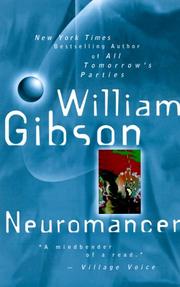
The novel that invented cyberspace as a word and a look, written in a compressed slang that drops you in without a glossary. It took the Hugo, Nebula and Philip K. Dick awards in one year — the first book to do so — and its opening pages are the standard test of whether you can read science fiction that withholds.

An overpopulated 2010 assembled from advertising copy, news fragments and interleaved narratives, decades before that structure was common. Genuinely hard going and the most formally ambitious winner the award has ever produced; attempt it only after Neuromancer.
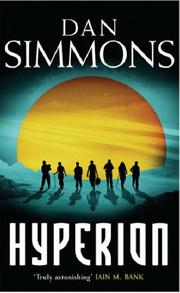
Seven pilgrims tell their stories on the way to a monster, in a deliberate reworking of Chaucer's frame. Each tale is written in a different register, so it doubles as a survey of the genre's styles — and it ends without resolution, which is the last thing this path asks you to accept.
Discussion
Keep reading
Paths that share books, cover the same subject, or open a related topic.