The Forever War Reading Order: Where to Start with Joe Haldeman
Joe Haldeman's three Forever books are usually sold as a trilogy and are not one. Only Forever Free continues the story; Forever Peace shares a title word, a preoccupation and nothing else. This path reads the novel first, then the two books that answer it, then the short fiction that fills the gaps, then the Vietnam writing the whole thing came out of — and ends with the argument the trilogy is having with the rest of military science fiction.
The novel itself
BeginnerRead the book everything else on this path responds to, and see why its structure — not its combat — is the point.
▸ Study plan for this stage
Pace: One week, and most of that is slack: at 272 pages The Forever War is plainly written and moves fast, so two or three evenings will finish it. Spend the spare days rereading the homecoming sections rather than pushing on to the next stage, because those are what the rest of the path answers. Check yo
- Relativistic time dilation used as a plot mechanism rather than as set dressing: every tour costs Mandella decades of Earth time he does not experience
- The homecoming, not the fighting, is the novel's subject — the war scenes exist to make the returns land
- Conscription of the intellectually elite, and what that premise lets Haldeman say about who actually got sent to Vietnam
- The enemy who is never negotiated with, and how little the novel finally tells you about the Taurans
- Command as arithmetic: casualty figures reported in the same register as supply figures
- Social change rendered as an alien environment, so that Earth becomes harder to survive than the front
- For each of Mandella's tours, how much subjective time passes for him and how much passes on Earth — and where does the novel tell you rather than show you?
- What does the novel actually establish about the Taurans, and at what point in the text does it become clear that this absence is deliberate?
- Why does Haldeman keep promoting Mandella, and what does each promotion cost him in relation to the soldiers under him?
- Which is the more hostile environment in this book, the front or Earth, and what evidence does the text give for your answer?
- How does the novel's ending resolve the time-dilation problem, and is that resolution earned or granted?
- Keep a two-column log as you read — Mandella's subjective elapsed time against Earth's calendar — using only dates the novel supplies. The widening gap between the columns is the plot, and seeing it as numbers is different from reading it as scenes.
- Mark every scene set on Earth, then reread just those in sequence. It is a small fraction of the book; judge whether it holds together as its own short novel about a veteran coming home.
- Find your edition's copyright and text notes and work out whether you are reading the restored text or a cut one. If it is cut, look up which section is missing before you form a view of the novel's middle.
- Copy out the two or three paragraphs where casualties are reported, and note the vocabulary Haldeman uses. Keep them to hand — Starship Troopers in the final stage reports the same events in an entirely different register.
Next up: You now have the novel every other book on this path is measured against, which is what makes the next stage's central question — which of the other two Forever books is actually a sequel — answerable rather than academic.

The only possible starting point, and complete in itself: relativistic time dilation means Mandella returns from each tour to a human society he no longer recognises. Read the full restored text if your edition offers it, since early US printings cut the middle section.
The two books that are not a sequel and a sequel
IntermediateUnderstand what 'reading order' actually means for this trilogy — one book is a thematic companion, the other a direct continuation, and they were written twenty years apart.
▸ Study plan for this stage
Pace: Two to three weeks for 575 pages across the two, and they read at very different speeds. Forever Peace, at 351 pages, is the denser and slower of them: a near-future novel with a large cast and a technical premise it keeps explaining as it goes, and it shares no characters, century or continuity wit
- The difference between a thematic companion and a continuation, and why a shared word in a title is not evidence of either
- Remote-operated warfare in Forever Peace as a re-asking of the first novel's question from inside the machine rather than from the trenches
- Enforced empathy as a proposed solution, and the objections the novel itself raises against it
- Forever Free as the only book that takes Mandella and Marygay forward, and what it decides the war finally cost them
- The turn in Forever Free's last third, and why a reader's judgement of the whole book usually hangs on that one decision
- Two answers to one problem written far apart in a career, and how differently the same author frames the question each time
- What, specifically, do Forever Peace and The Forever War have in common once you subtract the title — and is that enough to call them a series?
- How does Forever Peace's mechanised warfare change who bears the psychological cost of killing, compared with the infantry model of the first novel?
- In Forever Free, what has the settlement actually done to Mandella and Marygay, and how much of that is legible before the final third?
- Where exactly does Forever Free change what kind of book it is, and does the earlier material prepare you for it?
- If you had read Forever Free immediately after The Forever War, skipping Forever Peace entirely, what would you have missed?
- Before opening Forever Free, write down in two or three sentences what you expect a sequel to The Forever War to be about. Read the book, then compare — the gap between your version and Haldeman's is the most useful thing this stage produces.
- Mark the page in Forever Free where the novel changes genre. Compare your page number with where other readers place it; the disagreement about the book is partly a disagreement about that location.
- Take one scene of combat from Forever Peace and one from The Forever War and set them side by side. Note who is in physical danger in each, and how the prose distributes attention between the operator and the target.
- List every claim you can find in Forever Peace against its own proposed solution. Haldeman argues both sides; assembling the case for the prosecution shows how far.
Next up: Having read all three Forever books you now know exactly which years of Marygay's life the original novel skipped, which is precisely the gap the next stage's title novella fills.
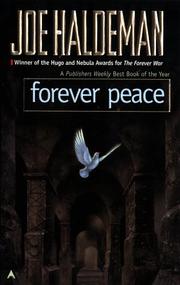
Read second, and read it knowing it is not a sequel: different characters, different century, no continuity with Mandella at all. It won the Hugo and Nebula for re-asking the first book's question about mechanised war from inside the machine.
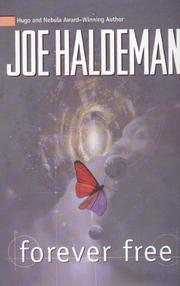
The actual sequel, picking up Mandella and Marygay decades after the war ends, and the one that divides readers because of the turn it takes in its final third. Read it last of the three so that turn lands against the original rather than against Forever Peace.
The short fiction that fills the gaps
IntermediateRead the stories Haldeman wrote around the novel, including the one that shows the war from Marygay's side.
▸ Study plan for this stage
Pace: Under a week. A Separate War and Other Stories runs 294 pages and short fiction paces itself — a story an evening works well, and the collection is easy to put down and pick up in a way the novels are not. Read the title novella first even though it is one piece among many, because it is the only re
- The same war told from the side the novel left offstage, and how much the original withheld without appearing to
- Marygay as a protagonist rather than as the thing Mandella is trying to get back to
- What the novella form lets Haldeman do that the novel's forced-march chronology would not allow
- The range of the rest of the collection — comic, formal and non-military pieces alongside the war fiction
- Reading side material that genuinely adds, as against side material that restates: the test this collection passes
- What does A Separate War show you about Marygay's years apart that the novel actively concealed rather than merely omitted?
- Does the novella change your reading of the original's ending, and if so which specific scene does the work?
- Which of the non-Forever stories in this collection would you hand to someone who had never read Haldeman, and why that one?
- Where is the novella deliberately silent, and does it withhold in the same places the novel does?
- What can Haldeman do at novella length here that neither The Forever War nor Forever Free attempts?
- Read the title novella against the corresponding stretch of The Forever War with both books open. Note every event that appears in both and check whether the two accounts agree.
- Rank the collection's stories by how much they depend on the Forever books. The independent end of that list is the argument that Haldeman is not a one-novel writer.
- Pick the single non-war story you find strongest and write a paragraph on what it shares with the war fiction. Keep it — the next stage is built on the claim that the concerns predate the science fiction.
Next up: The novella shows you Haldeman writing the same war from a second angle; the next stage removes the science fiction entirely and shows you the war he was actually writing about.

The title novella covers the years Marygay spends apart from Mandella — the gap the novel skips — so it belongs after both, not before. The rest of the collection is the best short-form introduction to Haldeman's range.
Haldeman without the science fiction
IntermediateRead the Vietnam material directly, and see how little of The Forever War was invented.
▸ Study plan for this stage
Pace: Three to four weeks for 944 pages across four books of very unequal weight. War Year is 127 pages and can be read in an afternoon — it is the shortest book on this path and the plainest. 1968 runs 340 pages and is the hardest of the four, a deliberately fractured home-front-and-battlefield novel tha
- The allegory made legible: how much of The Forever War's material is reportage with the serial numbers filed off
- Realist and fragmented treatments of one year by one writer, and what the later technique buys him
- The fix-up as a form — episodes written separately and joined afterwards — and how to read All My Sins Remembered accordingly
- Repeatedly overwritten identity as a theme that appears immediately after The Forever War, not decades later
- Camouflage as evidence that the Forever books are a part of a career rather than the whole of it
- First novel against mature novel: what a writer can attempt once he no longer needs a genre to hide in
- Which specific scenes in War Year have direct counterparts in The Forever War, and what did the science-fictional version add or remove?
- Why does 1968 break its own chronology, and what could it not have said if it had kept War Year's straightforward telling?
- Where do you feel the joins in All My Sins Remembered, and does the identity premise hold the episodes together or merely justify them?
- What in Camouflage is recognisably the author of The Forever War, once war is no longer the subject?
- Having read all four, is the earlier claim that War Year makes the allegory 'almost embarrassingly legible' fair, or does it flatten what the novel was doing?
- Read War Year in one sitting — its 127 pages permit it — then immediately reread the first fifty pages of The Forever War. The correspondences are strongest at the training and first-deployment sequences.
- Build a rough chronology of 1968 by reordering its sections into calendar order as you read. Then ask what is lost when you do; the answer is the case for the technique.
- Identify where each episode of All My Sins Remembered was likely a self-contained story, and check your guess against any acknowledgements or copyright page credits in your edition.
- Write a paragraph making the case that Camouflage is the work of the same writer as War Year, using only evidence from the two books and not from what you know of his biography.
Next up: You have now seen both halves of Haldeman's material — the war as reported and the war as extrapolated — which is the equipment you need to judge his argument against the rest of the genre in the final stage.

His first novel, a plain realist account of a combat engineer's tour in Vietnam, written before he had a genre to hide in. Read alongside The Forever War it makes the allegory almost embarrassingly legible.
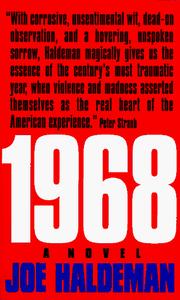
The mature, much stranger return to the same year — a fractured home-front-and-battlefield novel that does what War Year could not. Placed after War Year so you see the twenty-five-year gap in the handling.

A fix-up about an agent whose identity is repeatedly overwritten, written in the immediate aftermath of The Forever War and sharing its exhaustion. Worth reading here for how early the concerns were fixed.

The late Nebula winner, and the clearest demonstration that the Forever books are one part of a career rather than the whole of it. A good stopping point if you want more Haldeman without more war.
The argument the trilogy is having
IntermediatePlace The Forever War inside the sixty-year conversation about soldiers in science fiction, on both sides of it.
▸ Study plan for this stage
Pace: About four weeks for 1,321 pages, and the four books are very unlike each other. Starship Troopers is the shortest at 233 pages and is largely argument rather than incident — long stretches are classroom lecture, and Heinlein is an advocate here, making a case for a specific political settlement in
- Starship Troopers as the position Haldeman answered, stated by an advocate rather than a neutral narrator
- Powered armour and insectile war as inherited furniture: which elements are Heinlein's, which are Haldeman's, and which had become the genre's common property by the time of Armor
- Trauma displacing civics as the organising concern of military science fiction across these four books
- Old Man's War as a descendant that borrows the machinery of both predecessors while declining the argument
- The Dispossessed as the deliberate control case: the same problem of time, distance and changed homecoming with the war removed entirely
- How a genre conversation actually propagates — through structure and premise, not through explicit reply
- What is Heinlein's actual proposition about the franchise and military service, and which scenes are doing the arguing rather than the storytelling?
- Point to three specific moves in The Forever War that read as direct rebuttals of Starship Troopers. Do they survive being read in this order rather than the reverse?
- Armor splits into two very different halves — what is the second half for, and would the book work without the first?
- Old Man's War is openly indebted to both earlier novels; what does it take from each, and what does it decline to take a position on?
- The Dispossessed and The Forever War appeared the same year and share a problem. What does Le Guin's book get at that a war novel structurally cannot?
- After all four, is 'the trilogy is having an argument' the right description, or is it a family resemblance being read as a dispute?
- Read Starship Troopers with a pen and mark every passage that is expository argument rather than narrative. Count roughly how many of its 233 pages that accounts for; the proportion is itself the answer to what kind of book it is.
- Set the casualty-reporting paragraphs you copied out in the first stage beside the equivalent passages in Starship Troopers and Armor. Three registers, one event type.
- For Old Man's War, list which elements come from Heinlein and which from Haldeman, then check which of your Heinlein attributions actually first appear in Armor instead.
- Read the homecoming sections of The Dispossessed against those of The Forever War. Both are about a man who cannot return to what he left; write down what each blames for that, and note that only one of them has a war to blame.
- Finish by writing a short paragraph placing the three Forever books in order of how well each survives this comparison. You will have read enough by now that the answer is yours rather than the path's.
Next up: This is the end of the path: you can now say what The Forever War argued, what its two companions did and did not continue, and where both sit in the sixty-year conversation they belong to.
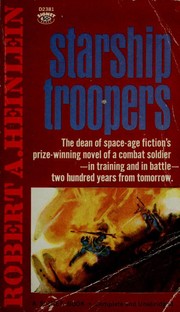
The book Haldeman was answering, and he has said so directly. Read it after The Forever War rather than before, so the rebuttal registers as a rebuttal rather than as a coincidence of setting.
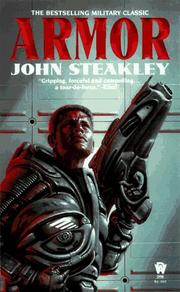
The third point of the triangle: powered armour and endless insectile war played for trauma rather than for civics. Useful for seeing which of Haldeman's moves were his and which became the genre's furniture.
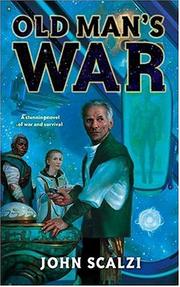
The modern descendant, and openly indebted to both Heinlein and Haldeman. Read last in this stage to see what the form looks like once the argument has been settled for thirty years.
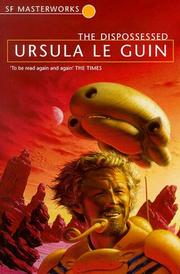
Published the same year as The Forever War and the other great 1974 novel about time, distance and returning home changed. A deliberate contrast: same problem, no war at all.
Discussion
Keep reading
Paths that share books, cover the same subject, or open a related topic.