Imperial Radch Reading Order and Guide
The Imperial Radch is a trilogy plus two loosely connected standalones, all by Ann Leckie, and the order is not in dispute: Ancillary Justice, Ancillary Sword, Ancillary Mercy, then Provenance and Translation State in publication order. What is worth saying up front is that the trilogy narrows rather than widens — book one is a revenge story spanning a thousand years, books two and three are a tense station-bound political drama, and readers who expect escalation are often surprised. This path reads the three, then the two same-universe novels, then the rest of Leckie, then the three books the Radch is most clearly descended from.
The Trilogy, in Order
IntermediateRead the three Ancillary novels in sequence and adjust to their two defining devices: a narrator who used to be a warship, and a language with no gender.
▸ Study plan for this stage
Pace: 6 to 7 weeks for about 1,180 pages. Budget extra time for the first eighty pages of Ancillary Justice, which are the hardest in the trilogy — two timelines, an unfamiliar pronoun convention and a narrator who is not one person. After that it accelerates. Ancillary Sword and Ancillary Mercy are quick
- The pronouns are the thing everyone stumbles on, so take it plainly first. Radchaai has no grammatical gender. Breq narrates in Radchaai and therefore calls every character she regardless of their body, and when she speaks other languages she visibly struggles to gender people correctly and gets it
- It takes about fifty pages to stop noticing. Almost every reader reports the same curve — irritation, then adjustment, then forgetting it was ever an issue
- The second device is the narrator. Breq is One Esk Nineteen, a surviving fragment of the artificial intelligence of the troop carrier Justice of Toren. Ancillaries are the bodies of conquered people, stored and then fitted with ship AI, so a ship can occupy dozens of bodies simultaneously
- Ancillary Justice alternates two timelines roughly nineteen years apart: Breq alone in a single body, and Justice of Toren perceiving through many bodies at once. The multi-body chapters are the hard ones, because a single paragraph can be in four places, and they are also the best writing in the tr
- Anaander Mianaai, the empire's ruler, occupies thousands of bodies and has split against herself. The trilogy's central conflict is a civil war inside one person, which is the same idea as Breq at a different scale
- The trilogy narrows rather than widens, and readers who expect escalation are routinely disappointed. Book one spans a thousand years and several worlds; books two and three take place almost entirely on one station and one planet, and are about tea, labour, station governance and a plantation econo
- That narrowing is deliberate. Leckie's argument is that empire is not a battle but an administrative arrangement, and the small scale is where annexation is actually visible
- Radchaai propriety — gloves, tea sets, correct forms of address, who serves whom — is the trilogy's main instrument for showing class. Pay attention to the tea
- How long did the pronoun convention take to stop registering, and what did you notice about your own assumptions while it still did?
- In the multi-body chapters, what can Justice of Toren know that Breq cannot? Name three things it loses by being reduced to one body
- Anaander Mianaai is at war with herself. What does the trilogy think identity is, given that both the ruler and the narrator are distributed?
- Books two and three shrink the scale drastically. What does the smaller stage let Leckie show about empire that a war could not?
- Ancillaries are made from conquered people. How does the trilogy handle the fact that its sympathetic narrator is built out of an atrocity?
- What is the tea actually doing? Track one scene where a tea set carries the whole political content
- Commit to fifty pages before judging the pronouns. Nearly everyone who abandons the book does so before that point
- In the multi-body chapters, mark where each body is in a given scene. Doing this once teaches you to read the rest without effort
- Keep a list of the Radchaai houses and who is client to whom. The politics are unreadable without it
- Note every time Breq gets someone's gender wrong in a non-Radchaai language, and what happens socially as a result
- After the trilogy, reread the first chapter of Ancillary Justice. You will understand roughly twice as much of it
Next up: You have the empire from inside its own machinery; the two standalone novels are built to show what it looks like from positions the trilogy could not reach.
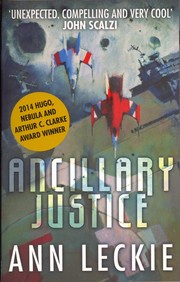
Breq is the last fragment of a troop carrier's mind walking around in one stolen body, and she is going to kill the emperor. Start here. The default she pronoun and the split timeline are disorienting for about forty pages and then become the point.
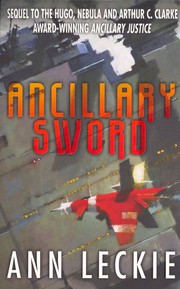
A deliberate contraction: Breq given a ship and sent to one station to deal with tea, labour exploitation and local grievance. Read it knowing the scale drops on purpose — this is where the trilogy's actual politics live.
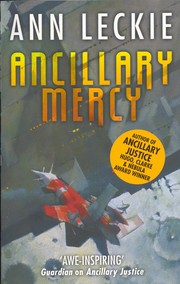
The confrontation the first book promised, resolved in a way almost nobody predicts. Read it directly after Sword; the two were plainly conceived as one long book.
The Same Universe, Different Corners
IntermediateRead the two standalone novels set in the Radch universe, each of which deliberately looks at the empire from outside it.
▸ Study plan for this stage
Pace: 3 to 4 weeks. Provenance over two weeks at 464 pages, Translation State over one to two. They can be read in either order but publication order works better. Neither requires the trilogy, but both are far richer with it, and Translation State is best read last.
- Provenance is set in the same universe but outside the Radch, in a small polity called Hwae where family status depends on owning authenticated historical objects called vestiges. It is a comedy of manners with a heist in it and it is much lighter than the trilogy
- Its protagonist, Ingray, is out of her depth in a way Breq never is, which is the point. After a narrator who was once a warship, a young woman who has made an expensive and badly thought-out plan is a deliberate change of register
- Hwae has three genders and uses a neman pronoun set alongside she and he, with gender chosen in adolescence. Placed after a trilogy in which everyone is she, this reads as a second experiment rather than a repetition
- The vestiges give Leckie a way to write about authenticity, provenance and national myth. What makes an object real, who certifies it, and what happens when the certification is a story a state tells about itself
- Translation State is the strangest of the five and returns to the Presger, the incomprehensibly powerful aliens whose treaty holds the whole setting together. It follows three characters, one of whom may or may not be a Presger Translator
- The Translators are the setting's best invention: entities built to be intermediaries between humans and something that does not think in categories humans have. Translation State is about what it costs to be manufactured as an interface
- It also finally engages with the Significance question the trilogy kept in the background — what counts as a person under the treaty, and who decides. That is the same question the trilogy asked about ancillaries, asked from the alien side
- Neither book has ancillaries or Anaander Mianaai. They deliberately look at the empire from outside it, which is why they belong after the trilogy rather than inside it
- What does Ingray have that Breq does not, and what does the novel gain from a protagonist who can be embarrassed?
- Hwae's vestiges authenticate identity through objects. What is the novel saying about national history, and does it apply to real states?
- Provenance uses three genders where the trilogy used one pronoun. What is each doing differently to the reader?
- The Presger Translators are built as interfaces. What does Translation State conclude about beings manufactured for a purpose?
- Who counts as Significant under the treaty, and how does that map onto the trilogy's question about ancillaries?
- These two are lighter and stranger respectively. Do they enlarge the setting or reduce it?
- Read Provenance immediately after Ancillary Mercy. The tonal drop is instructive and quite funny
- Track the neman pronoun for the first thirty pages. Compare the adjustment curve with the one you went through in Ancillary Justice
- In Translation State, keep a note of what each of the three viewpoint characters is permitted to know about themselves
- Write a paragraph on how the Presger treaty holds the whole setting together despite almost never appearing
Next up: Radch business is finished, and the remaining Leckie shows that her real interest was never spaceships but the problem of a narrator who is not a person.
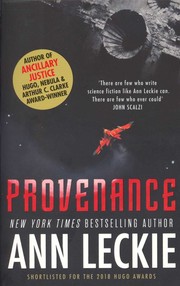
A caper about forged cultural artefacts on a non-Radchaai world, with a young woman trying to impress her politician mother. Much lighter than the trilogy and set just after it; read it fourth, when you know enough about the Radch to enjoy being outside it.
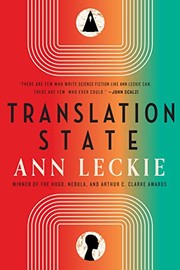
Takes the Presger translators — the trilogy's most alarming running joke — and makes them the subject. The best book Leckie has written since Ancillary Justice, and it needs the trilogy's treaty politics to land.
The Rest of Ann Leckie
IntermediateFollow Leckie out of science fiction and into her fantasy and short work, where the same interest in narrating gods and machines continues.
▸ Study plan for this stage
Pace: 4 weeks. The Raven Tower over two to three weeks at 432 pages — it is the most formally demanding book she has written and rewards slow reading. Lake of Souls is a story collection; take two or three stories per sitting over a week or two rather than reading it through.
- The Raven Tower is fantasy rather than science fiction, and it is narrated in the second person by a god who is a rock. That sentence sounds like a gimmick and it is not: the whole novel depends on it
- The rules of divinity are the book's engine. A god's speech makes things true, but a god who says something it cannot make true dies. So every divine utterance is an expenditure of power, and gods therefore speak with extreme care
- That constraint turns theology into a resource-management problem and makes the plot genuinely tense. It is also the clearest statement of Leckie's real subject — what a mind that is not a human mind can and cannot do with language
- The plot is Hamlet, openly. A ruler dies, a succession is usurped, an heir returns. Recognising the frame early lets you watch what Leckie changes rather than wondering where it is going
- The second-person narration is addressed to a specific character and the identity of the you matters. Do not skim the framing
- Lake of Souls collects her short fiction, including Radch-universe stories, Raven Tower-adjacent pieces and unconnected work. The Radch stories fill in corners the novels did not have room for
- Read the collection last. Several of the strongest stories assume the novels, and the range across it is the best demonstration of how consistent her preoccupations are — narrating gods, narrating machines, and the ethics of being made for a purpose
- Why does the god narrating The Raven Tower have to be a rock? What does immobility give the narration?
- Divine speech has a cost. How does that single rule generate the entire plot?
- The novel is built on Hamlet. What does Leckie change, and does the change improve the original?
- Who is the you of the second person, and when did you work it out?
- Across the trilogy, the standalones and this novel, Leckie keeps narrating from non-human minds. What is the consistent problem she is interested in?
- Which of the short stories does something the novels could not?
- Read the first twenty pages of The Raven Tower twice before continuing. The narrative situation is stated once and quietly
- Write down the rules of divine speech as you learn them. The plot is playable against that list
- Read the Radch stories in Lake of Souls first, then the rest
- Write two sentences on what Breq, the rock and the Presger Translators have in common
Next up: With Leckie's own range mapped, the last stage reads the three books the Radch is most clearly descended from, which is where you find out what she inherited and what she built.
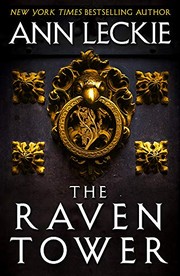
A fantasy narrated by a stone that is a god, addressing a Hamlet-shaped succession crisis in the second person. Structurally her most daring book — read it when you trust her enough to follow a very strange voice.

Her collected short fiction, including Radch-universe stories and the origins of several ideas the novels develop. A completist volume, best read once the novels are done.
Where the Radch Comes From
IntermediateRead the three novels the trilogy is most obviously in conversation with, on gender, on empire, and on the machinery of interstellar politics.
▸ Study plan for this stage
Pace: 7 to 8 weeks for about 1,200 pages. The Left Hand of Darkness over two to three weeks — it is short but dense and the ethnographic chapters slow you down on purpose. Downbelow station over three weeks; it is famously hard to get into. A Memory Called Empire over two to three. Take them in this order
- The Left Hand of Darkness is the direct ancestor of the pronoun question. Le Guin's Gethenians have no fixed sex, and she used he for all of them — a choice she publicly criticised herself for later, and revisited in an essay and a rewritten story
- Reading it directly before or after Ancillary Justice turns the pronoun issue into a real argument between two writers rather than a stylistic quirk. Le Guin's default masculine makes Gethenians read as men with an exception; Leckie's default feminine makes everyone read as unspecified. The two expe
- Le Guin's other legacy here is the envoy structure — one representative sent alone into a culture he cannot read, on behalf of a polity that wants that world to join it. Everything from Breq to Mahit Dzmare is downstream of Genly Ai
- Downbelow station is C. J. Cherryh's Hugo-winning space-station novel and it is where the political texture comes from: a station under siege, competing corporate and military authorities, refugees, supply lines, and no side that is clearly correct
- Cherryh's method is to drop you inside a viewpoint with no orientation at all, which is exactly what the opening of Ancillary Justice does. Her opening chapters are notoriously hard and the difficulty is the same design choice
- The station politics of Ancillary Sword and Ancillary Mercy — governance, labour, who controls the docks, who is allowed to leave — are pure Cherryh, and reading Downbelow station makes the middle of the trilogy read very differently
- A Memory Called Empire is the reply rather than the ancestor. Published six years after Ancillary Justice, it takes the same subject — a person from a small polity dealing with an enormous annexing empire whose culture they love — and makes literature rather than force the empire's instrument
- Reading all three shows what is genuinely Leckie's: not the empire, not the ambiguous gender, not the station politics, but the distributed narrator. Nobody else in this lineage built a protagonist who used to be a fleet
- Le Guin uses he for everyone and Leckie uses she. Which choice made you more aware of gender, and which made you more aware of your own defaults?
- Genly Ai and Breq are both outsiders inside a culture. What does each one want, and how does that change the shape of the novel?
- Cherryh gives you no orientation at the start. What is the reader supposed to do with that, and does it pay off?
- The Radch trilogy's station politics closely resemble Downbelow station. Name three specific correspondences
- A Memory Called Empire uses poetry as the machinery of empire. What does Leckie use instead, and which is more persuasive?
- After all three, what is genuinely original in the Imperial Radch?
- Read the Gethenian ethnographic chapters of The Left Hand of Darkness carefully rather than skipping to the plot. They carry the argument
- Read the first forty pages of Downbelow station knowing you will be lost. Push through and it resolves
- Make a two-column list of what the Radch inherited and what it invented, with at least four entries a side
- Read the first chapter of A Memory Called Empire and the first chapter of Ancillary Justice on consecutive days
- Write a paragraph on why the distributed narrator is the trilogy's real contribution, using a specific multi-body scene as evidence
Next up: That is the Radch and its whole lineage, and the natural continuations are deeper into Cherryh's Alliance-Union novels, or the Teixcalaan duology in its own right.
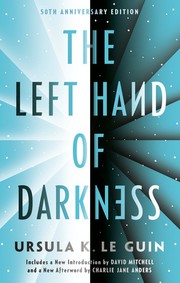
The novel that made an ungendered pronoun a literary problem rather than a gimmick, and the book Leckie's default she is answering directly. Read it first of the three.

Station politics, corporate fleets and refugee crises rendered with total procedural seriousness. The closest ancestor to the second and third Ancillary books, and the reason their smaller scale is a tradition rather than a failure.

The obvious contemporary sibling: an outsider ambassador, an annexing empire, a mind carried inside another body. Read it last and the two series illuminate each other completely.
Discussion
Keep reading
Paths that share books, cover the same subject, or open a related topic.