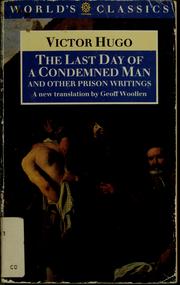
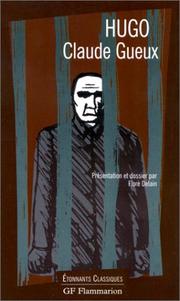
Start with The last day of a condemned man. It is about a hundred pages, it is the interior monologue of a man in the final hours before his execution, and it is Hugo doing at short length exactly what he does at enormous length: taking a social argument — here, against capital punishment — and making it unbearable by attaching it to one person. Claude Gueux is the even shorter companion, based on a real case.
The reason to start here is economic. Les Miserables is around fourteen hundred pages and contains long essays on the sewers of Paris, the battle of Waterloo and the argot of Parisian criminals. It is a masterpiece and it asks a great deal. Two hundred pages of the short work will tell you whether you like being in Hugo's company, at a fraction of the cost of finding out the other way.
The two big ones
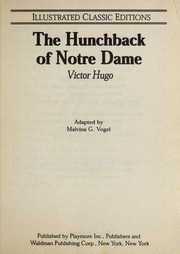
The hunchback of Notre Dame comes next — published as Notre-Dame de Paris, which is a better description of a novel whose real protagonist is the cathedral. Be warned that it is much darker than any adaptation you have seen and that nobody is rescued at the end.
Then Les Miserables. The digressions are not padding: Hugo believed the argument required the reader to understand the sewer system and the barricade and the convent, and abridged editions cut precisely the material that makes it his rather than a plot. If you want the plot, read an abridgement and enjoy it; if you want the novel, read it whole and let the essays happen.
The later novels
Toilers of the Sea is a man against the ocean, written in exile on Guernsey, and it contains a famous fight with an octopus that is either magnificent or absurd depending on the reader. The man who laughs concerns a child surgically disfigured into a permanent grin — the direct ancestor of a great deal of gothic imagery since. Ninety-three, his last novel, is about the Terror, and it is the most controlled thing he wrote: three characters who each embody an irreconcilable political principle, and no easy resolution.
The early work and the poetry
Bug-Jargal and Hans of Iceland are apprentice novels, written very young, and they matter mainly as evidence of where he started. Bug-Jargal concerns a slave revolt in Saint-Domingue and its handling of race is very much of 1826; it is worth reading as a historical document rather than as a novel that has aged well.
Selected poems of Victor Hugo is the part English readers most often skip, and in France he is a poet first and a novelist second. Any selection will be a translation problem — his poetry depends on formal effects that do not cross — but the scale of what he was is not visible without it.
Graham Robb's Victor Hugo is the biography, and Hugo's life was strange enough to be worth a book: exile, séances, an enormous public funeral, a man who was a national institution while he was still alive.
Where to stop
The last day of a condemned man, The hunchback of Notre Dame and Les Miserables is Hugo. Ninety-three is the one that most rewards going further. The early novels are for completists, and the poetry is for readers willing to accept that they are seeing it through glass.
Follow the full ordered path here: Victor Hugo Reading Order: Where to Start with the Novels.
Ready to learn something deeply?
Build a reading path — free