Ursula K. Le Guin Reading Order: Where to Start
This curriculum moves from Le Guin's most beloved and accessible fiction into her more complex speculative novels, then into her non-fiction voice, building a complete picture of her imagination and philosophy. Each stage deepens your fluency with her themes — anarchism, gender, ecology, myth, and the ethics of power — so that by the end you can read her most challenging work with full appreciation.
The Front Door: Earthsea
BeginnerFall in love with Le Guin's prose and moral imagination through her most iconic fantasy world, learning her core themes of balance, shadow, and the weight of names.
▸ Study plan for this stage
Pace: 6–7 weeks total (~20–25 pages/day): Week 1–2 for A Wizard of Earthsea, Week 3–4 for The Tombs of Atuan, Week 5–6 for The Farthest Shore, with Week 7 reserved for reflection, re-reading favorite passages, and completing exercises.
- The Equilibrium: Le Guin's foundational principle that all magic and action in Earthsea carries a cost — every change disturbs a cosmic balance that must be restored or respected.
- The Shadow Self: In A Wizard of Earthsea, Ged's unnamed shadow represents the Jungian idea that wholeness requires confronting and integrating one's own darkness rather than fleeing or fighting it.
- The Power of True Names: Names in Earthsea are not labels but the essence of a thing — to know something's true name is to hold power over it, making language itself a form of magic and responsibility.
- Darkness as Sacred Space: The Tombs of Atuan reframes darkness and the labyrinth not as evil but as ancient, feminine, and spiritually potent — a place of power that Tenar must learn to see clearly before she can leave.
- Coming-of-Age as Moral Education: All three books follow young protagonists whose growth is measured not by power gained but by wisdom, humility, and self-knowledge earned through failure.
- The Acceptance of Death: The Farthest Shore argues that mortality is not a wound to be healed but the very condition that gives life meaning — the refusal to accept death is portrayed as the ultimate imbalance.
- Sparse, Incantatory Prose Style: Le Guin's writing is deliberately plain, rhythmic, and parable-like, drawing on Taoist and oral-tradition aesthetics; noticing her sentence-level craft is as important as following the plot.
- Complementarity over Conquest: Across all three books, resolution comes not through domination but through partnership, acceptance, and the willingness to let go — a recurring ethical stance that defines Le Guin's moral imagination.
- In A Wizard of Earthsea, why does Ged's victory over the shadow require him to name it with his own name — and what does this reveal about Le Guin's view of identity and wholeness?
- How does The Tombs of Atuan challenge the reader's initial assumptions about the Nameless Ones and the labyrinth? In what sense is Tenar's world 'dark' before Ged arrives, and in what sense is it dark after?
- The Farthest Shore centers on a wound in the world caused by one man's refusal to die. What does Le Guin suggest about the relationship between immortality, meaning, and the health of a community?
- How does Le Guin use the concept of the Equilibrium differently in each of the three books — as a personal, interpersonal, and civilizational concern, respectively?
- Trace the role of a mentor figure across all three books (Ogion, Ged-as-mentor to Tenar, Ged-as-mentor to Arren). How does Le Guin's portrayal of mentorship differ from typical fantasy archetypes?
- Le Guin's prose has been described as 'parable-like.' Choose one passage from each book and explain how her sentence-level choices — rhythm, diction, imagery — reinforce the thematic content.
- Shadow Journal: After finishing A Wizard of Earthsea, write a 1–2 page personal reflection identifying your own 'shadow' — a fear, flaw, or denied part of yourself — and describe what it would mean to name and integrate it as Ged does.
- Name Inventory: Make a list of 10 things (people, places, objects, ideas) and write both their 'common name' and an invented 'true name' that captures their deepest essence. Reflect in a paragraph on how the exercise changes the way you perceive those things.
- Labyrinth Map: Draw a rough map of the Tombs of Atuan as you imagine them from Tenar's descriptions. Annotate it with emotional or thematic notes (e.g., 'this passage = Tenar's isolation'). Compare how the space feels at the novel's opening versus its close.
- Equilibrium Audit: Choose any single scene from The Farthest Shore where the Equilibrium is visibly broken or restored. Write a close-reading paragraph (200–300 words) analyzing how Le Guin signals that imbalance through imagery, character behavior, or dialogue.
- Prose Imitation: Select one paragraph from any of the three books that strikes you as especially beautiful or strange. Rewrite it in a modern, casual voice — then write a reflection on what is lost and what Le Guin's original choices are actually doing.
- Thematic Arc Chart: Create a simple three-column chart (one column per book) tracking how the theme of 'acceptance' evolves — acceptance of self (Wizard), acceptance of another world/identity (Tombs), and acceptance of death (Farthest Shore). Use direct quotes from each book as evidence.
Next up: Mastering the Earthsea trilogy's core vocabulary — balance, shadow, true names, and the cost of power — gives the reader the ethical and aesthetic lens they need to engage with Le Guin's more complex, ambiguous, and politically charged work in her science fiction.

The perfect entry point: short, mythic, and immediately beautiful. It introduces her spare prose style and the central Earthsea idea that true power comes from knowing — and accepting — yourself.
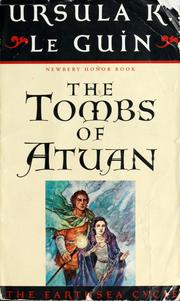
Shifts perspective to a young woman trapped in a patriarchal religious system, deepening the world and introducing Le Guin's lifelong interest in gender and liberation. Read second so Ged's return lands with full weight.
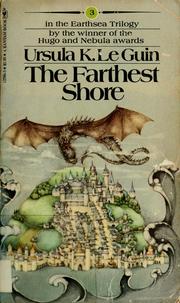
Completes the original trilogy with a meditation on death, meaning, and what leaders owe the world — essential before moving to her more philosophically demanding science fiction.
Into the Hainish Cycle: First Contact
BeginnerCross over into Le Guin's science fiction universe and understand how she uses alien societies as thought experiments about human nature, colonialism, and difference.
▸ Study plan for this stage
Pace: 6–7 weeks total. Week 1–4: The Left Hand of Darkness (~286 pages) at ~20–25 pages/day, pausing mid-book (around Chapter 9, "Estraven Alone") for a reflection journal entry. Week 5–7: The Word for World is Forest (~189 pages) at ~25–30 pages/day, a shorter but more intense read best taken in 2–3 larg
- The Ekumen (Hainish universe) as a framework: Le Guin's interstellar league is not an empire but a network of communication and voluntary contact, making 'first contact' inherently political and ethical
- Gender as a thought experiment: The Gethenians of The Left Hand of Darkness are ambisexual ('kemmer'), and Le Guin uses this to strip away assumptions about gender roles, war, and social organization
- The Envoy/Observer as outsider lens: Genly Ai and Raj Lyubov are both off-world observers whose biases and blind spots are as important as what they accurately perceive — the reader must read against the narrator
- Colonialism and ecological destruction: The Word for World is Forest directly dramatizes resource extraction, military occupation, and the dehumanization of indigenous peoples (the Athsheans), drawing explicit parallels to real-world colonialism
- Dreams, consciousness, and resistance: Athshean culture blurs the boundary between waking and dreaming; Le Guin presents this not as primitivism but as a sophisticated, valid epistemology that the colonizers cannot comprehend
- Anthropological imagination: Both books are structured like field reports or ethnographies, borrowing the form of social science to make the reader question what 'objective' observation even means
- The cost of contact: Both protagonists witness — and partly cause — catastrophic harm; Le Guin refuses to let the Ekumen's good intentions absolve it of consequences
- Darkness and shadow as moral metaphor: In The Left Hand of Darkness, light/dark imagery and the Handdara philosophy of 'unlearning' ask the reader to sit with ambiguity rather than resolve it
- In The Left Hand of Darkness, how does Genly Ai's inability to fully shed his gendered assumptions affect his relationship with Estraven, and what does Le Guin suggest this costs him — and Estraven?
- The Left Hand of Darkness uses multiple document types (reports, myths, folktales, a journal). How does this fragmented, multi-voiced structure shape your trust in any single narrator, and what does that say about 'truth' in cross-cultural contact?
- In The Word for World is Forest, Captain Davidson and Lyubov represent two poles of the colonizer mindset. What distinguishes them, and does Le Guin suggest that Lyubov's 'sympathetic' colonialism is ultimately less harmful, or merely differently harmful?
- Selver's transformation into a 'god' (a dream-shaper who brings a new way of killing) is presented as both liberation and tragedy. What is Le Guin arguing about the violence that oppression forces upon the oppressed?
- Both books feature a character who acts as a cultural bridge (Estraven, Lyubov) and is destroyed by that role. What does this pattern suggest about Le Guin's view of the personal cost of genuine cross-cultural understanding?
- How does each book use landscape and environment — the ice of Gethen, the forests of Athshe — as more than setting? What does the natural world 'mean' in each novel?
- Bias audit: After finishing The Left Hand of Darkness, go back to Chapter 1 and annotate 5–10 moments where Genly Ai's language reveals gendered or ethnocentric assumptions he doesn't acknowledge. Write a one-paragraph reflection on how this changes your reading of his reliability.
- Parallel document exercise: The Left Hand of Darkness includes myths and folktales alongside the main narrative. Choose one myth (e.g., 'The Place Inside the Blizzard') and write a 200-word analysis of how it comments on or reframes a scene in the main plot.
- Colonialism comparison: After finishing The Word for World is Forest, make a two-column chart mapping elements of the novel (characters, institutions, events, language used by colonizers) onto a real historical colonial situation of your choice. Note where the analogy holds and where Le Guin deliberately distorts or abstracts it.
- Dream-logic close read: Select the passage in The Word for World is Forest where Selver explains dreaming to Lyubov. Rewrite it in the flat, clinical language of a scientific report, then reflect in 150 words on what is lost — this is Le Guin's point.
- Character voice swap: Write a single scene — Genly and Estraven on the ice, or Selver confronting Davidson — from the perspective of the character who is NOT the narrator in the original. Focus on what that character notices that the original narrator misses.
- Thematic thread journal: Keep a running log as you read both books, tracking every use of the words 'dark/darkness,' 'forest/tree,' or 'dream.' At the end, write a paragraph on how Le Guin uses each image as a moral or philosophical symbol across both texts.
Next up: Mastering how Le Guin uses a single alien society as a focused thought experiment prepares the reader to tackle her more expansive and explicitly anarchist/utopian works, where she stress-tests entire social systems — economics, governance, family — against each other across whole worlds.
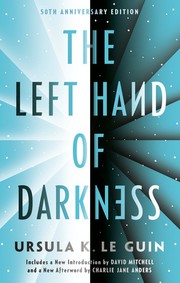
Her most celebrated novel and the ideal Hainish starting point: an envoy visits a world of ambisexual humans and must confront everything he assumes about gender, loyalty, and the self. The Earthsea trilogy has warmed up your ear for her prose.
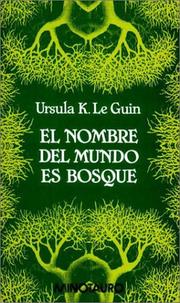
A shorter, more urgent Hainish novella about colonization and ecological destruction — read here because Left Hand of Darkness has established the universe and this book's anger hits harder in context.
The Hainish Cycle: Deeper Waters
IntermediateEngage with Le Guin's most structurally and philosophically ambitious novels, tackling anarchism, time, and the limits of utopia.
▸ Study plan for this stage
Pace: 6–8 weeks total: spend weeks 1–5 on The Dispossessed (~25–30 pages/day, paying close attention to the alternating chapter structure), then weeks 6–8 on The Telling (~20–25 pages/day with reflective pauses after each section). Reserve the final 2–3 days of each book for review and journaling before m
- Ambiguous utopia: Le Guin's subtitle for The Dispossessed signals that no society — not Anarres nor Urras — is presented as a perfect model, and the reader must hold both worlds in critical tension simultaneously
- Anarchist philosophy in practice: Anarres is built on Odo's thought, exploring how stateless, property-less societies function, calcify, and resist internal corruption over generations
- The chronological double helix: The Dispossessed's alternating timeline structure (Anarres past / Urras present) is itself an argument — form mirrors the novel's physics of time as a simultaneous, non-linear whole
- Simultaneity and Shevek's physics: The Sequency vs. Simultaneity debate in theoretical physics maps directly onto the novel's political and ethical tensions between individual freedom and collective obligation
- Cultural erasure and the politics of memory: In The Telling, the Aka corporation-state has suppressed indigenous oral tradition (the Telling) in the name of modernization, raising questions about what is lost when a culture's story is forcibly silenced
- The observer as ethical actor: Sutty's role as a Ekumen observer in The Telling forces the reader to examine whether neutrality is possible or even moral when witnessing cultural genocide
- Utopia as process, not destination: Across both novels, Le Guin argues that a just society is never achieved but must be continually re-chosen, re-examined, and re-built by its members
- The body and place as knowledge: Both Shevek and Sutty learn through physical presence and embodied experience — deserts, cold, illness, long journeys — suggesting that abstract theory must be grounded in lived reality
- How does the alternating chapter structure of The Dispossessed reinforce its central philosophical argument about time and freedom — and what would be lost if the novel were told chronologically?
- In what specific ways does Anarres fail to live up to Odo's anarchist ideals by the time of Shevek's adulthood, and who or what is responsible for that drift?
- How does Shevek's General Theory of Temporality function as a metaphor for the novel's political vision, and what does it mean that he gives the ansible away freely?
- In The Telling, what does the Telling itself (as a practice, not just a body of texts) represent, and why is its oral, embodied, communal nature essential to its meaning?
- Compare the role of the outsider-observer in both novels: how do Shevek (on Urras) and Sutty (on Aka) each use their outsider status to expose the contradictions of the societies they visit?
- By the end of both novels, what is Le Guin's answer to the question: can a utopian vision survive contact with power, time, and human imperfection?
- Structural mapping — The Dispossessed: Draw a two-column timeline charting every chapter by planet (Anarres / Urras) and summarize the key event and its thematic echo in the opposite column. Identify at least three chapter pairs where the juxtaposition creates an irony or argument that neither chapter makes alone.
- Odo's constitution: Write a 300–400 word 'founding principle' document as if you were Odo, then annotate it with specific passages from The Dispossessed showing where Anarres has honored or betrayed each principle. This forces close reading of the society's ideological drift.
- Physics-to-politics translation: Restate Shevek's Simultaneity Principle in plain language, then write a one-page argument for how it applies to one real-world political or social question (e.g., historical justice, collective vs. individual rights). Ground your argument in at least two quotes from the novel.
- The Telling field notes: As you read The Telling, keep a running 'Sutty's notebook' — a journal written in first person as Sutty, recording observations about Aka's surface culture vs. the hidden Telling. After finishing, review your notes and write a half-page reflection on how your own perspective shifted alongside Sutty's.
- Comparative utopia essay: Write a 500–700 word comparative analysis answering: 'What does each novel identify as the single greatest threat to a just society — and do Le Guin's answers agree?' Use specific characters, scenes, and quotes from both The Dispossessed and The Telling.
- Oral tradition exercise: Choose any 10-minute stretch of your daily routine and describe it purely through metaphor, story, and sensory detail — no abstractions, no data. Reflect in writing on how this exercise changes your understanding of why the Aka authorities found the Telling threatening.
Next up: Mastering Le Guin's most philosophically dense long-form arguments here — anarchism, cultural memory, and the ambiguity of utopia — equips the reader with the conceptual vocabulary and critical confidence needed to engage with her shorter, more concentrated works and essays, where these same ideas are distilled to their sharpest edge.
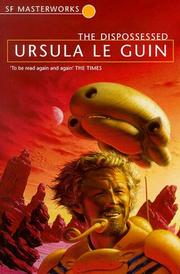
Her masterpiece of political philosophy: a dual-timeline story contrasting an anarchist moon with a capitalist planet. Place it here because the prior Hainish novels have built the conceptual vocabulary you need to fully inhabit its argument.
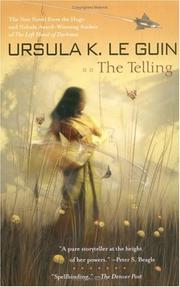
A late Hainish novel about a society that has erased its own oral tradition — a quieter, more elegiac book that rewards readers already fluent in her universe and themes of cultural memory.
Later Earthsea: Revisiting the World
IntermediateReturn to Earthsea as a more experienced reader and discover how Le Guin radically revised and deepened her own mythology, centering women and questioning the power structures of the original trilogy.
▸ Study plan for this stage
Pace: 4–5 weeks total: Weeks 1–3 cover Tehanu (~30 pages/day, reading slowly and reflectively given its quiet, interior pace); Weeks 4–5 cover Tales from Earthsea (~25 pages/day, pausing between stories to journal and compare each tale's perspective to the original trilogy).
- Feminist revisionism: how Tehanu deliberately dismantles the heroic, male-centered power structures of the original Earthsea trilogy and reframes magic, authority, and worth through Tenar and Therru's experiences
- The body and vulnerability as thematic centers: Tehanu shifts from epic adventure to domestic, embodied life — illness, aging, violence against women and children, and physical limitation become the new dramatic terrain
- Therru/Tehanu as a new mythic figure: the burned child as a symbol of trauma, transformation, and a radically different kind of power that the old Roke-centered system cannot contain or understand
- Rewriting Ged: the deconstruction of the archmage hero — Ged's loss of power forces both character and reader to question whether power was ever the point, and what a man is without it
- The politics of silence and speech: who gets to tell stories, whose knowledge is valued, and how women's wisdom (Tenar's, Moss's, Ogion's) has always existed outside official Roke magic
- Tales from Earthsea as mythological scaffolding: the five stories and the essay expand the world's history, reveal suppressed female mages, and show how institutions (especially Roke) were built on exclusion
- 'The Finder' and institutional origins: how the founding of Roke itself involved the erasure of women from the practice of magic, recontextualizing everything in the original trilogy
- Le Guin's essayistic voice in 'Earthsea Revisioned': understanding her own stated intentions for the feminist revision as a lens for reading both books in this stage
- How does Tehanu challenge the definition of 'power' established in the original Earthsea trilogy, and what does Le Guin propose as an alternative through the lives of Tenar and Therru?
- What does Ged's loss of his magical abilities reveal about how the earlier books constructed masculine identity and heroism — and how does his arc in Tehanu complicate or complete that construction?
- In Tales from Earthsea, 'The Finder' depicts the founding of Roke's School of Wizardry as an act that deliberately excluded women. How does this retcon change your reading of the all-male institution in the original trilogy?
- Therru is described as something the world has not seen before. What kind of power does she represent, and why is it threatening to the existing order of Earthsea's patriarchal magic system?
- How do the stories in Tales from Earthsea collectively function as a counter-history — whose voices and experiences do they recover, and what does that recovery suggest about the nature of 'official' history and myth?
- Le Guin waited nearly two decades to return to Earthsea with Tehanu. Based on your reading, what philosophical or political shifts in her thinking does that gap seem to reflect, and where do you see those shifts most clearly on the page?
- Comparative annotation exercise: Go back to any single chapter from the original trilogy (e.g., a Roke chapter from A Wizard of Earthsea) and annotate it through the lens of Tehanu and Tales from Earthsea — mark every moment where women are absent, silenced, or marginalized, and write a one-paragraph reflection on how the later books reframe that absence.
- Character voice journal: Write a 1–2 page first-person journal entry from Tenar's point of view set during any scene in Tehanu where she is observing Ged's powerlessness. Focus on what she notices that the narrative doesn't explicitly state, drawing on her interiority as Le Guin constructs it.
- Story mapping for Tales from Earthsea: Create a timeline or map that places each of the five stories in the chronology of Earthsea's history. For each story, note: whose perspective is centered, what institution or power structure is examined, and what it adds or corrects relative to the original trilogy.
- Thematic close reading: Select the scene in Tehanu where Therru sings to the dragon Kalessin. Write a 300–400 word close reading analyzing Le Guin's specific language choices — imagery, syntax, tone — and argue what this scene claims about the relationship between trauma, identity, and power.
- Debate prompt — written response: Le Guin has been criticized by some readers for 'breaking' the world of Earthsea with its feminist revision. Write a structured 400–500 word response either defending or challenging this critique, using specific evidence from Tehanu and Tales from Earthsea.
- Reading log for Tales from Earthsea: After finishing each of the five stories, write a 3–5 sentence entry answering: What surprised me? What does this story add to Earthsea that couldn't exist in the original trilogy? Which character's voice felt most necessary?
Next up: Tehanu and Tales from Earthsea establish the feminist and philosophical foundations that Le Guin continues to develop in The Other Wind and the final Earthsea stories, where the themes of death, the dry land, and the liberation of the dead are resolved — making this stage essential preparation for understanding why those final books feel like a culmination rather than a continuation.
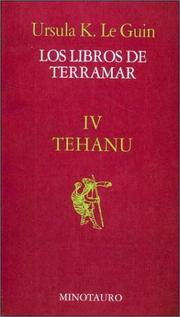
Written 18 years after the original trilogy, this deliberately subverts it — Ged has lost his power and a damaged woman becomes the unexpected hero. It only makes full sense after reading the first three Earthsea books and the Hainish novels, as Le Guin is now in explicit dialogue with her younger self.
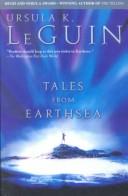
A collection of stories that fills in the world's history and includes a crucial essay on Earthsea's creation — the ideal bridge between the novels and her non-fiction voice.
The Essayist: Le Guin on Writing and the World
ExpertHear Le Guin speak directly in her own critical and personal voice, synthesizing everything you've read into a coherent understanding of her ethics, aesthetics, and politics.
▸ Study plan for this stage
Pace: 6–8 weeks total: Weeks 1–3 cover The Language of the Night (~20–25 pages/day, including re-reading Le Guin's prefaces and introductions to individual essays); Weeks 4–7 cover Dancing at the Edge of the World (~20–25 pages/day, pausing after thematic clusters — gender, travel, literature, politics —
- Le Guin's theory of fantasy and science fiction as a 'thought experiment' mode — not escapism but a rigorous imaginative method for exploring reality, articulated throughout The Language of the Night
- The 'carrier bag theory' of narrative: Le Guin's rejection of the hero-as-weapon story in favor of a gathering, relational, container-based model of storytelling, developed in Dancing at the Edge of the World
- The role of the author's moral imagination: Le Guin's insistence in both collections that the writer bears ethical responsibility for the worlds and values they create
- Feminism as a lens for rereading genre, language, and daily life — Dancing at the Edge of the World applies feminist critique to literature, academia, travel writing, and political speech
- Le Guin's aesthetic of 'realism of the inner life': her argument in The Language of the Night that fantasy accesses psychological and archetypal truths unavailable to mimetic realism
- The politics of utopia: how Le Guin distinguishes between static, authoritarian utopias and dynamic, ambiguous ones, connecting her essay arguments to her fiction-writing practice
- Language as a political act: Le Guin's scrutiny — especially in Dancing at the Edge of the World — of how gendered, militarized, and commodified language shapes thought and power
- The writer as citizen: Le Guin's consistent positioning of the literary vocation as inseparable from social conscience, running through both collections as a unifying ethical thread
- According to The Language of the Night, why does Le Guin believe fantasy and science fiction are not lesser or escapist genres, and what specific imaginative capacities does she argue they uniquely possess?
- How does Le Guin's 'carrier bag theory of fiction' in Dancing at the Edge of the World challenge conventional (particularly masculine-heroic) narrative structure, and what kind of stories does she propose in its place?
- Across both collections, how does Le Guin define the ethical obligations of the writer — and does her position shift, deepen, or contradict itself between the earlier essays in The Language of the Night and the later ones in Dancing at the Edge of the World?
- How does Le Guin apply feminist analysis in Dancing at the Edge of the World to domains beyond fiction (e.g., travel, academic speech, political rhetoric), and what common thread connects these critiques?
- What is Le Guin's relationship to utopia as a literary and political concept, and how do her essays reframe utopia as a process or orientation rather than a blueprint?
- Having now read her fiction and her criticism together, how do the essays in these two collections illuminate or complicate your reading of her novels and stories — what did the essays explain that the fiction left implicit?
- Close-reading annotation: Select one essay from each book that directly addresses the craft of writing (e.g., 'From Elfland to Poughkeepsie' in The Language of the Night; 'Bryn Mawr Commencement Address' in Dancing at the Edge of the World). Annotate every claim Le Guin makes about language and power, then write a one-page synthesis of where the two essays agree and where they diverge.
- Position paper: Le Guin argues in The Language of the Night that fantasy is a legitimate — even superior — vehicle for psychological truth. Write a 500-word response either defending or challenging this claim, using specific examples from her fiction you have read in earlier stages of the curriculum.
- Carrier bag exercise: Choose any short story or novel from a previous stage of this curriculum and re-describe its plot using Le Guin's carrier bag framework from Dancing at the Edge of the World. What gets foregrounded that the conventional plot summary hides? Write up your analysis in 300–400 words.
- Language audit: Inspired by Le Guin's political scrutiny of language in Dancing at the Edge of the World, collect 5–10 sentences from a current news source or public speech. Annotate each for gendered, militarized, or euphemistic language, then rewrite each sentence in what Le Guin might call the 'mother tongue.'
- Comparative essay (800–1,000 words): Trace the concept of 'responsibility' — to readers, to society, to the future — across both collections. How does Le Guin's sense of what writers owe the world evolve from The Language of the Night to Dancing at the Edge of the World? Use direct quotations from both books.
- Synthesis reflection journal: At the end of Week 8, write a 1–2 page personal statement answering: 'What is Le Guin's vision of what literature is for?' Draw on at least four specific essays across the two books, and conclude by stating which of her arguments you find most or least persuasive and why.
Next up: By internalizing Le Guin's own critical vocabulary — her ethics of imagination, her feminist aesthetics, and her theory of narrative — the reader is now equipped to engage with scholarly and biographical secondary literature about her work with genuine critical independence, able to evaluate outside interpretations against the author's own articulated intentions.
Her foundational essay collection on fantasy and science fiction as serious literature — now that you've read the fiction, her arguments about myth, shadow, and the uses of imagination resonate with specific, earned meaning.
Essays, talks, and reviews spanning feminism, ecology, and storytelling. The capstone of the curriculum: Le Guin in full command of her prose and politics, speaking to a reader who has traveled her whole imaginative world.
Discussion
Keep reading
Paths that share books, cover the same subject, or open a related topic.