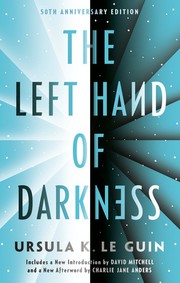
Start with The Left Hand of Darkness. An envoy arrives on a world where people have no fixed sex, and Ursula K. Le Guin writes it plainly, plots it slowly and thinks it through hard. It is the correct entry point to the whole award because it needs no prior science fiction at all, and because it is the novel that made Hugo voters take anthropology as seriously as engineering.
Do not start with Neuromancer or Stand on Zanzibar. William Gibson drops you into a compressed slang with no glossary and expects you to keep up; John Brunner assembles an overpopulated near-future out of advertising copy, news fragments and interleaved narratives, decades before that structure was common. Both are on this path because they are extraordinary. Both will convince a new reader that the award rewards difficulty for its own sake, which is not true.
The Hugo is a fan vote, and that explains everything
The Hugo has been voted since 1953 by the paying members of the World Science Fiction Convention. It is a record of what an organised readership loved in a given year, not what a committee judged best — which accounts for both its unusual reliability and its periodic collapses.
That structure is also why it has been fought over. Organised slate campaigns between 2013 and 2016 swept entire ballot categories and forced a change to the counting system; voters responded by handing several categories to No Award outright. In 2023 the Chengdu convention was found to have quietly disqualified eligible finalists. Neither episode is a footnote — a popularity award is only as good as the integrity of who gets to vote and what reaches the ballot, and the Hugo has had to defend both.
The best first Hugos
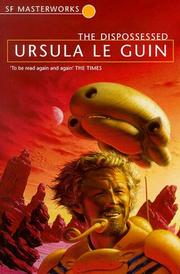
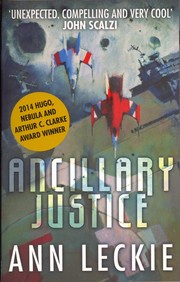
After The Left Hand of Darkness, read The Dispossessed: a physicist travels from an anarchist moon to the capitalist world it seceded from, in chapters that alternate forward and backward. Same author, same restraint, a far more direct argument. Then Ancillary Justice, in which a warship's artificial intelligence, reduced to a single human body, goes looking for revenge. It is the clearest modern winner and shows how much of the old space-opera furniture the award has kept.
The golden age and the new wave
Begin this era with A Canticle for Leibowitz, in which monks in a post-nuclear American desert preserve engineering fragments they cannot understand, across three sections centuries apart. It is the best written of the early winners and by far the least dated. Its author is usually credited as Walter M. Miller Jr., though the catalogue record drops the suffix.
The moon is a harsh mistress is next, and it comes with a caveat. Robert A. Heinlein is the writer Hugo voters loved most and the one modern readers argue with hardest; read him for the plotting and the invented dialect, and expect to disagree. Follow it immediately with The Forever War, written by a Vietnam veteran as a direct answer to Heinlein's Starship Troopers — the two books in sequence are an argument rather than two novels. Lord of Light, in which colonists have taken on the roles of the Hindu pantheon, is the most stylish winner of the decade and opens deliberately disorienting, so save it for last here.
The modern turn
The Fifth Season is the most important recent winner: a world that ends on a schedule, told partly in the second person, by an author who then won three years running — the only writer to do so. Doomsday book sends a history student to the fourteenth century and lands her in the plague year; it is emotionally the hardest book on this path and structurally the most conventional, which makes it a good rest. Among Others is a Welsh girl's reading diary, and doubles as a guided tour of the award itself, naming and judging dozens of the books around it.
The demanding ones
Neuromancer took the Hugo, Nebula and Philip K. Dick awards in a single year, the first novel to do so, and its opening pages are the whole barrier. Stand on Zanzibar is genuinely hard going and the most formally ambitious winner the award has produced. Hyperion tells seven pilgrims' stories in seven registers, in a deliberate reworking of Chaucer — and it ends without resolution, so know before you start that finishing the story means reading its sequel.
Follow the full ordered path here: Hugo Award-Winning Novels: Where to Start and What to Read Next.