Science fiction: an essential reading path
This curriculum traces science fiction from its genre-defining classics through the rebellious New Wave, the neon-lit streets of cyberpunk, and into today's most provocative voices. Each stage builds on the last — first establishing the genre's core ideas and sense of wonder, then complicating them with literary ambition and social critique, and finally arriving at contemporary works that push form and content to their limits.
The Foundations: Wonder & Big Ideas
BeginnerGrasp the genre's essential DNA — space, time, technology, and humanity — through the most accessible and beloved classics that defined what science fiction is.
▸ Study plan for this stage
Pace: 8–10 weeks total, reading at a relaxed beginner pace (~20–25 pages/day, ~4–5 days/week). Suggested breakdown: The Martian Chronicles (2.5 weeks) → The War of the Worlds (1.5 weeks) → Fahrenheit 451 (2 weeks) → The Left Hand of Darkness (2.5 weeks). Reserve the final 2–3 days of each book for reflect
- The 'sense of wonder' (novum): how each book introduces a single extraordinary premise — Martian colonization, alien invasion, book-burning, ambiguous gender — and extrapolates it into a fully realized world
- Science fiction as social mirror: Bradbury's Mars as a lens on American nostalgia and racism, Wells's invasion as a critique of British imperialism, Fahrenheit 451 as a warning about censorship and mass media, Le Guin's Gethen as an interrogation of gender and politics
- The role of the outsider or witness narrator: Bradbury's rotating cast of settlers, Wells's unnamed journalist, Montag the fireman, and Genly Ai the envoy — all characters who experience an alien world through fresh, estranged eyes
- Estrangement and defamiliarization: how SF makes the familiar strange (Earth seen through Martian eyes; humanity seen through Gethenian eyes) to provoke new thinking
- Technology as double-edged sword: rocket ships enabling both wonder and conquest in Bradbury; the mechanical hound, seashell radios, and wall-screens in Fahrenheit 451 as tools of control; the ansible-less isolation in Le Guin showing technology's limits
- World-building through accumulation: Bradbury's episodic chronicle structure vs. Wells's tight thriller pacing vs. Le Guin's anthropological appendices and myths — three distinct strategies for making an invented world feel real
- The question of what it means to be human: each book uses non-human or altered contexts (Martians, Martian colonists, a book-burning society, a genderless species) to ask what values, memories, and connections define humanity
- Colonialism and first contact: the parallel between Wells's Martians invading Earth and humans invading Mars in Bradbury, and the ethical weight of Genly Ai's 'mission' to Gethen
- In The Martian Chronicles, Bradbury repeatedly shows human settlers destroying Martian civilization — what does this pattern suggest about humanity's relationship with exploration and conquest, and how does it mirror real historical events Bradbury was responding to?
- H. G. Wells wrote The War of the Worlds partly as a critique of British imperialism. How does experiencing invasion from the victim's perspective change the reader's understanding of colonialism, and where do you see this technique echoed in The Martian Chronicles?
- Fahrenheit 451 is often called a book about censorship, but Bradbury himself said it was really about television killing the desire to read. Using specific scenes — the parlor walls, the seashell radios, Mildred's overdose — argue which interpretation feels more supported by the text, or whether both can be true simultaneously.
- Le Guin invented a species with no fixed biological sex in The Left Hand of Darkness. How does removing gender from Gethenian society change their politics, warfare, and personal relationships — and what does this thought experiment reveal about how gender shapes our own world?
- All four books feature a protagonist who undergoes a dramatic shift in worldview (the settlers' disillusionment, the journalist's survival, Montag's awakening, Genly Ai's transformation). Compare any two of these journeys: what triggers the change, and what does the character sacrifice or gain?
- Each author uses a distinct narrative structure — Bradbury's linked short stories, Wells's journalistic retrospective, Le Guin's field report with embedded myths and appendices. How does the chosen structure reinforce each book's central theme?
- **The Novum Journal:** For each book, write a one-paragraph 'elevator pitch' identifying the single extraordinary premise (the novum) and listing three real-world anxieties or questions it is designed to explore. Compare your four entries at the end of the stage to see the range of SF's concerns.
- **Parallel Colonialism Map:** Create a two-column chart comparing the Martian invasion in The War of the Worlds with the human colonization of Mars in The Martian Chronicles — motivations, methods, outcomes, and moral framing. Write a short reflection on what Wells and Bradbury each seem to be saying about power.
- **Rewrite a Scene Through Different Eyes:** Choose one scene from Fahrenheit 451 (e.g., Mildred's overdose, the burning of the old woman's house) and rewrite it from a different character's first-person perspective. This exercise builds the skill of recognizing whose viewpoint shapes a narrative.
- **Gender Swap Thought Experiment (Le Guin Response):** After finishing The Left Hand of Darkness, pick any scene from one of the three earlier books and rewrite it imagining all characters are Gethenian — biologically genderless except during kemmer. Write a paragraph reflecting on what changed and what that reveals about the original scene.
- **Author's Toolkit Comparison:** Make a one-page visual diagram (hand-drawn or digital) showing each author's key world-building tools: structure, narrative voice, use of technology, and central metaphor. Use direct quotes or chapter references from each book as evidence.
- **Reading Group Debate (solo or with others):** Stage a structured argument — even if just in writing — around this prompt: 'Of the four books in this stage, which one feels most relevant to life in the 21st century, and why?' Force yourself to steelman the case for each book before choosing, drawing on specific passages.
Next up: Mastering how these four foundational texts use wonder, social critique, and humanist questioning as SF's core toolkit prepares the reader to engage with more structurally and philosophically complex works in the next stage, where the genre's ideas grow darker, more ambiguous, and more formally experimental.
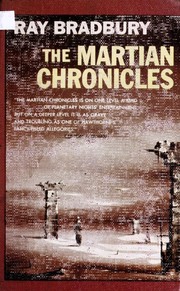
Bradbury's lyrical, linked stories ease a new reader into SF's imaginative mode without demanding hard-science literacy. It establishes the genre's power to use other worlds as mirrors for human nature.
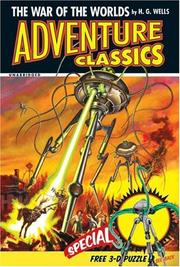
The ur-text of alien invasion and humanity's cosmic insignificance. Short and propulsive, it shows how SF has always weaponized scientific ideas for social commentary.
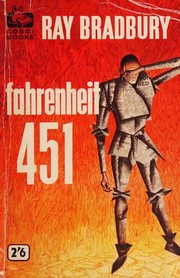
A natural next step: a dystopian classic that is immediately gripping and introduces the genre's tradition of using the future to interrogate the present.
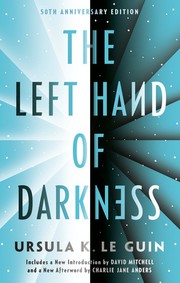
Le Guin bridges the golden age and the New Wave with unmatched elegance. Her exploration of gender and society on an alien world shows SF at its most intellectually ambitious yet emotionally resonant.
The New Wave: Literature Meets the Future
IntermediateUnderstand how 1960s–70s writers exploded genre conventions, bringing literary experimentation, inner space, and political urgency into science fiction.
▸ Study plan for this stage
Pace: 8–10 weeks total: ~2.5 weeks for Slaughterhouse-Five (~30 pages/day, including re-reading key chapters), ~3 weeks for The Dispossessed (~35 pages/day), and ~3.5 weeks for Dune (~40 pages/day). Budget extra days after each book for reflection and exercises before moving on.
- Non-linear narrative and the disruption of chronological storytelling, as demonstrated by Vonnegut's time-slipping structure in Slaughterhouse-Five
- Inner space: the shift from outer-space adventure to the exploration of psychology, trauma, and consciousness (Billy Pilgrim's dissociation and Paul Atreides's prescient inner life)
- Political urgency and anti-war critique embedded in genre fiction, most explicitly in Slaughterhouse-Five's treatment of the Dresden firebombing
- Anarchism, utopia, and the critique of capitalism through world-building, as Le Guin constructs the twin societies of Anarres and Urras in The Dispossessed
- Ambiguous utopia: Le Guin's refusal to present either society as a perfect model, forcing the reader to hold contradictions simultaneously
- Ecology as ideology: Herbert's Arrakis in Dune as a fully realized ecosystem whose scarcity (spice/water) drives politics, religion, and power
- The Chosen One subverted: Dune's Paul Muad'Dib as a messianic figure whose triumph is also a tragedy, questioning the hero-worship common in earlier SF
- Prose style as meaning: how Vonnegut's dark irony, Le Guin's anthropological clarity, and Herbert's dense appendices each enact the thematic concerns of their respective novels
- How does Vonnegut's use of 'So it goes' and Billy Pilgrim's time-travel function as narrative and emotional strategies for processing atrocity — and what does this say about the limits of traditional storytelling?
- In The Dispossessed, Le Guin alternates chapters between Anarres and Urras. How does this structural choice reinforce her argument about the relationship between freedom and constraint?
- What does Dune suggest about the dangers of charismatic leadership and messianic movements, and how does Herbert use ecology and religion to make that argument feel inevitable rather than didactic?
- All three books challenge the idea of a straightforward hero's journey. Compare how Vonnegut, Le Guin, and Herbert each undermine or complicate traditional notions of agency and heroism.
- How do these three novels use world-building not merely as backdrop but as the primary vehicle for political and philosophical argument?
- The New Wave is often described as bringing 'literary' concerns into genre SF. Identify one specific stylistic or structural technique in each book that you would not expect to find in a pulp adventure story, and explain what it contributes.
- Structural mapping — After finishing Slaughterhouse-Five, draw a timeline of Billy Pilgrim's actual chronological life, then map the order in which Vonnegut presents events. Write a one-paragraph reflection on what emotional or thematic effect the reordering creates versus a straight chronology.
- Comparative society chart — While reading The Dispossessed, maintain a two-column running log of Anarres vs. Urras: note one detail per chapter about each society's values, social structures, and contradictions. After finishing, write a 300-word verdict on whether Le Guin presents a 'winner' — and defend your answer with textual evidence.
- Ecology and power diagram — For Dune, create a web diagram connecting spice (melange), water, the Fremen, the Spacing Guild, House Atreides, and the Emperor. Draw arrows showing dependency and conflict. Use this diagram to write a short explanation of why controlling Arrakis means controlling the universe.
- Voice imitation exercise — Choose one page from each of the three books and rewrite the same scene or idea in the style of one of the other two authors (e.g., rewrite a Dune passage in Vonnegut's ironic, fragmented voice). Reflect on what is gained and lost in translation.
- Political lens essay — Choose one of the three novels and write a 400–500 word close-reading essay arguing that a specific world-building detail (a law, a resource, a ritual) is actually a disguised argument about a real-world political issue from the 1960s–70s.
- Reading group debate — Stage a structured 20-minute discussion (alone in writing, or with others) debating the prompt: 'Of these three novels, which one is most optimistic about humanity's future?' Force yourself to argue for a book you initially disagree with, using only evidence from the texts.
Next up: By mastering how Vonnegut, Le Guin, and Herbert used literary form and political philosophy to explode genre boundaries, the reader is now equipped to engage with later SF that inherits and radicalizes these techniques — including cyberpunk, Afrofuturism, and post-apocalyptic fiction — where inner space, systemic critique, and subverted heroism become the default mode rather than the exception.
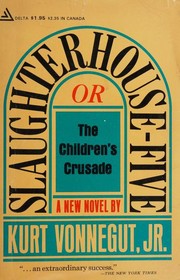
Vonnegut's fractured, darkly comic anti-war novel is the perfect New Wave entry point — it uses SF's time-travel device to devastating literary and moral effect.
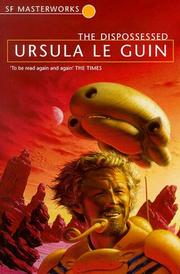
Le Guin's dual-world anarchist thought experiment deepens the political and philosophical ambition introduced in the previous stage, demanding more active engagement from the reader.
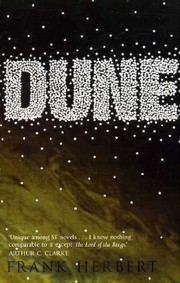
The genre's most fully realized world-building achievement. After the New Wave's literary turn, Dune shows how epic scope and ecological, political, and religious ideas can coexist in a single towering novel.
Cyberpunk: The Street Finds Its Own Uses
IntermediateAbsorb cyberpunk's defining vision of technology, capitalism, and identity — the movement that rewired SF for the digital age and whose aesthetics still dominate popular culture.
▸ Study plan for this stage
Pace: 8–10 weeks total. Week 1–2: "Do Androids Dream of Electric Sheep?" (~20–25 pages/day, ~180 pages). Week 3–5: "Neuromancer" (~20 pages/day, ~270 pages) — slow down for dense prose. Week 6–9: "Snow Crash" (~30 pages/day, ~440 pages). Week 10: review, reflection, and exercises.
- Simulacra and authenticity: Dick's androids and electric animals force the question of what makes experience, empathy, and life 'real' versus simulated — a question cyberpunk never stops asking.
- The cyberspace paradigm: Gibson's 'matrix' in Neuromancer invented the spatial metaphor for networked data that still shapes how we visualize the internet, hacking, and digital consciousness.
- Body as hardware, mind as software: across all three books, identity is modular, hackable, and commodified — from Rick Deckard's empathy tests to Case's jacked-in disembodiment to Y.T.'s corpo-franchise body contract.
- Late capitalism and corporate dystopia: the Tyrell Corporation, the zaibatsus of Neuromancer, and Snow Crash's franchise nation-states (Mr. Lee's Greater Hong Kong, the Mafia pizza delivery) all portray a world where corporations have replaced governments as the dominant power structure.
- The street-level protagonist: cyberpunk centers working-class or underclass antiheroes (bounty hunters, console cowboys, skateboard couriers) navigating systems built by and for the powerful — 'the street finds its own uses for things.'
- Language as virus and meme: Snow Crash literalizes the idea that information can be a weapon — the Nam-Shub of Enki and the Snow Crash drug/virus collapse the boundary between linguistic code and biological code.
- Noir aesthetics and fatalism: Dick's rain-soaked San Francisco, Gibson's Sprawl, and Stephenson's Burbclaves all inherit hard-boiled noir's moral ambiguity, urban decay, and protagonists who win pyrrhically if at all.
- Posthumanism and the erosion of the human: Rachael Rosen, Molly Millions's mirror-lens implants, and the Metaverse avatars each mark a step away from a stable, bounded human self toward something hybrid, augmented, and uncertain.
- In 'Do Androids Dream of Electric Sheep?', what does the Voigt-Kampff empathy test actually measure, and why does Dick make it unreliable? What does this ambiguity say about the nature of humanity?
- Gibson famously described cyberspace as a 'consensual hallucination' in Neuromancer. How does the novel use Case's physical body — its sickness, its modification, its vulnerability — to complicate the fantasy of pure digital escape?
- Both Neuromancer and Snow Crash feature AIs or quasi-divine information entities (Wintermute/Neuromancer; the Metaverse's Librarian and the Snow Crash entity itself). How does each book frame the relationship between human agency and superhuman information systems?
- Snow Crash argues, through Hiro's research, that language and religion can function as mind-control viruses. How does Stephenson use the Sumerian mythology subplot to make a serious point about memetics and social control, and how does this connect to cyberpunk's broader themes?
- Across all three books, female characters (Rachael, Molly, Y.T., Juanita) occupy complex and sometimes troubling roles. How does each author use these characters to reinforce or challenge cyberpunk's genre conventions?
- The corporate entity in each book (Tyrell Corp., the zaibatsus/Tessier-Ashpool SA, the Mafia/franchise system) operates differently. Compare how Dick, Gibson, and Stephenson each model the relationship between capitalism and social collapse.
- Empathy-test journal: After finishing 'Do Androids Dream of Electric Sheep?', write a one-page Voigt-Kampff-style interview for a character of your own invention. Then write a second page arguing whether your character would pass or fail — and what that verdict actually proves.
- Cyberspace map: While reading Neuromancer, sketch a visual map of the matrix as Gibson describes it — the corporate ice, the nodes, the Tessier-Ashpool cores. Annotate it with page references. The act of drawing forces close attention to Gibson's notoriously impressionistic spatial descriptions.
- Corporate org-chart dystopia: After Snow Crash, diagram the power structure of its world — the franchise nation-states, the Mafia, the Feds, Mr. Lee's Greater Hong Kong, the Raft. Then write a one-paragraph 'mission statement' for one of these entities in its own voice.
- Prose style comparison: Choose one action scene from each of the three books and write a 200-word analysis of the sentence-level style. How does Dick's paranoid interiority differ from Gibson's telegraphic cool and Stephenson's satirical velocity? What does style do to theme?
- Meme-tracing exercise: Identify one idea, image, or phrase from each book that has visibly escaped into real-world culture (e.g., 'avatar,' 'the matrix,' 'electric sheep'). Research its actual cultural trajectory and write a short paragraph on how the original fictional context was preserved or distorted.
- Rewrite the ending: Choose the ending of any one of the three novels and rewrite the final scene (1–2 pages) so that the protagonist makes a different choice. Then write a reflective note on what your rewrite reveals about the original's ideological commitments — what the author needed to happen, and why.
Next up: By internalizing cyberpunk's core tensions — real vs. simulated, human vs. corporate system, body vs. information — the reader is primed to explore how later science fiction either inherits, critiques, or deliberately dismantles these frameworks in subsequent movements like post-cyberpunk, Afrofuturism, and solarpunk.

Dick's paranoid masterpiece is the essential precursor to cyberpunk, raising the questions of consciousness, empathy, and corporate power that the movement would inherit. Reading it first makes Neuromancer hit harder.
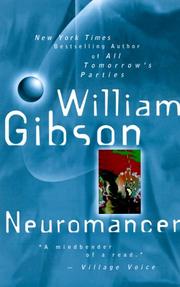
The founding text of cyberpunk and one of the most influential SF novels ever written. Gibson's prose style and vision of cyberspace, megacorporations, and body modification define the movement's aesthetic.
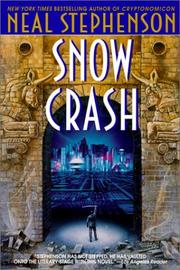
Stephenson's satirical, high-velocity follow-up to Neuromancer expands cyberpunk into linguistics, mythology, and virtual reality — and is far more fun to read, providing essential tonal range.
Today's Boundary-Pushing Voices
ExpertEncounter contemporary SF that synthesizes everything before it — classic wonder, New Wave politics, cyberpunk tech-anxiety — while centering new perspectives and pushing the genre into uncharted territory.
▸ Study plan for this stage
Pace: 10–13 weeks total. Week 1–3: "Kindred" (~30 pages/day, including re-reading key chapters). Weeks 4–9: Cixin Liu's four-book collection (~35–40 pages/day; pace yourself across The Three-Body Problem → The Wandering Earth → The Dark Forest → Death's End). Weeks 10–13: "A Memory Called Empire" (~25 pag
- Afrofuturism and the weaponization of history: Butler's use of time-travel in 'Kindred' not as escapism but as a confrontational device that forces the protagonist — and reader — to inhabit the lived trauma of American slavery, interrogating how the past is never truly past.
- Embodied power and complicity: 'Kindred' dismantles the comfortable distance of the observer by making Dana physically and morally entangled in the slave system, raising questions about survival, agency, and moral compromise under oppression.
- Cosmic civilizational scale and the Dark Forest theory: Cixin Liu's four-book arc escalates from a single physicist's crisis to the fate of the universe, introducing the 'Dark Forest' axiom — that mutual distrust and the logic of survival make interstellar contact inherently lethal.
- Technological determinism vs. human will: Across Liu's collection, technology (sophons, dimension-folding weapons, light-speed ships) repeatedly outpaces human moral frameworks, asking whether civilization can survive its own ingenuity.
- Non-Western SF cosmology: Liu's work centers Chinese history, philosophy (Confucian hierarchy, Maoist trauma, Taoist fatalism), and collective identity as the lens through which humanity faces extinction — a deliberate counter to Anglo-American genre defaults.
- Imperial assimilation and cultural identity: In 'A Memory Called Empire,' Mahit Dzmare's love of Teixcalaanli culture is itself a form of colonization; Martine uses the tension between admiration and erasure to interrogate how empires reproduce themselves through desire.
- Language, poetry, and power: Martine embeds Teixcalaanli culture in its poetry and naming conventions, arguing that linguistic and aesthetic dominance are the most insidious tools of empire — a New Wave-style foregrounding of semiotics in SF.
- Synthesis of the genre's lineage: All three works consciously inherit and transform what came before — Butler rewrites the slave narrative through golden-age time-travel tropes; Liu scales up hard-SF cosmology to civilizational tragedy; Martine fuses space-opera with postcolonial theory — together m
- In 'Kindred,' how does Butler use Dana's physical body — particularly her injuries that persist across time — as a narrative argument about the inescapability of historical trauma, and what does this say about the limits of 'objective' historical distance?
- The Dark Forest theory in Cixin Liu's work rests on two axioms: the will to survive and the chain of suspicion. Trace how these axioms are introduced in 'The Three-Body Problem' and then systematically tested, confirmed, and complicated across 'The Dark Forest' and 'Death's End' — does Liu ultimately endorse or mourn this logic?
- How does Cixin Liu use the short story 'The Wandering Earth' (versus the novel-length works in the collection) to explore collective sacrifice and national identity, and how does its tone differ from the cosmic pessimism of the trilogy?
- Mahit Dzmare in 'A Memory Called Empire' is an unreliable ambassador — she loves the empire that threatens to absorb her people. How does Martine use this internal contradiction to argue something specific about the psychology of colonized peoples, and which moments in the novel most sharply expose this tension?
- Compare the role of the 'outsider protagonist' across all three works: Dana in 'Kindred,' Ye Wenjie and later Cheng Xin in Liu's trilogy, and Mahit in 'A Memory Called Empire.' What does each author's choice of perspective reveal about how power, vulnerability, and moral agency are distributed in their fictional worlds?
- Each of these works engages with a specific real-world political or historical trauma — American slavery, China's Cultural Revolution, and contemporary anxieties about imperial globalization. How does grounding SF in specific historical wounds change the genre's relationship to 'escapism,' and do these books ultimately offer hope, critique, or something more ambiguous?
- 'Kindred' close-read journal: Each time Dana is pulled back in time, log the trigger, the power dynamic she enters, and one moral compromise she is forced to make. At the end, map these entries into a single diagram showing how her entanglement deepens — then write a 300-word reflection on what Butler is saying about complicity.
- Dark Forest debate: After finishing 'The Dark Forest,' write a structured 500-word argument either defending or refuting the Dark Forest theory using only evidence from Liu's four books. Then swap positions and write the counter-argument. This forces engagement with Liu's internal logic rather than gut reaction.
- Civilizational timeline: Create a visual timeline spanning all four Cixin Liu works, marking key technological leaps, societal collapses, and moral turning points. Annotate each with the question: 'Did human choice matter here, or was this outcome technologically/cosmically determined?' Use this to form a thesis about Liu's view of free will.
- Poetry as empire exercise: Martine signals Teixcalaanli cultural dominance through its poetry. Select three poems or poetic fragments quoted in 'A Memory Called Empire' and analyze how each one functions as a tool of soft power — what does it make Mahit (and the reader) feel, and how does that feeling serve the empire's interests?
- Cross-book synthesis essay (600–800 words): Choose one theme — survival, identity under pressure, or the cost of contact with a more powerful civilization — and trace it across all three works. Your essay must cite specific scenes from 'Kindred,' at least two books from Liu's collection, and 'A Memory Called Empire,' arguing what contemporary SF, taken together, says about this theme.
- Perspective rewrite: Choose one pivotal scene from any book in this stage and rewrite it (1–2 pages) from the point of view of a character who holds institutional power in that scene (Rufus in 'Kindred,' a Trisolar sophon-controller in Liu, or a Teixcalaanli minister in Martine). Reflect on how the shift in perspective changes the moral weight of the scene.
Next up: By having wrestled with how Butler, Liu, and Martine each synthesize the genre's full history while centering radically different cultural vantage points, the reader is now equipped to engage with the cutting edge of SF criticism, fandom, and emerging voices — the natural next step toward evaluating the genre's future directions and developing their own critical framework for what SF can and shoul

Butler's time-travel narrative about slavery is a landmark that proves SF's speculative tools are uniquely suited to confronting historical trauma. It reframes everything the curriculum has covered through a Black feminist lens.

A global phenomenon that brings the hard-SF sense of cosmic scale back with full force, filtered through Chinese history and a genuinely alien conception of first contact — expanding the reader's sense of where SF comes from and where it's going.

A recent Hugo winner that synthesizes the whole arc: Le Guin's anthropological depth, cyberpunk's identity anxiety, and a fresh postcolonial voice — the ideal capstone for a reader who has traveled the full genre.
Discussion
Keep reading
Paths that share books, cover the same subject, or open a related topic.