Victor Hugo Reading Order: Where to Start with the Novels
Hugo wrote nine novels across sixty years, and the English-speaking world reads one of them — usually at 1,400 pages, usually as a first Hugo, usually not to the end. Les Miserables stalls readers because it is not really a novel with digressions but a set of essays with a novel running through it: fifty pages on Waterloo, thirty on the sewers of Paris, a whole book on a convent, all of it deliberate. Start elsewhere. This path opens with the two short, furious books he wrote against the death penalty, moves through the cathedral novel that made him famous, takes on Les Miserables when you already trust him, and then goes to the strange late novels written during his twenty-year exile on Guernsey after he refused to accept Napoleon III. The poetry, which is what French readers actually rank him by, comes last.
Start Short: The Death-Penalty Books
BeginnerRead the two short polemical fictions that run under everything else Hugo wrote, and get his voice at a length that costs you an evening.
▸ Study plan for this stage
Pace: One week, and genuinely one week — The last day of a condemned man runs about 100 pages and Claude Gueux is shorter still. Read the condemned man in one sitting if you can; it is written as an unbroken descent and breaking it up flattens the effect. Then leave a day before Claude Gueux so the change
- The withheld crime. The narrator of The last day of a condemned man never tells you what he did, and every reader who wants to know is being shown the exact instinct the book is arguing against
- First-person present-tense narration used as a clock — the form of the book is the countdown, and Hugo invented most of this technique before the novel had a name for it
- The move from fiction to case in Claude Gueux: a real prisoner, a real killing, and a closing passage that abandons narrative for direct address
- Hugo's central social claim, stated here for the first time and repeated for the next forty years: that society manufactures the criminals it then executes
- How early it all arrives. Hugo was twenty-seven for the first book, and the argument does not change afterwards; only the length does
- The seed of Les Miserables — the bread, the prison, the hardened man, the question of whether punishment reforms anyone — all present in a text you can read over a lunch break
- Why does Hugo refuse to name the crime, and what happens to the argument if you decide for yourself that the man is guilty of something terrible?
- The condemned man's account is full of ordinary detail — food, corridors, a daughter. What is that detail doing in an abolitionist argument?
- Where does Claude Gueux stop being a story and become a speech? Find the sentence.
- Both books blame society. What specifically are they blaming it for, and is the charge the same in each?
- Which of the two is the better argument, and which is the better book? They may not be the same answer.
- Time yourself reading The last day of a condemned man and note where you wanted to stop. The book is engineered to make stopping uncomfortable, and noticing that is the exercise.
- Write 200 words summarising Hugo's case against capital punishment using only what is in these two texts, without adding any argument of your own.
- Copy out the final paragraph of Claude Gueux by hand. Hugo's rhetorical construction is much more visible at writing speed than at reading speed.
- Keep a single page of notes on Hugo's habits — the direct address, the accumulation of examples, the sudden widening from one man to all of society. You will use this page constantly for the next 2,000 pages.
Next up: You now have Hugo's argument and Hugo's voice at a cost of one week, which is the equipment you need to read a 500-page novel where the argument arrives in chapters that are not about the plot at all.
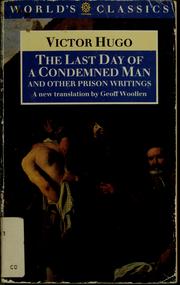
A man's final hours before the guillotine, narrated by him, with his crime never named — because naming it would let you decide he deserved it. Written when Hugo was twenty-seven and still the best short introduction to him: the technique is modern, the argument is unanswerable, and it takes two hours.
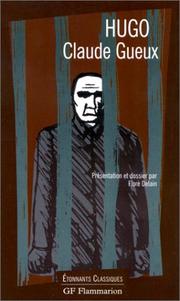
A real prisoner who killed a warden, retold as a case against a society that made him. Even shorter than the first, and read second because it is where the polemic comes to the surface — the last pages are effectively a speech, and that speech is the seed of Les Miserables.
The Cathedral Novel
IntermediateTake on Hugo's first great novel and learn to read his digressions as part of the book rather than as obstacles in it.
▸ Study plan for this stage
Pace: Four to five weeks for roughly 500 pages, depending on the translation. Read it in daily sittings rather than long weekend blocks; the digressive chapters are easier to absorb in short doses and much harder to push through in bulk. Do not skip the architecture chapter — reading it properly is the wh
- This will kill that — Hugo's argument that the printed book destroyed the cathedral as the medium of collective memory, delivered as a chapter that stops the plot entirely and is the intellectual centre of the novel
- The cathedral as protagonist. The French title names the building, not the bellringer, and the English title has misled readers for two centuries about what the book is about
- Preservation as motive: Hugo wrote partly to stop the demolition of medieval Paris, and the campaign worked — the restoration of Notre-Dame followed the novel's success
- Frollo as the book's genuine tragedy — an intelligent, disciplined man destroyed by an appetite he has no vocabulary for, and given far more interiority than Quasimodo
- Esmeralda and the machinery of justice: the trial, the torture, the confession, all of it procedurally accurate and all of it recognisably the same institution the death-penalty books attacked
- How to read a Hugo digression: it is an essay with a thesis, it will be referred to later, and treating it as an obstacle is the reading habit that kills Les Miserables for most people
- Fifteenth-century Paris rendered street by street from documents — Hugo's research is not decoration, it is the claim that this city really was lost
- What is the argument of the this-will-kill-that chapter, and where else in the novel does it turn out to be load-bearing?
- Whose story is this? Make the case for the cathedral over any of the human characters.
- Frollo is given reasons and Quasimodo mostly is not. What does Hugo gain by that imbalance?
- The ending is far bleaker than any adaptation you have seen. What does the bleakness accomplish that a rescue would not?
- Where does Hugo stop the plot to teach you something, and in each case, does the novel later need what he taught?
- Having read it, is the English title actively misleading, or does it name something the book genuinely contains?
- List every chapter that contains no plot advancement, then, after finishing, mark which ones the ending depends on. The proportion is higher than you expect.
- Read the Paris-from-above chapter with a map of the modern city beside you and locate three things that are still there. Hugo's preservation argument becomes concrete rather than rhetorical.
- Write 200 words on Frollo's argument with himself about Esmeralda, in his terms rather than in ours.
- Practise the technique you will need next: read one digressive chapter deliberately slowly, at half your normal pace, and one at double speed. Decide which suits you, because you are about to need the choice for a 1,400-page book.
Next up: You have now read a Hugo novel where roughly a fifth of the pages are essays and finished it anyway, which is the only preparation that actually works for the book most readers abandon.
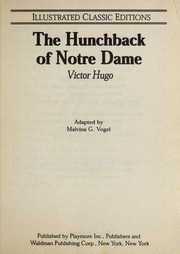
Fifteenth-century Paris, a deaf bellringer, an obsessed archdeacon, and an entire chapter arguing that printing killed architecture. Hugo wrote it partly as a campaign to stop the demolition of medieval buildings, and it worked — the restoration of Notre-Dame followed. Read it before Les Miserables specifically to practise on a 500-page book what the 1,400-page one will demand: the essays are the argument, not padding. Note that the French title, Notre-Dame de Paris, names the cathedral rather t
Les Miserables, and How to Survive It
IntermediateRead Hugo's central work with a strategy, and be able to say honestly which parts of it are the reason it is great.
▸ Study plan for this stage
Pace: Ten to fourteen weeks, and plan it as a project rather than as a read. Around 1,400 pages in an unabridged translation, so roughly 20 pages a day finishes it in a season. Two structural warnings worth planning around: the Waterloo section arrives early and stops the story dead for about fifty pages,
- Why unabridged is not snobbery: abridgements cut the essays, and the essays are the difference between a great novel and a very long melodrama about a stolen loaf
- Valjean and Javert as two theories of law — one man who believes people can change and one who believes the category is permanent, with the plot as the experiment
- The bishop's candlesticks as the novel's hinge: an act of unearned mercy that the remaining 1,300 pages exist to test
- Waterloo as method. Hugo spends fifty pages on a battle to reach one small event connected to the plot, and the disproportion is a deliberate statement about how history and individual lives touch
- The sewers as the novel's argument made literal — Hugo's insistence that a society is best understood by what it flushes away and refuses to look at
- The barricade and the failure of the 1832 insurrection: Hugo writes a defeat, not a revolution, and the choice is political
- The digression as the unit of the book. Convents, argot, Waterloo, sewers — Les Miserables is not a novel with essays in it but an argument about France with a novel running through it
- Javert's end is the novel's most discussed moment. What exactly breaks in him, and why can it not be repaired?
- What does the Waterloo section actually contribute, beyond the one plot connection at its end? Answer as if defending it to someone who skipped it.
- The bishop appears briefly and governs everything. Why does Hugo give him so few pages?
- Marius is the character readers like least. What is he for, structurally, and would the book work with a stronger one there?
- Which of the long digressions could be cut without loss, in your honest opinion — and what does your answer say about what you think the book is?
- Hugo chose to write a failed insurrection rather than a successful revolution. What does the novel gain by ending on the barricade the way it does?
- Before starting, compare the opening pages of two or three unabridged translations and pick one deliberately. You are committing to a voice for three months.
- Keep a one-line-per-day reading log with the page count and how it felt. At this length the log is what gets you through the flat stretches, and it makes the shape of the book visible afterwards.
- When you reach the Waterloo section, read the first ten pages, then write down what you predict it is for. Check your prediction against the end of the section.
- After finishing, write 300 words on whether the digressions are the reason the book is great or the reason it is unread. Argue one side properly rather than splitting the difference.
- Reread the bishop chapters last, immediately after the ending. Fifteen hundred pages later they are a different scene.
Next up: With the central work behind you, you can read the books Hugo wrote from exile — where nobody was editing him, nobody was waiting for a sequel, and the results are considerably stranger.

Valjean, Javert, the barricade, and the seventeen years Hugo spent on it. Two practical points: read an unabridged translation, because the abridgements cut precisely the essays that make it more than a melodrama, and give yourself permission to read the Waterloo and sewer sections at a different pace rather than abandoning the book at them. By this point in the path you already know how Hugo builds an argument, which is the only preparation that actually helps.
The Guernsey Novels
IntermediateRead the three novels of the exile years and see Hugo at his strangest — grander, weirder, and much less concerned with whether you are following.
▸ Study plan for this stage
Pace: Ten to twelve weeks for the three. Toilers of the Sea is around 500 pages, The man who laughs is longer and baggier, and Ninety-three is the shortest and tightest at roughly 350. Read them in the given order and leave a gap before Ninety-three: it is the settled verdict and lands harder after a paus
- Hugo in exile: he refused to accept Napoleon III and spent nearly twenty years on Guernsey, and the isolation shows in books that stop caring whether you are keeping up
- The long central section of Toilers of the Sea — one man, a wrecked steamer and a rock, with almost no dialogue for hundreds of pages, which is the most sustained descriptive writing Hugo ever produced
- Nature as antagonist rather than backdrop. The sea in Toilers is not symbolic weather; it is an opponent with tactics
- The grotesque as a moral instrument. The permanently disfigured boy in The man who laughs is a device for asking who is allowed to be heard, which the House of Lords speech then answers at full volume
- The unevenness is real. The man who laughs is genuinely a mess in places, and reading it means accepting a great set piece embedded in a shaky book
- Ninety-three's structure: three men, each doing what is right by their own lights, destroying each other precisely because none of them is wrong
- The lifelong argument closing. Hugo spent sixty years weighing revolution against mercy, and Ninety-three is where he finally files the judgement
- In Toilers of the Sea, what does the near-absence of dialogue in the central section make possible that a companion character would have prevented?
- The octopus sequence is the most famous thing in Toilers. Is it earned by what precedes it, or is it a set piece the book stops for?
- What does the disfigurement in The man who laughs let Hugo say about class that a merely poor protagonist could not?
- The speech to the House of Lords is Hugo's politics undisguised. Does it work as a scene, or only as an argument?
- In Ninety-three, each of the three men acts rightly and the result is catastrophe. What is Hugo claiming about revolutions?
- Read as a group, what changed in Hugo during the exile — in subject, in style, or in what he thought fiction was for?
- Read the salvage section of Toilers of the Sea over consecutive days rather than in fragments, and note where Hugo tells you the physics of what is happening. The passage is closer to an engineering account than to adventure writing.
- Extract the House of Lords speech from The man who laughs and read it aloud. It was built for the ear and reads very differently at speaking pace.
- For Ninety-three, write one sentence per principal character stating the principle he is acting on, then a fourth sentence on which principle the book ultimately prefers. Being forced to choose is the exercise.
- Write 200 words comparing the sea in Toilers with the sewers in Les Miserables. Both are Hugo describing an inhuman space at enormous length, and the difference between them is the exile.
Next up: You have read Hugo at the height of his powers and at his strangest, which is the moment to fill in the two ends of the career — the boy who could not yet write, and the poet the French actually rank him as.

A Guernsey fisherman salvages a wrecked steamer alone, and fights an octopus in a sea cave. Hugo dedicated it to the island that sheltered him; the long central section of one man against rock and weather is the best sustained writing he ever did, and there is almost no dialogue in it.
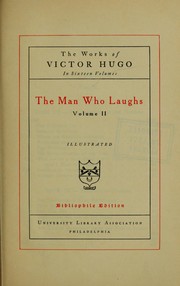
A boy is surgically disfigured into a permanent grin and exhibited as a freak, then discovers he is an English lord. Grotesque, uneven, and the direct visual ancestor of the Joker — read it for the enormous set-piece speech to the House of Lords, which is Hugo's politics at full volume.

His last novel, set during the Terror, in which three men each do the right thing and destroy each other by doing it. The tightest and most morally serious of the late books; read it last of the three, because it is the settled verdict of a man who spent his life arguing about revolution and mercy.
The Early Work, the Poems, and the Life
IntermediateFill in the two ends of the career — the apprentice novels and the poetry French readers rank above all the fiction — and get a biography that explains the politics.
▸ Study plan for this stage
Pace: Six to eight weeks, and this stage is the one to graze rather than march through. Bug-Jargal and Hans of Iceland are short and can be read in a week each. Selected poems of Victor Hugo should be read a few poems at a sitting over a month rather than consecutively. Save the biography, titled simply V
- Apprentice work read as apprentice work. Hans of Iceland is not good, and the point of reading it is the distance between it and Ninety-three by the same hand
- Bug-Jargal's double vision: genuine anti-slavery sympathy and an unexamined colonial frame, both visible on the same page, written by a teenager
- Hugo as a poet first. In France he is ranked by the verse and the novels are the sideline, which is close to the inverse of the English-language reputation
- Why a selection is the right form — the collected verse runs to many volumes, and a selection is how even French readers meet it
- The exile poems written after his daughter's drowning, which are where the French estimate of Hugo actually comes from and which have no equivalent in the fiction
- The life as explanation: the exile, the seances, the appetites and the state funeral that drew enormous crowds — the biography accounts for the politics of Les Miserables and Ninety-three better than any preface bound into them
- Reading order as argument. Putting the juvenilia at the end rather than the start is a deliberate choice, and by now you can say why it was the right one
- What in Hans of Iceland is already recognisably Hugo, and what had he not yet learned to do?
- How does Bug-Jargal handle its Haitian revolutionaries, and where does the sympathy stop? Be specific about the passages rather than general about the period.
- Reading the poems after the novels, what does the verse do that the fiction cannot?
- The exile poems come out of a private catastrophe. How does Hugo get from that to public poetry, and does the transition convince you?
- After the biography: which of the novels do you now read differently, and what specifically changed?
- Would you send a new reader down this same path, or would you now reorder it? Defend whatever you answer.
- Put a page of Hans of Iceland beside a page of Ninety-three and mark three concrete differences in how the prose works. Sixty years of craft becomes visible in about ten minutes.
- Read three of the exile poems aloud in translation, then the same three in French even if you do not read French. Hugo's verse is built on sound, and the shape survives the language barrier better than the sense does.
- Write 200 words on Bug-Jargal that states both what is admirable and what has not aged, without resolving the tension. Resolving it would falsify the book.
- Read the biography's account of the exile, then reread the opening of Toilers of the Sea. The dedication to the island stops being a courtesy.
- Draw up your own Hugo reading order for a friend with three months and no French, and justify every place it departs from the one you just followed.
Next up: This is the end of the path — the polemics, the two great novels, the exile books, the verse and the life — and the natural next step is a reread of The last day of a condemned man, ninety minutes that now contain everything the following 4,000 pages spent themselves proving.
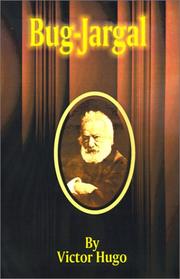
A teenage Hugo's novel of the Haitian revolution, with a noble slave leader at its centre. Genuinely early work and worth reading as such: the anti-slavery sympathy is real, the colonial framing around it has not aged, and both are visible on the same page.

His first published novel, a gothic tale of a monstrous outlaw in seventeenth-century Norway, written at twenty. Nobody would call it good; read it to see how far the writer of Ninety-Three travelled, which is the point of putting it here rather than first.
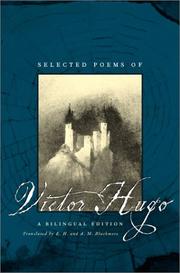
In France, Hugo is a poet who also wrote novels, and English readers almost never find this out. A selection is the right form — the collected verse runs to many volumes — and the exile poems written after his daughter's drowning are the ones that justify the French estimate of him.
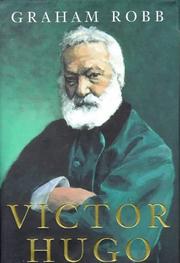
The standard English biography: the exile, the seances, the enormous appetites, the state funeral that drew two million people. Read it last, when you have the books in your head — it explains the politics behind Les Miserables and Ninety-Three better than any introduction bound into them.
Discussion
Keep reading
Paths that share books, cover the same subject, or open a related topic.