The History of Turkey: Best Books to Read in Order
This curriculum traces Turkey's story from the late Ottoman Empire through the revolutionary birth of the modern republic, building steadily from accessible narrative history to serious analytical scholarship. Each stage assumes the vocabulary and context built in the previous one, so readers arrive at the advanced texts already fluent in the key events, personalities, and debates.
Foundations: The Ottoman World and Its End
BeginnerUnderstand the Ottoman Empire's structure, its long decline, and the catastrophic collapse triggered by World War I — the essential backdrop for everything that follows.
▸ Study plan for this stage
Pace: 8–10 weeks, ~40–50 pages/day. Start with İnalcık (weeks 1–5, ~350 pages), then transition to Rogan (weeks 6–10, ~400 pages). Allocate 1–2 days per week for review and synthesis.
- Ottoman administrative structure: the devshirme system, the Janissaries, and the millet system as foundations of imperial governance
- Economic and military organization during the classical period (1300–1600): trade networks, taxation, and military innovation
- The concept of Ottoman decline: demographic pressures, military obsolescence, and fiscal crisis from the 17th century onward
- The role of World War I as the catastrophic accelerant: Ottoman entry, military defeats, and territorial collapse
- The Armenian Genocide and other wartime atrocities as symptoms of imperial disintegration and ideological radicalization
- The final dissolution: the Armistice of Mudros (1918) and the immediate aftermath that set the stage for Turkish national reconstruction
- Continuity and rupture: how Ottoman institutions and mentalities persisted even as the empire collapsed
- What were the key features of Ottoman administrative organization during the classical age, and how did the devshirme and millet systems enable imperial control?
- How did Ottoman military and economic power in the 16th century compare to European rivals, and what structural weaknesses emerged over the following centuries?
- What were the primary causes of Ottoman decline from the 17th century onward, and why did reform efforts repeatedly fail?
- How did Ottoman entry into World War I accelerate the empire's collapse, and what were the major military and political turning points?
- What role did ideological radicalization and wartime violence (including the Armenian Genocide) play in the empire's final years?
- What was the immediate political and territorial situation in late 1918 and early 1919, and how did it create the conditions for national reconstruction?
- Create a timeline of Ottoman history from 1300–1920, marking key administrative reforms, military defeats, territorial losses, and wartime events. Use İnalcık for the classical period and Rogan for the decline and collapse.
- Map the Ottoman Empire's territorial extent at three points: 1453 (after Constantinople), 1600 (peak classical power), and 1918 (after WWI). Annotate with the causes of major territorial losses.
- Write a 2–3 page comparative analysis: How did Ottoman governance during the classical age (İnalcık) differ from the fragmented, crisis-ridden state Rogan describes in the early 20th century?
- Trace the devshirme system and Janissary corps from their classical origins (İnalcık) through their decline and final abolition. How did this institutional decay reflect broader Ottoman weakness?
- Create a cause-and-effect diagram showing how Ottoman military defeats in WWI (Rogan) cascaded into political radicalization, ethnic violence, and territorial dissolution.
- Read and annotate 2–3 key passages from each book: one describing Ottoman classical strength, one describing structural decline, and one describing wartime collapse. Write a 1-page synthesis explaining the arc.
Next up: This stage establishes the Ottoman world as a coherent, sophisticated empire that declined over centuries before collapsing catastrophically in WWI—a foundation essential for understanding how Turkish nationalists rebuilt from the ruins and why the Turkish Republic emerged as a radically different state.

The single best short introduction to how the Ottoman state actually worked — its institutions, society, and culture — giving the reader a baseline before studying its unraveling.
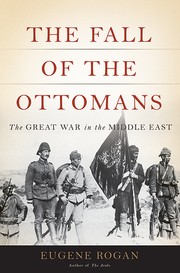
A gripping, accessible narrative of the empire's final chapter in World War I; written for general readers, it explains why the empire collapsed and sets the stage directly for Atatürk's revolution.
The Revolution: Atatürk and the Birth of the Republic
BeginnerFollow the War of Independence and Atatürk's radical transformation of Anatolia into a secular, nationalist Turkish republic, understanding both the man and the movement.
▸ Study plan for this stage
Pace: 8–10 weeks, ~40–50 pages/day. Start with Mango's biography (weeks 1–5, ~600 pages), then move to Kinross's account (weeks 6–10, ~500 pages). This pacing allows time for reflection between the two complementary perspectives.
- Atatürk's early military career and the Gallipoli campaign as formative experiences that shaped his nationalist vision
- The War of Independence (1919–1923) as the crucible for Turkish nationalism and the rejection of Ottoman decline
- The abolition of the Ottoman Sultanate and Caliphate as symbolic breaks with the past, enabling radical secularization
- The Six Arrows (Kemalism): republicanism, nationalism, populism, statism, secularism, and reformism as the ideological foundation of the new state
- Atatürk's systematic modernization reforms—legal, educational, linguistic, and social—designed to Westernize and unify Anatolia
- The tension between Atatürk's authoritarian methods and his stated goal of creating a modern nation-state
- The role of the military and single-party rule in consolidating the revolution and preventing fragmentation
- How Atatürk's personal character, decisiveness, and vision drove the transformation despite enormous obstacles
- What were the key military and political experiences in Atatürk's early life that prepared him to lead the War of Independence?
- How did the War of Independence differ from the Ottoman Empire's earlier military conflicts, and what made it a nationalist turning point?
- Why did Atatürk abolish the Sultanate and Caliphate, and what did these acts symbolize for the future of the Turkish state?
- What were the Six Arrows of Kemalism, and how did each principle shape specific reforms in the new republic?
- Describe three major modernization reforms (legal, educational, or social) that Atatürk implemented and explain their intended impact on Turkish society
- How did Atatürk balance the need for rapid, top-down transformation with claims of popular sovereignty and republicanism?
- Create a timeline of Atatürk's life from 1881 to 1938, marking key military campaigns, political turning points, and major reforms. Use both Mango and Kinross to cross-reference dates and events.
- Write a comparative character sketch of Atatürk based on Mango's and Kinross's portrayals—note where they emphasize different aspects of his personality and leadership style.
- Map the geographic and political progression of the War of Independence using details from both books; identify which regions were contested, when, and why.
- Select three of the Six Arrows (e.g., secularism, nationalism, reformism) and find concrete examples of each from the text—laws passed, institutions created, or public statements made.
- Analyze one major reform (e.g., the adoption of the Latin alphabet, the legal code, or education reform) by extracting Mango's and Kinross's explanations of its rationale, implementation, and consequences.
- Write a 500-word reflection on the paradox of Atatürk's authoritarianism: How did he justify single-party rule and restricted freedoms as necessary for building a modern republic?
Next up: This stage establishes the ideological and institutional foundations of the modern Turkish state under Atatürk, preparing you to examine how his successors navigated the tensions between his authoritarian methods and democratic aspirations, and how Turkey's secular nationalism evolved through the 20th century.

The definitive English-language biography of Mustafa Kemal — authoritative yet readable, it is the essential single-volume account of the man who invented modern Turkey and should be read before tackling thematic studies.
Kinross's classic narrative history of the Turkish War of Independence and early republic reads almost like a novel, reinforcing the chronology and human drama established in the Mango biography.
Going Deeper: Society, Identity, and the Kemalist Project
IntermediateAnalyze what the Kemalist reforms actually meant for ordinary people — religion, gender, language, and ethnicity — and how a new national identity was constructed and contested.
▸ Study plan for this stage
Pace: 6–8 weeks, ~40–50 pages/day (with 2–3 reflection days per week)
- Atatürk's vision of modernization and secularization as a deliberate break from Ottoman Islamic tradition
- The language reform (Latinization of script, vocabulary purification) as a tool for constructing national identity and breaking with the past
- Gender and social reforms (abolition of polygamy, women's suffrage, dress codes) and their contested reception across urban and rural populations
- The role of ethnicity and Kurdish identity within Turkish nationalism—suppression of minority identities and the construction of a unified 'Turkish' nation
- Religion's transformation from state-organizing principle to private practice, and the tension between secular law and popular Islamic belief
- How ordinary people experienced, resisted, or adapted to rapid top-down modernization
- The Kemalist state apparatus as an instrument of social engineering and cultural transformation
- The persistence of local, regional, and religious identities despite centralized nationalist ideology
- What were the main pillars of Atatürk's Kemalist reforms, and how did they differ from Ottoman governance?
- How did the language reform (script change and vocabulary purification) serve the Kemalist nation-building project, and what resistance did it face?
- What specific changes did Kemalist reforms introduce regarding gender roles, family law, and women's public participation, and how did different social groups respond?
- How did Kemalism attempt to construct a unified Turkish national identity, and what role did the suppression of Kurdish and other minority identities play?
- What was the relationship between secularization and religion in Kemalist Turkey—was Islam eliminated or merely privatized?
- How do Stone and Pettifer differ in their assessment of whether Kemalist reforms succeeded in transforming Turkish society, and what evidence do they present?
- Create a timeline of major Kemalist reforms (1923–1938) with specific examples from Stone's account, noting which reforms targeted language, law, dress, religion, and gender.
- Analyze 2–3 primary source excerpts (if available in the books or supplementary materials) showing resistance to reforms—e.g., rural reactions to secularization or opposition to the Latin alphabet—and write a 300-word reflection on why ordinary people resisted.
- Compare and contrast Stone's and Pettifer's interpretations of a single reform (e.g., the dress code or language policy): what does each author emphasize, and where do they agree or diverge?
- Map the geographic and social distribution of reform acceptance vs. resistance (urban vs. rural, educated vs. illiterate, religious vs. secular communities) using evidence from both books.
- Write a first-person narrative (300–400 words) from the perspective of an ordinary Turkish person (a rural imam, a woman in Istanbul, a Kurdish villager, or a merchant) experiencing one major Kemalist reform, grounding it in details from the texts.
- Create a visual diagram showing how Kemalist reforms in language, law, religion, and gender interconnected to construct a new national identity—what was the underlying logic?
Next up: This stage equips you to understand how state ideology translates into lived experience and social contestation, preparing you to examine how Turkey's post-Kemalist era (multiparty democracy, Islamism, Kurdish nationalism) emerged as reactions to and reinterpretations of these foundational modernization projects.

A brisk, opinionated synthesis that challenges some Kemalist orthodoxies and introduces the reader to competing interpretations — ideal for building critical thinking after absorbing the mainstream account.
Bridges the early republic and the late 20th century by examining how Kemalist ideology shaped — and strained — Turkish politics, Kurdish identity, and relations with Islam, preparing the reader for advanced texts.
Advanced: Contested Histories and the Long 20th Century
ExpertEngage with the most contested and complex dimensions of modern Turkish history — minority policies, political Islam, military coups, and Turkey's place in the wider world — at a scholarly level.
▸ Study plan for this stage
Pace: 8–10 weeks, ~40–50 pages/day. Akçam's work (~400 pages, dense scholarly analysis) requires 2–3 weeks; Pamuk's novel (~400 pages, literary but philosophically demanding) requires 2–3 weeks. Allow 2–3 weeks for synthesis, reflection, and deeper engagement with contested interpretations.
- The Armenian Genocide as a foundational trauma and contested historical event in Turkish national identity
- How the Young Turk movement's ideology of Turkish nationalism and modernization led to systematic violence against minorities
- The role of state violence, bureaucracy, and ideology in perpetrating crimes against humanity
- Political Islam, secularism, and religious identity as competing visions for Turkey's future (explored through Pamuk's Kars setting)
- The tension between Turkey's Western aspirations and its Islamic heritage, and how this shapes contemporary politics
- Literary representation as a means of engaging with historical trauma, ambiguity, and moral complexity that academic texts cannot fully capture
- The concept of 'deep state' power structures and how military/political elites have shaped Turkish history across the 20th century
- Minority experience and marginalization in the Turkish nation-state, from Armenians to Kurds to religious minorities
- What evidence does Akçam present for characterizing Young Turk policies toward Armenians as genocide, and what are the historiographical debates he engages with?
- How does Pamuk use the snow-bound setting of Kars to explore the collision between secular modernism and political Islam in contemporary Turkey?
- What role did Turkish nationalism and the ideology of creating a homogeneous nation-state play in the persecution of minorities during the Young Turk era?
- How do Akçam's historical analysis and Pamuk's literary narrative each illuminate different aspects of Turkey's relationship with its own violent past?
- What does the protagonist Ka's journey in Snow reveal about the impossibility of reconciling Western rationalism with Turkish social and religious realities?
- How have Turkey's 20th-century political crises (coups, Islamist movements, Kurdish conflict) been shaped by unresolved questions about national identity rooted in the Young Turk period?
- Create a detailed timeline of Young Turk policies (1908–1923) using Akçam, marking key ideological shifts, legislative actions, and violent episodes; annotate each with the human consequences Akçam documents.
- Write a 2,000-word comparative analysis: How does Akçam's scholarly argument about genocide differ from how Pamuk's characters (particularly the Islamist and secular factions) understand and deny historical violence?
- Map the ideological positions of major characters in Snow (Ka, Sunay, the Islamists, the military) onto the historical tensions Akçam identifies between nationalism, modernization, and minority suppression.
- Conduct a close reading of 3–4 key passages from Snow that deal with history, memory, or violence; analyze how Pamuk uses ambiguity and silence to represent what cannot be directly stated about Turkish history.
- Research and write a 1,500-word reflection on one contemporary Turkish political issue (Kurdish rights, Islamism, military influence, or Armenian recognition) using both Akçam's historical framework and Pamuk's insights into Turkish psychology and ideology.
- Debate exercise: Prepare arguments for and against the characterization of Young Turk policies as genocide using Akçam's evidence; then consider how Pamuk's portrayal of denial and competing narratives complicates simple historical verdicts.
Next up: This stage equips you to recognize how Turkey's foundational traumas, ideological contradictions, and unresolved historical questions continue to shape its politics, culture, and international relations—preparing you to examine how these tensions play out in contemporary Turkey's role in the Middle East, its EU aspirations, and its internal democratic struggles.

A landmark scholarly work on the Armenian Genocide by Turkey's foremost historian of the subject; essential for understanding the darkest and most debated episode in the transition from empire to republic.
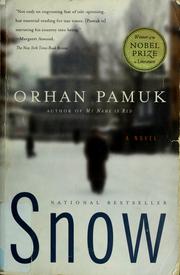
Nobel laureate Pamuk's novel set in eastern Turkey dramatizes the collision of secularism, political Islam, and Kurdish identity with a depth no non-fiction account matches — the perfect capstone that makes the history viscerally real.
Discussion
Keep reading
Paths that share books, cover the same subject, or open a related topic.