The History of Cuba: Best Books to Read in Order
This curriculum traces Cuba's full arc — from Spanish colonialism through independence, revolution, the Castro era, and the tangled US-Cuba relationship — across four progressively deeper stages. Each stage builds the political vocabulary, historical context, and analytical frameworks needed to tackle the more demanding primary sources and scholarly works that follow.
Foundations: The Big Picture
BeginnerGain a clear, chronological overview of Cuban history from colonization to the present, establishing the key names, dates, and turning points needed for everything that follows.
▸ Study plan for this stage
Pace: 4–5 weeks, ~40–50 pages/day. Start with Gott's "Cuba" (approximately 400 pages, 2–2.5 weeks), then move to "The Cuba Reader" (approximately 400–500 pages, 2–2.5 weeks). Build in 3–4 days for review and consolidation.
- Spanish colonization and the plantation economy: how Cuba became a sugar-dependent colony and the role of slavery in its development
- The Ten Years' War (1868–1878) and the Wars of Independence: the emergence of nationalist movements and key figures like José Martí
- U.S. intervention and the Spanish-American War (1898): how Cuba gained nominal independence but fell under U.S. economic and political dominance
- The early republic (1902–1933): political instability, the Platt Amendment, and the conditions that bred discontent
- Fulgencio Batista's rule and the rise of Fidel Castro: the revolutionary movement and the 1959 revolution
- The Cold War era: the Bay of Pigs, the Cuban Missile Crisis, and Cuba's alignment with the Soviet Union
- The Special Period and post-Soviet Cuba: economic crisis, survival strategies, and Cuba's contemporary position
- The role of race, gender, and class in Cuban history: how these dimensions shaped social movements and revolutionary ideology
- What were the main economic and social structures of colonial Cuba, and how did slavery shape the island's development?
- Who were the key figures in Cuba's independence movements, and what were their different visions for the nation?
- How did U.S. intervention after 1898 constrain Cuban sovereignty, and what was the Platt Amendment?
- What conditions in the early republic led to the Cuban Revolution, and how did Batista's rule contribute to revolutionary sentiment?
- What were the major Cold War crises involving Cuba (Bay of Pigs, Missile Crisis), and how did they shape U.S.–Cuba relations?
- How did the collapse of the Soviet Union affect Cuba's economy and society, and what strategies did Cuba employ to survive?
- Create a detailed timeline of Cuban history from 1492 to the present, marking major political events, wars, and economic shifts. Use both books to fill in details and cross-check dates.
- Write a one-page biography of three key figures (e.g., José Martí, Fulgencio Batista, Fidel Castro), noting their role in Cuban history and their competing visions for the nation.
- Map out the economic relationship between Cuba and the United States from 1898 to 1962, identifying how U.S. interests shaped Cuban policy and why this relationship became a source of resentment.
- Create a comparison chart showing the different independence movements and their ideologies (e.g., the Ten Years' War vs. the 1895 War of Independence vs. the 1959 Revolution). What changed between them?
- Write a 2–3 page reflection on how colonialism, slavery, and U.S. dominance created the conditions for revolution. Use specific examples from the books.
- Identify 5–7 turning points in Cuban history and explain why each one was pivotal. For each, note which book provided the most useful context.
Next up: This stage establishes the chronological backbone and major actors of Cuban history, preparing you to dive deeper into specific themes—such as the revolution's ideology, Cold War geopolitics, or contemporary Cuban society—in subsequent stages.
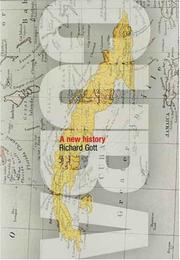
A highly readable, single-volume narrative history covering Cuba from the indigenous Taíno people through the early 2000s — the ideal first book for building a complete chronological spine.

A curated anthology of primary documents, journalism, and essays organized by era; reading it second lets you hear Cuban voices directly after Gott's overview has oriented you.
Colony, War & Independence
BeginnerUnderstand Spanish colonial rule, the sugar economy and slavery, the Ten Years' War, and the independence struggle led by José Martí — the deep roots of Cuban national identity.
▸ Study plan for this stage
Pace: 6–8 weeks, ~40–50 pages/day. Start with "Sugar Is Made with Blood" (weeks 1–5, approximately 300 pages), then "Our America" (weeks 6–8, approximately 100 pages of essays). Allow 1–2 weeks for review and integration.
- The sugar economy as the engine of Spanish colonial exploitation and the central role of enslaved African labor in generating wealth for Spain and Cuban planters
- The dehumanizing systems of slavery in Cuba—labor conditions, resistance, and the racial hierarchies that slavery created and reinforced
- The Ten Years' War (1868–1878) as the first major independence uprising and its incomplete victory, leaving Cuba still under Spanish rule
- José Martí's vision of 'Our America'—a unified, anti-imperialist Latin America built on democratic ideals and cultural sovereignty, distinct from U.S. domination
- The ideological foundations of Cuban nationalism: the rejection of Spanish colonialism, the critique of U.S. imperialism, and the dream of a multiracial, independent nation
- The continuity between colonial grievances (economic exploitation, political exclusion) and the independence movement's demands for self-determination
- Martí's literary and philosophical approach to nation-building—how essays and rhetoric shaped the independence struggle
- How did the sugar economy structure Spanish colonial rule in Cuba, and what role did slavery play in making sugar production profitable?
- What were the primary causes and outcomes of the Ten Years' War, and why did it fail to achieve independence?
- Who was José Martí, and what were his main arguments in 'Our America' regarding Latin American identity and independence?
- How did Martí's vision of a multiracial, democratic Cuba differ from the colonial and slavery-based society he inherited?
- What does Martí mean by 'Our America,' and how does he position it against U.S. imperialism and European colonialism?
- How did the experiences of enslaved people and the sugar economy create the conditions for the independence movement?
- Create a timeline of major events from Spanish colonization through Martí's death (1895), marking key dates from both books: colonial establishment, sugar boom, abolition, Ten Years' War, and independence struggles.
- Write a 2–3 page comparative analysis: How does Paquette's historical account of slavery and the sugar economy in 'Sugar Is Made with Blood' provide the material foundation for understanding Martí's ideological vision in 'Our America'?
- Select 3–4 key passages from 'Our America' and annotate them, explaining how Martí responds to or critiques the colonial and economic systems described in Paquette's book.
- Create a concept map showing the relationships between: Spanish colonialism → sugar economy → slavery → Ten Years' War → Martí's independence ideology. Use evidence from both books.
- Write a short essay (3–4 pages) from the perspective of a Cuban planter, enslaved person, or independence fighter in the 1870s–1890s, drawing on specific details from 'Sugar Is Made with Blood' to ground your narrative.
- Prepare a 10-minute oral presentation on Martí's critique of U.S. imperialism in 'Our America,' using specific quotes and explaining why this was urgent for Cuba in the 1880s–1890s.
Next up: This stage establishes the historical and ideological roots of Cuban independence and national identity, preparing you to examine how those ideals were tested, transformed, and sometimes betrayed in the actual wars of independence (1895–1898) and the early republic that followed.

Focuses on the 1844 Ladder Conspiracy and the brutal slave society underpinning Cuba's sugar wealth, giving essential social and economic context before tackling the independence wars.

Martí's own essays are foundational to understanding Cuban and Latin American identity; reading him here lets his ideas resonate through every subsequent stage of the curriculum.
Revolution & the Castro Era
IntermediateUnderstand the causes and course of the 1959 Revolution, the consolidation of Castro's socialist state, the Bay of Pigs, the Missile Crisis, and life inside revolutionary Cuba.
▸ Study plan for this stage
Pace: 8–10 weeks, ~40–50 pages/day. Allocate 2–3 weeks to Guevara's *Guerrilla Warfare* (theoretical foundation), 2–3 weeks to LeoGrande's *Back Channel to Cuba* (diplomatic history), and 3–4 weeks to Pérez's *Cuba* (comprehensive social and political context).
- Guerrilla warfare doctrine and its application in the Cuban context: Guevara's theory of foco and peasant mobilization as revolutionary strategy
- The structural causes of the 1959 Revolution: economic dependency, Batista's dictatorship, and social inequality as detailed in Pérez's historical analysis
- The consolidation of Castro's socialist state: radicalization from nationalist to Marxist-Leninist ideology and the nationalization of property
- U.S.–Cuba Cold War confrontations: the Bay of Pigs invasion and the Cuban Missile Crisis as turning points in hemispheric relations
- Diplomatic back-channels and secret negotiations: how covert communication shaped U.S.–Cuba relations during crisis moments, per LeoGrande
- Daily life and social transformation in revolutionary Cuba: education, healthcare, rationing, and the reshaping of Cuban society under socialism
- The role of Che Guevara and other revolutionary leaders in shaping Cuba's trajectory and ideological direction
- The intersection of nationalism, anti-imperialism, and communism in Cuban revolutionary ideology
- What were Guevara's core principles of guerrilla warfare, and how did they differ from conventional military strategy?
- What structural conditions in Cuba (economic, political, social) made the 1959 Revolution possible, according to Pérez?
- How did Castro's revolution shift from a nationalist movement to a socialist state, and what role did U.S. hostility play in this radicalization?
- What were the key events and outcomes of the Bay of Pigs invasion, and how did it affect Cuban–American relations?
- How did the Cuban Missile Crisis develop, and what role did back-channel diplomacy play in its resolution, according to LeoGrande?
- How did revolutionary Cuba transform daily life, institutions, and society in the first decade after 1959?
- Create a timeline of major events from 1952–1962 (Batista's coup through the Missile Crisis), annotating each with causes and consequences drawn from all three texts
- Write a comparative analysis: contrast Guevara's theoretical vision of revolution in *Guerrilla Warfare* with how the actual Cuban Revolution unfolded according to Pérez and LeoGrande
- Map the ideological shift of the Cuban Revolution from 1959–1962 using specific quotes and policies from the texts; identify inflection points where nationalism became socialism
- Analyze the Bay of Pigs invasion using LeoGrande's diplomatic perspective: what miscalculations and communication failures led to the fiasco?
- Debate the Missile Crisis: using LeoGrande's back-channel accounts, argue whether the crisis was resolved through diplomacy or brinkmanship, and what each side risked
- Create a 'day in the life' narrative for a Cuban citizen in 1962 (urban worker, peasant, or intellectual) based on Pérez's social history, incorporating details about rationing, education, and ideology
Next up: This stage establishes the ideological foundations, diplomatic crises, and social transformation of the early revolutionary period, preparing you to examine Cuba's subsequent foreign policy adventures, economic strategies, and long-term survival strategies in the decades following the Missile Crisis.
Reading Guevara's own tactical and ideological manual first gives you the revolutionaries' self-understanding before outside analysts weigh in.
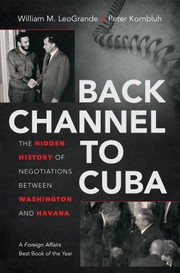
A meticulously researched account of secret US-Cuba diplomacy that contextualizes the revolution's international stakes and the Bay of Pigs and Missile Crisis within a broader diplomatic frame.

The most widely assigned academic survey of Cuban history, with deep chapters on the revolution and its aftermath; Pérez's analytical rigor rewards the intermediate reader who now has solid foundations.
US–Cuba Relations & the Modern Era
ExpertCritically analyze the full arc of US-Cuba antagonism — embargo, covert operations, the Special Period after Soviet collapse, and the post-Castro transition — and assess competing interpretations.
▸ Study plan for this stage
Pace: 8–10 weeks, ~40–50 pages/day (with 2–3 days per week for synthesis and note-taking)
- The Bay of Pigs invasion (1961) as a pivotal failure that hardened US-Cuba antagonism and shaped Cold War policy for decades
- The mechanics and rationale of the US embargo: economic sanctions as both Cold War tool and post-Cold War political fixture
- Covert CIA operations against Castro beyond the Bay of Pigs, including assassination plots and sabotage campaigns documented in declassified records
- The Special Period (1991–2000s): Cuba's economic crisis after Soviet collapse and how it exposed the fragility of the revolutionary state
- The role of Cuban exiles in Miami and Washington as political actors shaping US-Cuba policy independent of official diplomacy
- Competing narratives: US justifications for embargo/intervention vs. Cuban revolutionary ideology and claims of imperialism
- The post-Castro transition: succession, internal reform debates, and the question of whether isolation or engagement better serves US interests
- How personal networks, declassified documents, and journalistic investigation reveal hidden dimensions of state policy
- What were the strategic assumptions behind the Bay of Pigs invasion, and why did it fail so catastrophically? How did this failure reshape US-Cuba relations?
- Describe the structure and scope of the US embargo on Cuba. What economic and political purposes has it served, and what are the main critiques of its effectiveness?
- What covert operations did the CIA conduct against Castro and Cuba beyond the Bay of Pigs? What do declassified documents reveal about their scope and legality?
- What was the Special Period, and how did Cuba's economic crisis after 1991 challenge the sustainability of the revolutionary model?
- How have Cuban exiles, particularly in Miami, influenced US foreign policy toward Cuba? What role did they play in maintaining the embargo?
- What are the main competing interpretations of US-Cuba antagonism? How do Cold War security arguments differ from critiques of imperialism and economic coercion?
- What evidence exists for potential reform or normalization in US-Cuba relations, and what obstacles (political, ideological, economic) have prevented it?
- Timeline exercise: Create a detailed chronology of US-Cuba military and covert operations (1959–2000s) using evidence from *The Brilliant Disaster* and *Cuba Confidential*. Annotate each event with its stated rationale and actual outcome.
- Embargo analysis: Map the economic impact of the embargo using data and arguments from *Trading with the Enemy*. Write a 2–3 page memo arguing either for or against the embargo's continuation, citing specific evidence.
- Primary document close-reading: Select 3–4 declassified CIA memos or State Department cables discussed in the books. Analyze their language, assumptions, and what they reveal about official thinking at the time.
- Exile politics case study: Using *Cuba Confidential*, research one influential Cuban-American political figure or organization (e.g., CANF, specific exile leaders). Write a profile showing how they shaped US policy.
- Special Period simulation: Using economic data from *Trading with the Enemy*, create a brief scenario analysis of Cuba's options during the 1990s crisis. What were the realistic paths forward?
- Competing narratives essay: Write a 4–5 page comparative analysis of how US officials and Cuban revolutionaries justified their positions on embargo, intervention, and sovereignty. Use all three books to ground both perspectives.
Next up: This stage equips you to understand the full historical arc of US-Cuba antagonism and the structural forces (Cold War ideology, exile politics, economic coercion) that sustained it, preparing you to examine how—or whether—these dynamics shifted in the post-2008 era and what the future of the relationship might hold.
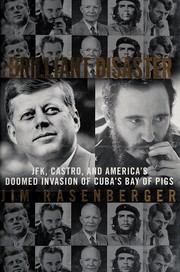
A gripping, deeply reported account of the Bay of Pigs invasion that reveals how US policy failures shaped decades of hostility — best read now that you can place it in full context.

A ground-level travelogue and investigation into how the US embargo shaped everyday Cuban life; its journalistic texture balances the policy-heavy books around it.
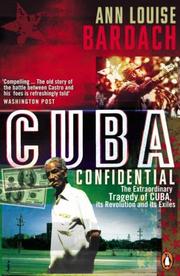
A veteran journalist's investigation into the exile community, the Castro inner circle, and the political forces on both sides of the Florida Straits — a fitting capstone that synthesizes politics, biography, and US-Cuba relations.
Discussion
Keep reading
Paths that share books, cover the same subject, or open a related topic.