The Ottoman Empire: six centuries, explained
This curriculum takes the reader from a vivid, accessible introduction to the Ottoman world all the way through specialized scholarship on its institutions, decline, and modern legacy. Each stage builds on the last: first establishing a narrative skeleton, then fleshing it out with social and cultural depth, and finally engaging with the historiographical debates and regional consequences that define serious Ottoman studies.
Foundations: The Big Picture
BeginnerGrasp the full arc of Ottoman history — from Anatolian frontier state to global empire to collapse — and build the vocabulary and mental map needed for everything that follows.
▸ Study plan for this stage
Pace: 10–12 weeks total. Week 1–4: İnalcık's "The Ottoman Empire: The Classical Age, 1300–1600" (~20–25 pages/day, ~280 pages). Read thematically — pause after each major section on state, society, and economy to take notes. Week 5–12: Finkel's "Osman's Dream" (~25–30 pages/day, ~600 pages). Read chronolo
- The ghazi frontier ethos: how the early Ottoman state drew legitimacy from holy war on the Byzantine-Anatolian frontier, as established by İnalcık's account of Osman and Orhan
- The devshirme system and the Kapıkulu: the mechanics of the slave-soldier household that powered Ottoman military and administrative expansion through the classical age
- The timar system: the land-grant economy that sustained the sipahi cavalry and tied provincial governance to military service, central to İnalcık's structural analysis
- Dynastic succession and fratricide: the brutal but stabilizing logic of Ottoman succession crises, a recurring thread from İnalcık through Finkel's full narrative
- The millet system: the Ottoman framework for governing non-Muslim communities, and how it evolved from pragmatic tolerance to formal institution across the centuries Finkel covers
- Imperial overextension and the 'long decline' debate: Finkel's narrative arc from Süleyman I onward challenges simple decline narratives and introduces the idea of adaptation and reform
- The role of the sultanic household and the harem in governance: Finkel's treatment of the 'Sultanate of Women' and later periods shows how power shifted from the battlefield sultan to palace politics
- Geopolitical mental map: the empire as a tri-continental entity spanning Anatolia, the Balkans, the Arab world, and North Africa, and the strategic logic of controlling key straits, trade routes, and holy cities
- According to İnalcık, what were the key structural features — military, administrative, and economic — that allowed the early Ottoman state to consolidate power so rapidly between 1300 and 1453?
- How does Finkel's narrative of the post-Süleymanic period complicate or enrich İnalcık's portrait of the 'classical' Ottoman system at its peak?
- What does the devshirme system reveal about the Ottoman conception of loyalty, meritocracy, and the relationship between the sultan and his servants?
- Tracing across both books: what were the major turning points — military, dynastic, or economic — that most significantly altered the empire's trajectory?
- How did the Ottomans manage religious and ethnic diversity across such a vast territory, and what were the limits of that management as revealed in Finkel's later chapters?
- By the end of 'Osman's Dream,' what combination of internal and external pressures drove the empire's dissolution, and how does Finkel avoid reducing this to a simple story of inevitable decline?
- Draw a freehand map from memory after finishing İnalcık: mark the Anatolian heartland, the Balkans, Constantinople, key frontier zones, and major battle sites mentioned. Repeat and expand the map after finishing Finkel to include the Arab provinces, North Africa, and the Caucasus.
- Build a two-column timeline: on one side, record major political/military events from both books; on the other, record structural/institutional developments (e.g., timar reforms, devshirme changes, succession laws). Look for patterns between the two columns.
- Write a one-page 'state portrait' of the Ottoman Empire at three snapshots in time — c. 1400, c. 1550, and c. 1800 — drawing details from İnalcık for the first two and Finkel for all three. What changed? What persisted?
- Create a glossary of 20 Ottoman/Turkish terms encountered across both books (e.g., sultan, pasha, janissary, timar, millet, devshirme, ulema, grand vizier). Write each definition in your own words with a concrete example from the text.
- After finishing Finkel, write a 300-word response to this prompt: 'Was Ottoman decline inevitable?' Use specific evidence from both books to argue a position, then steelman the opposing view.
- Identify one sultan covered in depth by Finkel (e.g., Süleyman I, Selim I, Mahmud II) and trace every mention of that ruler across both books. Note where İnalcık's structural lens and Finkel's narrative lens produce different emphases or even tensions.
Next up: By grounding you in the full chronological arc and core institutional vocabulary through İnalcık and Finkel, this stage equips you to move from "what happened and when" to "why and how" — making you ready to engage with more specialized or thematic studies of Ottoman society, culture, economics, or regional history without losing the big-picture orientation.

Written by the dean of Ottoman studies, this compact masterwork covers the empire's founding, rise, and golden age with unmatched authority. It establishes the core political, legal, and social vocabulary every subsequent book assumes.
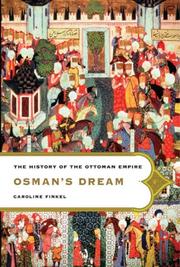
The single best one-volume narrative history of the entire Ottoman Empire in English. Read it second so İnalcık's framework gives you anchors; Finkel then fills in the full story from 1300 to 1923 in rich, readable detail.
Society, Culture & the Golden Age
BeginnerMove beyond political narrative to understand how ordinary Ottomans lived, how the imperial court functioned, and what made the sixteenth-century empire so formidable culturally and militarily.
▸ Study plan for this stage
Pace: 4–5 weeks, ~20–25 pages/day — Goodwin's prose is rich and impressionistic, so a relaxed pace allows the reader to absorb the vivid vignettes and thematic digressions without rushing past the cultural detail.
- The devshirme system — how the empire recruited, converted, and trained Christian boys into elite soldiers (Janissaries) and administrators, and why this 'slave elite' was a pillar of Ottoman power
- The millet system — how the Ottomans governed a multi-ethnic, multi-religious empire by granting semi-autonomy to non-Muslim communities, enabling remarkable (if unequal) coexistence
- The imperial household and the Topkapi model — the palace as a self-contained world of hierarchy, ritual, and training that produced both sultans and bureaucrats
- The Janissaries as a military-cultural institution — their discipline, their distinctive identity, and the paradox of an army whose loyalty was personal to the sultan yet would later become a political threat
- The sixteenth-century 'Golden Age' under Suleiman the Magnificent — the convergence of military expansion, architectural patronage (Sinan), legal codification, and literary flourishing that defined Ottoman peak power
- The role of the bazaar, the coffeehouse, and the hammam as social infrastructure — how commerce, conversation, and ritual bathing structured everyday Ottoman urban life
- Ottoman cosmopolitanism — how Istanbul functioned as a crossroads of goods, peoples, languages, and ideas, and what that meant for imperial identity
- The tension between the 'classical' Ottoman order and the forces (demographic, economic, military) that would eventually erode it — planting the seeds of later decline
- How did the devshirme system simultaneously strengthen the sultan's authority and create a new kind of social mobility within the empire — and what were its human costs?
- In what ways did the millet system make the Ottoman Empire distinctive among early-modern states, and what were the practical limits of the tolerance it offered?
- Goodwin describes the Ottoman court as a place of elaborate ritual silence and hierarchy — what purpose did this ceremonial culture serve politically and psychologically?
- What combination of factors made the reign of Suleiman the Magnificent the high-water mark of Ottoman power, and how does Goodwin convey this through cultural as well as military evidence?
- How did spaces like the bazaar, the coffeehouse, and the hammam function as social and political institutions, not merely commercial or recreational ones?
- By the end of Lords of the Horizons, what structural tensions does Goodwin identify that would eventually unravel the classical Ottoman order?
- Map the empire at its peak (c. 1566): draw or annotate a blank map marking the major provinces, frontier zones, and the trade routes that fed Istanbul — use Goodwin's geographical passages as your guide to check which regions he emphasises.
- Build a 'social pyramid' diagram of Ottoman society as Goodwin describes it: place the sultan at the apex, then layer in the palace household, the devshirme elite, the ulema (religious scholars), merchants, artisans, and non-Muslim millets — annotate each layer with one concrete detail from the book.
- Keep a 'character journal': each time Goodwin introduces a historical figure (sultan, architect, janissary, slave, merchant), write 2–3 sentences on who they are and what they reveal about the broader system — aim for at least 10 entries by the end.
- After finishing the book, write a 400–500 word 'day in the life' narrative imagining yourself as a specific Ottoman urbanite (a Greek merchant in Istanbul, a Janissary recruit, a woman in a provincial hammam) — draw only on details Goodwin provides to keep it historically grounded.
- Select one chapter or section where Goodwin's literary style is most vivid and re-read it slowly, underlining every concrete sensory detail (sounds, smells, textures, colours) — then write a one-paragraph reflection on how his narrative technique shapes your impression of Ottoman culture.
- Create a simple timeline from the book's narrative: mark at least 8 key events or reigns from Osman I to the late sixteenth century, noting beside each one whether Goodwin treats it primarily as a political, military, cultural, or social turning point — this will reveal his interpretive priorities.
Next up: By internalising how the classical Ottoman system worked at its height — its institutions, its culture, its internal tensions — the reader is now equipped to understand why and how that system began to fracture, making a future stage on Ottoman decline, reform, and the long nineteenth century feel like a natural and urgent continuation.
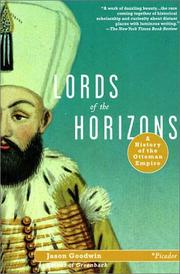
A beautifully written thematic portrait of Ottoman civilization — its cuisine, architecture, slavery, and cosmopolitanism. Its literary style makes abstract institutions feel human and vivid.
Conflict, Reform & the Long Decline
IntermediateUnderstand the structural pressures — military, economic, and ideological — that eroded Ottoman power from the seventeenth century onward, and how reformers tried (and partly failed) to respond.
▸ Study plan for this stage
Pace: 8–10 weeks total. Week 1–4: Goffman's "The Ottoman Empire and Early Modern Europe" (~25–30 pages/day, 4–5 days/week). Week 5–10: Howard's "A History of the Ottoman Empire" (~20–25 pages/day, 4–5 days/week), which is denser and more chronologically expansive — budget extra time for chapters covering
- The Ottoman Empire as a European power: Goffman's central argument that the Ottomans were not an 'outside' force but an integral actor in early modern European diplomacy, trade, and culture — challenging the traditional East/West binary
- Structural military decline: the transformation (and eventual obsolescence) of the Janissary corps, the failure to keep pace with European military-fiscal innovations, and how battlefield losses fed internal political instability
- Economic erosion: the impact of New World silver, shifting Mediterranean trade routes, and capitulations (trade privileges granted to European powers) that gradually undermined Ottoman fiscal sovereignty
- Ideological and legitimacy crises: how sultanic authority was contested by Janissaries, provincial notables (ayan), and religious scholars (ulema), creating cycles of reform and reaction
- The Tanzimat reforms (1839–1876): Howard's treatment of top-down modernization — new legal codes, conscript armies, and bureaucratic restructuring — as both a genuine response to decline and a source of new tensions around identity and citizenship
- Nationalism as a solvent: the role of Greek, Serbian, Bulgarian, and Arab nationalist movements — fueled partly by European patronage — in fragmenting the empire's multi-ethnic fabric
- The 'Eastern Question': how European great-power rivalry over Ottoman succession shaped (and constrained) every reform attempt from the late 18th century onward
- Reform paradox: Goffman and Howard together illuminate how reforms often strengthened central bureaucracy while alienating traditional power brokers, producing instability rather than consolidation
- According to Goffman, in what specific ways was the Ottoman Empire a participant in — rather than a threat to — the early modern European state system, and how does this reframing change how we should interpret Ottoman 'decline'?
- What were the key internal and external factors that degraded the Janissary corps from an elite fighting force into a political obstacle, and how does Howard trace the consequences of their eventual abolition in 1826 (the 'Auspicious Incident')?
- How did the capitulations evolve from pragmatic diplomatic tools into structural liabilities, and what does this trajectory reveal about the shifting balance of economic power between the Ottomans and Western Europe?
- In what ways did the Tanzimat reforms succeed in modernizing Ottoman institutions, and where — according to Howard — did they generate new contradictions or resistance that accelerated rather than halted fragmentation?
- How did the 'Eastern Question' constrain Ottoman agency? Use at least two specific episodes from Howard to illustrate how great-power intervention shaped the empire's reform options.
- Taken together, do Goffman and Howard present Ottoman decline as primarily self-generated (internal dysfunction) or externally imposed (European pressure and interference)? What evidence supports each interpretation?
- Comparative timeline: Build a two-column timeline as you read Howard — one column for Ottoman reform edicts/events, the other for concurrent European geopolitical events (e.g., Napoleonic Wars, Congress of Vienna, Crimean War). This makes the 'Eastern Question' dynamic visible at a glance.
- Argument mapping for Goffman: After finishing 'The Ottoman Empire and Early Modern Europe,' write a one-page summary of his central thesis and list three pieces of evidence he uses. Then write two genuine counter-arguments. This sharpens critical engagement with revisionist historiography.
- Faction role-play memo: Choose one reform episode from Howard (e.g., the Tanzimat, the 1876 Constitution) and write a short memo (300–400 words) from the perspective of a stakeholder who opposed it — a Janissary officer, a provincial ayan, or a conservative ulema scholar. Ground the objections in the text.
- Concept glossary: Maintain a running glossary of 15–20 terms (devshirme, ayan, millet, capitulations, Tanzimat, vilayet, etc.) with a one-sentence definition AND a note on how each term's meaning or significance shifted over the period covered by both books.
- Decline debate essay: After completing both books, write a 500-word argumentative response to this prompt: 'Ottoman decline was primarily a failure of adaptation, not a result of European aggression.' Use specific evidence from both Goffman and Howard to either defend or refute this claim.
- Map annotation exercise: Using a blank outline map of the empire at its peak, shade and date territorial losses covered in Howard decade by decade. Annotate each loss with the primary cause (military defeat, nationalist revolt, great-power pressure). This converts abstract narrative into spatial and chronological pattern recognition.
Next up: Mastering the structural pressures and reform failures covered here equips the reader to engage the empire's final decades — the Young Turk revolution, World War I, and the post-war partition — as the culmination of dynamics already set in motion, rather than as sudden or inexplicable events.

Reframes the Ottomans not as Europe's 'other' but as a fully integrated player in early modern European diplomacy and trade — essential context for understanding why decline was relative, not absolute.

A clear, scholarly survey that devotes serious attention to the Tanzimat reform era and the nineteenth-century 'Eastern Question,' bridging the gap between the classical empire and its collapse.
Collapse, War & the Birth of the Modern Middle East
IntermediateTrace the empire's final decades — the Young Turk revolution, World War I, the Armenian Genocide, and the post-war partition — and understand how these events directly shaped today's Middle East and Turkey.
▸ Study plan for this stage
Pace: 10–12 weeks total: Weeks 1–5 for "The Fall of the Ottomans" (~30–35 pages/day, ~320 pages), then Weeks 6–12 for "A Peace to End All Peace" (~25–30 pages/day, ~560 pages). Allow 5–6 days of reading per week, leaving 1–2 days for notes, reflection, and exercises. The two books are read sequentially so
- The Young Turk Revolution (1908) and the Committee of Union and Progress (CUP): how a modernizing coup reshaped Ottoman politics and accelerated nationalist tensions — covered in the opening chapters of Rogan
- Ottoman entry into WWI: the strategic miscalculation of allying with Germany, the Gallipoli campaign, and the multi-front collapse Rogan reconstructs battle by battle
- The Armenian Genocide: Rogan's unflinching account of the CUP's deportation and mass-murder campaign as deliberate state policy, its scale, and its long-contested legacy
- Arab Revolt and British promises: the Hussein-McMahon correspondence and how Britain simultaneously courted Arab nationalism while making contradictory commitments — a tension Fromkin dissects at length
- The Sykes-Picot Agreement and the secret partition of the Middle East: Fromkin's central argument that European powers drew borders according to imperial rivalry, not local realities
- The Balfour Declaration and the Palestine question: Fromkin's analysis of British motivations and the long-term consequences for Arab-Jewish relations
- The post-war peace settlements (Treaty of Sèvres, 1920, and Treaty of Lausanne, 1923): how Sèvres dismembered the empire on paper while Lausanne reflected the military reality of Atatürk's nationalist resistance — bridged across both books
- Fromkin's core thesis — that today's Middle Eastern instability is a direct inheritance of decisions made by a small group of British officials in 1914–1922 — and how to evaluate it critically against Rogan's more Ottoman-centered perspective
- According to Rogan, what were the key military and political factors that drew the Ottoman Empire into WWI on the German side, and how did the Gallipoli campaign reflect both Allied strategic ambition and Ottoman resilience?
- How does Rogan present the Armenian Genocide — what evidence does he marshal, what role did CUP leadership play, and how does his account compare with official Turkish denialism?
- What contradictory promises did Britain make to Arab, Zionist, and French parties between 1914 and 1917, and how does Fromkin argue these contradictions were not accidental but rooted in competing imperial priorities?
- What is Fromkin's central argument about who 'made' the modern Middle East, and what are the strongest critiques of his thesis — including the agency of local actors that Rogan's book helps restore?
- How did the Treaties of Sèvres and Lausanne differ in their treatment of Anatolia and the new Turkish state, and what does this difference reveal about the limits of European imperial power after WWI?
- Taken together, how do Rogan and Fromkin complement and challenge each other — where do their interpretations align, and where does each author's focus (Ottoman/military vs. British/diplomatic) create a different picture of causation?
- Mapping exercise: After finishing Rogan, draw (by hand or digitally) a map of the Ottoman Empire in 1914 and annotate it with the major WWI fronts he describes — Gallipoli, Sinai-Palestine, Mesopotamia, the Caucasus. Then, after finishing Fromkin, overlay the Sykes-Picot partition lines and the eventual post-Lausanne borders. The visual contrast will make the arbitrariness of the new borders visce
- Contradictions timeline: Create a two-column chronological table listing, on the left, each major British promise or agreement (Hussein-McMahon letters, Sykes-Picot, Balfour Declaration) and, on the right, who it contradicted and how. Use Fromkin's chapters on each agreement as your primary source.
- Comparative author analysis: Write a 500-word memo arguing which book — Rogan or Fromkin — gives more agency to non-European actors, citing at least three specific passages from each. This forces close reading and sharpens critical thinking about historical perspective.
- Genocide documentation reflection: Using Rogan's chapters on the Armenian Genocide as a base, research one primary source document from the period (e.g., Ambassador Morgenthau's dispatches, available freely online) and write a one-page response on how the primary source corroborates, complicates, or extends Rogan's account.
- Thesis stress-test debate: Formulate two opposing one-paragraph arguments — one defending Fromkin's thesis that British decisions 'created' the modern Middle East, one refuting it using evidence from Rogan's Ottoman-centered narrative. Then write a third paragraph synthesizing both into a nuanced position.
- Current-events connection: Choose one contemporary conflict or political boundary dispute in the Middle East (e.g., Kurdish statehood, the Israel-Palestine conflict, the Iraq-Syria border) and write a one-page trace of its roots back to specific events or decisions covered in these two books, citing page numbers.
Next up: By understanding how the Ottoman collapse and European partition created the modern Middle East's borders, identities, and grievances, the reader is primed to explore how the successor states — Turkey, the Arab nations, and Israel/Palestine — developed their own nationalisms, governments, and conflicts throughout the 20th century.
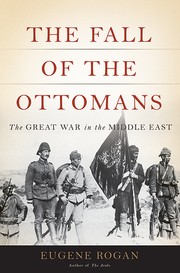
A gripping, meticulously researched account of the Ottoman Empire in World War I. Rogan humanizes all sides and shows precisely how the war destroyed the empire and redrew the map of the modern world.
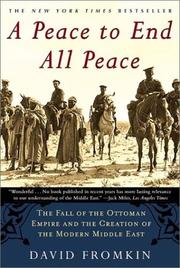
Picks up where Rogan leaves off, detailing how British and French diplomats carved up the former Ottoman lands and created the borders — and the conflicts — that define the Middle East to this day.
Deep Dives: Legacy & Historiography
ExpertEngage with cutting-edge scholarship on Ottoman identity, memory, and enduring influence — and develop a critical understanding of how the empire has been interpreted, mythologized, and contested.
▸ Study plan for this stage
Pace: 6–8 weeks total: Weeks 1–4 on "The Ottoman Endgame" (~35–40 pages/day, including note-taking pauses); Weeks 5–8 on "Midnight at the Pera Palace" (~25–30 pages/day, with slower reading to absorb the cultural and historiographical layering). Reserve the final 3–4 days of each book for review, synthesi
- The 'Eastern Question' and Great Power rivalry as the structural context for Ottoman collapse — McMeekin's central argument that the empire's endgame was shaped as much by external predation as internal decay
- Revisionist historiography: McMeekin's challenge to the standard Eurocentric and nationalist narratives of WWI, reframing the Ottoman theater as strategically decisive rather than peripheral
- The politics of memory and myth-making: how the Pera Palace Hotel in King's book functions as a microcosm for the contested identities of post-Ottoman Istanbul — Turkish, Greek, Armenian, Jewish, and Western
- Ottoman identity in transition: the shift from multi-ethnic imperial subjecthood to Turkish national citizenship, and the human costs and cultural ruptures that accompanied it
- Historiographical contestation: how the Armenian Genocide, population exchanges, and the dissolution of the empire are remembered, denied, or instrumentalized by successor states and diaspora communities
- The role of individuals and contingency in history: both McMeekin and King use granular, character-driven narratives to argue against deterministic accounts of the empire's fall and Istanbul's transformation
- Istanbul as palimpsest: King's portrait of the city in the 1920s–1940s as a layered space where Ottoman, Republican Turkish, and cosmopolitan European cultures collide and negotiate
- The enduring geopolitical legacy: how decisions made during the Ottoman endgame (Sykes-Picot, the Balfour Declaration, the Lausanne Treaty) continue to structure conflicts in the Middle East and Eastern Mediterranean
- According to McMeekin, how does centering the Ottoman and Eastern fronts change our understanding of the causes and outcomes of World War I — and what evidence does he marshal to support this revisionist claim?
- How does McMeekin characterize the relationship between the Committee of Union and Progress (CUP) and the Great Powers, and to what extent does he hold external actors responsible for the empire's collapse?
- In 'Midnight at the Pera Palace,' how does Charles King use the hotel as a historiographical device, and what does this method reveal about Istanbul's cosmopolitan identity that a conventional political history might miss?
- How do both books treat the question of Ottoman/Turkish national identity — where do McMeekin and King agree, and where do their emphases or interpretations diverge?
- What does King's account of the interwar period (1920s–1940s) reveal about the unresolved tensions between the Ottoman past and the Kemalist Republican project, particularly regarding minority communities?
- How do these two books, taken together, illustrate the difference between diplomatic/military historiography and cultural/social historiography as approaches to understanding the Ottoman legacy?
- Comparative argument map: After finishing both books, draw a two-column diagram contrasting McMeekin's and King's central theses. Identify at least three points of direct tension and two points of unexpected agreement, then write a 300-word synthesis explaining which author you find more persuasive and why.
- Primary source pairing: McMeekin draws heavily on diplomatic cables and military records. Choose one specific event he covers (e.g., the Gallipoli campaign, the Armenian deportations, or the armistice negotiations) and locate one primary source document related to it (via the Avalon Project, Hathi Trust, or a university library). Write a one-page reflection on how the document supports, complicate
- Place-based reading journal for 'Midnight at the Pera Palace': As you read King's book, keep a running log of every physical location he mentions in Istanbul. After finishing, use Google Maps or a historical map of Istanbul to trace a walking route connecting at least five of these sites. Annotate each stop with a key event or character from the book.
- Historiographical positioning essay: Write a 500-word essay placing both books within the broader debate over Ottoman historiography. Consider: Are these works examples of 'new Ottoman history'? Do they engage with postcolonial critiques? Use the authors' own prefaces, acknowledgments, and bibliographies as your evidence.
- Character study from King: Select one of the real historical figures who passes through the Pera Palace in King's narrative (e.g., Agatha Christie, Mustafa Kemal, or a diplomat of your choice). Research that figure independently for 30 minutes, then write a paragraph on what King includes, what he omits, and what that editorial choice reveals about his historiographical priorities.
- Legacy debate: Draft a structured 400-word argument responding to this prompt: 'The Ottoman Empire's collapse was primarily a product of external Great Power aggression, not internal failure.' Use specific evidence from McMeekin to support the claim and specific evidence from King to complicate or qualify it.
Next up: By mastering the revisionist military-diplomatic lens of McMeekin and the cultural-memory lens of King, the reader is now equipped to engage with contemporary and comparative scholarship — the natural next step is examining how Ottoman legacies play out in the modern Middle East, the Balkans, and Turkey today, whether through political science, postcolonial theory, or primary-source archival work.

A revisionist, archivally rich account of the empire's final wars that challenges conventional narratives and forces the reader to weigh competing historical interpretations — ideal for developing critical historiographical thinking.
Focuses on Istanbul in the 1920s–30s to show how Ottoman cosmopolitan culture survived, transformed, and was mourned after the empire's end — a fitting capstone on the empire's enduring human legacy.
Discussion
Keep reading
Paths that share books, cover the same subject, or open a related topic.