The History of Ethiopia: Best Books to Read in Order
This curriculum takes the reader from a broad, accessible introduction to Ethiopian history all the way through the turbulent modern era, building knowledge stage by stage. Each stage deepens the political, cultural, and social context needed to fully appreciate the next, moving from ancient Aksum through the imperial age, the reign of Haile Selassie, the brutal Derg period, and finally into contemporary Ethiopia.
Foundations: The Big Picture
BeginnerGain a confident, chronological overview of Ethiopian history from ancient times to the present, establishing the key names, dynasties, events, and vocabulary needed for deeper reading.
▸ Study plan for this stage
Pace: 4–5 weeks, ~25–30 pages/day (approximately 150–170 pages/week). Marcus's narrative is dense with names and dates, so allow time for review and note-taking alongside reading.
- Ancient Ethiopia: Axum as a major Mediterranean and Indian Ocean trading power, and the Ge'ez language and script as cultural anchors
- The Aksumite Kingdom's Christianization (4th century) and its lasting religious and political significance
- The medieval dynasties (Zagwe, Solomonic) and the concept of divine kingship legitimized through the Kebra Nagast
- The role of the Ethiopian Orthodox Church in maintaining cultural continuity and political authority across centuries
- The Oromo migrations and their demographic and political impact on the Ethiopian highlands
- European contact and the Portuguese intervention in the 16th century, and later European colonialism's limited success in Ethiopia
- Tewodros II, Yohannes IV, and Menelik II as modernizing emperors who reshaped the state and resisted colonialism
- Ethiopia's unique position as an African nation that defeated a European power (Italy) at Adwa (1896) and maintained independence
- What made Axum a major power in the ancient world, and how did its Christianization in the 4th century shape Ethiopian identity?
- How did the Solomonic dynasty use the Kebra Nagast to legitimize its rule, and why was this narrative important for Ethiopian political continuity?
- What were the consequences of the Oromo migrations for Ethiopian political geography and the balance of power in the highlands?
- How did Menelik II use diplomacy, military strategy, and modernization to defeat Italy at Adwa and secure Ethiopian independence?
- What role did the Ethiopian Orthodox Church play in maintaining Ethiopian unity and identity across different dynasties and external pressures?
- How did Ethiopia's geography, religious identity, and diplomatic skill allow it to avoid colonization when most of Africa was partitioned by European powers?
- Create a chronological timeline of major Ethiopian dynasties and emperors (Axum, Zagwe, Solomonic, Tewodros II, Yohannes IV, Menelik II) with 2–3 key achievements or events for each.
- Map the geographic extent of Axum, the medieval Ethiopian kingdom, and the 19th-century empire under Menelik II; note how borders shifted and why.
- Write a one-page comparison of how three emperors (e.g., Tewodros II, Yohannes IV, and Menelik II) each responded to European pressure and modernization.
- Create a glossary of key terms from Marcus's text: Kebra Nagast, Ge'ez, Axum, Zagwe, Oromo, Amhara, Tigray, Adwa, and explain their historical significance.
- Annotate Marcus's account of the Battle of Adwa (1896), identifying the diplomatic, military, and political factors that led to Ethiopian victory.
- Prepare a 5-minute oral summary of how the Ethiopian Orthodox Church maintained cultural and political continuity from Axumite times through the 19th century.
Next up: This stage establishes the chronological skeleton and major actors of Ethiopian history, preparing you to dive into thematic or regional deep dives—such as the political economy of the Solomonic state, the social history of the Oromo, or detailed studies of 19th-century modernization—in subsequent stages.

The single best one-volume survey of Ethiopian history by a leading American Ethiopianist. Read this first to build a reliable mental map of the entire timeline — from Aksum to the post-Derg era — before diving into any specialist work.
Ancient Roots: Aksum and the Medieval Kingdom
BeginnerUnderstand the rise and legacy of the Aksumite Empire, the adoption of Christianity, and the foundations of Ethiopian civilization that shaped every later dynasty.
▸ Study plan for this stage
Pace: 4–5 weeks, ~40–50 pages/day (accounting for dense mythological and historical narrative; slower pace recommended for first-time readers of classical texts)
- The Kebra Nagast as a foundational text: its role as both sacred history and political legitimacy document for Ethiopian dynasties
- The Queen of Sheba (Makeda) narrative: the legendary union with Solomon and its theological and political significance in Ethiopian identity
- The Ark of the Covenant in Ethiopian tradition: how the Kebra Nagast claims Ethiopia as the Ark's final resting place and what this means for Ethiopian Christianity
- The Aksumite Empire's connection to Judeo-Christian tradition: how the text positions Ethiopia within broader Mediterranean and Middle Eastern religious history
- Genealogy and dynastic legitimacy: how the Kebra Nagast establishes the Solomonic line and justifies Ethiopian royal authority through descent
- The transition from pre-Christian to Christian Ethiopia: how the text reflects and reinforces the adoption of Christianity as state religion
- Mythological versus historical layers: learning to read the Kebra Nagast as both legend and historical document that shaped real political outcomes
- What is the Kebra Nagast and why was it so important to Ethiopian rulers and national identity?
- According to the Kebra Nagast, what was the relationship between the Queen of Sheba (Makeda) and King Solomon, and what offspring resulted from their union?
- How does the Kebra Nagast claim that the Ark of the Covenant came to Ethiopia, and what significance did this claim hold for Ethiopian Christianity?
- What role did the Solomonic line play in legitimizing Ethiopian royal authority, and how did the Kebra Nagast establish this genealogy?
- How does the Kebra Nagast reflect Ethiopia's adoption of Christianity, and what does it reveal about the relationship between religious and political power in early Ethiopia?
- What are the key differences between the legendary/mythological elements of the Kebra Nagast and the historical facts we can extract about Aksumite civilization?
- Create a genealogical chart tracing the line from Solomon through Makeda to the Ethiopian royal dynasty as presented in the Kebra Nagast; annotate it with dates and historical context
- Write a 2–3 page comparative analysis: how does the Kebra Nagast's account of the Queen of Sheba differ from biblical and Islamic versions, and what does this tell us about Ethiopian theological priorities?
- Map the geographical references in the Kebra Nagast (Sheba, Axum, Jerusalem, Egypt) to understand Ethiopia's perceived position in the ancient world and its trade/religious networks
- Select three key passages from the Kebra Nagast that deal with the Ark of the Covenant and annotate them, explaining their theological meaning and political implications for Ethiopian rulers
- Create a timeline of major events in the Kebra Nagast (the Queen's journey, Solomon's reign, the birth of Menelik, the Ark's arrival in Ethiopia) and cross-reference with external historical sources to identify what is legendary versus historically plausible
- Write a short essay (3–4 pages) on how the Kebra Nagast functioned as a tool of political legitimacy: which rulers would have used it, and why would they have promoted this particular version of Ethiopian origins?
Next up: This stage establishes the mythological and religious foundations of Ethiopian civilization—the Solomonic claim, Christian identity, and the Ark narrative—which subsequent stages will show how later dynasties (Zagwe, Solomonic Renaissance) built upon, challenged, and reimagined these ancient roots to consolidate their own power.

The foundational Ethiopian national epic linking the Solomonic dynasty to the Queen of Sheba and the Ark of the Covenant. Reading it here — in translation — gives the reader the mythological and religious DNA that every Ethiopian emperor invoked for legitimacy.
The Imperial Age: Emperors, Conquest, and Resistance
IntermediateTrace the arc of Ethiopian imperial power from the medieval Solomonic restoration through the 19th-century scramble for Africa, culminating in the legendary victory at Adwa.
▸ Study plan for this stage
Pace: 4–5 weeks, ~40–50 pages/day (approximately 280–350 pages total across both books)
- The Solomonic Dynasty's restoration and legitimacy claims through the Kebra Nagast narrative and Aksumite continuity
- The role of the Ethiopian Orthodox Church as a centralizing force and source of imperial authority across the medieval and early modern periods
- The mechanisms of imperial expansion, tribute collection, and regional resistance from local rulers and ethnic groups
- The transformation of Ethiopian statecraft in response to European colonial pressure and the modernization strategies of emperors like Tewodros II and Menelik II
- The geopolitical context of the Scramble for Africa and Italy's imperial ambitions in the Horn of Africa
- The military, diplomatic, and ideological preparation for and execution of the Battle of Adwa (1896)
- The significance of Adwa as a watershed moment: African victory against colonialism, assertion of sovereignty, and international recognition
- The legacy of Adwa in shaping modern Ethiopian national identity and Pan-African consciousness
- How did the Solomonic Dynasty establish and maintain its claim to legitimacy, and what role did religious and historical narratives play in this process?
- What were the primary mechanisms through which Ethiopian emperors consolidated power and extracted resources from outlying regions, and how did local populations resist or accommodate these efforts?
- How did Ethiopian rulers respond to the challenge of European colonialism and the Scramble for Africa, and what strategies did Tewodros II and Menelik II employ to modernize the state?
- What were the immediate political, military, and diplomatic circumstances that led to the Battle of Adwa, and how did Menelik II prepare Ethiopia for this confrontation?
- Why was the Battle of Adwa significant not only for Ethiopia but for Africa and the broader anti-colonial movement, and what were its concrete international consequences?
- How did the victory at Adwa reshape Ethiopian national identity and contribute to the emergence of modern Ethiopia as a nation-state?
- Create a timeline of major Ethiopian emperors from the Solomonic restoration through Menelik II, noting key achievements, challenges, and turning points in each reign
- Map the territorial expansion and contraction of the Ethiopian empire across the medieval, early modern, and 19th-century periods, identifying regions of consistent control versus contested zones
- Write a comparative analysis of how Tewodros II and Menelik II each approached modernization and European relations, citing specific policies and outcomes from the texts
- Construct a detailed battle map and tactical analysis of Adwa using Jonas's account, identifying troop positions, command decisions, and the role of terrain and logistics
- Compile a dossier on the Treaty of Wuchale (1889): examine the Italian and Amharic versions, explain the disputed Article 17, and analyze how this ambiguity led to war
- Prepare a mock diplomatic negotiation between an Ethiopian envoy and an Italian representative in 1895–1896, using historical facts from both books to argue each side's position and interests
Next up: This stage establishes Ethiopia's successful resistance to colonialism and emergence as a recognized sovereign nation-state by 1896, providing the foundation for understanding how 20th-century Ethiopia navigated the League of Nations, Italian invasion, and the Haile Selassie era—topics that will deepen your grasp of modern Ethiopia's place in global politics and African independence movements.
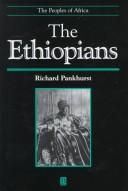
Pankhurst spent decades in Addis Ababa and is the foremost historian of Ethiopian social and economic life. This readable narrative bridges the medieval and modern periods and is essential before tackling the more focused works on Menelik and Haile Selassie.

A gripping, well-researched narrative of Africa's most decisive anti-colonial victory. It synthesizes military, political, and cultural history and shows why Adwa became a global symbol — essential context before studying Haile Selassie's era.
Haile Selassie, the Derg, and Revolution
IntermediateUnderstand the rise and fall of Haile Selassie, the Marxist Derg regime's terror and famine, and the liberation struggles that reshaped the country.
▸ Study plan for this stage
Pace: 4–5 weeks, ~40–50 pages/day (approximately 250–300 pages total)
- Haile Selassie's early life, rise to power, and modernization efforts as Emperor of Ethiopia
- The ideology and symbolism of Rastafarianism and Haile Selassie's role as a messianic figure
- Ethiopia's resistance to Italian colonization and the significance of the Battle of Adwa
- Haile Selassie's international diplomacy, the League of Nations appeal, and Ethiopia's sovereignty
- The contradictions between Haile Selassie's reformist rhetoric and the persistence of feudal structures
- The social and economic grievances that fueled discontent with his regime by the 1970s
- The political and military factors that led to Haile Selassie's downfall in 1974
- How did Haile Selassie consolidate power and what modernization reforms did he attempt to implement?
- What was the significance of the Battle of Adwa in 1896 and how did it shape Ethiopia's international standing?
- How did Haile Selassie use international diplomacy, particularly at the League of Nations, to protect Ethiopian sovereignty?
- Why did Rastafarians view Haile Selassie as a messianic figure, and what was his response to this movement?
- What were the major contradictions between Haile Selassie's modernization agenda and the persistence of traditional feudal power structures?
- What social, economic, and political factors contributed to the erosion of support for Haile Selassie's regime by the early 1970s?
- Create a timeline of Haile Selassie's major political and military achievements from his early career through his reign as Emperor
- Analyze Schwab's portrayal of Haile Selassie's relationship with modernization: identify 3–4 specific reforms he championed and explain why they faced resistance
- Write a 2–3 page essay comparing Haile Selassie's international diplomacy (especially his League of Nations speech) with his domestic governance
- Map out the key contradictions Schwab identifies between Haile Selassie's reformist rhetoric and the persistence of feudalism; discuss how these tensions destabilized his regime
- Research and annotate Haile Selassie's 1963 speech to the United Nations; connect it to Schwab's analysis of his political vision and international influence
- Create a character study of Haile Selassie using Schwab's biography, identifying his personal ambitions, ideological commitments, and blind spots as a ruler
Next up: This stage establishes the institutional, ideological, and personal foundations of Haile Selassie's rule, setting the stage for understanding how his regime's failures and rigidities directly precipitated the Derg's violent seizure of power and the revolutionary upheaval that followed.

A balanced political biography of the Emperor that covers his modernization efforts, his exile during the Italian occupation, and the contradictions of his autocratic rule — the ideal entry point before reading about his violent overthrow.
Discussion
Keep reading
Paths that share books, cover the same subject, or open a related topic.