The History of Nigeria: Best Books to Read in Order
This curriculum traces Nigeria's full historical arc — from ancient kingdoms and trade networks through colonial conquest, independence, civil war, and the turbulent modern state. Starting with accessible narrative histories, the path progressively deepens into specialized scholarship on politics, ethnicity, war, and identity, so each stage builds the conceptual vocabulary needed for the next.
Foundations: The Land and Its Peoples
BeginnerGain a broad, accessible orientation to Nigeria's geography, ethnic diversity, precolonial kingdoms (Yoruba, Igbo, Hausa-Fulani, Benin), and the long sweep of its history before and during colonialism.
▸ Study plan for this stage
Pace: 6–8 weeks, ~40–50 pages/day. Start with "The History of Nigeria" (weeks 1–4, ~350 pages), then "Things Fall Apart" (weeks 5–8, ~210 pages). Allow 1–2 days per week for review and reflection.
- Nigeria's diverse geography: the Niger River delta, savanna regions, forest zones, and how terrain shaped settlement patterns and trade networks
- Major precolonial kingdoms and their characteristics: Yoruba city-states (Oyo, Ife), Igbo village democracies, Hausa-Fulani emirates, and the Kingdom of Benin
- Precolonial social structures: kingship, age-grade systems, slavery, gender roles, and religious practices (traditional religions, Islam, Christianity)
- The Atlantic slave trade's impact on Nigerian societies: demographic loss, political instability, and the rise of coastal kingdoms
- Colonial conquest and administration: British strategies of indirect rule, resistance movements, and the reshaping of ethnic and political boundaries
- The lived experience of colonialism through fiction: how 'Things Fall Apart' dramatizes the collision between Igbo society and European intrusion
- Continuities and ruptures: what persisted from precolonial Nigeria and what fundamentally changed under colonial rule
- The role of oral tradition, proverbs, and storytelling in understanding Nigerian history and culture
- What were the major precolonial kingdoms of Nigeria, and what distinguished their political and social systems from one another?
- How did Nigeria's geography—rivers, forests, savanna—influence the settlement, trade, and development of different ethnic groups?
- What were the causes and consequences of the Atlantic slave trade for Nigerian societies, and how did it reshape power dynamics?
- How did British colonial rule operate in Nigeria, particularly through the policy of indirect rule, and what resistance did Nigerians mount?
- How does 'Things Fall Apart' illustrate the precolonial Igbo society that Falola describes in historical terms, and what does the novel reveal about the impact of colonialism?
- What cultural, political, and economic continuities existed between precolonial and colonial Nigeria, and what was fundamentally disrupted?
- Create a detailed map of precolonial Nigeria marking the major kingdoms (Oyo, Ife, Benin, Hausa-Fulani emirates, Igbo regions) and annotate with key characteristics of each society.
- Construct a timeline spanning 1500–1914 showing major events: the rise of kingdoms, the slave trade, European contact, and colonial conquest. Note how these events interconnect.
- Write character sketches of 3–4 major figures from 'Things Fall Apart' (Okonkwo, Nwoye, Obierika, the District Commissioner) and analyze how Achebe portrays their worldviews and responses to colonialism.
- Compile a glossary of Igbo terms, concepts, and cultural practices from 'Things Fall Apart' (e.g., chi, egwugwu, obi, bride price) and cross-reference them with Falola's discussion of precolonial Igbo society.
- Write two short comparative essays: (1) How do Falola's historical accounts of Yoruba, Hausa-Fulani, and Igbo societies compare? (2) How does Achebe's fictional portrayal of Igbo village life align with or complicate Falola's historical narrative?
- Conduct a close reading of 3–4 proverbs or oral traditions from 'Things Fall Apart' and explain their cultural significance and what they reveal about Igbo values and worldview.
Next up: This stage establishes the historical and cultural foundations—the precolonial kingdoms, ethnic diversity, and colonial rupture—that set the stage for understanding Nigeria's path to independence, nation-building, and the modern challenges of unity and governance in the next stage.
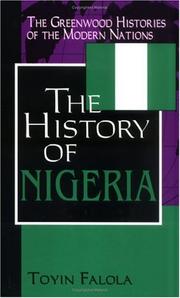
The ideal starting point — a concise, chronological survey by Nigeria's foremost historian that covers precolonial societies through the late 20th century, giving the reader a reliable mental map of the whole story.

Though fiction, this canonical novel is the most vivid and widely-read portrait of Igbo precolonial life and the first shock of British colonialism; reading it here builds cultural and emotional intuition that dry history alone cannot provide.
Colonial Nigeria: Conquest, Rule, and Resistance
BeginnerUnderstand how Britain assembled and governed the Nigerian colony — the amalgamation of 1914, indirect rule, missionary influence, and the seeds of nationalism — and how Nigerians responded.
▸ Study plan for this stage
Pace: 4–5 weeks, ~25–30 pages/day
- The 1914 Amalgamation: how Britain unified the Northern and Southern protectorates into a single colony and the administrative logic behind it
- Indirect Rule: the system of governing through existing African rulers and chiefs, its appeal to the British, and its uneven application across Nigeria
- The role of Christian missionaries in colonial Nigeria—education, conversion, cultural disruption, and the creation of a Western-educated elite
- The extraction economy: how colonial rule reorganized Nigeria's resources, trade, and labor for British benefit
- Early nationalist sentiment and resistance: how educated Nigerians, labor movements, and traditional leaders began to challenge colonial authority
- Regional and ethnic fragmentation under colonial rule: how British policies deepened divisions between North and South, and among ethnic groups
- What were the main reasons Britain decided to amalgamate Northern and Southern Nigeria in 1914, and what were the immediate consequences?
- How did indirect rule function in practice, and why did it work differently in the North versus the South?
- What role did Christian missionaries play in shaping colonial Nigeria, and how did their activities contribute to social change?
- How did colonial economic policies reshape Nigerian society, and who benefited most from these changes?
- What forms did Nigerian resistance to colonial rule take during this period, and who were the key figures or movements?
- How did the colonial period create or deepen regional and ethnic divisions that would shape Nigeria's future?
- Create a timeline of major events from 1900–1930 (conquest, amalgamation, key policy shifts) with brief annotations on their significance
- Map the Northern and Southern protectorates pre-1914 and post-1914, noting how the amalgamation redrew administrative boundaries and affected different regions
- Write a 500-word comparison of how indirect rule operated in a Northern emirate versus a Southern Yoruba or Igbo community, using specific examples from Bourne
- Identify 3–4 missionary societies mentioned in the text and trace their educational and religious impact on different regions of Nigeria
- Create a chart showing the colonial extraction economy: what resources were extracted, who controlled them, where they went, and what Nigerians received in return
- Compile a list of early nationalist figures, newspapers, or organizations mentioned in Bourne, and write one paragraph on each explaining their challenge to colonial authority
Next up: This stage establishes the structural foundations of colonial Nigeria—the administrative machinery, economic relationships, and social divisions—that will shape the nationalist movements and independence struggle of the mid-20th century.

A readable, well-sourced narrative history that devotes substantial attention to the colonial period and its contradictions, bridging the precolonial foundations from Stage 1 into the independence era ahead.
Independence, Crisis, and the Biafra War
IntermediateAnalyze the euphoria and rapid collapse of the First Republic, the military coups of 1966, the ethnic tensions that exploded into the Nigeria-Biafra War (1967–1970), and its devastating human cost.
▸ Study plan for this stage
Pace: 6–7 weeks, ~40–50 pages/day. Start with "There Was a Country" (3–4 weeks, memoir/essay format); transition to "Half of a Yellow Sun" (3–4 weeks, narrative fiction). Allow overlap for reflection and cross-referencing.
- The First Republic's structural fragility: regional divisions, ethnic federalism, and the illusion of democratic stability (1960–1966)
- The January and July 1966 military coups as responses to political chaos and ethnic competition for power
- Biafran secession as both a rational response to perceived marginalization and a catalyst for total war
- The human toll of the Nigeria-Biafra War: starvation, displacement, and the psychological trauma of civil conflict
- How personal relationships and individual agency are shaped by—and sometimes resist—historical forces
- The role of international actors (Britain, France, the Soviet Union) in prolonging and shaping the war
- Achebe's intellectual reckoning with his own complicity and the limits of literature in preventing catastrophe
- Adichie's fictional reconstruction of intimate lives during war as a counterpoint to historical abstraction
- What were the key structural weaknesses of Nigeria's First Republic, and how did regional and ethnic tensions contribute to its collapse?
- How did the 1966 military coups reflect deeper conflicts over power, ethnicity, and national identity?
- Why did the Igbo people perceive the post-coup environment as existentially threatening, and what role did this play in the secession of Biafra?
- What were the major phases of the Nigeria-Biafra War, and what strategies did each side employ?
- How does Achebe's memoir account for his own intellectual and political choices during the war, and what does he identify as the limitations of the writer's role?
- How do the fictional characters in 'Half of a Yellow Sun' experience the war differently based on their class, ethnicity, and gender, and what does this reveal about the war's social impact?
- Create a timeline of key events from 1960–1970 using both texts: mark the major political turning points, military interventions, and military operations. Note where Achebe's memoir and Adichie's fiction intersect or diverge in their accounts.
- Write a comparative character analysis of how Achebe (as narrator of his own memoir) and the protagonists in 'Half of a Yellow Sun' (Ugwu, Olanna, Richard) respond to the outbreak of war. What do their different perspectives reveal about the war's impact?
- Map the ethnic and regional geography of Nigeria as described in both texts. Identify which groups held power in each phase (colonial, First Republic, military rule) and trace how this shifted after 1966.
- Analyze Achebe's argument about the writer's responsibility and failure during the war. How does his self-critique in 'There Was a Country' complicate the narrative presented in Adichie's fiction?
- Trace the role of international involvement (Britain, France, Soviet Union) in the war as presented in both texts. Create a chart showing which powers supported whom and why, and assess the impact on the war's outcome.
- Write a reflective essay: How does reading Achebe's firsthand account alongside Adichie's imaginative reconstruction change your understanding of the war? What does each form of writing (memoir vs. fiction) reveal that the other cannot?
Next up: This stage equips you with a deep understanding of Nigeria's first major national crisis and the catastrophic consequences of state collapse, providing essential context for examining how subsequent military regimes (1966–1999) attempted to rebuild the nation and the ongoing legacies of war trauma in contemporary Nigerian society.

Achebe's memoir-history of Biafra is the essential personal and political account of the war from the Igbo perspective; its literary power makes the tragedy viscerally real before the reader encounters drier analyses.

This Booker-shortlisted novel reconstructs the Biafra war through multiple perspectives and social classes, deepening the reader's empathy and understanding of how ordinary lives were shattered — best read alongside Achebe's memoir.
Military Rule, Oil, and the Struggle for Democracy
IntermediateTrace Nigeria's post-war decades: oil boom and bust, successive military juntas, structural adjustment, the annulled 1993 election, the Abacha dictatorship, and the return to civilian rule in 1999.
▸ Study plan for this stage
Pace: 4–5 weeks, ~40–50 pages/day. Start with Achebe's essay (3–4 days, ~80 pages), then move to Campbell's Nigeria (3–4 weeks, ~35–45 pages/day).
- Achebe's diagnosis of Nigeria's post-independence failures: leadership, tribalism, and the corruption of institutions
- The oil boom of the 1970s and its paradoxical role in deepening inequality and state capture
- The cycle of military interventions and their justifications versus actual outcomes (Gowon, Obasanjo, Buhari, Babangida, Abacha)
- Structural adjustment programs and their devastating social impact on ordinary Nigerians
- The annulled 1993 presidential election and the delegitimization of democratic processes
- Sani Abacha's dictatorship as the nadir of military rule: repression, executions, and international isolation
- The transition mechanisms and civil society pressure that enabled Nigeria's return to civilian rule in 1999
- How resource wealth became a curse rather than a blessing: the resource curse thesis in Nigeria's context
- What does Achebe identify as the root causes of Nigeria's troubles, and how do these manifest in the military period Campbell describes?
- How did Nigeria's oil wealth between the 1970s and 1980s fail to translate into broad-based development, and what structural factors does Campbell highlight?
- Compare the stated rationales for military coups (e.g., Buhari's anti-corruption agenda) with their actual outcomes—what patterns emerge?
- What was the significance of the annulled 1993 election, and how did it accelerate the crisis that led to Abacha's rise?
- How did the Abacha regime represent both a continuation and an intensification of military authoritarianism in Nigeria?
- What internal and external pressures combined to force Nigeria's transition back to civilian democracy in 1999?
- Create a timeline of military rulers (1966–1999) with their stated justifications for taking power and one major policy or failure for each—use both texts to populate it.
- Write a 2–3 page analytical response: 'Using Achebe's framework of leadership failure, explain one military regime's inability to address Nigeria's core problems.'
- Track oil prices and government spending patterns across the boom (1970s) and bust (1980s–90s) periods; annotate Campbell's explanations of how this affected ordinary Nigerians.
- Debate exercise: Prepare arguments for and against the proposition 'Military rule was inevitable given Nigeria's post-independence trajectory'—ground both sides in textual evidence.
- Create a comparison matrix of three military regimes (e.g., Obasanjo, Buhari, Abacha) on dimensions like: anti-corruption efforts, civil liberties, economic policy, and international standing.
- Research and write a 1–2 page reflection: 'What does the 1993 election annulment reveal about the fragility of democratic institutions in Nigeria?' Connect to Achebe's diagnosis.
Next up: This stage establishes the institutional and economic crises that shaped Nigeria's return to democracy in 1999, setting the stage for examining how post-1999 civilian governments have grappled with the legacies of military rule, oil dependence, and the unresolved question of national cohesion.
This short, sharp political essay — written in 1983 at the height of military misrule — diagnoses Nigeria's leadership failure with surgical clarity and is the most-read entry point into understanding the country's political dysfunction.

A former U.S. Ambassador to Nigeria offers a clear-eyed, up-to-date analysis of the political economy of oil, corruption, ethnic federalism, and democratic fragility — essential for understanding why independence's promise remained unfulfilled.
Deep Dives: Identity, Power, and Modern Nigeria
ExpertEngage with advanced scholarship on the structural forces shaping contemporary Nigeria — religion, ethnicity, Boko Haram, resource conflict, and the question of national identity — synthesizing everything learned so far.
▸ Study plan for this stage
Pace: 8–10 weeks, ~40–50 pages/day (accounting for dense theoretical passages and primary source analysis)
- Memory, oral tradition, and the construction of Nigerian identity through personal and collective narratives
- The role of religion (Islam and Christianity) as both unifying and divisive forces in shaping modern Nigeria
- Boko Haram as a symptom of deeper structural inequalities: regional disparity, educational access, and political marginalization
- Resource conflict and the political economy of oil: how extraction shapes state capacity, corruption, and communal violence
- Ethnicity and nationalism: competing visions of what 'Nigeria' means and who belongs
- The state's monopoly on violence and its failure: security crises as evidence of institutional collapse
- Syncretism and religious practice as everyday resistance and adaptation in contexts of instability
- How does Falola use personal and family memory to illuminate broader patterns in Nigerian history and identity formation?
- What are the structural conditions that Ellis identifies as enabling Boko Haram's rise, and how do they connect to Nigeria's colonial and post-colonial legacies?
- How do religious and ethnic identities intersect in contemporary Nigeria, and where do they reinforce or complicate each other?
- What role does the control and distribution of oil wealth play in fueling both state corruption and communal conflict?
- How do Falola and Ellis each conceptualize the relationship between individual agency and structural constraint in understanding modern Nigeria?
- What evidence do these texts provide that Nigeria's 'national identity' remains contested and fragmented?
- Create a timeline mapping Falola's personal/family history against major national events; annotate where private memory intersects with public history
- Construct a 'structural analysis map' identifying the root causes Ellis attributes to Boko Haram (economic, political, religious, educational); trace how each factor connects to earlier colonial and post-colonial decisions
- Conduct a close reading of 3–4 passages from each book where religion is discussed; compare how Falola and Ellis each frame religious identity and practice
- Research and write a 2–3 page case study of one specific resource conflict (e.g., Niger Delta oil politics, Plateau State communal violence) using Ellis's framework to analyze its causes
- Create a comparative chart of how 'national identity' is imagined or contested in different regions/communities described in both texts; identify points of consensus and irreconcilable difference
- Conduct interviews with 2–3 people familiar with Nigeria (diaspora, academics, journalists) asking how they understand the relationship between religion, ethnicity, and national belonging; synthesize findings against Falola and Ellis's arguments
Next up: This stage equips you to recognize Nigeria's contemporary crises not as aberrations but as products of deep structural forces—positioning you to evaluate competing policy solutions and imagine alternative futures in the final synthesis stage.
Falola's lyrical memoir of growing up in Ibadan illuminates how history, culture, and identity are lived from the inside, adding a personal dimension that complements his own survey history read in Stage 1.

A rigorous, evidence-based study of how criminal networks, oil theft, and political violence became structurally embedded in the Nigerian state — the most unflinching advanced analysis of modern Nigeria's deepest problems.
Discussion
Keep reading
Paths that share books, cover the same subject, or open a related topic.