Best Books on the History of the English Language, in Reading Order
English went from an obscure Germanic dialect spoken by a few thousand people to the working language of the planet in fifteen hundred years, and this path follows that arc from the narrative histories through to the standard scholarly reference. You start with the popular tellings, move to how the language actually changed and why linguists distrust some of the folk explanations, then look at spelling, dictionaries and the making of a standard before ending with the textbook and the global picture.
The story, told for pleasure
BeginnerGet the whole sweep — Anglo-Saxon settlement, Norse and Norman contact, printing, empire — in your head, along with a first sense of which popular claims about English are shaky.
▸ Study plan for this stage
Pace: 4 weeks for roughly 980 pages at ~35 pages/day. All three are trade paperbacks written for general readers and go quickly. No prerequisites — do not look anything up yet, and resist the urge to verify Bryson as you go; the point of this stage is momentum, and the corrections arrive on schedule in st
- The basic chronology: Anglo-Saxon settlement from the fifth century, Norse contact from the ninth, the Norman conquest in 1066, Caxton's press in 1476, and imperial expansion from the seventeenth century
- Borrowing as English's defining habit — Norse function words, Norman French administrative and culinary vocabulary, Latin and Greek learned vocabulary — and the resulting layered synonym sets (kingly, royal, regal)
- The political mechanism behind each shift: which language had power, in which domain, and for how long — Bragg's organising principle
- That popular histories of English repeat a durable stock of myths (Eskimo snow words, English's uniquely large vocabulary, spelling as pure chaos), and that The Mother Tongue carries a documented share of them
- McCrum's move of treating world Englishes — American, Caribbean, Indian, Australian, Scots — as varieties in their own right rather than as departures from a British norm
- The difference between a language's internal history and its speakers' political history, which these books deliberately blend and later ones separate
- Sketch the chronology of English in six dated events, and say in one sentence what each did to the language.
- Which layer of English vocabulary came from Norse, which from Norman French, and which from learned Latin? Give three examples of each and say what distinguishes them in register.
- Bragg organises the story around power. Take one century and state who held linguistic power, in what domain, and what the consequence was.
- What does McCrum's treatment of global varieties assume that a purely British account does not?
- List five claims from The Mother Tongue you would want to check. Keep the list — stages two and three will settle most of them.
- Keep a running list, as you read Bryson, of every claim that sounds too neat. Do not check them yet. Bring the list to Crystal in stage two and to Baugh and Cable in stage five and mark each confirmed, corrected or refuted.
- Build a one-page timeline with three parallel bands: political events, contact events (Norse, Norman, Latin, colonial), and language-internal changes (loss of inflection, the Great Vowel Shift, standardisation).
- Take a paragraph of modern English prose you wrote yourself and colour-code every word by origin — Germanic, Norse, French, Latin or Greek — using a dictionary's etymologies. The proportions surprise most people.
- Write 200 words on how Bragg and McCrum tell the same Norman Conquest story differently, and what each is trying to make you notice.
- Read Bryson's chapter on spelling and McCrum's on global English side by side, and write down the two questions you most want answered by the end of the path.
Next up: With the shape of the story in place and a list of suspect claims in hand, the next stage puts real Old and Middle English texts in front of you so you can see the changes instead of being told about them.

The most enjoyable way in, and the reason many people get interested in the subject at all. It is worth knowing before you start that linguists have catalogued a fair number of factual errors and repeated myths in it — read it for momentum and curiosity, and let the next few books correct the details.
A more careful chronological narrative built around a television series, strong on the political and social pressures that shaped the language at each stage. It gives you the timeline Bryson skips around.
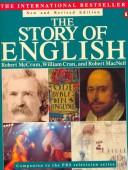
The other great popular history, notable for taking the varieties of English around the world seriously rather than treating British and American as the whole story. Reading it here plants the question the last stage returns to.
Old, Middle, and the making of modern English
BeginnerFollow the actual periods of the language with real examples in front of you, and be able to explain what changed between Beowulf, Chaucer and Shakespeare.
▸ Study plan for this stage
Pace: 8–10 weeks for ~904 pages. Lerer's 320 pages go at ~20 pages/day because each chapter turns on a passage you should read slowly and aloud; Crystal's 584 pages are structured as many short chapters plus interleaved 'interludes' and can be read at ~25 pages/day. No Old English required — both authors
- The three periods and their boundaries: Old English to roughly 1100, Middle English to roughly 1500, Early Modern from there — and the fact that the boundaries are conventions marked by textual change, not events
- Inflectional loss: Old English marked case and gender on nouns and adjectives; the collapse of those endings is what forced English toward fixed word order and prepositions
- The Great Vowel Shift and why Chaucer's spelling looks wrong to us while his rhymes work — the sounds moved after the spellings were fixed
- Lerer's method of reading a single text closely as evidence for a moment in the language, from Beowulf and the Anglo-Saxon Chronicle through Chaucer, Caxton, Shakespeare and the dictionaries
- Crystal's central thesis: the history of English is the history of its dialects, and standard English is one variety that won for social reasons, not the language's true form
- Why 'non-standard' is a description and not a diagnosis — Crystal's sustained argument against reading dialect and change as decay
- The gap between the written record and the spoken language, and the specific problem that everything we know about early English pronunciation is inferred from spelling, rhyme and metre
- What actually changed between Beowulf and Chaucer, and between Chaucer and Shakespeare? Give a grammatical, a phonological and a lexical answer for each pair.
- Explain how the loss of inflectional endings changed English word order, and say which came first as far as the evidence can tell.
- How do linguists know how Middle English was pronounced, given that nobody recorded it? Name the three kinds of evidence Lerer and Crystal use.
- State Crystal's dialect thesis and give the strongest counterargument you can. What is at stake in it politically?
- Take one of the suspect claims from your stage-one list and settle it with Lerer or Crystal, showing the evidence.
- Read the opening of Beowulf, the opening of the Canterbury Tales General Prologue, and a Shakespeare sonnet aloud in that order, using the pronunciation guidance Lerer gives. Then write half a page on what your mouth had to do differently in each.
- Take Chaucer's rhyming pairs from a single passage and work out what the vowels must have been for the rhymes to work. This is the Great Vowel Shift derived from evidence rather than accepted on authority.
- Write out the Old English noun paradigm for a single word from Lerer, then rewrite a modern English sentence as if those endings still existed. The exercise is in noticing how much word order you can then afford to lose.
- Choose a passage in a non-standard variety of English — a dialect poem, a transcript, a regional novel — and analyse it using Crystal's framework rather than as error. List the systematic rules it follows.
- Build a two-column table for each period: what the surviving texts tell us directly, and what has to be inferred. Crystal is scrupulous about this distinction and it is the habit the rest of the path depends on.
Next up: You can now see that English changed; the next stage explains the general mechanisms by which any language changes, so that you can judge a historical claim rather than accept it.
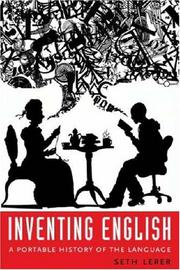
A chapter-per-moment history built around close readings of real texts, so you see and hear the language changing rather than being told that it did. Lerer is a medievalist, which makes the early chapters unusually good.

Crystal's central argument is that the history of English is the history of its dialects, not of the standard variety that eventually won — a corrective to every account that treats non-standard English as decay. This is the pivot from narrative history to linguistics.
How languages actually change
IntermediateUnderstand the mechanisms behind the changes — contact, grammaticalisation, sound shifts, semantic drift — well enough to evaluate a historical claim about English on your own.
▸ Study plan for this stage
Pace: 6–8 weeks. Read McWhorter first — it is short, argumentative and fast — then Deutscher's 360 pages at ~15 pages/day, since his chapters build on each other and the middle sections on erosion and reanalysis need to be followed step by step. No formal linguistics assumed; Deutscher explains every tech
- McWhorter's thesis: English's genuinely unusual features — meaningless 'do' in questions and negation, the progressive 'be ...ing' — come from Celtic contact, and the loss of inflection from imperfect Norse adult learning
- Why McWhorter's case is a minority position, and what the standard objections are: thin textual evidence for Celtic influence, long delay before the features appear in writing, and the availability of internal explanations
- Reading an argued minority position as a model: McWhorter states his opponents' case, marshals typological comparison, and is explicit about what would refute him
- Deutscher's three forces — erosion, analogy and reanalysis — as the engine that grinds words down and rebuilds grammar from the debris
- Grammaticalisation: how full lexical words become grammatical markers (the road from 'go' to the future 'gonna'), demonstrated across unrelated languages
- The destruction-and-creation paradox Deutscher resolves: change looks like decay at every step, yet the result is a fully complex grammar every time
- Why 'the language is degenerating' is a claim with a two-thousand-year track record of being wrong, and what the linguist substitutes for it
- State McWhorter's Celtic hypothesis precisely, and give the two strongest objections to it. Which do you find more damaging?
- How does McWhorter explain the loss of English inflection, and how does that explanation differ from the standard internal one?
- Define erosion, analogy and reanalysis, and give an example of each from English that Deutscher or your own reading supplies.
- Trace one full grammaticalisation path from a lexical word to a grammatical marker, naming each intermediate stage.
- Deutscher's argument implies that complexity arises without design. Explain how, in a paragraph, without using the word 'evolve'.
- Using Deutscher's mechanisms, re-explain one change from stage two that Lerer or Crystal simply reported.
- Write a 300-word summary of McWhorter's argument, then a 300-word rebuttal from a historian of English who rejects it. Doing both is the exercise.
- Take the English 'do' construction and write out every context that requires it and every context that forbids it. Then try to state a rule. The difficulty is McWhorter's evidence that it is not a native development.
- Pick a grammatical marker in a language you know and reconstruct a plausible grammaticalisation path for it using Deutscher's stages. Mark where you are inferring rather than knowing.
- Collect ten complaints about 'bad English' from real sources, and answer each with the specific mechanism from Deutscher that accounts for it.
- Go back to your stage-one list of suspect Bryson claims and settle every remaining one, writing the mechanism beside each. Any that remain unresolved go to stage five.
Next up: Sound and grammar change on their own; spelling and dictionaries do not — the next stage covers the parts of English that were deliberately made.
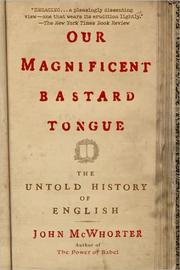
McWhorter argues that English's oddest grammatical features come from contact with Celtic and Norse speakers, a case most historians of the language have resisted. He is explicit that he is arguing a minority position, which makes this an excellent model of how a linguistic argument is built and contested.
Not about English specifically, but the clearest account anywhere of how complex grammar emerges from erosion and reanalysis over time. Once you have Deutscher's mechanisms, the changes in English stop looking like a series of accidents.
Spelling, dictionaries, and the invention of a standard
IntermediateExplain why English spelling is the way it is, and how dictionary-makers turned a sprawling language into something that could be described, standardised and argued about.
▸ Study plan for this stage
Pace: 5–6 weeks for roughly 800 pages. Crystal's Spell It Out is short and systematic and should be read first and quickly; Winchester's 286 pages read like narrative history; Stamper's 296 pages are essayistic and best read a chapter at a sitting. Have a dictionary — ideally the OED, through a library su
- Crystal's layered account of English spelling: Old English scribal practice, Norman scribes reworking it, printers' conventions including Dutch compositors, and later learned respelling on Latin models
- The specific culprits behind the worst-known irregularities — the silent 'b' in 'debt' and 'doubt' inserted to show Latin ancestry, 'gh' preserving a sound that later vanished, and 'ough' as a fossil of several distinct pronunciations
- Why spelling froze roughly when printing spread, so that Early Modern spelling records Middle English pronunciation — the same fact behind the Great Vowel Shift from stage two
- The OED's founding principle: describe the language from documented evidence rather than legislate it, and the quotation-slip method that made it possible
- The scale of the OED project — decades over schedule, thousands of volunteer readers, the editorship of Murray — and what an evidence-based dictionary costs to build
- Stamper's account of the modern lexicographer's craft: reading for citations, defining by the actual distribution of use, and the doctrine that a dictionary records rather than approves
- The public fights over usage — 'irregardless', the definition of marriage, obscenity — as places where the descriptive principle collides with what readers want a dictionary to be
- Explain, layer by layer, why 'though', 'through', 'tough' and 'thought' share a spelling and not a sound.
- Why did the silent letters in 'debt' and 'island' get inserted, and by whom?
- What is the relationship between the timing of printing and the timing of the Great Vowel Shift, and why does that pairing explain most of English spelling?
- How did the OED's evidence method work in practice, and what did it make possible that a definition-by-authority dictionary could not?
- Stamper insists dictionaries describe rather than prescribe. Take one usage controversy she discusses and state what a prescriptive dictionary would have done instead.
- Are English spelling reform proposals defensible on Crystal's evidence? Argue one side.
- Take twenty words with irregular spellings and, using Crystal's layers, assign each to the layer that caused it. Words that resist assignment are worth flagging — Crystal covers the residue too.
- Look up the OED entry for a single common word and read its whole history, quotation by quotation. Then write a page on what the entry shows that a shorter dictionary definition cannot.
- Write a definition of an ordinary word — 'run', 'set', 'take' — the way Stamper describes doing it, then compare it to the published entry and note every distinction you missed.
- Design a spelling reform for ten English words, apply it consistently to a paragraph, and then write out the specific problems it creates. Crystal's book is largely an argument that this exercise never ends well.
- Find one usage argument in current circulation and write both the prescriptive and the descriptive case for it in 150 words each, citing Winchester or Stamper for the principle.
Next up: You now have the popular story, the periods, the mechanisms and the standardising institutions; the last stage puts them on a scholarly footing and asks what happens to English next.

A short, systematic answer to the question everyone asks: why is English spelled so badly? Crystal traces each layer of interference — scribal, Norman, printers' conventions, learned respelling — and the mess becomes legible.
The history of the Oxford English Dictionary: seventy years, thousands of volunteer readers, and a philosophy of describing the language rather than legislating it. It is the institutional counterpart to the linguistic story you have been reading.

A working lexicographer on how definitions are actually written today, including the fights over usage that reach the public. Read it after Winchester to see the same craft from the inside and in the present tense.
The scholarly baseline and the global present
BeginnerWork from the standard university text, and think seriously about what happens to a language when most of its speakers learn it as a second one.
▸ Study plan for this stage
Pace: 3–4 months for 614 pages, which sounds light and is not — Baugh and Cable is a university textbook and should be worked at ~10 pages/day with notes, not read. It assumes exactly the background the previous four stages supplied: the periods, basic phonology, and the vocabulary strata. Crystal's Engli
- Baugh and Cable's organisation by period, with the sound changes, inflectional developments and vocabulary strata laid out systematically rather than anecdotally — this is the source the whole popular literature draws on
- The technical apparatus you finally meet properly: the sound changes named and dated, the loanword counts per period, the dialect boundaries and the manuscript evidence behind each
- Baugh and Cable's chapters on the eighteenth-century prescriptive movement and on American English, both of which the trade books compress badly
- That the textbook itself has a history — Baugh's 1935 original, revised repeatedly by Cable — so it records changing scholarly consensus and should be read with attention to what its later editions revised
- Crystal's central question in English as a Global Language: what made English the international default, and how much of that is intrinsic to the language (essentially none) versus historical and economic
- Non-native speakers now outnumbering native speakers several times over, and what that does to who gets to decide what English is
- The three-circle model of world Englishes and the open question Crystal ends on: whether English fragments into mutually unintelligible varieties, holds together under a written standard, or is displaced
- For each period, name the principal sound changes and inflectional developments Baugh and Cable identify, with approximate dates.
- Where does Baugh and Cable's account correct or complicate the narrative you got from Bryson, Bragg and McCrum? Give three specific instances.
- What drove the eighteenth-century prescriptive movement, and which of its rules survive in modern usage advice?
- Crystal argues no language becomes global because of intrinsic merit. Summarise his evidence, and say what actually did it.
- If most English speakers learn it as a second language, who owns the standard? Give Crystal's answer and your own.
- Which of your original stage-one suspect claims are still unresolved, and what would settle them?
- Work Baugh and Cable chapter by chapter with a notebook, producing a one-page summary per chapter covering: period, sound changes, grammatical changes, vocabulary sources, and the evidence cited. This is the deliverable of the whole path.
- Take one sound change Baugh and Cable name and trace it through a set of specific words from Old English to modern, checking each against the OED entries. Doing it once makes the whole apparatus concrete.
- Compare Baugh and Cable's account of one episode — the Norman Conquest, the Great Vowel Shift, or eighteenth-century prescriptivism — with the version in the stage-one books, and write 400 words on what the popular telling gave up for readability.
- Find a sample of English written by a proficient non-native speaker in a variety Crystal discusses, and analyse its systematic features. Then decide, in writing, whether you would call any of them errors.
- Write a final two-page essay answering the question the path opened with: how did an obscure Germanic dialect become the working language of the planet? Cite specific books for each stage of the argument.
- Return to your original stage-one list of suspect claims and close it out — every item marked confirmed, corrected or refuted, with the source.
Next up: This closes the path: from the popular narrative through the mechanisms of change to the standard scholarly reference, and out into the open question of what a global English becomes next.
Baugh and Cable is the textbook the whole popular literature draws on — systematic, sourced, and organised by period with the sound changes and vocabulary strata laid out properly. Everything before this stage was preparation for reading it without difficulty.
Crystal asks how English became the default international language, whether that position is stable, and what it does to the language when non-native speakers outnumber native ones several times over. The right place to end, because it turns a history into an open question.
Discussion
Keep reading
Paths that share books, cover the same subject, or open a related topic.