Bill Bryson Reading Order: Where to Start
Bill Bryson's books fall into three groups that read very differently — the travel books that made him famous, the big popular-science and social-history books he turned to in middle age, and a couple of language and memoir books that sit between them. There is no chronology to respect, so the useful order is by which voice you meet first. Start with the two most beloved travel books, then decide whether you want more walking or more explaining.
Start Here
BeginnerMeet the comic-traveller voice in the two books almost everyone recommends first.
▸ Study plan for this stage
Pace: Two to three weeks for A Walk in the Woods (328 pages) and Notes from a small island (324). These are the easiest reading in any of the paths on this site — chatty, episodic, funny on nearly every page — and they go down at 50 or 60 pages an evening without effort. There is no chronology to respect
- The comic persona: a mildly exasperated middle-aged man being defeated by circumstances, which is a construction rather than a diary and is worth reading as one
- The digression as Bryson's actual form. A walk becomes a lecture on the chestnut blight becomes a complaint about a motel, and the transitions are the craft
- Katz in A Walk in the Woods as comic foil and structural device — the unfit companion gives Bryson someone to talk to, which is what makes the book a narrative rather than a diary
- Real natural history underneath the jokes: the decline of the eastern American forest is a genuine argument the book makes while appearing to be about blisters
- The insider-outsider position of Notes from a small island — an American who had lived in Britain for twenty years, which lets him be affectionate and rude at the same time
- Public transport as a method. Bryson's Britain is seen from trains and buses, which produces a particular and now slightly historical version of the country
- Affection as the thing that makes the complaining bearable, and the reason these two books outlast the crankier ones
- How much of the Appalachian Trail do Bryson and Katz actually walk, and does the book's honesty about that improve it?
- What is the serious argument in A Walk in the Woods about American forests and the National Park Service?
- How does the persona in Notes from a small island differ from the one in A Walk in the Woods, and what accounts for it?
- What does Bryson find funny about Britain, and what does he clearly love about it? The two lists overlap more than you would expect.
- How dated is Notes from a small island now, and is the datedness a problem or a bonus?
- Pick one digression in A Walk in the Woods and trace how Bryson gets in and out of it. It is a genuinely learnable piece of technique and it is the whole basis of his later career.
- Note which parts of A Walk in the Woods are jokes and which are argument. The book conceals the ratio well and it is higher on the argument side than it feels.
- If you know Britain, list three things in Notes from a small island that no longer exist. The book has become a period document without meaning to.
- Read these two before deciding whether Bryson is for you. If neither works, the rest of this path will not either — which is a useful thing to find out in two weeks.
Next up: You have the voice at its most likeable, which is the right preparation for the rest of the travel books, where the same persona is applied to countries he likes less and the tone changes accordingly.
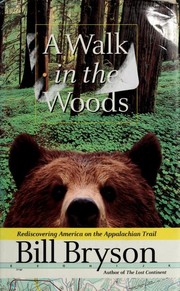
Bryson and a catastrophically unfit old friend attempt the Appalachian Trail. The best single entry point: funny on every page, but with a genuine natural history of the eastern forest underneath.
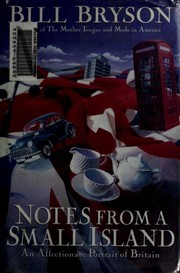
A farewell tour of Britain by public transport, written as an American who had lived there twenty years. Read second — it is the book that made him a household name in the UK and the affection in it is real.
The Travel Books
BeginnerWork through the rest of the travel writing and notice how the persona hardens and softens by country.
▸ Study plan for this stage
Pace: Three to four weeks for Down Under (In a Sunburned Country) (348 pages), The Lost Continent (319) and Neither here nor there (272) — about 940 pages of light reading and easily a book a week. Read them in that order: the best first, the sharpest second, the weakest last. A note on titles that confus
- Down Under as the most purely delighted book he has written — Bryson genuinely likes Australia and the comedy is warm rather than defensive throughout
- Digression at its best: the Australian book's detours into deadly wildlife, exploration disasters and forgotten prime ministers are the model for the later science books
- The Lost Continent as the origin and the outlier — his first book, driving small-town America looking for a childhood that has gone, and considerably more unkind than anything after it
- Nostalgia curdling into contempt. The Lost Continent is worth reading precisely because it shows the persona before it was softened, and some readers find it the more honest book
- Neither here nor there and the problem of the retrospective trip: retracing a student backpacking route twenty years later, with the material thinnest and the jokes most dated
- The dated jokes issue, stated plainly — the earlier travel books contain material about nationality and appearance that has aged badly, and it is more noticeable in Europe than elsewhere
- The persona as a variable: the same writer is warm in Australia, sour in Iowa and bored in Europe, which tells you the voice is a choice rather than a temperament
- What does Bryson find in Australia that makes the book so much warmer than the American one?
- How does the persona in The Lost Continent differ from the one in A Walk in the Woods, given the same author and the same country?
- Is the unkindness of The Lost Continent a flaw or a form of honesty?
- Why is Neither here nor there the weakest of the four? Try to name the structural reason rather than the tonal one.
- Which passages in these books would not be written today, and does that change the value of reading them?
- Read Down Under first even though it is not the earliest. The chronological order is the worst way to read Bryson's travel writing and there is no reason to respect it.
- In The Lost Continent, note where the joke stops being about the place and starts being about the people. The line is where readers divide on this book.
- Compare an Australian digression with an American one. The technique is identical; the affection is not.
- If Neither here nor there is a slog, abandon it. It is the one book in this path where stopping costs nothing at all.
Next up: Having seen every version of the travel persona, the next stage is the career pivot — the same digressive habit applied to material where the digressions are the point rather than the decoration.
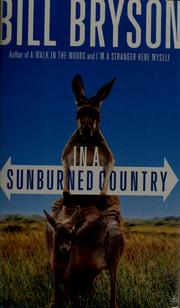
Australia, and the most purely delighted book he has written. Published as Down Under in Britain — same book, and the best of the travel volumes after the first two.

His first book, driving small-town America looking for a childhood that has gone. Sharper and considerably more unkind than the later travel books, which is worth seeing.
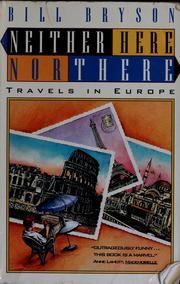
Retracing a student backpacking trip across Europe. The weakest of the four and the most dated, so read it once you already like him rather than as an introduction.
Bryson Explains the World
BeginnerSwitch to the research books, where the jokes are the delivery system for a genuine popular-science education.
▸ Study plan for this stage
Pace: Six to eight weeks for A short history of nearly everything (592 pages), The Body (465) and At Home (637) — about 1,700 pages, and slower going than the travel books despite the same voice, because these are full of information you will want to retain. Read A short history of nearly everything first
- Scientists as characters: Bryson tells the history of science through the people who did it, including their feuds, obsessions and mistakes, which is why the book is memorable where textbooks are not
- How we know what we know, rather than what we know. The recurring question of A short history of nearly everything is how anyone worked this out, and it is the source of most of the book's pleasure
- The amateur's advantage and its limit — Bryson is not a scientist, checks his work with specialists, and occasionally gets things wrong, so read the science as an invitation rather than as a reference
- The Body's organisation by anatomy, which turns a survey into a tour and lets each chapter be self-contained
- Medical history as the recurring mode in The Body: what was believed, what was tried, and how much was learned by accident or by cruelty
- At Home's structure as his cleverest — walking room to room through an old English rectory and letting each room open onto the social history that produced it
- The digressive method fully justified: in these books the digression is the argument, because the claim is that everything connects to everything
- What is the recurring question of A short history of nearly everything, and how does asking it change a science book?
- Which scientist in that book is the most memorable, and is it because of the science or the personality?
- How does The Body's organ-by-organ structure change what a reader retains compared with a chronological history of medicine?
- In At Home, pick one room and list what it opens onto. The list will be longer and stranger than you expect.
- Where should a reader be sceptical of Bryson's science, and how would you check?
- Read A short history of nearly everything in sections by discipline rather than straight through. It is a survey and it is more absorbable that way.
- Pick three facts from it and verify them independently. Bryson is generally reliable and occasionally not, and doing this once tells you how to read popular science generally.
- Read one chapter of The Body about a part of your own body that has given you trouble. It is the fastest way to see what the book is for.
- In At Home, follow one digression back to the room it started in and count the steps. That count is a fair measure of what Bryson can get away with.
Next up: You have now met the entertainer and the explainer, which leaves the three books that are neither — where the material is personal or historical and the voice has to work without either a trail or a laboratory.

Everything from the Big Bang to human origins, told through the eccentrics who worked it out. His most important book and the pivot in his career — read it before the other two in this stage.

The same method applied to human anatomy, organ by organ. The most recent of the science books and the easiest to read in short sittings.
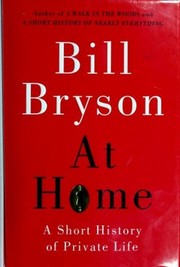
A history of domestic life told by walking room to room through an old English rectory. The cleverest structure he has used, and it works best once you know his digressive habit from A Short History.
Language, Childhood, History
BeginnerFinish with the three books that fit neither category and show the range of what he actually is.
▸ Study plan for this stage
Pace: Four to five weeks for The Mother Tongue (270 pages), The Life and Times of the Thunderbolt Kid (288) and One Summer (544) — about 1,100 pages, with the last accounting for half of it. The Mother Tongue and Thunderbolt Kid are both quick; One Summer is the most straightforwardly historical thing he
- The Mother Tongue as popular history of English — cheerfully opinionated, hugely enjoyable, and demonstrably wrong in places, which is a genuinely useful thing for a reader to experience
- Reading a beloved writer sceptically: the errors here are the best available lesson in why an entertaining source still needs checking
- Thunderbolt Kid as memoir rather than travelogue, and the warmest thing Bryson has written — 1950s Des Moines, a stable childhood, and almost no complaint in it
- The counterweight function: Thunderbolt Kid describes the same American small-town world that The Lost Continent found unbearable, from the inside and thirty years earlier
- One Summer's structure — Lindbergh, Babe Ruth, Sacco and Vanzetti, the coming of talkies and a great deal else, braided across a single summer of 1927
- The single-season frame as an argument that history is simultaneous rather than sequential, which is the same claim At Home makes about objects
- Where Bryson ends up: three modes over forty years — travel, science, history — held together by one voice and one habit of digression
- Which claims in The Mother Tongue would you want to check, and how did you spot them?
- How does Thunderbolt Kid's 1950s Iowa compare with the small-town America of The Lost Continent — is the difference the era or the narrator?
- What does the single-summer frame of One Summer let Bryson show that a conventional history could not?
- Which of the three Bryson modes — travel, science, history — do you think he is actually best at?
- What holds his whole body of work together, given how little the subjects have in common?
- Check three claims in The Mother Tongue against a linguistics reference. This is a genuinely valuable exercise and it will change how you read popular non-fiction generally.
- Read a chapter of Thunderbolt Kid immediately after a chapter of The Lost Continent. Same country, same author, opposite emotional temperature.
- In One Summer, list the storylines Bryson is braiding and how often he cuts between them. It is the most technically ambitious structure in his work.
- Finish by naming the one Bryson you would give someone who has never read him, and why. After twelve books you will have a real answer, and it is rarely the one you would have given at the start.
Next up: This is the end of the path — the traveller, the explainer and the historian, in the order that makes each one intelligible — and if you want more the natural next step is his Shakespeare book or the trail memoir reread, which is funnier once you know how carefully it was built.

A popular history of English, cheerfully opinionated and occasionally contested by linguists. Read it with a little scepticism — it is entertainment first and scholarship second.

His 1950s Iowa childhood, and the warmest thing he has written. A good counterweight to the crankier stretches of The Lost Continent.

Lindbergh, Babe Ruth, Sacco and Vanzetti and a great deal else in a single American summer. The most straightforwardly historical of his books, and a fitting close to the path.
Discussion
Keep reading
Paths that share books, cover the same subject, or open a related topic.