Best Books on the History of Psychiatry and Asylums, in Reading Order
Psychiatry's history is unusually contested — historians, clinicians and former patients tell it in incompatible ways, and the disagreement is itself part of the subject. This path starts with two general histories written from opposing positions, moves into the asylum era and the sociology that dismantled it, gives the anti-psychiatry critics a stage of their own, then covers the somatic cures and the drug revolution, and ends on the arguments now running over diagnosis and long-term outcomes.
Two histories that disagree
BeginnerGet the chronology from antiquity to the present, and see immediately that the same events support a story of progress and a story of failure depending on who is telling it.
▸ Study plan for this stage
Pace: 6 weeks. Madness in Civilization (448 pages) and A History of Psychiatry (442 pages) are almost exactly matched in length — three weeks each at 25 pages a day. Read Scull first and Shorter second, and do not interleave them: the exercise depends on holding one complete account in your head before th
- The long chronology both books share — humoral madness and the mad as a village presence, the seventeenth-century growth of confinement, moral treatment and the Retreat at York, the nineteenth-century asylum boom, the somatic era, deinstitutionalisation, and the psychopharmacological present
- Scull's governing scepticism: that psychiatry's account of its own progress is a professional narrative, that each generation's confident treatment was later repudiated, and that the social functions of confinement have persistently outrun the medical ones
- Shorter's counter-narrative: that psychiatry has made real if halting scientific advances, that the psychoanalytic mid-century was a detour away from biology rather than toward it, and that the return to a biological psychiatry was a recovery rather than a reduction
- That both authors are describing largely the same events. The disagreement is about what a treatment's later abandonment proves, and about whether professional self-interest or scientific progress is the better explanation of change
- Moral treatment as the test case both must account for — a humane, non-somatic regime that reported good outcomes and was then swallowed by institutional scale. Scull and Shorter draw opposite lessons from it
- The difference between a history of ideas about madness and a history of what was done to patients. Notice which book keeps patients in view and where each loses them
- Vocabulary you will need throughout: alienist, moral treatment, degeneration theory, somatic therapy, deinstitutionalisation, biological psychiatry
- Pick one episode both books cover — moral treatment, or the asylum boom, or the arrival of chlorpromazine — and state how each author explains it. Which parts of the disagreement are factual and which are about interpretation?
- Scull treats the repeated abandonment of confident treatments as evidence against psychiatry's self-account. What would Shorter say that pattern shows instead?
- Shorter frames psychoanalysis as a detour. What evidence does he offer, and is the judgment historical or a preference for one kind of explanation?
- Where in either book do actual patients appear as people rather than as cases or numbers? What does the answer tell you about the sources each historian is using?
- After both, can you name one claim about the history of psychiatry that you think is genuinely settled, and one that you now believe is not?
- Build a single timeline from 1700 to the present with two annotation tracks — Scull's reading above the line, Shorter's below — and enter every event both cover. Where the tracks diverge on the same year is the map of the field's disputes. Keep this document; every later stage adds to it
- Take moral treatment specifically and write two 250-word accounts of it, one Scull would sign and one Shorter would, using only material from the respective books
- Make a list of every treatment either author describes that was standard practice and is now abandoned, with the decade it peaked. The length of the list is the argument of stage 4
- Write 300 words on which of the two historians you found more persuasive and, separately, which you found more careful with evidence. If your two answers are the same author, check whether you are grading on agreement
Next up: You now know where the general histories diverge; the next stage goes inside the institution that both treat as the central fact of the nineteenth century.

The best single-volume history of madness and its treatment, sweeping and sceptical, written by the field's leading social historian. Scull is unimpressed by psychiatry's account of its own progress, which is worth knowing as you read.

The counterweight, and read second on purpose: Shorter tells the story as one of genuine if halting scientific advance, culminating in a biological psychiatry he defends. Holding Scull and Shorter side by side is the most efficient way to learn where the real disputes lie.
The asylum
IntermediateUnderstand why nineteenth-century reformers built enormous institutions, what life inside them was actually like, and how the total institution shaped the people in it.
▸ Study plan for this stage
Pace: 5 weeks. The Discovery of the Asylum (380 pages) is a historical monograph and needs two to three weeks. Asylums (386 pages) is four essays rather than a continuous book — read them one at a time over two weeks, and give the essay on the moral career of the mental patient a second pass.
- Rothman's central question: why Jacksonian America answered every kind of social disorder — madness, crime, poverty, orphanhood — with the same architectural answer, the institution. The asylum, penitentiary and almshouse are one phenomenon in his account
- The reformers' actual theory: that madness was caused by the disorder of a rapidly changing society, and that removal to a rationally ordered environment would itself be curative. This is why the buildings look the way they do
- The gap between the founding theory and what the institutions became once they were large, chronic and custodial — Rothman's account explains the asylum as a project before you see it as a failure, which is why he comes before Goffman
- Goffman's total institution: a place where sleep, work and play happen in one location under one authority, with a large batch of people treated identically. His comparison set includes monasteries, ships and army barracks, not just hospitals
- The mortification of the self and the moral career of the mental patient — Goffman's argument that admission strips the roles a person's identity rested on, and that much of what staff read as symptom is a rational adaptation to the institution
- The secondary adjustments patients make — the small evasions and accommodations by which people preserve some self inside a total setting. This is Goffman's most transferable observation
- That Goffman is a participant-observer at one hospital in the late 1950s, not a historian and not a clinician. His generalisation is theoretical, and its influence on deinstitutionalisation policy far exceeded its evidentiary base
- Reconstruct the reformers' causal theory of insanity as Rothman describes it. What follows architecturally from it, and can you see that logic in surviving asylum buildings?
- Rothman explains the asylum by social anxiety; a simpler account explains it by population growth and urbanisation. What in the book distinguishes them?
- Goffman argues institutions manufacture behaviour they then read as symptom. What would count as evidence against that claim, and does Goffman's method permit collecting it?
- Goffman's total institution covers monasteries and ships as well as hospitals. Is that breadth an insight or a loss of precision? Point to a passage
- Asylums was enormously influential on policy. Was the influence warranted by the evidence in it? Answer that question separately from whether you find the argument true
- Find the floor plan of one nineteenth-century asylum online — the Kirkbride plan buildings are well documented — and annotate it against Rothman's account of what the reformers believed the environment would do
- Read Goffman's essay on the moral career of the mental patient and then write out the admission sequence he describes as a numbered list. Then apply the same list to a non-psychiatric total institution you know something about, and note where it fits and where it does not
- Look up the patient population of one asylum at its founding and at its peak. Write 200 words on what the ratio does to Rothman's account of the founding theory
- Add the asylum era to your stage-1 timeline in detail, marking founding dates, peak populations and closure dates for three institutions
- Write a 300-word passage describing a day in an asylum in 1880, using only details you can source to Rothman. Mark every place you were tempted to invent — those gaps are what the archive does not contain
Next up: Goffman made the institution look like the problem rather than the cure, which is the position the next stage's critics push to its furthest conclusion.

The classic account of why Jacksonian America answered social disorder with institutions — asylums, penitentiaries, almshouses — and what the reformers believed they were doing. It explains the asylum as a project before you see it as a failure.
Goffman's fieldwork at a Washington mental hospital produced the concept of the total institution and showed how institutional life itself manufactures much of the behaviour it then treats as symptom. It is sociology rather than history, and it did more than any single book to make deinstitutionalisation thinkable.
The critics
IntermediateTake the anti-psychiatry arguments seriously enough to state them accurately, and to see where they have been convincingly answered and where they have not.
▸ Study plan for this stage
Pace: 5 weeks. Madness and Civilization (328 pages) is the abridged English text and is difficult prose — three weeks, and read it with Scull's chapters on the same period open beside you. The Myth of Mental Illness (320 pages) is argumentative but clear; two weeks. Read both as arguments to be examined,
- Foucault's great confinement thesis: that the seventeenth century saw a mass shutting-away of the mad along with the poor, the idle and the criminal, and that this was an act of social exclusion rather than the beginning of medical care
- His claim about the silencing of madness — that madness once had a voice in dialogue with reason and that the modern era ended the conversation by defining madness as pathology. This is an argument about discourse and power, not a claim about hospital populations
- The historians' correction, which you must hold at the same time: the numbers, dates and national scope of the great confinement have been shown not to hold as Foucault stated them, and Scull is among those who have demonstrated it. The book remains indispensable as an argument about power
- The reader's actual task here — separating a historical claim that has been falsified from a conceptual claim about how a society constitutes its categories, which has not. Most bad readings of Foucault fail to make that separation in either direction
- Szasz's argument: that disease is a concept defined by bodily lesion, that mental illness is therefore a metaphor treated as literal, and that what psychiatry treats are problems in living given a medical name
- The institutional consequences Szasz drew — his opposition to involuntary commitment and the insanity defence — and the fact that his position has been used by others toward ends he did not intend
- Why the challenge Szasz poses has not been retired even though his conclusion is a minority one: the question of what makes a condition a disease, in the absence of a biomarker, remains genuinely open and recurs in stage 5's DSM disputes
- State Foucault's thesis in a form a critic would agree is accurate. Then list which of its components the historical corrections actually touch and which they leave standing
- Scull has demonstrated errors in Foucault's history and continues to treat the book as essential. On what basis? Do you accept it?
- Reconstruct Szasz's argument as a syllogism. Which premise carries the weight, and what would have to be true of the body for it to fail?
- Szasz opposed involuntary commitment. Set out the strongest case for and the strongest case against, drawing the 'for' from Szasz and the 'against' from Rothman and Goffman in stage 2. Do not settle it here — this is a live ethical and legal argument, not a historical one
- Both critics were writing about a system organised around the asylum. How much of each critique survives the asylum's disappearance? Answer this again after stage 5
- Read Foucault's chapter on the great confinement alongside Scull's treatment of the same decades in Madness in Civilization. Make a two-column list: claims that conflict, and claims that do not touch each other. The second column is usually longer than readers expect
- Write 250 words stating Foucault's argument without using the words power, discourse or episteme. If it becomes unstatable, you have found the part that is doing real work and the part that is vocabulary
- Take Szasz's definition of disease and test it against three physical conditions of your choosing, including one with contested diagnostic criteria. Write a paragraph on where his definition strains
- Write the reply a practising clinician would make to Szasz, in 300 words, as strongly as you can. Then write Szasz's counter-reply in 150. Leave the exchange unresolved
- Add the critics to your timeline, marking publication dates against the deinstitutionalisation figures. The sequence is part of the historical argument
Next up: The critics attacked a concept and an institution; the next stage examines what was actually done to patients' bodies, which is where the historical record is least disputed and hardest to read.
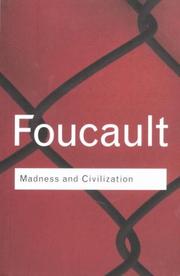
The most influential and most disputed book in the field: Foucault argues that confinement of the mad was an act of social exclusion rather than medical care. Historians have shown that several of his specific historical claims do not hold, and the book remains indispensable anyway — read it as an argument about power, checked against Scull.
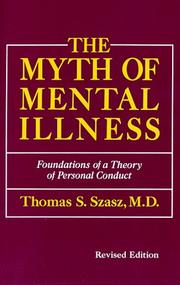
A psychiatrist's frontal attack on the concept of mental illness as a category error. Szasz's position is a minority one and has been used in ways he did not intend, but the challenge he poses about what makes a condition a disease has never really been retired.
Cures: surgery, shock, and the drug revolution
IntermediateFollow what psychiatry actually did to patients across the twentieth century — insulin coma, malaria therapy, lobotomy, then chlorpromazine and everything after.
▸ Study plan for this stage
Pace: 8 weeks. Great and Desperate Cures (345 pages) needs two to three weeks. Mad in America (341 pages) two weeks. Desperate Remedies (424 pages) three weeks, and read it last so you have Whitaker's account in mind when Scull covers the same ground with a fuller apparatus. Nothing in this stage is a gui
- The somatic sequence in order: malaria fever therapy for general paresis, insulin coma, metrazol convulsion, electroconvulsive therapy, and then lobotomy — each introduced with enthusiasm and minimal controlled evidence
- Valenstein's central question: how a procedure with almost no evidence base became mainstream and won a Nobel Prize in 1949. His answer involves professional incentives, press coverage, the desperation of families and the absence of any alternative for chronic patients
- The specific mechanisms of adoption Valenstein identifies — outcome claims made without controls, follow-up periods far too short, patients judged improved by whether they were manageable rather than by whether they were well
- That general paresis really was neurosyphilis and really was treatable, which is the case that made a somatic model plausible for everything else. Understanding this genuine success explains the subsequent overreach better than any account of mere folly
- Whitaker's historical narrative — colonial treatment, the eugenic sterilisation era, lobotomy, and the arrival of the antipsychotics — and his argument that the record is far worse than the profession's own account admits
- Where Whitaker is on firm ground and where he is not: the historical chapters draw on well-documented material, while his reading of the drug outcome literature is strongly contested by clinicians. Track the transition point in the book yourself
- What Scull's Desperate Remedies adds by covering the same therapies with the historian's apparatus — sources cited, alternatives weighed, claims qualified — which is the practical demonstration of the difference between polemic and history on identical material
- Walk through the evidence base that existed for lobotomy at the moment it was most widely practised. What specifically was missing, and what would have been required to detect the problem at the time?
- Valenstein is a neuroscientist writing about his own field's past. Does that change what he can see or what he is willing to say? Point to a passage
- Take one episode covered by both Whitaker and Scull and set the two accounts side by side. What does Scull add, what does he qualify, and is anything in Whitaker's version left standing unchanged?
- The general paresis case was a real success. How much does one genuine somatic cure justify a research programme, and did the field draw the right lesson from it?
- Identify the point in Mad in America where Whitaker moves from documented history to contested interpretation of outcome studies. Was it obvious, and would a reader without stage 1 through 3 have noticed?
- Build a table of every somatic treatment in this stage: years of peak use, claimed mechanism, the evidence offered at the time, and when and why it was abandoned. This table is the single most useful artefact of the whole path
- Take the outcome claims Valenstein quotes for lobotomy and rewrite each as a question a modern trial protocol would ask. The gap between the claim and the question is the methodological lesson
- Read Scull's and Whitaker's treatment of the same decade and mark, in the margin of each, every claim supported by a citation you could go and check. Count them. Then write 200 words on what the count tells you
- Add the somatic era to your running timeline, marking introduction and abandonment dates for each treatment. Overlay it on the asylum population curve from stage 2
- Write a 400-word account of how a treatment with no controlled evidence became standard practice, using only Valenstein. Then write 150 words on which of those mechanisms could still operate today
Next up: With the record of past treatment in view and a working sense of how evidence claims were made and broke down, you can assess the arguments now running about diagnosis and long-term outcomes.
A neuroscientist's history of lobotomy and its predecessors, careful about how a treatment with almost no evidence base became mainstream and won a Nobel Prize. It is the definitive study of how psychiatry can go badly wrong from inside its own procedures.

Whitaker, a journalist, traces American treatment of the severely mentally ill from colonial times through eugenics and lobotomy to the antipsychotic era, arguing the record is far worse than the profession admits. His reading of the drug outcome literature is strongly contested by clinicians, and the historical chapters are on firmer ground than the pharmacological ones.

Scull's recent and more focused account of psychiatry's two centuries of treatments, written with the full archive available and covering the same somatic therapies with the historian's apparatus that Whitaker's polemic lacks. Reading the two together shows what changes when the same events are argued rather than reported.
The present argument
IntermediateFollow the live disputes — diagnostic expansion, the DSM revisions, long-term drug outcomes and what replaced the asylum — and be able to say why each side finds the other's evidence unpersuasive.
▸ Study plan for this stage
Pace: 6 weeks. Shrinks (342 pages), Saving Normal (344 pages) and Anatomy of an Epidemic (404 pages) are each about two weeks. The order matters — the profession's self-account, then the insider's critique, then the outside challenge. This stage covers live disagreements about diagnosis and medication amo
- Lieberman's narrative: a discipline that overcame its own charlatanism — the psychoanalytic era, the diagnostic chaos before DSM-III — to become a science grounded in reliable diagnosis and effective treatment. This is the profession's self-account at its most articulate
- Why DSM-III in 1980 is the pivot everyone in this stage argues about: it replaced aetiological definitions with operational criteria, which massively improved inter-rater reliability without establishing validity. Reliability and validity are different things, and most of the dispute lives in that g
- Frances's position and its unusual provenance: he chaired the DSM-IV task force and then publicly warned that diagnostic thresholds had expanded to capture ordinary distress. A critique from the centre of the establishment carries different weight than one from outside, which is why he is here rathe
- The specific expansions Frances discusses — attention deficit, bipolar in children, the bereavement exclusion — and his account of how threshold changes interact with pharmaceutical marketing and with clinicians' incentives
- Whitaker's claim in Anatomy of an Epidemic: that long-term use of psychiatric medication may worsen outcomes for some patients, argued from longitudinal studies and from the rise in disability rates
- The substantive objections to that claim, which must be held with equal weight: critics argue he misreads the longitudinal data, that the sickest patients are the ones who stay on medication so the comparison is confounded by indication, and that disability rates track administrative and diagnostic
- Why this disagreement has not been resolved: the trial that would settle it — long-duration randomised discontinuation in severe illness — raises ethical problems that have kept it from being run at the necessary scale. Understanding why the evidence is missing is more useful than picking a side
- Explain the difference between diagnostic reliability and diagnostic validity, and say which one DSM-III achieved. How much of the disagreement in this stage follows from that distinction?
- Lieberman and Frances are both establishment psychiatrists and reach different conclusions about the DSM. Where exactly does their disagreement start — on the facts of expansion, or on whether expansion is a harm?
- State Whitaker's argument and then state the confounding-by-indication objection to it. What study design would distinguish them, and why has it not been run?
- Frances warns about diagnosing ordinary distress. Szasz in stage 3 argued mental illness is not a disease at all. Are these the same argument at different strengths, or different arguments? Be precise
- Take the somatic-treatment table you built in stage 4 and ask what a historian in fifty years would add to it from the present era. Answer honestly in both directions — the exercise fails if the answer is either 'nothing' or 'everything'
- Read Lieberman's account of DSM-III and Frances's account of DSM-IV back to back, and write a 400-word summary of what each thinks the manual is for. The difference in purpose explains most of the difference in verdict
- Take one diagnostic category Frances discusses, look up its criteria across successive DSM editions, and write out exactly what changed. Then write 200 words on what population that change adds or removes
- For three of Whitaker's central studies, write one sentence on what the study shows and one on what it cannot show — the same test you have applied since stage 1 — and then write a paragraph on whether his conclusion survives your second sentences
- Complete your path-long timeline through to the present and mark, for each era, what the dominant explanation of madness was and what the dominant treatment was. The pairing is the history of the field in one page
- Write 500 words answering the question the path opened with: is the history of psychiatry a story of progress, of failure, or of something the two framings both distort? Mark every sentence where you are relying on one author rather than on evidence several share, and leave the live disputes standing as disputes
Next up: This is the end of the path: you can now read a claim about psychiatry — from the profession, from its critics, or from the press — and place it in a two-hundred-year argument whose central questions remain open.

A former president of the American Psychiatric Association tells the story as a discipline that overcame its own charlatanism to become a science. It is the profession's self-account at its most articulate, and you should be able to weigh it against everything in the earlier stages.
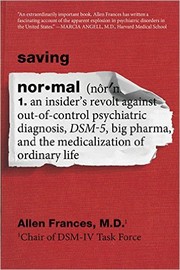
Frances chaired the DSM-IV task force and then publicly warned that diagnostic categories were expanding to swallow ordinary distress. A critique from the very centre of the establishment carries different weight than one from outside, which is why it belongs here rather than in the critics' stage.
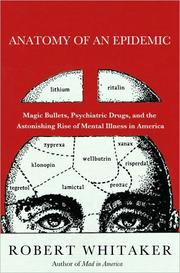
Whitaker's argument that long-term psychiatric drug use may worsen outcomes for some patients is the most consequential open claim in the field, and it is genuinely disputed — critics say he misreads the longitudinal studies and understates confounding. Read it last, with enough background to assess the evidence yourself rather than take a side on authority.
Discussion
Keep reading
Paths that share books, cover the same subject, or open a related topic.