Environmentalism is usually read backwards, starting from climate change and looking for antecedents. That produces a badly distorted picture, because the movement began as an argument about what wilderness was for, and it changed shape at least three times — preservation, then pollution and public health, then planetary systems — before carbon became the organising problem. Each shift left the earlier arguments in place rather than replacing them, which is why environmental politics today can look internally contradictory.
Reading in historical order fixes that. You see the ideas arrive as answers to specific problems, and you see which of them were later inherited by people with very different aims.
The founding texts
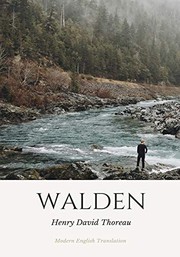
Walden is the origin point for the American habit of treating nature as a moral resource and not only an economic one. Read it as a founding document rather than as a nature guide; it is a book of arguments, and not always likeable ones.
My first summer in the Sierra is John Muir turning that private reflection into a public campaign for national parks, and his preservationist position defines one pole of every argument that follows. Our catalogue files it under the author form John Reid Muir, which is a cataloguing artefact rather than a different writer. Muir's legacy is genuinely contested: his published writing includes disparaging descriptions of Native Americans and Black people, and the organisation he founded publicly acknowledged that record in 2020. Readers should know it going in.
A Sand County Almanac comes third for a reason. Aldo Leopold's land ethic is the most influential single idea in environmental thought, and it carries more weight once you know he had spent years as a working forester on the utilitarian side of the preservation argument.
The book that started the movement
Silent Spring is the hinge between conservation and modern environmentalism, and should be read before any history of the movement rather than after it. Rachel Carson is the definitive biography, showing both the chemical industry's organised campaign against her and the cancer she was concealing while she defended the book — which explains a great deal about how the argument was conducted.
The legacy is disputed. Critics have argued that the restrictions on DDT that followed cost lives in malarial regions; historians of the period respond that agricultural overuse had already driven resistance and that the strongest form of the charge misstates what the bans covered. The dispute is live and this path does not settle it, but a reader should know it exists rather than meeting it later as a surprise.
Where the idea came from, and how it became politics
Wilderness and the American mind is the standard scholarly history of how Americans went from fearing wilderness to legislating its protection, and it frames everything in the first stage. Environmentalism sets American wilderness preservation beside the environmentalism of the poor in India, Brazil and Africa, where the issue is livelihood rather than scenery — the necessary corrective before mistaking one national tradition for the whole subject.
Then the politics. The wilderness warrior covers Theodore Roosevelt's conservation presidency at length, and shows environmentalism operating as mainstream governing policy long before it was a movement. The Genius of Earth Day reconstructs how the 1970 mobilisation was organised and why it produced a decade of legislation. The bet closes the stage with the Ehrlich and Simon wager over resource scarcity, using it to explain how environmental questions hardened into a left-right dispute — which is where the consensus the previous book describes breaks apart.
From conservation to climate
The end of nature was the first book on climate change written for a general audience, arguing that human influence has ended nature as an independent category. It is the direct heir to Carson and the start of the modern climate literature. The Sixth Extinction finishes the path by turning the local conservation ethic of stage one into a planetary accounting, reported from the field.
Twelve books, in the order the ideas actually arrived. Follow the full path below.
Follow the full ordered path here: Best Books on the History of Environmentalism, in Reading Order.