How language works
This curriculum takes you from curious newcomer to confident linguistics thinker across four carefully sequenced stages. It begins with vivid, accessible books that make language feel surprising and alive, then builds toward the cognitive science of how language works in the mind, the mechanics of how it changes over time, and finally the deeper theoretical frameworks that tie it all together. Each book assumes only what the previous ones have taught, so the difficulty ramp feels natural rather than jarring.
First Words: Language as a Human Wonder
BeginnerDevelop an intuitive sense of what linguistics is, shed prescriptivist myths about 'correct' grammar, and start seeing language as a natural, rule-governed human behavior rather than a set of rules to obey.
▸ Study plan for this stage
Pace: 8–10 weeks total: ~5 weeks on "The Language Instinct" (~25–30 pages/day, 5 days/week) followed by ~3–4 weeks on "Because Internet" (~20–25 pages/day, 5 days/week). Allow one buffer week for reflection and exercises.
- Language as a biological instinct: Pinker's central argument that humans are neurologically 'wired' for language, not merely taught it through culture or schooling
- Universal Grammar: the idea, drawn from Chomsky and developed by Pinker, that all human languages share deep structural properties, suggesting an innate language faculty
- Descriptivism vs. Prescriptivism: the crucial distinction between describing how language actually works (linguistics) versus policing how people 'should' speak or write — and why linguists firmly occupy the descriptive camp
- Language is rule-governed, not rule-obeyed: even casual, non-standard, or rapidly evolving speech follows systematic, learnable patterns — rules emerge from usage, not from grammar books
- Language change is natural and inevitable: McCulloch shows through internet language that new registers, conventions, and even punctuation norms arise organically and are not signs of decay
- Register and context-dependence: 'Because Internet' demonstrates that people code-switch fluidly between formal and informal registers depending on platform, audience, and relationship — all of it competent language use
- The role of community and identity in language: how shared linguistic conventions (emoji use, ironic capitalization, tilde tone markers) build in-group identity and signal social meaning beyond literal content
- Creoles and language acquisition as evidence: Pinker's examples of creole formation and children's acquisition errors (e.g., 'goed', 'mouses') reveal the underlying grammar engine operating beneath the surface
- According to Pinker, in what sense is language an 'instinct,' and what biological and cross-cultural evidence does he offer to support this claim?
- What is the difference between a prescriptivist and a descriptivist view of grammar? Why do linguists adopt the descriptivist stance, and can you give one example from either book where a 'non-standard' form is actually systematic and rule-governed?
- How does McCulloch use the internet as a linguistic laboratory? What does the evolution of conventions like all-lowercase, ironic capitalization, or the period-as-coldness tell us about how language norms form?
- What do children's acquisition errors (like 'I goed' or 'two mouses') reveal about the nature of the human language faculty, according to Pinker?
- McCulloch categorizes internet users by when and how they came online. How does a person's 'internet origin story' shape their linguistic intuitions and habits online?
- Taken together, what do these two books suggest about the relationship between language change, language 'correctness,' and human creativity?
- Myth-busting journal: Before starting Pinker, write down 5 grammar 'rules' you were taught (e.g., never split an infinitive, don't end a sentence with a preposition). After finishing both books, revisit each one and write a descriptivist rebuttal using evidence or reasoning from the texts.
- Acquisition error log: Find a child in your life or look up recorded child speech online. Collect 5–10 'errors' (like over-regularizations) and analyze them using Pinker's framework — what rule is the child applying, and what does it reveal about innate grammar?
- Internet dialect field notes: Spend one week collecting real examples of internet language from different platforms (Twitter/X, Discord, text messages, LinkedIn). Categorize them using McCulloch's frameworks: What register is being used? What community norms are visible? What would a prescriptivist object to, and why would a linguist disagree?
- Personal linguistic autobiography: Write 1–2 pages reflecting on your own language background — dialects spoken at home, code-switching between contexts, any languages other than English. Map your experience onto concepts from both books (instinct, register, community norms).
- Side-by-side translation exercise: Take a single message or idea and write it out in three different registers (a formal email, a casual text, an internet-native post with appropriate conventions). Then write a short analysis: what changed, what stayed the same, and what does that tell you about the underlying grammar?
- Concept map: After finishing both books, draw a visual concept map connecting at least 8 terms from across the two books (e.g., language instinct → universal grammar → creoles → language change → internet registers → descriptivism). Annotate each link with one sentence explaining the connection.
Next up: By dismantling the myth that language is a set of rules to obey and replacing it with the view that language is a structured, living, human behavior, this stage gives the reader the open and curious mindset needed to engage seriously with the formal structures — phonology, morphology, syntax, and semantics — that the next stage will introduce systematically.

The perfect entry point: Pinker argues that language is a biological instinct, not a cultural invention, and dismantles grammar snobbery with wit and evidence. It frames almost every topic the rest of the curriculum will explore.
A joyful, highly readable look at how language evolves in real time through digital communication. It reinforces that change is normal and rule-governed, and makes linguistics feel immediately relevant to everyday life.
How Children Learn and How Languages Differ
BeginnerUnderstand the process of first-language acquisition, grasp the stunning diversity of the world's languages, and appreciate what that diversity reveals about universal versus culture-specific aspects of mind.
▸ Study plan for this stage
Pace: 8–10 weeks total: Weeks 1–5 for "The Stuff of Thought" (~25–30 pages/day, 5 days/week), and Weeks 6–10 for "Language: The Cultural Tool" (~20–25 pages/day, 5 days/week). Allow one buffer day per week for re-reading dense passages and journaling reflections.
- First-language acquisition and the debate between nativist (innateness) and culturalist views of language learning
- Semantic categories and how the words we use carve up reality — Pinker's analysis of verb meanings, causation, space, and time
- The Sapir-Whorf hypothesis (linguistic relativity): does language shape thought, or does thought shape language?
- Universal Grammar vs. cultural tool: Chomsky's nativist framework contrasted with Everett's usage-based, culture-first model
- The Pirahã language as a case study — its lack of recursion, numbers, color terms, and creation myths, and what this challenges about linguistic universals
- The role of culture, community, and immediate experience in shaping a language's grammar and vocabulary
- How children acquire language through social interaction, imitation, and cultural immersion rather than (or in addition to) innate structures
- What cross-linguistic diversity reveals about the boundary between universal cognitive architecture and culturally contingent expression
- According to Pinker in 'The Stuff of Thought,' how do the semantic categories embedded in English verbs (e.g., manner vs. result verbs) reveal the way the mind organizes causation and events — and are these categories universal?
- What is the core argument Pinker makes about the relationship between language and thought — does he support strong linguistic relativity, and why or why not?
- How does Everett use the Pirahã language in 'Language: The Cultural Tool' to challenge Chomsky's Universal Grammar, and what is the 'immediacy of experience' principle?
- What does Everett mean when he calls language a 'cultural tool,' and how does this view differ fundamentally from the nativist picture presented by Pinker?
- How do children, according to the evidence discussed across both books, actually acquire their first language — what roles do innate capacity, social interaction, and cultural context each play?
- What does the existence of languages radically different from English (like Pirahã) tell us about which aspects of human cognition are truly universal versus culturally constructed?
- Semantic mapping journal: After each chapter of 'The Stuff of Thought,' write down 3–5 words or concepts Pinker analyzes and draw a quick diagram showing how that word carves up reality differently than its nearest equivalent in another language you know (or look one up).
- Linguistic relativity test: Choose one semantic domain Pinker discusses (e.g., spatial relations, time, causation) and find a real example from a non-English language that either supports or refutes the Sapir-Whorf hypothesis. Write a one-page reflection.
- Pirahã thought experiment: After reading Everett's Pirahã chapters, list 10 everyday English concepts (e.g., 'yesterday,' 'one,' 'green') and reason through how a Pirahã speaker might — or might not — express each idea. What does this reveal about language and thought?
- Debate prep — Pinker vs. Everett: Write a one-page position paper arguing either the nativist or the cultural-tool side, using specific evidence from both books. Then write a one-paragraph rebuttal from the opposing view.
- Child language observation log: Spend 30 minutes observing (in person or via recorded video) a child under age 5 speaking. Note 5 specific utterances and analyze them using concepts from both books — what do they suggest about innateness vs. cultural learning?
- Comparative language profile: Using Everett's framework, research one language other than Pirahã that differs strikingly from English in grammar or vocabulary (e.g., Hopi, Guugu Yimithirr, Turkish). Write a one-page profile explaining what that language's structure suggests about the universality of linguistic features.
Next up: By wrestling with whether language is a biological endowment or a cultural invention, the reader has built the conceptual tension needed to explore formal linguistic structure — phonology, morphology, syntax — and evaluate those frameworks with a critical, cross-linguistic eye in the next stage.

Bridges the gap between language and thought, showing how the words and grammar of a language reflect — and possibly shape — how its speakers conceptualize the world. Best read after The Language Instinct, which laid the biological groundwork.
Everett's fieldwork with the Pirahã people of the Amazon offers a direct counterpoint to Pinker's innateness view, arguing culture shapes language deeply. Reading both authors back-to-back gives you the field's most important live debate.
Language Change, Variation, and Social Life
IntermediateUnderstand how and why languages change over centuries, how dialects and social identity intertwine, and why no dialect is linguistically inferior to any other.
▸ Study plan for this stage
Pace: 8–10 weeks total, reading roughly 20–25 pages per day. Week 1–2: "Our Magnificent Bastard Tongue" (approx. 230 pages); Week 3–5: "Do You Speak American?" (approx. 240 pages, read more leisurely to absorb the documentary-style regional portraits); Week 6–10: "The Power of Babel" (approx. 290 pages, t
- Language change is rule-governed and inevitable, not a sign of decay — McWhorter's central argument in 'Our Magnificent Bastard Tongue' that English's quirks (e.g., the meaningless 'do,' progressive '-ing') stem from contact with Celtic and Norse speakers, not internal logic
- Contact-induced change: how bilingual or multilingual communities transfer grammatical structures (not just vocabulary) across languages, as illustrated by the Celtic and Phoenician influence threads in 'Our Magnificent Bastard Tongue'
- Dialect continua and regional variation: 'Do You Speak American?' maps how geography, migration history, and social boundaries produce distinct American dialects (Southern Vowel Shift, Northern Cities Vowel Shift, AAVE, Chicano English, etc.)
- Language and social identity: dialects are badges of belonging — MacNeil's interviews show speakers consciously or unconsciously use accent and vocabulary to signal region, class, ethnicity, and solidarity
- Linguistic prescriptivism vs. descriptivism: the recurring tension in all three books between 'correct' grammar authorities and linguists who document what speakers actually do
- The myth of linguistic inferiority: no dialect is grammatically simpler or more 'logical' than any other — AAVE's aspectual 'be,' for instance, encodes distinctions Standard American English cannot
- Language as a living organism — 'The Power of Babel' frames every modern language as a dialect of a dialect of a dialect, with all languages ultimately descending from earlier proto-languages through continuous splitting and mixing
- Language death and endangerment: 'The Power of Babel' explains how globalization accelerates the extinction of minority languages and what is lost when a language disappears
- According to McWhorter in 'Our Magnificent Bastard Tongue,' what specific grammatical features of English are most plausibly explained by Celtic contact, and why is this hypothesis controversial among mainstream historians of English?
- How does 'Do You Speak American?' use the Northern Cities Vowel Shift and the Southern Vowel Shift as evidence that dialect divergence is actively ongoing in the United States, rather than dialects converging toward a single standard?
- MacNeil's documentary encounters speakers who resist dialect leveling and others who embrace it — what social and economic forces does the book identify as driving each attitude?
- How does McWhorter's metaphor of languages as 'the power of Babel' in his third book reframe the common perception that linguistic diversity is a problem to be solved rather than a natural outcome of human history?
- All three books implicitly or explicitly critique prescriptivism. Drawing on concrete examples from at least two of the books, explain why linguists argue that prescriptive rules often reflect social power rather than grammatical logic.
- What mechanisms does 'The Power of Babel' identify for how a single ancestral language splits into mutually unintelligible daughter languages over centuries, and how does this process relate to the contact-induced change described in 'Our Magnificent Bastard Tongue'?
- Accent mapping journal: After finishing 'Do You Speak American?', spend one week actively listening to speech around you (in person, on TV, in podcasts). Log at least 10 features — vowel qualities, dropped or added sounds, specific vocabulary — and try to match them to the regional or social dialect profiles MacNeil describes.
- Contact-change detective: Choose any two languages you have even basic familiarity with (e.g., English and Spanish, or English and French). List 5–10 grammatical or phonological features in one that could plausibly be explained by contact with the other, then compare your hypothesis to what McWhorter's framework in 'Our Magnificent Bastard Tongue' would predict.
- Prescriptivism audit: Find three 'grammar rules' commonly taught in schools (e.g., never split an infinitive, don't end a sentence with a preposition, avoid double negatives). Research their actual historical origins and write a one-page descriptive counter-argument for each, drawing on the linguistic reasoning modeled across all three books.
- Language family tree sketch: Using the framework laid out in 'The Power of Babel,' hand-draw a partial family tree connecting at least 8 languages you know or have heard of. Annotate each branch point with the approximate time depth and the geographic or social event that likely drove the split.
- Dialect attitude interview: Interview 3–5 people of different ages or backgrounds about their opinions on a specific dialect (e.g., a Southern accent, AAVE, or Valley Girl speech). Record their judgments, then analyze whether those judgments reflect linguistic facts or social biases — explicitly referencing MacNeil's findings on dialect stigma.
- Reading synthesis essay: After completing all three books, write a 500–700 word essay answering: 'Is there such a thing as a pure, unchanging, or superior language?' Use at least one specific example from each of the three books to build your argument.
Next up: By internalizing how languages change, split, and carry social meaning, the reader is now equipped to tackle the deeper structural and cognitive questions of the next stage — how the human mind acquires, stores, and processes the very linguistic systems whose history and variation they have just mapped.
McWhorter traces the wild, contact-driven history of the English language in an entertaining narrative that makes historical linguistics concrete and accessible — ideal as a first taste of the field.
A survey of American English dialects that shows variation is systematic and socially meaningful, not sloppy. It builds directly on McWhorter's historical perspective by showing that diversity is the living result of ongoing change.
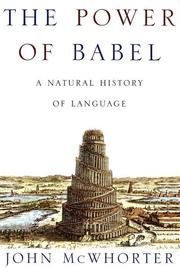
Zooms out from English to all human languages, showing how every language is a dialect that won a political battle and how the world's 6,000+ tongues are all equally complex. A natural capstone to this stage.
Mind, Grammar, and the Architecture of Language
ExpertEngage with the formal and cognitive structures underlying all human language — phonology, syntax, semantics — and understand how linguistics connects to cognitive science, philosophy of mind, and neuroscience.
▸ Study plan for this stage
Pace: 8–10 weeks total: Spend the first 5–6 weeks on Fromkin's "An Introduction to Language" (~25–30 pages/day, reading carefully with note-taking on formal rules and examples), then 3–4 weeks on Comrie's "The Atlas of Languages" (~20 pages/day, reading more comparatively and cross-referencing Fromkin's f
- The core components of grammar — phonology, morphology, syntax, semantics, and pragmatics — as distinct but interacting modules (Fromkin)
- The distinction between descriptive and prescriptive grammar, and why linguistics is a scientific, descriptive discipline (Fromkin)
- Phonemes, allophones, and the mental representation of sound systems; the International Phonetic Alphabet (IPA) as a tool (Fromkin)
- Morphological typology: inflectional vs. derivational morphology, and how languages vary in their word-formation strategies (Fromkin & Comrie)
- Phrase structure rules, constituency, and the hierarchical nature of syntactic trees — the basis of generative grammar (Fromkin)
- The semantics–pragmatics interface: how literal meaning, context, and inference interact in communication (Fromkin)
- Linguistic universals vs. typological diversity: what features are shared across all languages vs. what varies, as illustrated by Comrie's cross-linguistic survey (Comrie)
- Language families, genetic classification, and the geographic distribution of the world's languages — and what this reveals about human cognitive and cultural history (Comrie)
- After reading Fromkin, can you explain the difference between a phoneme and an allophone, and give an example of complementary distribution from English?
- How does Fromkin's modular view of grammar (phonology → morphology → syntax → semantics) reflect broader cognitive science assumptions about the architecture of the mind?
- What is the significance of the fact that all known human languages have nouns and verbs, recursion, and displacement — as discussed in Fromkin — for theories of Universal Grammar?
- Using Comrie's typological data, how do Subject-Object-Verb (SOV) languages differ structurally from Subject-Verb-Object (SVO) languages, and what does this distribution tell us about cognitive or functional pressures on language?
- How do the language families surveyed in Comrie challenge or support the idea of a single common ancestor for all human language?
- In what ways do Fromkin's formal linguistic tools (e.g., phrase structure rules, semantic features) help make sense of the cross-linguistic patterns Comrie documents?
- IPA transcription drill: Choose 10 English words and transcribe them using the IPA chart from Fromkin. Then find a language featured in Comrie with a very different sound inventory (e.g., a click language or a tonal language) and compare its phonological system to English using Fromkin's framework.
- Syntax tree practice: Using Fromkin's phrase structure rules, draw syntactic trees for 5 sentences of increasing complexity. Then attempt the same for a sentence from a language with a different word order (SOV or VSO) using Comrie as a source.
- Morphology mapping: Select 3 languages from different families in Comrie (e.g., one agglutinative, one isolating, one fusional) and use Fromkin's morphological categories to analyze one word from each, identifying roots, affixes, and grammatical information encoded.
- Language universals checklist: After finishing both books, compile a two-column table — 'Universals' (features found in all languages per Fromkin) vs. 'Variables' (features that differ across languages per Comrie). Aim for at least 10 entries per column and write a short paragraph interpreting the pattern.
- Cognitive connection essay: Write a 500-word reflection on how the formal structures Fromkin describes (e.g., recursion in syntax, compositionality in semantics) could be implemented in the human brain, drawing on any neurolinguistic or cognitive science asides in Fromkin.
- Family tree diagram: Using Comrie's language family data, draw a genetic tree for one major language family (e.g., Indo-European or Sino-Tibetan), labeling at least 10 member languages and noting one distinctive grammatical feature of each branch using Fromkin's terminology.
Next up: By mastering the formal architecture of language through Fromkin and gaining a panoramic view of linguistic diversity through Comrie, the reader is now equipped to move into deeper theoretical territory — exploring how specific schools of thought (generative grammar, cognitive linguistics, functional typology) build upon and contest these foundations.
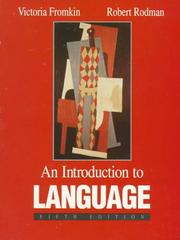
The standard undergraduate textbook, covering phonetics, phonology, morphology, syntax, semantics, and acquisition in a systematic way. After three stages of narrative books, this gives you the formal vocabulary to think like a linguist.
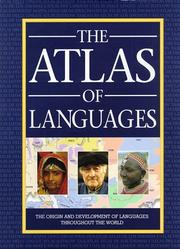
A richly illustrated reference that maps the structural diversity of the world's languages across every dimension covered in the curriculum — a satisfying, panoramic final read that rewards everything you have learned.
Discussion
Keep reading
Paths that share books, cover the same subject, or open a related topic.