Oil has an unusually clear canonical starting point, and that is both a help and a trap. One book dominates the field so thoroughly that many readers stop there and end up with a single, quite particular account of the twentieth century.
The other thing to know before you start is that this subject has two literatures. One tells the story through companies, engineers and statesmen and treats oil as a commodity that got produced. The other treats oil as a political form — something that shapes states, labour and democracy itself — and reads the same events entirely differently. Neither is a summary of the other. Read at least one book from each side.
The standard narrative
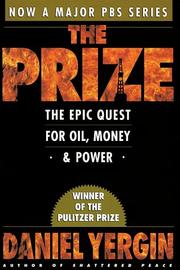
The Prize by Daniel Yergin is the place to begin: a Pulitzer-winning history of oil from the first Pennsylvania wells through the Gulf War, organised around companies and governments and written to be readable at eight hundred pages. It is the reference point everyone else argues with. Yergin has long-standing ties to the energy industry through his consulting work, and critics read the book as sympathetic to it; that is a fair caution rather than a disqualification.
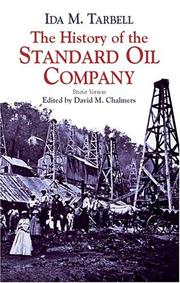
The history of the Standard Oil Company by Ida Minerva Tarbell is the 1904 investigation that helped break up the trust, and it is a primary source as much as a history — advocacy journalism by a writer whose own father was ruined by Standard Oil, and none the worse for it. Titan by Ron Chernow is the modern biography of Rockefeller and the calmer counterweight, taking the man seriously as a builder and a monopolist at once.
The modern majors
Private empire by Steve Coll is the reported history of ExxonMobil after the Valdez spill, and it is the best account of how a company of that size actually makes decisions across dozens of jurisdictions. Crude world by Peter Maass is the reporter's-eye counterpart, travelling through producing countries and asking what the money did when it arrived.
The Gulf, where the arguments sharpen
Desert Kingdom by Toby Craig Jones reads Saudi Arabia through water, oil and the technical expertise that built the state, which is a more revealing frame than the usual dynastic account. America's kingdom by Robert Vitalis is the direct challenge to the standard story of Aramco as a development partnership, documenting the racial hierarchy of the oil camps and arguing the partnership narrative was largely public relations. It contradicts a good deal of what the industry-side histories imply, and it is well sourced. Let the two accounts stand against each other.
Yergin's later volumes, and the structural critique
The Quest extends the story into energy security, climate and the alternatives, and New Map, published as The New Map, brings it to shale, renewables and great-power competition. Both are useful and both keep the framing of the first book.
Then read the critique. Carbon democracy by Timothy Mitchell argues that coal made mass democracy possible and oil made it harder — that the physical form of an energy system shapes the politics available to the people who live on it. Oil Curse by Michael L. Ross is the quantitative case that petroleum wealth systematically damages states that discover it, and it is careful about where the evidence is thin. Oil, Power, and War by Matthieu Auzanneau is the long French history that takes the depletion question seriously, and its projections are contested — read the history and treat the forecasting as one view among several.
Follow the full path for the sequence with study notes, or see the history of economic thought for the ideas these arguments draw on.
Follow the full ordered path here: How to Learn the History of Oil from Books, in Order.
Ready to learn something deeply?
Build a reading path — free