Etymology and Word Origins: Best Books, in Order
This curriculum takes you from joyful, story-driven introductions to etymology all the way through rigorous historical linguistics and the deep mechanics of how English absorbed words from dozens of languages. Each stage builds the conceptual vocabulary—roots, borrowings, sound shifts, semantic drift—needed to fully appreciate the more demanding books that follow.
Foundations: The Joy of Word Origins
BeginnerDevelop a feel for how English words have surprising, often dramatic histories, and build enthusiasm for the subject through accessible, narrative-driven reading.
▸ Study plan for this stage
Pace: 6–7 weeks, ~40–50 pages/day (approximately 3–4 hours of reading per day)
- English is a hybrid language shaped by invasion, trade, and cultural contact—particularly Norman French, Latin, and Germanic roots
- Words carry hidden histories: sound changes, semantic shifts, and folk etymologies reveal how meaning evolves over centuries
- Etymology is detective work: understanding how linguists use comparative methods, historical texts, and phonetic patterns to trace word origins
- False etymologies and popular myths about word origins are common; skepticism and evidence-based reasoning are essential tools
- The distinction between true origins and plausible-sounding but invented stories (like 'posh' from 'port out, starboard home')
- How words borrow across languages and how pronunciation, spelling, and meaning change as words travel and time passes
- The emotional and narrative dimension of words: understanding etymology makes everyday language feel alive and connected to human history
- Why does English contain so many words from French, Latin, and Germanic languages, and what historical events explain this pattern?
- What is the difference between a well-documented word origin and a folk etymology or false story, and how can you tell the difference?
- How do linguists actually trace word origins? What evidence do they use (historical texts, sound correspondences, related languages)?
- Give three examples from the books of words whose origins are surprising, counterintuitive, or dramatically different from what people assume
- What are some common myths about English word origins, and why do these myths persist despite being false?
- How does understanding a word's history change the way you perceive or use that word in everyday speech?
- While reading 'The Mother Tongue,' keep a 'Word Surprise Journal': record 5–10 words whose origins shocked or delighted you, note the origin story, and write one sentence about why it surprised you
- After finishing 'The Mother Tongue,' choose one chapter (e.g., on names, swearing, or regional dialects) and write a 1–2 page reflection on how Bryson's narrative style makes etymology entertaining
- Read Liberman's introduction and first few chapters carefully, then identify and list 3–4 false etymologies that Liberman debunks; for each, explain why the false story is plausible and what the real evidence shows
- Create an 'Etymology Detective File' for 5–8 words: for each word, note the proposed origin from Liberman, the evidence he cites, and any alternative theories he mentions; practice thinking like a historical linguist
- Choose one word from the books (e.g., 'nice,' 'awful,' 'silly') and trace its semantic shift: write out how its meaning has changed over time and why, using examples from the texts
- Fact-check a popular word-origin claim you've heard (e.g., 'OK' comes from 'oll korrect,' or 'tip' is an acronym). Use Liberman's methods to evaluate the evidence, then write a short paragraph on whether the claim holds up
Next up: This stage builds enthusiasm and intuition for word origins through narrative and accessible examples, preparing you to engage with more rigorous etymological methods, deeper linguistic theory, and specialized etymological dictionaries in the next stage.

A witty, wide-ranging introduction to the English language's quirks and origins—perfect first reading because it makes etymology feel like an adventure rather than a study.
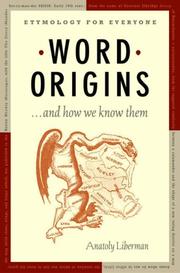
Liberman demystifies how etymologists actually do their work, giving beginners an honest, engaging look at the detective process behind tracing word histories.
Building Blocks: Roots, Prefixes & Suffixes
BeginnerLearn the Latin, Greek, and Anglo-Saxon building blocks that underpin thousands of English words, enabling you to decode unfamiliar vocabulary on sight.
▸ Study plan for this stage
Pace: 6–8 weeks, ~25–30 pages/day. Start with "Word Power Made Easy" (weeks 1–5, approximately 300 pages), then transition to targeted sections of "The Oxford Dictionary of Word Histories" (weeks 6–8, ~50 pages/week for reinforcement and historical context).
- Latin and Greek roots as the foundational building blocks of English vocabulary (e.g., port, duct, graph, morph)
- Common prefixes (pre-, anti-, sub-, trans-, etc.) and how they modify root meanings systematically
- Common suffixes (-tion, -ment, -able, -ology, etc.) and their grammatical and semantic functions
- Anglo-Saxon (Old English) words as the core of everyday English, distinct from Latinate vocabulary
- Etymology as a decoding tool: how understanding a word's origin reveals its meaning and related words
- Word families and semantic networks: how roots connect seemingly unrelated words (e.g., port → import, export, portable, portage)
- Historical sound changes and spelling patterns that obscure etymological connections (e.g., why 'receive' contains 'ceive' from Latin 'capere')
- Practical application: using roots, prefixes, and suffixes to infer meanings of unfamiliar words in context
- What are the three major linguistic sources of English vocabulary, and how do they differ in frequency and formality?
- Given a word like 'circumscribe' or 'antithetical,' can you break it into its component parts (prefix, root, suffix) and explain what each contributes to the overall meaning?
- How does knowing that 'port' comes from Latin 'portare' (to carry) help you understand words like import, export, portable, portmanteau, and deportment?
- What is the difference between a root, a stem, and a base, and why does this distinction matter when analyzing word families?
- Why do some etymologically related words have very different spellings or pronunciations (e.g., 'debt' from Latin 'debitum')?
- How can you use prefixes and suffixes as a strategy to decode an unfamiliar word you encounter while reading?
- Complete the word-building exercises in 'Word Power Made Easy' (Parts I–III): systematically work through the root lists, prefix lists, and suffix lists, creating your own example sentences for at least 10 words per section.
- Create a personal root journal: for each major root covered (port, duc, graph, morph, etc.), write the root, its meaning, its origin language, and list 5–8 related English words. Use 'The Oxford Dictionary of Word Histories' to verify etymologies.
- Practice decoding unfamiliar words: take 20 words from a challenging text (academic article, classic novel, etc.) and break each into components using your knowledge of roots, prefixes, and suffixes. Cross-reference 3–5 words in 'The Oxford Dictionary of Word Histories' to confirm your analysis.
- Word family mapping: select 5 roots from 'Word Power Made Easy' and create visual maps (mind maps or concept diagrams) showing how prefixes and suffixes generate related words (e.g., 'port' → import, export, report, transport, portable, portage, portfolio).
- Etymology detective work: choose 10 words from your daily reading that seem unrelated, then use 'The Oxford Dictionary of Word Histories' to trace their origins. Write a short paragraph explaining any surprising connections or historical shifts in meaning.
- Timed decoding drills: have a study partner or use flashcards to practice rapid decomposition of 30–40 complex words (e.g., 'perspicacious,' 'obfuscate,' 'ameliorate') into roots and affixes, aiming for accuracy and speed.
Next up: Mastery of roots, prefixes, and suffixes equips you with a systematic decoding toolkit that will enable the next stage—deeper exploration of semantic fields, word relationships, and contextual meaning—allowing you to move beyond mechanical breakdown to true linguistic understanding.

The classic self-teaching vocabulary builder; its root-based method trains you to see Latin and Greek stems everywhere, laying essential groundwork for deeper etymology study.
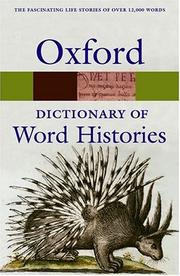
A concise, authoritative reference to dip into alongside other reading—use it to look up any word that sparks curiosity and reinforce the root patterns you are learning.
Going Deeper: Language Change & Borrowing
IntermediateUnderstand the historical forces—invasions, trade, religion, empire—that caused English to borrow massively from French, Norse, Latin, and beyond, and how meaning shifts over time.
▸ Study plan for this stage
Pace: 8–10 weeks, ~40–50 pages/day, with 1–2 days per week for reflection and exercises
- Historical invasions and contact (Norman Conquest, Viking settlement) as drivers of English vocabulary stratification
- Lexical borrowing patterns: why English borrowed from French (prestige, governance), Norse (everyday life), Latin (science, religion), and other languages
- The social and semantic hierarchy of borrowed words (e.g., Anglo-Saxon 'pig' vs. Norman French 'pork')
- Semantic change mechanisms: broadening, narrowing, amelioration, pejoration, and metaphorical extension
- How trade routes, religious institutions, and imperial expansion shaped vocabulary in specific domains (food, law, medicine, technology)
- The concept of word layers in English and how to trace a word's etymological path through multiple languages
- The relationship between a word's origin and its modern meaning—how historical context explains current usage
- Why did English borrow so heavily from French after 1066, and how is this reflected in the vocabulary of law, food, and governance?
- What is the difference between a Norse loanword and a French loanword in terms of phonetics, meaning, and social register? Provide examples.
- How do the concepts of semantic broadening and narrowing explain the evolution of words like 'awful' or 'nice'?
- Trace the etymological journey of a single word through multiple languages (e.g., 'restaurant' or 'algebra'). What does each stage reveal about historical contact?
- How did religious institutions and scientific advancement contribute to Latin and Greek borrowing into English?
- What does the distinction between Anglo-Saxon and Norman French vocabulary tell us about medieval English society and power structures?
- Create a 'word family tree' for 5–10 words from different semantic domains (food, law, medicine, warfare). Map their etymological origins and note which invasions or trade routes explain their arrival in English.
- Compile a list of 20 minimal pairs (e.g., pig/pork, cow/beef, sheep/mutton) that illustrate the Anglo-Saxon/Norman French divide. Write a short paragraph explaining the social history behind each pair.
- Track semantic change in 3–4 words across time using historical dictionaries and the OED. Document whether each word underwent broadening, narrowing, amelioration, or pejoration, and hypothesize why.
- Read a passage from a Middle English or Early Modern English text (provided in Crystal or Hitchings) and annotate it with etymologies. Identify which words are Norse, French, Latin, or Anglo-Saxon, and note how the language differs from modern English.
- Write a 500-word case study on a single language's influence on English (e.g., 'How Arabic Shaped English Through Trade and Science' or 'The Norse Legacy in Everyday English'). Use specific examples from the books.
- Create a visual timeline showing major historical events (Norman Conquest, Viking invasions, Renaissance, Industrial Revolution) and the corresponding waves of loanwords that entered English. Annotate with 3–5 examples per event.
Next up: This stage equips you with the historical and semantic frameworks needed to understand how English became a global language and how meaning continues to evolve in modern contexts—preparing you to explore contemporary word creation, digital-age neologisms, and the future of English in the next stage.

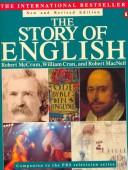
Crystal traces the full social and historical arc of English from Old English to the present, showing exactly why and how each wave of borrowing reshaped the vocabulary.

Focuses specifically on borrowed words—how English plundered Arabic, Hindi, Nahuatl, and dozens of other languages—building directly on Crystal's historical framework.
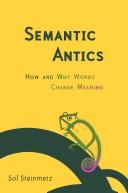
A focused, readable treatment of semantic change—narrowing, broadening, amelioration, pejoration—giving you the analytical tools to understand why words mean what they mean today.
Advanced: Historical Linguistics & the Indo-European Family
ExpertGrasp the scientific framework of historical linguistics—sound laws, proto-languages, and the Indo-European family tree—so you can trace words back to their deepest reconstructed roots.
▸ Study plan for this stage
Pace: 8–10 weeks, ~40–50 pages/day. Start with "The Horse, the Wheel, and Language" (5–6 weeks, ~40 pages/day for its ~400 pages), then "The Power of Babel" (3–4 weeks, ~50 pages/day for its ~300 pages). Build in 1–2 weeks for review and synthesis.
- Sound laws and regular sound change: how phonemes shift predictably across languages according to systematic rules (Grimm's Law, Verner's Law, etc.)
- Proto-Indo-European (PIE) reconstruction: methods for inferring the structure and vocabulary of the ancestral language from comparative evidence
- The Indo-European family tree: major branches (Anatolian, Tocharian, Indo-Iranian, Greek, Italic, Celtic, Germanic, Balto-Slavic, etc.) and their relationships
- Archaeological and linguistic synthesis: how material culture (horses, wheels, chariots) correlates with linguistic dispersal and language family origins
- Language change mechanisms: analogy, reanalysis, and grammaticalization as drivers of divergence within language families
- Comparative method: systematic comparison of cognates across languages to reconstruct ancestral forms and establish family relationships
- The Kurgan hypothesis and steppe origins: the evidence for PIE speakers as mobile pastoralists and the role of technological innovation in language spread
- Limitations of reconstruction: what we can and cannot reliably infer about proto-languages, and how uncertainty affects etymological claims
- What is Grimm's Law, and how does it exemplify the concept of regular sound change across Indo-European languages?
- How do linguists use the comparative method to reconstruct Proto-Indo-European, and what are the main challenges in this process?
- What does Anthony argue about the relationship between the domestication of the horse and the wheel, and the dispersal of Indo-European speakers?
- Name at least five major branches of the Indo-European family tree and give one example language from each.
- According to McWhorter, what are the primary mechanisms by which languages change over time, and how do these mechanisms lead to family diversification?
- What is the Kurgan hypothesis, and what archaeological and linguistic evidence supports it?
- Create a detailed Indo-European family tree diagram showing major branches, sub-branches, and example languages; annotate it with approximate dates of divergence based on Anthony's timeline.
- Trace a single word (e.g., 'mother,' 'horse,' 'wheel') through at least 6 Indo-European languages using cognates; document the sound changes that occurred and identify which sound laws apply.
- Reconstruct a short PIE phrase (e.g., a kinship term or basic noun) using a PIE dictionary or appendix from Anthony's book; explain the reasoning for each reconstructed form.
- Analyze a passage from Anthony on the Kurgan hypothesis and the archaeological evidence for steppe pastoralism; write a 2–3 page synthesis of how linguistic and material evidence converge.
- Compare McWhorter's explanation of analogy and reanalysis with specific examples from your own language or a language you know; show how these mechanisms could drive divergence in a hypothetical proto-language scenario.
- Create a 'sound law reference sheet' documenting Grimm's Law, Verner's Law, and 3–4 other major sound laws; include examples from Germanic, Latin, Greek, and Sanskrit for each.
Next up: This stage equips you with the scientific toolkit to understand language family relationships and trace words to their reconstructed roots; the next stage will likely apply these methods to specific etymologies, semantic shifts, and cultural borrowing across real historical texts and modern vocabulary.
Reveals the archaeological and linguistic evidence for Proto-Indo-European, the ancestor of most European languages—essential context for understanding why cognates exist across English, Latin, Greek, Sanskrit, and beyond.
McWhorter explains how all languages constantly change, split, and blend, giving you a sophisticated theoretical lens to apply to everything you have learned about English word origins.
A rigorous but accessible academic overview of Old English, Middle English, and Early Modern English phonology and vocabulary—the capstone text that ties together etymology, sound change, and historical context.
Discussion
Keep reading
Paths that share books, cover the same subject, or open a related topic.