Best Books on the History of Oil, in Reading Order
Oil is the cleanest single thread through the twentieth century: it explains Standard Oil and antitrust, two world wars, the Middle Eastern state system, the 1973 shock, and the climate problem we now have. The path opens with the one book that covers the whole story, goes back to how the industry was built, follows it into the era of the supermajors and the petrostates, looks forward to the transition, and closes with the scholarly arguments about what crude actually did to politics.
The one book that covers everything
BeginnerAcquire a complete century-and-a-half chronology of the oil industry — the wildcatters, the cartels, the wars, the shocks — that every later book can be slotted into.
▸ Study plan for this stage
Pace: Six to eight weeks. The Prize is 885 pages, which at 20 pages a day is about seven weeks and at 30 a day is a month. Do not try to speed it up by skimming the interwar chapters — the 1928 Achnacarry agreement and the Red Line agreement are the ones every later book on this path assumes you know. Rea
- Yergin's three-part periodisation — the founding era to 1918, the age of the international majors to 1970, and the era of state power after it. Everything else on this path attaches to one of those three
- Rockefeller's actual innovations, which were not drilling but refining, transport rebates and horizontal combination. Yergin is clear that Standard Oil won on logistics, and stage two will test how sympathetically he tells it
- The Anglo-Persian concession of 1901 and Churchill's 1912 decision to convert the Royal Navy from coal to oil, which is the moment oil becomes a strategic rather than a commercial commodity
- The Seven Sisters and the interwar cartel arrangements — Achnacarry, the as-is agreement, the Red Line — which fixed market shares and drew the boundaries of the modern Middle East's concessions
- Oil as a determinant of the Second World War: the Japanese decision after the 1941 embargo, the German drive toward the Caucasus, and Yergin's argument that fuel supply shaped operational outcomes on both fronts
- 1973: the embargo, the quadrupling of the posted price, and the transfer of pricing power from the companies to the producing states. This is the hinge of the whole book
- The 1980s counter-shock and the collapse to $10 oil, which Yergin uses to show that OPEC's power was always conditional rather than permanent — a corrective to the popular memory of 1973
- The narrative form itself. Yergin writes corporate and diplomatic history from the top down, through executives and ministers. Notice whose story is not being told, because stages three and five are largely arguments about exactly that
- What did Standard Oil actually do to its competitors, as Yergin describes it, and which of those practices were illegal at the time?
- Why did Churchill convert the Navy to oil in 1912, and what did that decision commit Britain to in the Persian Gulf?
- What were the Achnacarry and Red Line agreements, and how did they shape which companies held which Middle Eastern concessions?
- Trace the 1973 shock: what triggered the embargo, what did the producing states gain that they had not held before, and why was the price rise permanent when the embargo was not?
- What caused the 1986 price collapse, and what does it tell you about the limits of OPEC's control?
- Yergin is often described as sympathetic to the industry. Point to two specific places in The Prize where you can see that sympathy operating on the framing rather than the facts
- Build a one-page timeline as you read: 1859 Drake well, 1870 Standard Oil, 1901 Spindletop and the Anglo-Persian concession, 1911 breakup, 1928 Achnacarry, 1938 Saudi discovery, 1948 Aramco, 1951 Mossadegh, 1960 OPEC founded, 1973, 1979, 1986, 1990. Keep the page; every other book on this path drops onto it.
- Draw the descent of the Seven Sisters from the 1911 Standard Oil breakup to their present names. It takes twenty minutes and it makes Private Empire in stage three legible immediately.
- Write 200 words on the causal claim Yergin makes about oil and the outcome of the Second World War, stating exactly how strong a claim it is. He is more careful than his popular reputation suggests and pinning it down is good practice for stage five.
- After the 1973 chapters, write down in one sentence who set the price of oil in 1960 and who set it in 1975. That transfer is the single most important thing in the book.
Next up: Yergin gives you the whole chronology from the boardroom; the next stage goes back to the founding moment and reads it twice, from two irreconcilable vantage points.
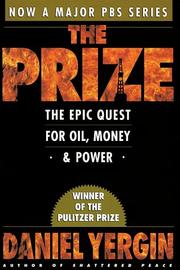
Still the definitive narrative history of oil and the obvious starting point; it won a Pulitzer and remains readable at 900 pages. Everything else on this list is either a deeper cut into one of its chapters or an argument with its assumptions.
How the industry was made
BeginnerSee where the modern oil corporation came from by watching one company invent the playbook — and watching the journalism that broke it up.
▸ Study plan for this stage
Pace: Six to seven weeks. Read Tarbell first — 227 pages, about ten days, and read it as a primary document rather than as history. Then Titan, at 832 pages, over four to five weeks. The order is not optional: Chernow is written partly as an answer to Tarbell, and reading him first defuses her. Leave a da
- Tarbell's actual charges, which are specific rather than atmospheric: the railroad rebates, the drawbacks by which Standard was paid a cut of competitors' freight, the control of pipelines as a chokepoint, and the predatory local price cutting
- The South Improvement Company scheme of 1872 as the founding scandal, and the Oil Region's revolt against it — which is where Tarbell's father was ruined and where her book's moral energy comes from
- Tarbell's method: she is doing document-based investigative journalism before the genre had a name, working from court records, testimony and internal correspondence. The technique is as important as the conclusions
- Her open partiality, which she does not conceal and which does not make the documents wrong. Learning to hold both of those at once is the actual skill this stage teaches
- Chernow's counter-case: Rockefeller as a genuine industrial organiser bringing order to a chaotic, wasteful and dangerous business, in an era with no antitrust law and no settled norms about what competition required
- Rockefeller's religion and philanthropy, which Chernow takes seriously rather than treating as laundering — the Baptist tithing habit predates the fortune, and the University of Chicago and the Rockefeller Institute follow from it
- What Chernow had that Tarbell did not: family papers, the full record of the 1917 to 1920 interviews, and eighty years of distance. Note which of her specific factual claims he confirms — it is most of them
- The 1911 Supreme Court dissolution and the irony Chernow presses: the breakup made Rockefeller far richer than he had been, because the successor companies' shares appreciated enormously
- What was a drawback, as distinct from a rebate, and why was it the most damaging practice Tarbell documented?
- What happened in the South Improvement Company affair of 1872, and how did the Oil Region defeat it?
- Which of Tarbell's specific factual allegations does Chernow confirm, and which does he contest? Be precise — the ratio is the point of the stage
- Chernow argues Rockefeller was solving a real problem in the early oil business. What was that problem, and is his account of it convincing?
- How does each author handle Rockefeller's philanthropy, and what does the difference reveal about what each book is for?
- Both books are about the same man and the same documents. Where exactly does the divergence enter — in the facts, in the selection, or in the framing?
- After Tarbell and before Chernow, write 200 words on what you think of Rockefeller. Date it and put it aside. This stage does not work unless you commit before the second book.
- Take three specific episodes — South Improvement, the pipeline consolidation, the Cleveland acquisitions of 1872 — and write a two-column comparison of how each author narrates them. Same events, and the columns will barely resemble each other.
- Note every place Tarbell uses a document verbatim and Chernow quotes the same one. Comparing what each surrounds it with is the clearest lesson in framing available in this path.
- Write a paragraph on whether Tarbell's personal stake disqualifies her. Then argue the opposite. The honest position is uncomfortable and worth reaching.
- Return to your Prize timeline and mark the 1911 dissolution, then write beside it the names of the successor companies that will reappear in stage three.
Next up: The corporate form Rockefeller invented is the ancestor of the companies in the next stage, and the states they now negotiate with rather than dominate.
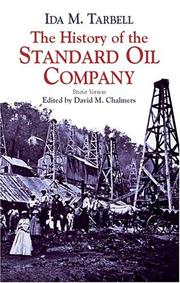
The 1904 investigation that led to Standard Oil's breakup, and one of the founding works of investigative journalism. Read it as a primary source: Tarbell's father was ruined by Rockefeller, and she is not neutral.

The counterweight to Tarbell — a full biography of Rockefeller with access to material she never had. Reading it directly after her shows you how much a vantage point changes the same set of facts.
The supermajors and the petrostates
IntermediateUnderstand how oil companies and oil-producing states actually behave today, and what a country looks like when crude is its main export.
▸ Study plan for this stage
Pace: Twelve to fourteen weeks — the longest stage in the path at roughly 1,650 pages across four books, and the one with the widest range of registers. Private Empire (704 pages) takes four to five weeks. Crude World is 276 pages and reads quickly, in about ten days; take it directly after Coll as the de
- Coll's central claim about ExxonMobil: that it functions as a sovereign actor with its own security policy, its own diplomacy and its own risk calculus, sometimes at odds with the US government. The Exxon Valdez litigation and the Aceh and Equatorial Guinea operations are the evidence
- The Lee Raymond doctrine on climate — Exxon's funding of doubt and its internal treatment of the science — and how Coll documents corporate position-taking as a governance question rather than a moral one
- Coll's method: reported, sourced, institutional. It is the direct descendant of Tarbell's technique applied to a company that learned from Standard Oil's mistakes
- Maass's inversion of the vantage point. Crude World is written from the Niger Delta, from Equatorial Guinea, from Venezuela, and its subject is what extraction does to the places it happens in. Read what Coll's Equatorial Guinea chapter contains and what Maass's does not share with it
- Jones's argument in Desert Kingdom: the Saudi state was built through the technical management of oil and water together, and expertise itself was a political instrument. The 1979 Qatif uprising and the Eastern Province Shia population are central rather than incidental
- The environmental and hydrological dimension Jones adds — desalination, agriculture in the desert, and a state legitimated by its capacity to engineer scarcity away
- Vitalis's demolition in America's Kingdom: Aramco's camps were segregated on an American racial model, with separate housing and pay scales for American, Italian and Saudi workers, and the 1953 and 1956 strikes were suppressed. The benign-partnership story is a corporate public relations constructio
- Why Vitalis belongs immediately after Yergin: The Prize tells the Aramco story largely as the companies told it, and Vitalis reconstructs the labour history that account leaves out
- What does Coll mean by calling ExxonMobil a private empire? Name three specific capabilities it exercises that you would normally associate with a state
- How did ExxonMobil's internal understanding of climate science compare with its public positioning, according to Coll, and what evidence does he rely on?
- Maass and Coll both write about Equatorial Guinea. What does each see, and what does the difference in vantage point make visible or invisible?
- In Jones's account, how did water engineering serve Saudi state-building, and why does he insist that technical expertise is political?
- What did Aramco's labour hierarchy look like in the 1940s and 1950s, and what happened to the workers who struck?
- Having read Vitalis, go back to Yergin's Aramco chapters. What is missing from them, and is it missing by selection or by framing?
- Read Coll's Equatorial Guinea material and Maass's on the same country back to back in one sitting, then write 300 words on what each one can see that the other cannot. This is the sharpest methodological exercise in the path.
- Reread the Aramco pages of The Prize immediately after finishing America's Kingdom, with a pencil. Mark every sentence you now read differently. The number is the measure of what a labour history does to a diplomatic one.
- Draw a map of Saudi Arabia marking the Eastern Province oil fields, the Shia population centres and the major desalination and agricultural projects, using Jones. The overlay is his argument in one image.
- Take one incident from Private Empire and write it as Tarbell would have written it, in 200 words. The exercise makes clear how much of investigative journalism's method has stayed constant since 1904.
- List every claim in this stage that contradicts something in The Prize. Keep the list — stage five is largely about whether those contradictions are factual or theoretical.
Next up: You now have the industry and the producing states as they stand; the next stage follows both forward into shale, climate and the transition.

A reported account of ExxonMobil as an entity with its own foreign policy, from the Valdez to Equatorial Guinea. It brings Yergin's institutional story into the present.
Travel reporting from the producing countries — Nigeria, Equatorial Guinea, Venezuela — showing what extraction does at ground level. The human counterpart to Coll's corporate view.

A close study of how oil and water engineering built the modern Saudi state. Take it as the detailed case behind the general claims you meet in the final stage.
Vitalis reconstructs Aramco's Jim Crow-style labour camps and dismantles the myth of a benign American partnership in Arabia. A necessary hard edge after Yergin's more sympathetic telling.
Where oil is going
IntermediateFollow the story past the twentieth century into shale, renewables and the geopolitics of the energy transition.
▸ Study plan for this stage
Pace: Ten to twelve weeks. The Quest is 804 pages and takes five to six weeks at the same pace as The Prize. The New Map is 512 pages and considerably brisker — three to four weeks. Read them in order and in reasonably close succession, because The New Map assumes The Quest's framework and revises it. A n
- The Quest's structure — security of supply, the rise of renewables, and climate — and how differently Yergin writes when the story stops being a chronology and becomes an argument about the future
- Post-Soviet energy politics as Yergin's strongest material in The Quest: the Caspian pipeline routes, Russian state consolidation of the sector, and the Europe-Russia gas dependency that later became the central fact of the continent's security
- Yergin on climate: he narrates the science and the politics rather than campaigning, which readers coming from the environmental literature find either admirably neutral or evasive. Decide which, and on what evidence
- The shale revolution in The New Map, and the technical basis for it — horizontal drilling plus hydraulic fracturing, and the short-cycle economics that make shale a price-responsive swing supply rather than a long-lead conventional project
- What shale did to the geopolitics: the United States as a net exporter for the first time in decades, the weakening of OPEC's pricing discipline, and the 2014 to 2016 price collapse as the first test
- China's energy strategy in The New Map — the demand growth, the Belt and Road corridors, the South China Sea claims, and the dominance of the solar and battery supply chains
- The transition as Yergin frames it: not a switch but a long overlap, with energy systems historically taking many decades to displace their predecessors. This is his central prediction and it is contestable
- How to read Yergin critically by this point in the path. He is exceptionally well-sourced and consistently sympathetic to incumbents; having read Vitalis and Maass, you can now see the frame while still using the information
- What are the main threads of The Quest, and how does Yergin's treatment of the future differ in method from his treatment of the past?
- Describe the Caspian pipeline politics of the 1990s and 2000s. Which route was chosen and what were the alternatives?
- What makes shale economically different from conventional production, and why does that difference change OPEC's leverage?
- How does Yergin characterise China's energy position, and what does he think it wants?
- State Yergin's argument that energy transitions are slow. What is the strongest counterargument, and does he engage it?
- Reading The Quest immediately after the petrostate books, what does Yergin leave out of his account of the producing countries that Maass, Jones and Vitalis put in?
- Extend your Prize timeline through to 2020: 1998 oil at $10, 2008 at $147, the 2008 to 2014 shale ramp, 2014 to 2016 collapse, 2015 Paris, 2020. One page should now hold 160 years.
- Take three specific predictions from The Quest, published 2011, and check them against what actually happened. Then do the same for The New Map's 2020 forecasts against today. Scoring a forecaster is the only way to calibrate one.
- Write 400 words on whether Yergin's slow-transition thesis is a description or an advocacy. Use his own evidence on both sides — the case is genuinely closer than either his admirers or his critics allow.
- Sketch the shale production process well enough to explain to someone else why a shale well's output profile differs from a conventional one. The economics of the whole chapter follow from the decline curve.
- List the three biggest changes since 2020 that The New Map does not contain. That list is what you would need to read next.
Next up: You have the full narrative from 1859 to the present; the last stage asks the analytical question the narrative books mostly leave alone, which is what oil did to politics itself.
Yergin's own sequel to The Prize, taking the story into climate, renewables and post-Soviet energy politics. Read it directly after the petrostate books so you can judge how much has actually changed.
The most recent instalment: shale, the US as a swing producer, China's energy strategy and the transition. It is the best single update on where the industry stands now.
The arguments about what oil did to politics
BeginnerEngage the analytical literature — whether oil wealth causes authoritarianism, and whether the shape of the energy system itself constrains democracy.
▸ Study plan for this stage
Pace: Twelve to fourteen weeks and a genuine change of gear — these are arguments rather than narratives, and reading pace is not the constraint. Carbon Democracy is 292 pages and should take three to four weeks with rereading; it is the most conceptually demanding book in the path. The Oil Curse is 312 p
- Mitchell's core argument, and the reason this book reframes everything before it: coal required masses of workers at concentrated chokepoints — pits, railways, docks — which gave labour the power to halt an economy, and that leverage is where mass democratic politics in the industrial West came from
- Oil's different physical form as the counterpart claim: pipelines, tankers and a far smaller workforce, controllable from a distance, with supply routes that route around any single point of resistance. Democratic leverage is engineered out of the system
- Mitchell's move from resource to infrastructure. He is not arguing that oil money corrupts, he is arguing that the material arrangement of the energy system constrains what politics is possible — which is a different and much harder claim to test
- Ross's method in The Oil Curse, which is the opposite: cross-national panel data, careful about endogeneity, asking which resource-curse effects survive statistical scrutiny
- What Ross finds survives — oil wealth is associated with less democracy in states that nationalised after the 1970s price rise, and with markedly worse outcomes for women's economic and political participation, through the mechanism of a non-tradable-sector economy that does not draw women into the
- What Ross finds does not survive, or is far weaker than the popular version claims — the blanket assertions about growth and about civil war need heavy qualification, and the timing matters enormously
- Auzanneau's depletion frame in Oil, Power, and War: a global history written from the position that physical limits are the organising fact, which is the perspective The Prize most consistently declines. Read the two accounts of the same events side by side and the difference in what counts as causa
- The three books do not settle the question and are not meant to. What you should come away with is the ability to say which kind of claim — mechanical, statistical or historical — a given argument about oil and politics is making
- State Mitchell's coal-versus-oil argument in four sentences. What exactly is the mechanism by which coal produced democratic leverage?
- Which resource-curse claims does Ross find support for, and which does he substantially qualify? Be specific about the conditions and the periods
- Why does Ross find oil wealth so strongly associated with poor outcomes for women, and what is the causal mechanism he proposes?
- Ross and Mitchell would explain the same petrostate very differently. Take Saudi Arabia as Jones and Vitalis described it in stage three and give both explanations
- What does Auzanneau's depletion framing make visible that Yergin's abundance framing does not, and where does it lead him into claims the evidence does not carry?
- After all five stages: what did oil do to twentieth-century politics? Answer in one paragraph and name which book each part of your answer comes from
- Reread the 1973 chapters of The Prize immediately after finishing Carbon Democracy. Mitchell's account of the same events is in his book, and setting the two side by side is the single most instructive comparison in the path.
- Work through one of Ross's central tables and write out in plain English what the model is claiming, what it controls for, and what it cannot rule out. Reading quantitative political science without doing this once is just accepting the abstract.
- Take your list from stage three of claims that contradicted The Prize and sort each one into factual disagreement or theoretical disagreement. Most will be the second, and that distinction is the real payoff of the whole path.
- Write 500 words applying Mitchell's framework to renewable energy: does a solar and battery system distribute political leverage more like coal or more like oil? He gestures at this and does not settle it, and it is the most useful thing you can do with his argument.
- Return to your one-page timeline and, beside each major event, write which of the path's books explains it best. The resulting page is a map of the field.
Next up: This is the end of the path — the full chronology, the founding controversy, the corporations and the states, the transition, and the analytical arguments — and you can now read new writing on energy and identify within a page which tradition it belongs to.
The most original argument in the field: coal's labour-intensive supply chain gave workers leverage that oil's pipelines and tankers took away. It reframes everything in the first four stages.

The careful quantitative test of the resource-curse claim, showing which effects survive the data and which do not. The right corrective to any single-country story you have read so far.

A recent global history written from the depletion-and-limits perspective Yergin is least sympathetic to. Finish here for a synthesis that reaches conclusions The Prize deliberately avoids.
Discussion
Keep reading
Paths that share books, cover the same subject, or open a related topic.