Best Books on Schizophrenia, in Reading Order
This curriculum builds a deep, multi-dimensional understanding of schizophrenia across four stages, starting from a solid clinical and conceptual foundation, then moving into treatment and neuroscience, family caregiving, and finally immersive first-person recovery narratives. Because the learner starts at an intermediate level, early books are accessible but substantive, and each stage equips the reader with the vocabulary and empathy needed to fully absorb the next.
Foundations: Understanding Psychosis
IntermediateUnderstand what schizophrenia and psychosis are — their symptoms, causes, history, and how they are diagnosed — building the core vocabulary for everything that follows.
▸ Study plan for this stage
Pace: 4–5 weeks, ~40–50 pages/day (Surviving Schizophrenia is ~450 pages; aim to complete in 9–11 reading days, then spend 2–3 weeks on review, exercises, and integration)
- Psychosis as a brain-based illness: hallucinations, delusions, and disorganized thinking as core positive symptoms
- Negative symptoms (alogia, avolition, anhedonia, affective flattening) and their distinction from positive symptoms
- The neurobiology of schizophrenia: dopamine hypothesis, brain structure/function abnormalities, and genetic predisposition
- Historical context: how schizophrenia was conceptualized from Kraepelin through modern diagnostic criteria (DSM-5)
- Diagnostic criteria and differential diagnosis: distinguishing schizophrenia from bipolar disorder, depression, substance-induced psychosis, and other conditions
- The prodromal phase and early warning signs: recognizing risk before full-blown psychosis
- Environmental and social factors: stress, trauma, substance use, and socioeconomic factors in the etiology and course of illness
- Prognosis and heterogeneity: why outcomes vary widely and what factors predict better or worse trajectories
- What is the difference between positive and negative symptoms in schizophrenia, and can you give concrete examples of each?
- How does the dopamine hypothesis explain psychotic symptoms, and what evidence supports it?
- What are the DSM-5 diagnostic criteria for schizophrenia, and how do they differ from earlier definitions (e.g., Kraepelin's dementia praecox)?
- What is the prodromal phase, and why is early identification important?
- How do you distinguish schizophrenia from bipolar disorder with psychotic features, substance-induced psychosis, and other conditions that present with psychosis?
- What role do genetics, brain structure, neurotransmitters, and environmental stressors play in the development of schizophrenia?
- Create a symptom matrix: list positive symptoms (hallucinations, delusions, disorganized speech/behavior) and negative symptoms (alogia, avolition, anhedonia, affective flattening) with real examples from Torrey's case studies; use this to practice differential diagnosis
- Timeline exercise: map the historical evolution of schizophrenia diagnosis from Kraepelin (1899) through DSM-5, noting how criteria and understanding have changed; reflect on why these shifts occurred
- Case study analysis: select 2–3 detailed case histories from Surviving Schizophrenia; for each, identify onset, prodromal signs, symptom presentation, and prognostic factors; write a 1-page summary of what you learned
- Neurobiology diagram: sketch or describe the dopamine pathways implicated in schizophrenia (mesolimbic, mesocortical, nigrostriatal); explain how dopamine dysregulation produces specific symptoms
- Diagnostic decision tree: create a flowchart for distinguishing schizophrenia from bipolar disorder, major depression with psychosis, and substance-induced psychosis based on Torrey's clinical guidance
- Prodromal recognition exercise: write a detailed description of what early warning signs you would look for in a teenager or young adult at risk for psychosis, based on Torrey's discussion of the prodromal phase
Next up: This stage establishes the clinical and biological foundations—what schizophrenia is, how it manifests, and why it occurs—preparing you to explore evidence-based treatments, recovery models, and the lived experience of people with schizophrenia in subsequent stages.

The definitive lay-reader reference on schizophrenia — covering causes, brain biology, symptoms, and treatment options in plain language. Its encyclopedic scope makes it the essential second read to consolidate and deepen the foundation.
Treatment, Medication, and the Mental Health System
IntermediateUnderstand the landscape of antipsychotic medications, psychosocial treatments, and the psychiatric system — including its failures — so the reader can evaluate care options critically.
▸ Study plan for this stage
Pace: 8–10 weeks, ~40–50 pages/day. "Anatomy of an Epidemic" (480 pages) takes 5–6 weeks; "Mad in America" (400 pages) takes 3–4 weeks. Build in 1–2 weeks for review, reflection, and exercises.
- The rise of antipsychotic medications and their initial promise versus long-term outcomes documented in the NIMH Epidemiologic Catchment Area study and other longitudinal research
- How the pharmaceutical industry shaped psychiatric practice and the concept of 'chemical imbalance' through marketing and selective reporting of drug efficacy data
- The historical evolution of psychiatric institutions in America—from moral treatment to custodial asylums to deinstitutionalization—and how each era's failures informed (or failed to inform) the next
- The distinction between acute symptom suppression and long-term recovery outcomes; why antipsychotics may worsen long-term prognosis despite short-term benefit
- Psychosocial and rehabilitative approaches (work, community, peer support) that show superior long-term outcomes compared to medication-only models, particularly in developing countries
- The role of disability, poverty, and social marginalization in both the etiology and treatment of schizophrenia, and how the mental health system perpetuates rather than alleviates these conditions
- Critical evaluation of psychiatric diagnosis, involuntary commitment, and the power dynamics embedded in the mental health system
- Evidence-based alternatives and complementary approaches: peer support, supported employment, family psychoeducation, and recovery-oriented frameworks
- What does Whitaker's analysis of the NIMH Epidemiologic Catchment Area study reveal about long-term outcomes for people on antipsychotics compared to those not medicated, and what are the limitations or criticisms of his interpretation?
- How did the pharmaceutical industry's marketing strategies and the concept of 'chemical imbalance' influence psychiatric practice and patient expectations regarding antipsychotic medications?
- Trace the major shifts in American psychiatric institutions from the 19th century through deinstitutionalization. What were the stated goals and actual outcomes of each era?
- What evidence does Whitaker present for the claim that antipsychotics may worsen long-term prognosis? How does this square with their acute efficacy?
- According to the books, what psychosocial and rehabilitative approaches show promise for recovery in schizophrenia, and why have they been marginalized in the U.S. mental health system?
- How do the books characterize the relationship between poverty, social marginalization, and schizophrenia? What role does the mental health system play in this dynamic?
- Create a timeline of American psychiatric history (1800s–present) using evidence from 'Mad in America,' marking key institutional shifts, policy changes, and their stated versus actual outcomes. Annotate with Whitaker's critiques.
- Read and annotate one key study cited by Whitaker (e.g., the NIMH ECA study or a long-term outcome study from Scandinavia). Write a 2–3 page summary of its methods, findings, and implications, noting where Whitaker's interpretation aligns or diverges from the original authors' conclusions.
- Construct a comparison table of antipsychotic medications' acute effects (symptom suppression) versus long-term effects (relapse rates, disability, mortality) as presented in 'Anatomy of an Epidemic.' Identify gaps in the evidence and areas where more research is needed.
- Interview or conduct a written dialogue with someone who has lived experience with schizophrenia and psychiatric treatment (with consent). Ask about their experience with medication, psychosocial support, and the mental health system. Reflect on how their narrative aligns with or challenges Whitaker's claims.
- Research and write a 3–4 page case study of one alternative or complementary treatment model mentioned in the books (e.g., peer support, supported employment, family psychoeducation). Evaluate its evidence base and feasibility within the current U.S. system.
- Debate exercise: Prepare arguments for and against the claim that 'antipsychotic medications do more harm than good in the long term.' Use evidence from both books and identify which claims are strongest and which are most contested.
Next up: This stage equips you with a critical, historically grounded understanding of psychiatric treatment and its systemic failures, preparing you to examine the neurobiology and etiology of schizophrenia in the next stage with healthy skepticism about how biological findings are interpreted and applied in clinical practice.

A rigorously researched challenge to mainstream psychiatric drug practice, examining long-term outcomes of antipsychotic treatment. Reading it here, after the clinical foundation, allows the learner to engage critically rather than uncritically with its provocative arguments.

Traces the history of how society and medicine have treated people with severe mental illness, providing essential historical context for why current treatment controversies exist. It deepens the critical lens opened by Anatomy of an Epidemic.
Family Caregiving: Living Alongside the Illness
IntermediateGain practical and emotional tools for family members and caregivers — understanding how to support a loved one with schizophrenia while maintaining one's own wellbeing.
▸ Study plan for this stage
Pace: 8–10 weeks, ~25–30 pages/day (alternating between both books; allow 2–3 weeks per book with overlap for reflection)
- LEAP method (Listen, Empathize, Agree, Partner): Amador's core framework for motivating change without confrontation or coercion
- Anosognosia and lack of insight: understanding why people with schizophrenia may not recognize their illness, and how this differs from denial
- Emotional regulation and self-care for caregivers: recognizing caregiver burden and setting boundaries to prevent burnout
- Building trust and collaboration: moving from a 'helper-patient' dynamic to genuine partnership with your loved one
- The lived experience of schizophrenia: how isolation, stigma, and systemic barriers shape daily reality for people with the illness
- Practical harm reduction and incremental progress: accepting small wins and meeting people where they are, rather than demanding immediate recovery
- Compassion without enabling: distinguishing between supportive caregiving and behaviors that reinforce dependence or avoidance of treatment
- What is anosognosia, and how does Amador distinguish it from denial? Why is this distinction crucial for caregivers?
- Describe the LEAP method in your own words. How would you apply each step (Listen, Empathize, Agree, Partner) to a specific conflict with your loved one?
- How does Steve Lopez's relationship with Nathaniel change over the course of *The Soloist*, and what does this reveal about the limits and possibilities of caregiver involvement?
- What are three signs of caregiver burnout, and what self-care strategies does Amador recommend to prevent it?
- How do systemic barriers (housing, employment, stigma) complicate the caregiving relationship in *The Soloist*? What can individual caregivers realistically influence?
- What does it mean to 'partner' with someone who has schizophrenia, according to Amador? How does this differ from traditional helper roles?
- Practice LEAP: Identify a recent conflict with your loved one. Write out how you would reframe it using the LEAP method—what would you listen for, how would you empathize, where could you find agreement, and how would you propose partnership?
- Caregiver self-assessment: Complete Amador's caregiver burden checklist (or create your own). Identify one area of burnout and design a concrete boundary or self-care practice to address it this week.
- Perspective-taking journal: After reading a chapter from *The Soloist*, write a brief entry from Nathaniel's point of view. What does he value? What are his fears? How might his perception of reality differ from Lopez's?
- Role-play dialogue: With a partner or therapist, practice a difficult conversation using LEAP. Record yourself or have your partner give feedback on where you listened well and where you slipped into advice-giving or judgment.
- Harm reduction planning: Identify one behavior or situation that troubles you about your loved one's illness. Rather than seeking 'cure,' brainstorm 3–5 small, incremental steps toward safety or stability that your loved one might actually accept.
- Comparative case study: Write a 1–2 page reflection on how Lopez's caregiving approach aligns with or diverges from Amador's LEAP method. What would Amador advise Lopez to do differently?
Next up: This stage equips you with both the emotional resilience and practical communication tools to sustain a caregiving relationship; the next stage will deepen your understanding of treatment options, medication management, and how to navigate the mental health system on behalf of your loved one.
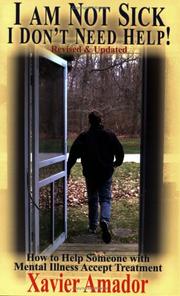
Addresses the single greatest caregiving challenge — anosognosia (lack of illness awareness) — and teaches the evidence-based LEAP method for building trust with someone who refuses treatment. This is the most practically urgent book for families.

A journalist's account of befriending a brilliant, homeless musician with schizophrenia, illuminating the limits of care, the complexity of autonomy, and the humanity of the person behind the diagnosis — a powerful bridge between caregiving strategy and lived reality.
First-Person Accounts: Recovery and Lived Experience
ExpertExperience schizophrenia from the inside — understanding what psychosis feels like, how people rebuild identity and meaning, and what recovery actually looks like in practice.
▸ Study plan for this stage
Pace: 8–10 weeks, ~40–50 pages/day (approximately 2–3 weeks per book with reflection time)
- Phenomenology of psychosis: what delusions, hallucinations, and thought disorganization feel like from the inside (Saks, Snyder)
- Identity fragmentation and reconstruction: how people maintain or rebuild sense of self during and after psychotic episodes (Saks, Snyder, Nasar)
- The role of denial, insight, and acceptance in recovery: how acknowledging illness becomes necessary for functional recovery (Saks, Snyder)
- Social stigma and isolation as barriers to recovery: how shame, fear of disclosure, and loss of relationships complicate the healing process (all three)
- Medication, therapy, and support systems as practical tools: what actually helps versus what people resist and why (Saks, Snyder, Nasar)
- Recovery is non-linear and deeply personal: there is no single 'cure' but rather ongoing management, adaptation, and meaning-making (all three)
- The distinction between symptom remission and functional recovery: managing symptoms is different from rebuilding work, relationships, and purpose (Saks, Snyder, Nasar)
- Intersectionality in lived experience: how gender, race, class, and professional identity shape the experience and recovery of schizophrenia (Saks, Nasar)
- What does Elyn Saks describe as the subjective experience of her psychotic episodes, and how did her denial of her illness initially prevent her from seeking treatment?
- How does Kurt Snyder's account of his early symptoms differ from Saks' in terms of onset, insight, and the role of his family in his recovery?
- In Sylvia Nasar's biography of John Nash, what role did his mathematical identity play in both his vulnerability to psychosis and his eventual adaptation to living with schizophrenia?
- Across all three accounts, what are the common barriers to accepting medication and treatment, and how did each person eventually overcome (or fail to overcome) these barriers?
- How do Saks, Snyder, and Nash each describe the experience of rebuilding relationships and trust after psychotic episodes damaged their social connections?
- What does 'recovery' mean in each of these three accounts—is it symptom remission, functional independence, or something else entirely?
- Close-read one vivid passage from each book describing a psychotic symptom (e.g., Saks on her 'Ping-Pong' thoughts, Snyder on his paranoia, Nash's delusions in Nasar's account). Write a 1-page reflection on what each passage reveals about the subjective reality of psychosis that clinical descriptions might miss.
- Create a timeline for each person (Saks, Snyder, Nash) mapping key events: first symptoms → diagnosis → treatment resistance/acceptance → functional recovery milestones. Compare the timelines—what patterns emerge?
- Write a dialogue between any two of the three authors discussing what 'recovery' means to them. Use direct quotes from the books to ground the conversation.
- Identify one moment in each book where the person's sense of identity was most threatened or fragmented. Write a short reflection on how they either recovered that identity or built a new one.
- Interview someone in your life (with permission) about their understanding of schizophrenia before and after you describe what you've learned from these three accounts. Document how the lived experience narratives changed their perspective.
- Write a letter from the perspective of one of the three authors to someone newly diagnosed with schizophrenia, drawing on their lived experience to offer practical and emotional guidance.
Next up: This stage grounds schizophrenia in human reality—now you're ready to examine how clinical science, neurobiology, and treatment systems attempt to understand and address what you've experienced through these intimate accounts.

A USC law professor's memoir of living with severe schizophrenia — widely considered the gold-standard first-person account. Her story of psychosis, hospitalization, and eventual flourishing reframes everything learned in earlier stages through lived experience.
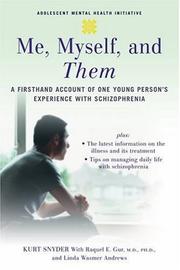
A first-person account by someone diagnosed with schizophrenia, written alongside a clinician, that uniquely bridges the insider experience and clinical explanation — ideal for consolidating the full curriculum by seeing both perspectives at once.

The definitive biography of Nobel laureate John Nash, whose decades-long journey through schizophrenia and eventual recovery is one of the most documented and inspiring in history. It closes the curriculum by showing the full arc of a life shaped by — but not defined by — the illness.
Discussion
Keep reading
Paths that share books, cover the same subject, or open a related topic.